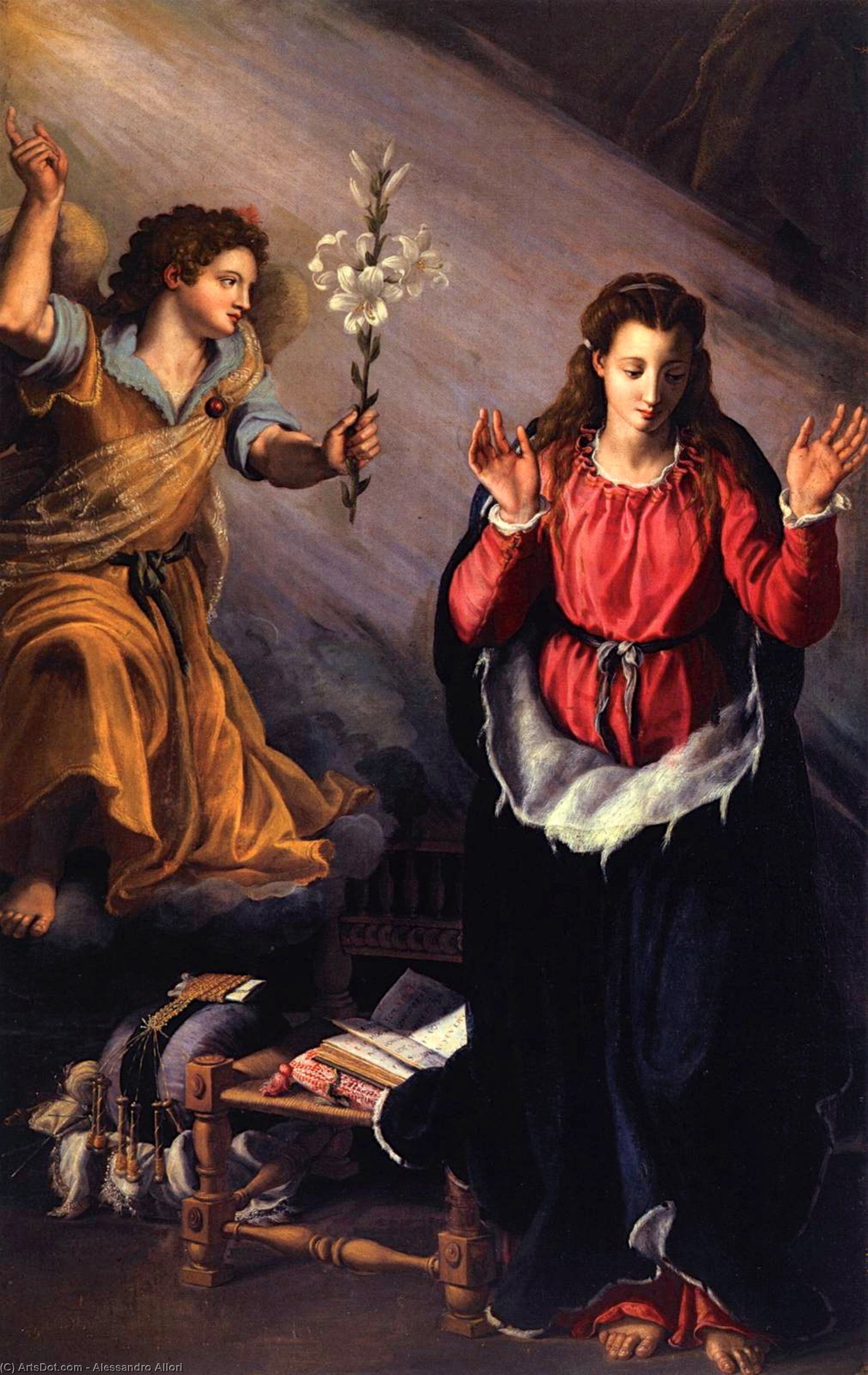
Admire Alessandro Allori’s masterpiece, ‘Annunciation,’ depicting Gabriel announcing Mary's pregnancy to Zechariah. Explore the serene Florentine Renaissance style and masterful detail of this iconic painting.
Descubre Alessandro Allori (1535-1607), pintor manierista florentino clave. Explora sus retratos y figuras estatuarias influenciadas por Bronzino, uniendo el arte renacentista.
Descubre el corazón del Renacimiento en la Galleria dell’Accademia de Florencia: David, obras maestras y un viaje artístico inolvidable.
Alessandro Allori’s “Annunciation”: A Florentine Masterpiece Illuminated by Mannerist Elegance
Alessandro Allori's "Annunciation," completed in 1603 and currently residing within the Galleria dell'Accademia in Florence, stands as a testament to the enduring legacy of Florentine Mannerism. Painted during a period marked by artistic experimentation and intellectual fervor—a reaction against the idealized beauty of High Renaissance ideals—this monumental fresco embodies Allori’s signature style: a masterful blend of sculptural precision and luminous color that continues to captivate viewers centuries later.
The Composition & Technique – Sculptural Form Meets Radiant Light
Allori meticulously crafted this scene with an unwavering dedication to anatomical accuracy, reflecting the influence of humanist scholarship prevalent at the time. The figures—the angel Gabriel and Mary—are rendered with elongated proportions and subtly twisted poses, characteristic of Mannerist aesthetics. These forms aren’t merely realistic; they strive for a heightened sense of drama and emotion, conveying spiritual contemplation through carefully orchestrated gestures and drapery folds. Allori employed tempera paint on plaster, a technique favored by Florentine artists during this era, ensuring exceptional durability and preserving the vibrancy of his pigments—particularly the brilliant blues and golds that dominate the composition. The artist skillfully manipulated light to create an ethereal atmosphere, highlighting the angel’s halo and casting shadows across Mary's face, enhancing the emotional depth of the portrayal.
Historical Context & Artistic Influences: Bronzino’s Legacy
“Annunciation” emerged from a milieu profoundly shaped by Agnolo Bronzino’s artistic dominance. Bronzino, Allori’s mentor, championed a style characterized by polished surfaces and restrained emotion—a deliberate departure from the exuberant expressiveness of Raphael and Michelangelo. This stylistic kinship is palpable in “Annunciation,” where Allori avoids overt sentimentality, opting instead for an understated elegance that prioritizes intellectual contemplation. The painting reflects broader artistic trends of its time – a fascination with classical ideals combined with a nuanced exploration of psychological complexity—a hallmark of Mannerist art’s ambition to capture the human condition with unprecedented subtlety.
Symbolism & Narrative Depth: Lily and Bird – Echoes of Divine Grace
Beyond its technical brilliance, “Annunciation” is rich in symbolic significance. The lily held by Gabriel represents purity and virginity—essential attributes ascribed to Mary—a motif frequently employed in religious iconography throughout the Renaissance. Similarly, the bird perched upon Mary’s shoulder symbolizes hope and divine grace, reinforcing the narrative's central theme: God’s intervention in human affairs. Allori’s careful attention to detail extends beyond mere representation; he seeks to communicate profound spiritual truths through visual language—a testament to the enduring power of art as a vehicle for conveying religious belief and artistic innovation.
Emotional Impact & Artistic Resonance – A Timeless Vision
“Annunciation” transcends its historical context, continuing to resonate with audiences today due to its ability to evoke feelings of serenity and reverence. The painting’s luminous colors and sculptural forms invite contemplation—encouraging viewers to consider the profound mysteries of faith and divine grace. Like many masterpieces of Mannerist art, it exemplifies a commitment to artistic excellence that prioritizes intellectual engagement alongside aesthetic beauty—a legacy that ensures Alessandro Allori's “Annunciation” remains an unforgettable emblem of Florentine artistic heritage.