A Symphony of Blooms: Daniel Seghers’ Floral Wreath with Relief
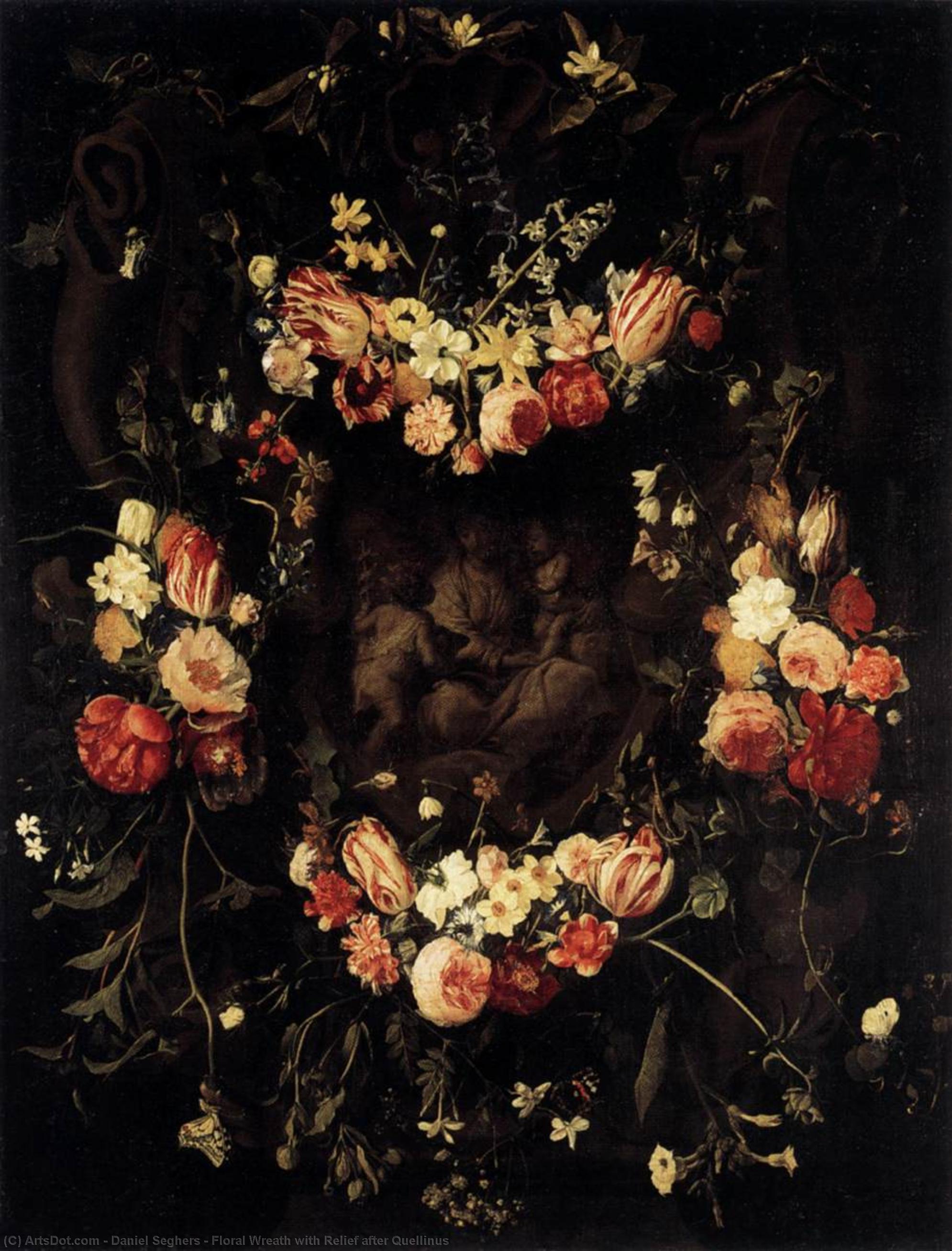
The painting before us – “Floral Wreath with Relief after Quellinus” by the masterful Flemish painter Daniel Seghers, created in 1645 – is more than a simple still life; it's an immersive experience of color, texture, and profound serenity. Measuring 129 x 95 cm, this work transports us to a world meticulously crafted with delicate brushstrokes and an astonishing attention to detail. At its heart lies a captivating scene: a baby nestled within a lavish wreath overflowing with an astounding thirteen distinct flower species – roses in varying shades of crimson and blush, the elegant curves of carnations, the stately presence of lilies, and countless others, each rendered with breathtaking realism.
Seghers, born in Antwerp in 1590, was a pivotal figure in the development of Flemish flower painting. His artistic journey began within the prestigious studio of Jan Brueghel the Elder, absorbing the master’s techniques and ultimately forging his own distinctive style. This apprenticeship instilled in him a deep appreciation for naturalism and an ability to capture the fleeting beauty of the botanical world. His work reflects not just technical skill but also a profound connection to the religious currents of his time – Seghers was a Jesuit brother, and his paintings often carried subtle devotional undertones, though here, the focus is primarily on the celebration of life and innocence.
The Legacy of Quellinus and Baroque Ornamentation
This particular piece draws inspiration from Erasmus II Quellinus, a prominent Antwerp sculptor known for his intricate relief work. Seghers skillfully translates this sculptural element into a painted wreath – a technique that was gaining popularity during the mid-17th century. The ‘relief’ aspect isn't literal depth but rather an illusion created through careful layering of petals and leaves, suggesting three-dimensionality and adding to the overall richness of the composition. The style is firmly rooted in the Baroque period, characterized by dramatic contrasts between light and shadow, a heightened sense of realism, and an opulent display of decorative elements – all hallmarks of Seghers’s oeuvre.
Notice the masterful use of color; the vibrant reds and pinks of the roses are juxtaposed with the softer hues of the carnations and lilies. The artist employs a technique known as ‘stiacciato,’ where colors are applied in thick, opaque layers to create a sense of volume and texture. This method is particularly evident in the rendering of the baby’s skin – soft and luminous against the dense foliage. The background, rendered in deep browns and greens, serves to further accentuate the brilliance of the floral display, creating a harmonious balance between foreground and background.
Symbolism and Emotional Resonance
Beyond its technical brilliance, “Floral Wreath with Relief” is rich in symbolic meaning. The baby at the center represents innocence, vulnerability, and new life – themes frequently explored in religious art of the period. The wreath itself symbolizes protection, abundance, and eternal life. Flowers, universally associated with beauty, love, and remembrance, contribute to the painting’s overall atmosphere of warmth and tenderness. It's a scene designed to evoke feelings of comfort, serenity, and perhaps even a touch of nostalgia.
The choice of flowers is also significant. Each bloom carries its own symbolic weight – roses representing love and devotion, lilies signifying purity and grace, and carnations conveying remembrance and affection. Seghers’s meticulous selection and arrangement create a visual poem that speaks to the enduring power of nature and the beauty of human connection. This painting isn't merely a depiction of flowers; it is an invitation into a world of quiet contemplation and profound emotional resonance – a testament to Seghers’s extraordinary talent and his ability to capture the essence of beauty in its most delicate form.