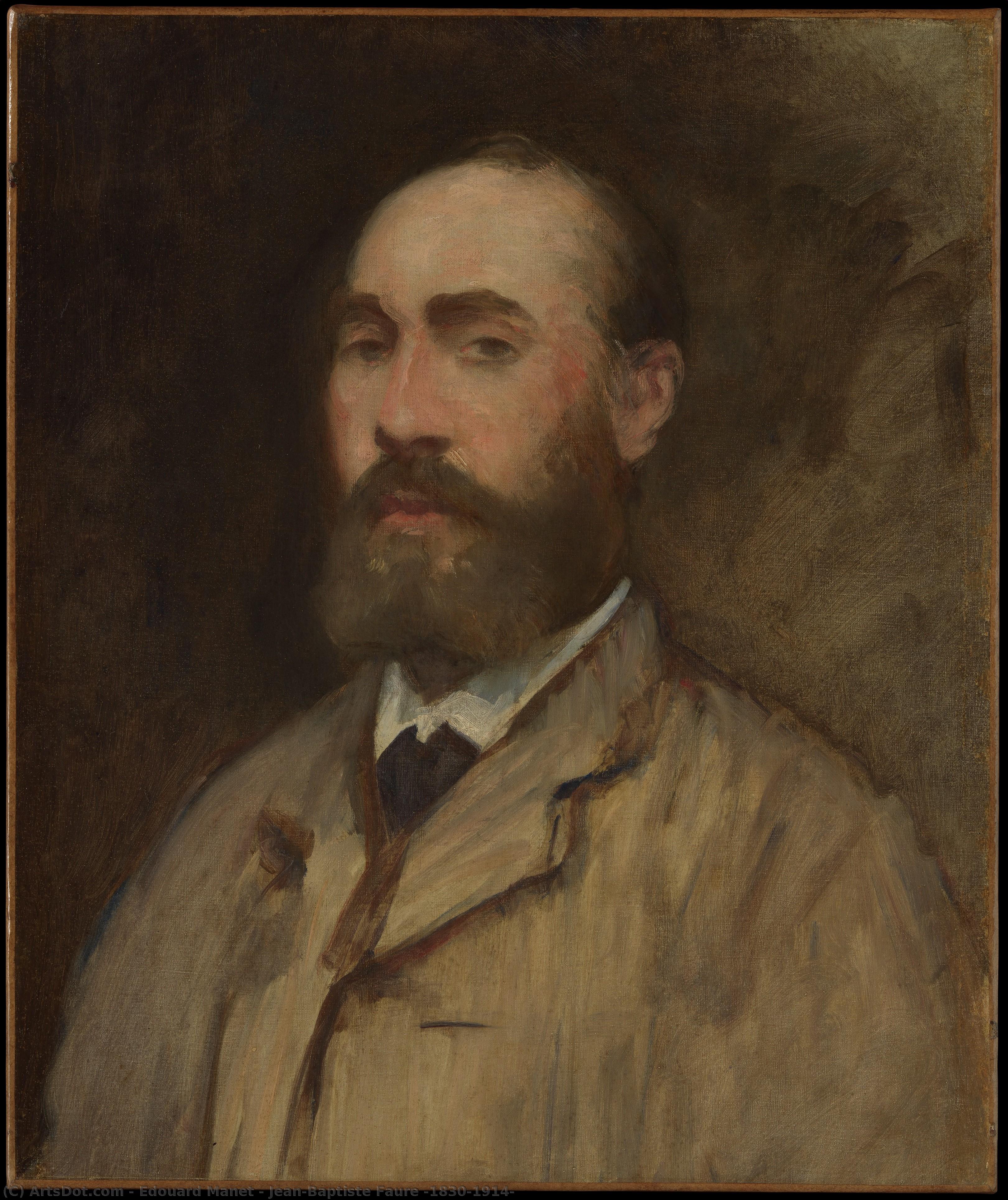
Jean-Baptiste Faure (1830–1914): A Portrait of Elegance and Quiet Authority
Within the rich tapestry of 19th-century French art, few portraits possess the subtle power to capture a subject’s essence quite like Édouard Manet's depiction of Jean-Baptiste Faure. Painted in 1882, this oil on canvas is more than just a likeness; it’s a carefully constructed study in elegance, authority, and the quiet dignity of a man deeply immersed in both artistic circles and the world of opera. The painting offers a glimpse into the life of a prominent baritone and discerning collector, revealing not only his physical appearance but also a sense of cultivated refinement that speaks volumes about his character.
The subject himself, Jean-Baptiste Faure, was a figure of considerable renown in Parisian cultural circles. A celebrated baritone known for his powerful voice and sophisticated tastes, he possessed a keen appreciation for art and music – evidenced by his patronage and the commission of this portrait from Manet. The painting’s creation coincided with a pivotal period in Manet's career, following the controversial reception of “Le Déjeuner sur l’herbe” and “Olympia.” This work represents a shift toward a more controlled and refined aesthetic, reflecting Manet’s desire to temper the shock value of his earlier works while still retaining a modern sensibility. The unfinished state of this portrait at the time of Manet's death underscores its significance as one of the artist’s final explorations of form and expression.
Composition and the Language of Form
Manet’s composition is remarkably balanced, drawing the viewer’s eye directly to Faure. The subject occupies a central position within the frame, his figure commanding attention despite the slightly blurred background – a technique that was characteristic of Manet's style and served to emphasize the individual's presence. The meticulous detail lavished upon Faure’s beard and mustache speaks to both the artist’s skill and the subject’s own pride in his appearance. The carefully chosen attire—a formal suit and tie—suggests a man of considerable social standing, hinting at his involvement with the elite circles of Parisian society.
The background, rendered with a subtle atmospheric haze, isn't merely decorative; it serves to isolate Faure, creating a sense of intimacy and drawing attention to his face. The interplay between light and shadow subtly sculpts his features, revealing the nuances of his expression – a hint of confidence, perhaps even a touch of melancholy—that invites contemplation. Manet masterfully utilizes color to enhance this effect, employing rich, muted tones that evoke a sense of understated luxury.
The Brushstroke and the Essence of Impressionism
Manet’s masterful use of oil paint is central to the painting's impact. He employs loose, visible brushstrokes—a hallmark of his style—that create a vibrant texture and capture the play of light on Faure’s clothing and skin. This technique, while seemingly spontaneous, reveals a deep understanding of color theory and how it can be used to convey depth and atmosphere. The subtle variations in tone suggest a remarkable sensitivity to the nuances of light and shadow, anticipating the techniques of Impressionist painters who would follow.
The painting’s surface is alive with movement—not in a chaotic way, but through the careful manipulation of brushstrokes that create an illusion of depth and volume. This attention to detail, combined with Manet's ability to capture the fleeting effects of light, elevates “Jean-Baptiste Faure” beyond a simple portrait; it becomes a study in perception and the beauty of everyday life.
Historical Context and Artistic Legacy
It’s important to consider this portrait within the broader context of Manet's artistic development. The earlier, unfinished "Hamlet" portrait—a full-length depiction commissioned by Faure—had been met with considerable criticism upon its exhibition in 1877, largely due to its unconventional composition and perceived departure from academic standards. This study, therefore, represents a more refined and controlled approach, reflecting Manet’s evolving artistic sensibilities. It's a testament to his ability to learn from past experiences and adapt his style while retaining his unique vision.
The painting’s legacy extends beyond its aesthetic qualities. It offers a valuable insight into the cultural landscape of late 19th-century Paris, revealing the interconnectedness between art, music, and society. For those seeking to appreciate Manet's genius or explore similar works from this period, ArtsDot.com offers high-quality reproductions of “Jean-Baptiste Faure (1830–1914)” and related pieces by Manet, allowing you to bring a piece of art history into your own space. Furthermore, the Holburne Museum in Bath, United Kingdom, houses a remarkable collection of fine and decorative arts that complement Manet’s style and offer further context for understanding his artistic journey.