 Vista previa
 Compartir
 Compartir
 Ver detalles

 Descargar
 Ver similares
 Radiografía
 Presentación de diapositivas
Jean-Baptiste Faure (1830–1914)
 Óleo sobre lienzo
- Arte de pared
- Impressionistic Painting
 1882
1882- Siglo XIX
 59.0 x 50.0 cm
 Leer más
Reproducción al óleo hecha a mano
Óleo sobre lienzo pintado a mano en el tamaño y marco de su elección, realizado por encargo por nuestros artistas. ( Pedir impresión Comprar descarga)




P118B $10

P118H $10

P118W $10

P438Z $10

P508JH $12

P508YH $12

P805H $10

P805Z $10

P919BZ $10

P919G $10

P919XJ $10

P959ZH $10

P968JZ $12

W106C $8

W218G $10

W218JH $8

W218Y $10

W307PJ $10

W316G $10

W316PJ $8

W316Y $10

W398PJ $8

W4111J $10

W500HY $15

W500JH $15

W692G $12

W849H $8

W940BG $15

W953PJ $8




Elija entre nuestros tamaños predefinidos que respetan las proporciones originales de la obra.

Puede ingresar sus propias dimensiones para adaptarse a un marco o espacio específico. Si el tamaño seleccionado no coincide con las proporciones de la imagen original, recortaremos la obra o extenderemos la pintura con elementos adicionales pintados a mano. Se le enviará una maqueta digital para su aprobación antes de comenzar la producción.
Tenga en cuenta que la vista previa en pantalla no refleja el recorte o la extensión reales. Solo la maqueta mostrará con precisión la composición final.
Si bien existen tamaños personalizados, recomendamos seleccionar una dimensión de la lista predefinida para preservar las proporciones originales.
Tras realizar el pedido, el equipo de ArtsDot.com enviará un correo electrónico al cliente para solicitar instrucciones y proporcionarle una vista previa del boceto.
Envío a todo el mundo () en 3-4 semanas en lugar de las 5 semanas estándar. (19 agosto). Sin comprometer la calidad.

Envío exprés gratuito a todo el mundo

Lienzo de lino de alta calidad

Seguro de envío completo

Garantía de reembolso de aranceles aduaneros

Garantía de fidelidad cromática exacta

Política de devolución de 60 días (solo por defectos)

Garantía de devolución del 100% del dinero

Oferta por volumen
 La opción de vidrio solo está disponible en tamaños inferiores a 110 cm.

Jean-Baptiste Faure (1830–1914)
Técnica de reproducción
Tamaño de la reproducción
-


Precio total
$ 263
Descripción de la obra
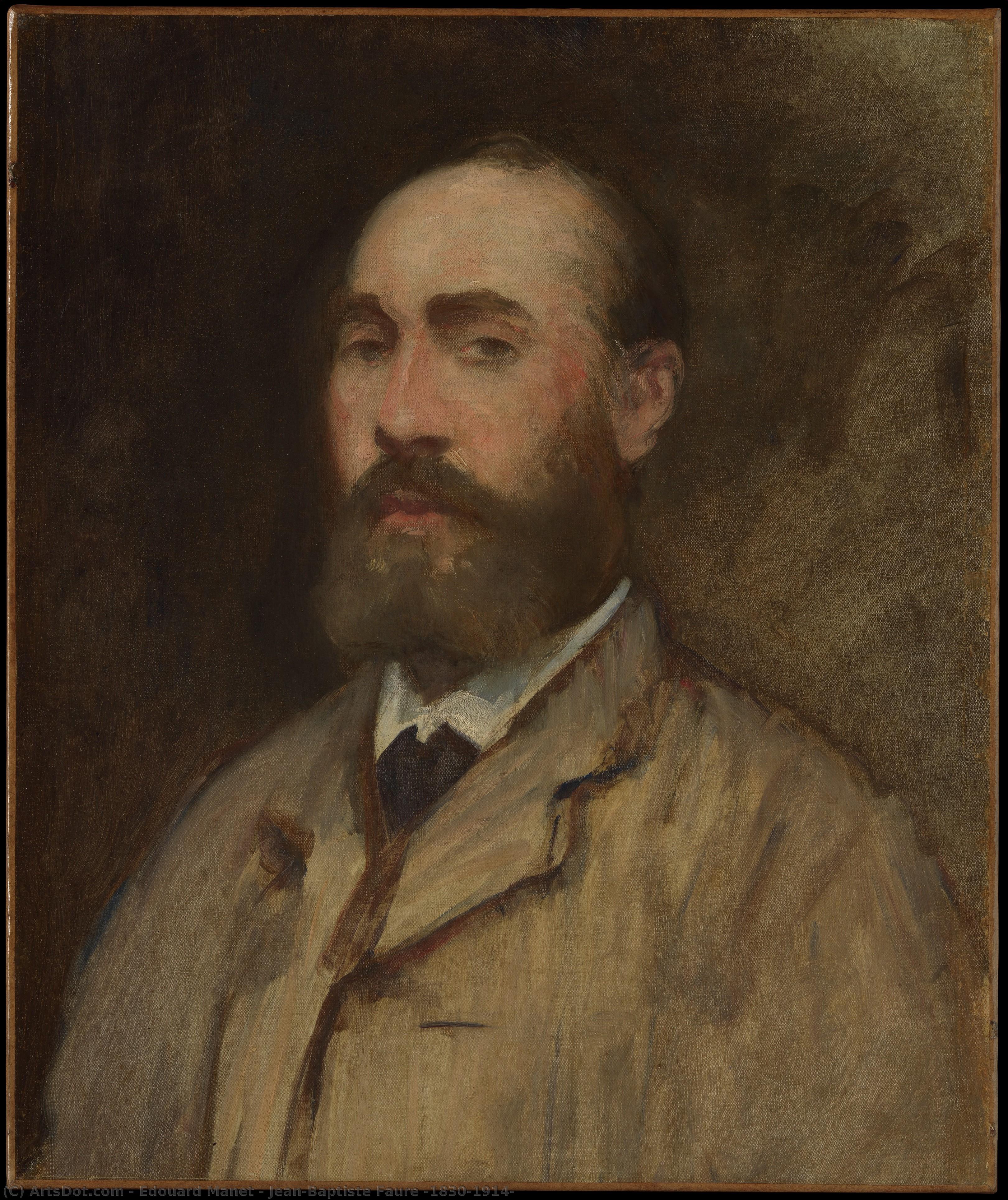
Jean-Baptiste Faure (1830–1914): A Portrait of Elegance and Quiet Authority
Within the rich tapestry of 19th-century French art, few portraits possess the subtle power to capture a subject’s essence quite like Édouard Manet's depiction of Jean-Baptiste Faure. Painted in 1882, this oil on canvas is more than just a likeness; it’s a carefully constructed study in elegance, authority, and the quiet dignity of a man deeply immersed in both artistic circles and the world of opera. The painting offers a glimpse into the life of a prominent baritone and discerning collector, revealing not only his physical appearance but also a sense of cultivated refinement that speaks volumes about his character.
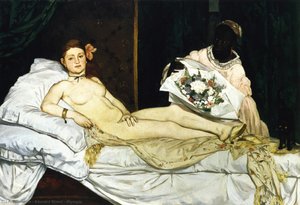
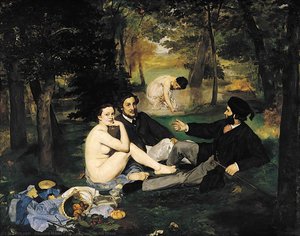
The subject himself, Jean-Baptiste Faure, was a figure of considerable renown in Parisian cultural circles. A celebrated baritone known for his powerful voice and sophisticated tastes, he possessed a keen appreciation for art and music – evidenced by his patronage and the commission of this portrait from Manet. The painting’s creation coincided with a pivotal period in Manet's career, following the controversial reception of “Le Déjeuner sur l’herbe” and “Olympia.” This work represents a shift toward a more controlled and refined aesthetic, reflecting Manet’s desire to temper the shock value of his earlier works while still retaining a modern sensibility. The unfinished state of this portrait at the time of Manet's death underscores its significance as one of the artist’s final explorations of form and expression.
Composition and the Language of Form
Manet’s composition is remarkably balanced, drawing the viewer’s eye directly to Faure. The subject occupies a central position within the frame, his figure commanding attention despite the slightly blurred background – a technique that was characteristic of Manet's style and served to emphasize the individual's presence. The meticulous detail lavished upon Faure’s beard and mustache speaks to both the artist’s skill and the subject’s own pride in his appearance. The carefully chosen attire—a formal suit and tie—suggests a man of considerable social standing, hinting at his involvement with the elite circles of Parisian society.
The background, rendered with a subtle atmospheric haze, isn't merely decorative; it serves to isolate Faure, creating a sense of intimacy and drawing attention to his face. The interplay between light and shadow subtly sculpts his features, revealing the nuances of his expression – a hint of confidence, perhaps even a touch of melancholy—that invites contemplation. Manet masterfully utilizes color to enhance this effect, employing rich, muted tones that evoke a sense of understated luxury.
The Brushstroke and the Essence of Impressionism
Manet’s masterful use of oil paint is central to the painting's impact. He employs loose, visible brushstrokes—a hallmark of his style—that create a vibrant texture and capture the play of light on Faure’s clothing and skin. This technique, while seemingly spontaneous, reveals a deep understanding of color theory and how it can be used to convey depth and atmosphere. The subtle variations in tone suggest a remarkable sensitivity to the nuances of light and shadow, anticipating the techniques of Impressionist painters who would follow.
The painting’s surface is alive with movement—not in a chaotic way, but through the careful manipulation of brushstrokes that create an illusion of depth and volume. This attention to detail, combined with Manet's ability to capture the fleeting effects of light, elevates “Jean-Baptiste Faure” beyond a simple portrait; it becomes a study in perception and the beauty of everyday life.
Historical Context and Artistic Legacy
It’s important to consider this portrait within the broader context of Manet's artistic development. The earlier, unfinished "Hamlet" portrait—a full-length depiction commissioned by Faure—had been met with considerable criticism upon its exhibition in 1877, largely due to its unconventional composition and perceived departure from academic standards. This study, therefore, represents a more refined and controlled approach, reflecting Manet’s evolving artistic sensibilities. It's a testament to his ability to learn from past experiences and adapt his style while retaining his unique vision.
The painting’s legacy extends beyond its aesthetic qualities. It offers a valuable insight into the cultural landscape of late 19th-century Paris, revealing the interconnectedness between art, music, and society. For those seeking to appreciate Manet's genius or explore similar works from this period, ArtsDot.com offers high-quality reproductions of “Jean-Baptiste Faure (1830–1914)” and related pieces by Manet, allowing you to bring a piece of art history into your own space. Furthermore, the Holburne Museum in Bath, United Kingdom, houses a remarkable collection of fine and decorative arts that complement Manet’s style and offer further context for understanding his artistic journey.
Obras relacionadas
Biografía del artista
vida temprana y carrera
Édouard Manet, un pintor modernista francés, nació el 23 de enero de 1832 en París. Desafiando sus raíces acomodadas y una trayectoria naval predeterminada, Manet emergió como un audaz pintor modernista francés cuyas lienzos capturaban la vitalidad de la vida del siglo XIX. Es ampliamente aclamado por su papel pionero en el impresionismo, guiando el arte hacia territorios inexplorados fuera del realismo.obras notables
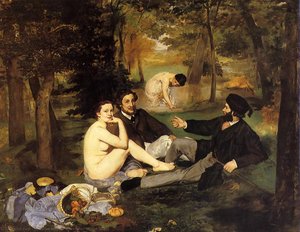
Las primeras obras maestras de Manet, el almuerzo en el césped (Le déjeuner sur l'herbe) (1863) y Olympia (1865), fueron radicales, desafiando las normas artísticas y provocando indignación entre los tradicionalistas. Estas obras provocadoras merecieron el aplauso de sus compañeros visionarios, sembrando las semillas del impresionismo. * el almuerzo en el césped (Le déjeuner sur l'herbe) (1863) - una pintura que provocó controversia tanto entre críticos como la academia de bellas artes. * Olympia (1865) - una obra que causó gran revuelo debido a su representación de una mujer desnuda blanca acompañada por una criada negra.museos y colecciones
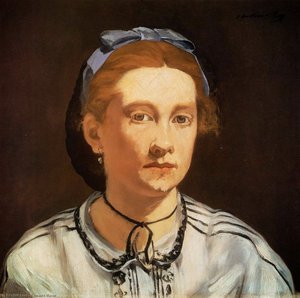
Las obras de Manet se pueden encontrar en varios museos de todo el mundo, incluyendo: * Musée d'Orsay (París, Francia) - hogar de una extensa colección de pinturas de Manet, incluyendo Olympia. * Museo de Bellas Artes (Boston, Estados Unidos) - presenta el retrato de Victorine Meurent, una obra notable en su obra.legado e influencia
El estilo innovador de Manet, caracterizado por pinceladas amplias y rápidas, iluminación de estudio y profundidad superficial, ha sido una gran influencia para los pintores futuros. Su legado se puede ver en las obras de numerosos artistas que han seguido sus pasos.- Impresionismo: su trabajo pionero en este estilo lo ha convertido en un nombre familiar entre los entusiastas del arte.
- Realismo: su rechazo de los enfoques realistas tradicionales allanó el camino para una nueva generación de artistas.
- Arte moderno: las contribuciones de Manet a la evolución del arte moderno son innegables, consolidando su lugar en los anales de la historia del arte.
lectura adicional y exploración
* Descubra más sobre la vida y obra de Édouard Manet en ArtsDot. * Explore la colección del Musée d'Orsay, que presenta una amplia gama de pinturas de Manet, incluyendo Olympia, en ArtsDot's página del museo.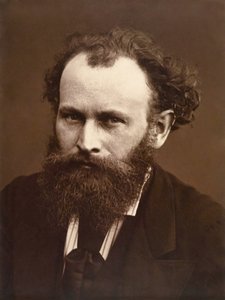
Édouard Manet
1832 - 1883 , Francia
Datos clave
- Artistas Influenciados:
- Claude Monet
- Pierre-Auguste Renoir
- Edgar Degas
- Artistas Que Influyeron:
- Thomas Couture
- Gustave Courbet
- Diego Velázquez
- Fecha De Muerte: 1883
- Fecha De Nacimiento: 23 de enero de 1832
- Lugar De Nacimiento: París, Francia
- Movimiento Artístico: Impresionismo, Realismo
- Nacionalidad: Francés
- Nombre Completo: Édouard Manet
- Obras Notables:
- Le Déjeuner sur l'herbe
- Olympia
- Madame Manet
- Un joven pelando una pera
Artículos relacionados
Édouard Manet: Las 25 Obras Maestras del Impresionismo para Decorar tu Hogar con Arte
Descubre las 25 obras maestras de Édouard Manet, el rebelde del impresionismo. Explora su historia, técnica y significado en cada cuadro famoso. Reproducciones de arte de museo para decorar tu hogar con estilo. ¡Explora la colección completa en ArtsDot.com!
Édouard Manet: Pioneering Modernism & Challenging Artistic Conventions
Explore the life & art of Édouard Manet, a pivotal figure bridging Realism and Impressionism. Discover his revolutionary techniques, controversial masterpieces like 'Olympia,' and lasting impact on modern art history.

The Enduring Legacy of Oil on Canvas: Technique, History & Aesthetic Impact
Explore the rich history & techniques of oil painting – from Renaissance masters to Impressionism. Discover pigments, layering methods, and why this timeless medium endures. Expert insights for artists & art enthusiasts.

The Enduring Power of Painting: A Historical & Contemporary Exploration of Form and Emotion
Explore the rich history & enduring techniques of oil painting with ArtsDot. Discover masterpieces, learn about art collecting, and find authentic handmade reproductions crafted by skilled artists.

El Óleo sobre Lienzo: Historia, Técnica y la Persistencia de un Medio Artístico Atemporal
Descubre la historia y técnica del óleo sobre lienzo. Explora reproducciones fieles hechas a mano, personalización artística y consejos de expertos con ArtsDot. ¡Colecciona arte con confianza!