A Vision of Florentine Elegance
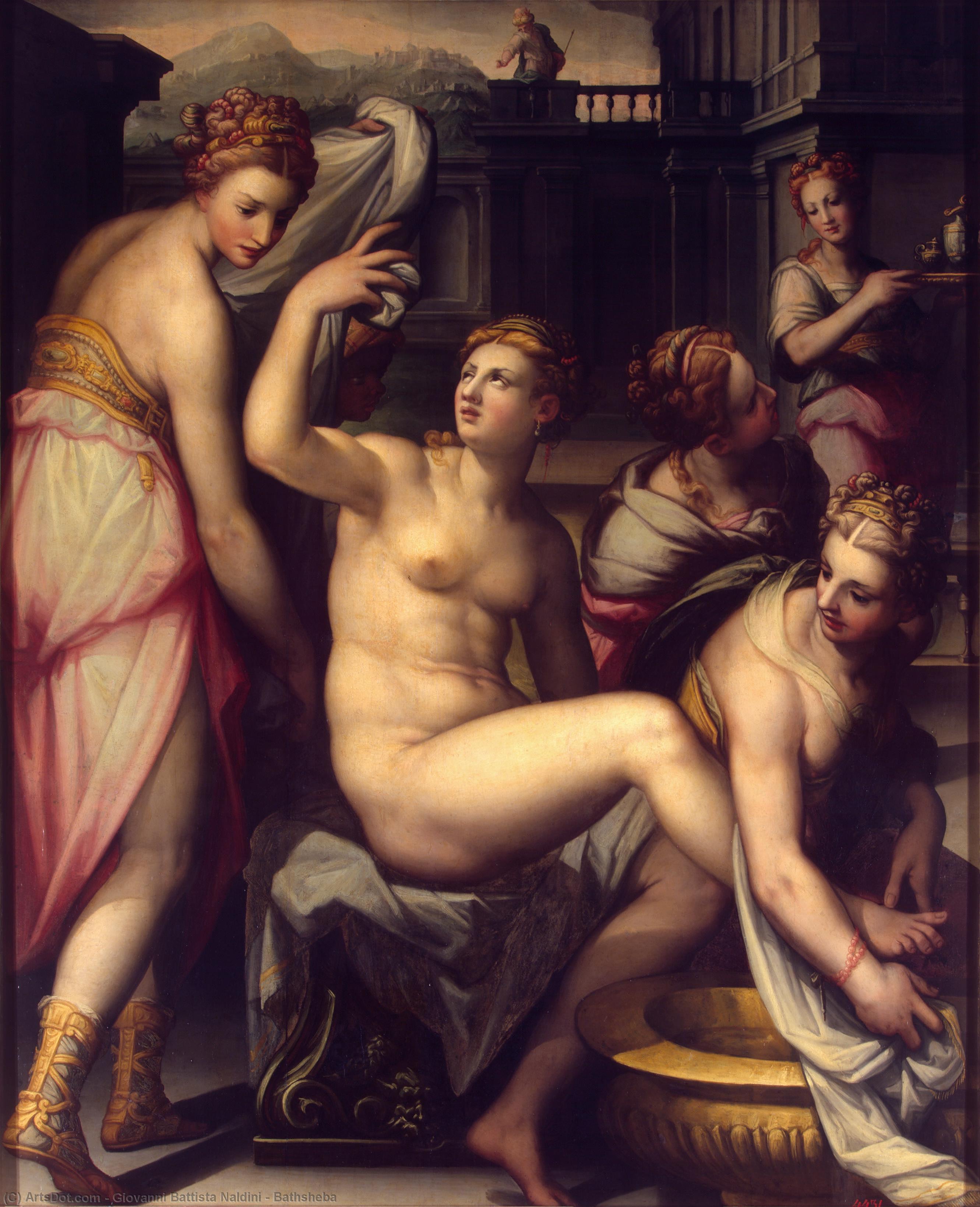
In the soft, flickering light of a late sixteenth-century chamber, Giovanni Battista Naldini captures a moment of profound intimacy and ritualistic grace. His masterpiece, Bathsheba, is not merely a depiction of a bath; it is a choreographed ballet of movement, texture, and human connection. The scene unfolds within a private sanctuary where five women are gathered, their lives momentarily suspended in the shared rhythm of grooming and care. As one woman sits poised in a chair, her companions surround her like celestial attendants, engaged in the delicate tasks of washing hair and brushing locks. This composition, far from being a static portrait, breathes with the vitality of a lived experience, inviting the viewer to step into a world where every gesture carries weight and every shadow tells a story.
The painting serves as a breathtaking window into the height of Florentine Mannerism. Naldistic technique, deeply rooted in the lineage of his mentor Pontormo, is evident in the sophisticated use of color and the intentional, almost lyrical, distortion of form. The artist employs a palette that dances between warmth and cool shadow, creating a sense of depth that pulls the eye through the crowded, yet harmonious, space. Notice how the drapery of the women's garments catches the light, adding a tactile dimension to the canvas that makes the silk and linen feel almost touchable. For the discerning collector or interior designer, this piece offers a rich tapestry of visual interest, where the interplay of light and shadow provides a sophisticated focal point for any grand salon or curated gallery space.
Symbolism and the Art of Mannerist Drama
Beyond its surface beauty, Bathsheba is steeped in the psychological complexity characteristic of Naldini’s era. The arrangement of the figures—the way they lean toward one another, the shared glances, and the communal focus on the central figure—suggests a narrative of vulnerability and strength. In the context of the biblical Bathsheba, the act of bathing often symbolizes purity, yet it also foreshadows the fateful encounter that would alter the course of history. Naldini masterfully balances this tension, using the domesticity of the scene to mask a deeper, more dramatic undercurrent. The presence of everyday objects, such as the bowl resting near the center, grounds the ethereal beauty of the women in a tangible reality, creating a bridge between the divine and the earthly.
To possess a reproduction of this work is to bring a piece of art history’s most transformative period into the modern home. The emotional impact of the painting lies in its ability to evoke nostalgia for an age of refined elegance and dramatic storytelling. It is a work that demands contemplation, rewarding the observer with new details upon every viewing—from the subtle musculature of a reaching arm to the intricate way a strand of hair falls. Whether used to anchor a room with classical authority or to add a layer of historical depth to a contemporary setting, this painting remains an enduring testament to the mastery of Giovanni Battista Naldini and the timeless allure of the Florentine tradition.