

 Ver en contexto
 Enviar
 Compartir
 Detalles

 Descargar
 Similares
 Radiografía
 Presentación de diapositivas
Bathsheba
 Oil
Oil- WallArt
- Mannerism
 1570
1570- Early Modern
 182.0 x 150.0 cm
 Museo del Hermitage
 Ver más
Reproducción al óleo hecha a mano
Óleo sobre lienzo pintado a mano en el tamaño y marco de su elección, realizado por encargo por nuestros artistas. ( Comprar impresión Comprar imagen)




P118B $10

P118H $10

P118W $10

P438Z $10

P508JH $12

P508YH $12

P805H $10

P805Z $10

P919BZ $10

P919G $10

P919XJ $10

P959ZH $10

P968JZ $12

W106C $8

W218G $10

W218JH $8

W218Y $10

W307PJ $10

W316G $10

W316PJ $8

W316Y $10

W398PJ $8

W4111J $10

W500HY $15

W500JH $15

W692G $12

W849H $8

W940BG $15

W953PJ $8




Elija entre nuestros tamaños predefinidos que respetan las proporciones originales de la obra.

Puede ingresar sus propias dimensiones para adaptarse a un marco o espacio específico. Si el tamaño seleccionado no coincide con las proporciones de la imagen original, recortaremos la obra o extenderemos la pintura con elementos adicionales pintados a mano. Se le enviará una maqueta digital para su aprobación antes de comenzar la producción.
Tenga en cuenta que la vista previa en pantalla no refleja el recorte o la extensión reales. Solo la maqueta mostrará con precisión la composición final.
Si bien existen tamaños personalizados, recomendamos seleccionar una dimensión de la lista predefinida para preservar las proporciones originales.
Tras realizar el pedido, el equipo de ArtsDot.com enviará un correo electrónico al cliente para solicitar instrucciones y proporcionarle una vista previa del boceto.
Envío a todo el mundo () en 3-4 semanas en lugar de las 5 semanas estándar. (1 septiembre). Sin comprometer la calidad.

Envío exprés gratuito a todo el mundo

Lienzo de lino de alta calidad

Seguro de envío total

Garantía de reembolso de impuestos aduaneros

Garantía de fidelidad cromática exacta

Política de devolución de 60 días (solo por defectos)

Garantía de devolución del 100% del dinero

Descuento por cantidad
 La opción de vidrio solo está disponible en tamaños inferiores a 110 cm.

Bathsheba
Técnica de reproducción
Dimensiones de la reproducción
-


Precio total final
$ 263
A Vision of Florentine Elegance
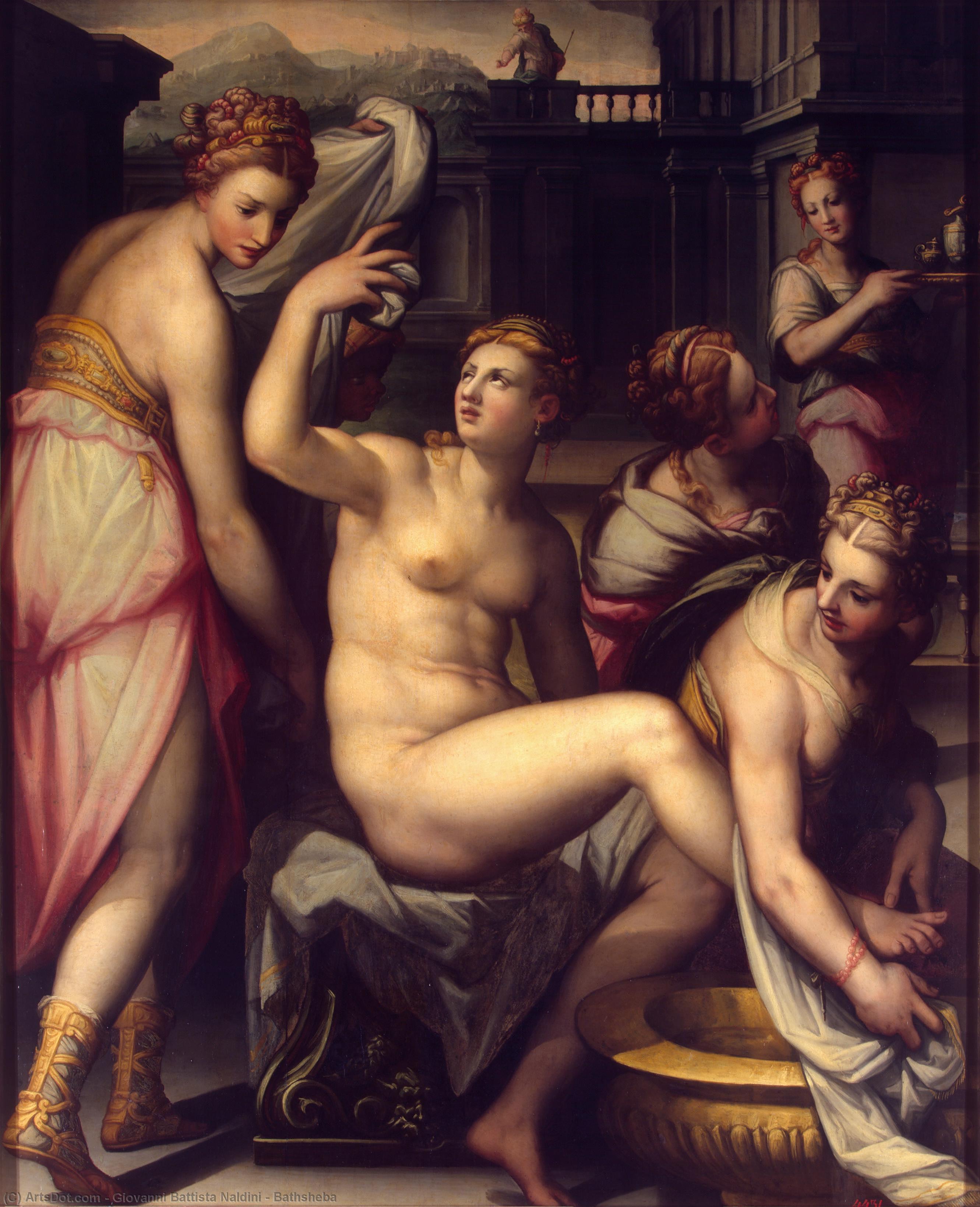
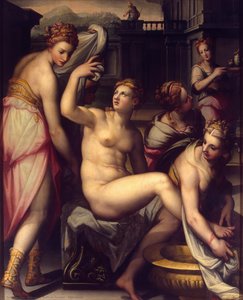
In the soft, flickering light of a late sixteenth-century chamber, Giovanni Battista Naldini captures a moment of profound intimacy and ritualistic grace. His masterpiece, Bathsheba, is not merely a depiction of a bath; it is a choreographed ballet of movement, texture, and human connection. The scene unfolds within a private sanctuary where five women are gathered, their lives momentarily suspended in the shared rhythm of grooming and care. As one woman sits poised in a chair, her companions surround her like celestial attendants, engaged in the delicate tasks of washing hair and brushing locks. This composition, far from being a static portrait, breathes with the vitality of a lived experience, inviting the viewer to step into a world where every gesture carries weight and every shadow tells a story.
The painting serves as a breathtaking window into the height of Florentine Mannerism. Naldistic technique, deeply rooted in the lineage of his mentor Pontormo, is evident in the sophisticated use of color and the intentional, almost lyrical, distortion of form. The artist employs a palette that dances between warmth and cool shadow, creating a sense of depth that pulls the eye through the crowded, yet harmonious, space. Notice how the drapery of the women's garments catches the light, adding a tactile dimension to the canvas that makes the silk and linen feel almost touchable. For the discerning collector or interior designer, this piece offers a rich tapestry of visual interest, where the interplay of light and shadow provides a sophisticated focal point for any grand salon or curated gallery space.
Symbolism and the Art of Mannerist Drama
Beyond its surface beauty, Bathsheba is steeped in the psychological complexity characteristic of Naldini’s era. The arrangement of the figures—the way they lean toward one another, the shared glances, and the communal focus on the central figure—suggests a narrative of vulnerability and strength. In the context of the biblical Bathsheba, the act of bathing often symbolizes purity, yet it also foreshadows the fateful encounter that would alter the course of history. Naldini masterfully balances this tension, using the domesticity of the scene to mask a deeper, more dramatic undercurrent. The presence of everyday objects, such as the bowl resting near the center, grounds the ethereal beauty of the women in a tangible reality, creating a bridge between the divine and the earthly.
To possess a reproduction of this work is to bring a piece of art history’s most transformative period into the modern home. The emotional impact of the painting lies in its ability to evoke nostalgia for an age of refined elegance and dramatic storytelling. It is a work that demands contemplation, rewarding the observer with new details upon every viewing—from the subtle musculature of a reaching arm to the intricate way a strand of hair falls. Whether used to anchor a room with classical authority or to add a layer of historical depth to a contemporary setting, this painting remains an enduring testament to the mastery of Giovanni Battista Naldini and the timeless allure of the Florentine tradition.
Obras relacionadas
Biografía del artista
The Florentine Master of Mannerist Drama
Giovanni Battista Naldini stands as a pivotal figure in the waning years of Florentine Mannerism, embodying its characteristic preoccupation with psychological complexity and dramatic visual impact. Born into a family of artists—his father was also a painter—Naldini’s formative artistic education occurred within the crucible of Jacopo Pontormo's studio. This early apprenticeship established him firmly within a prestigious stylistic lineage, instilling in him a profound understanding of Pontormo’s innovative use of color and spatial distortion. Such an education provided Naldini with invaluable experience in tackling ambitious projects and experimenting with groundbreaking techniques that would define his later mastery.
As his career progressed, Naldini's horizons expanded beyond the borders of Florence. A brief sojourn in Rome exposed him to the sophisticated artistic currents of the papal court, enriching his visual vocabulary with a sense of grandeur. This period of exploration was followed by a significant professional development through his partnership with Giorgio Vasari. Working alongside the legendary biographer and architect, Naldini contributed to monumental undertakings, most notably the frescoes within the Studiolo of Francesco I in the Palazzo Vecchio. In these works, such as the Allegory of Dreams and the Gathering of Ambergris, one can witness his ability to navigate the complex demands of large-scale decorative programs.
A Symphony of Color and Composition
Naldini's mature style is instantly recognizable for its densely populated canvases and a masterful manipulation of perspective. He represented a deliberate departure from the serene clarity championed by Andrea del Sarto, opting instead for a more restless and emotive approach. By skillfully blending Pontormo’s expressive dynamism with Vasari’s meticulous attention to detail, he created images that pulsate with emotional intensity while maintaining a remarkable degree of compositional precision. His paintings frequently depict allegorical narratives imbued with symbolic richness, reflecting the humanist ideals of his era and exploring profound themes of spirituality and morality.
One of his most breathtaking achievements is found in works like Bathsheba, where he captures a moment of profound intimacy and ritualistic grace. In this masterpiece, the scene unfolds within a private sanctuary where figures are gathered in a choreographed ballet of movement and texture. The artist employs a palette that dances between warmth and cool shadow, creating a sense of depth that pulls the viewer into a world where every gesture carries weight. Through his Naldistic technique, he achieves a sophisticated use of color and an intentional, almost lyrical, distortion of form that breathes with the vitality of a lived experience.
Legacy and Historical Significance
The historical significance of Giovanni Battista Naldini lies in his role as a bridge between the high tension of early Mannerism and the evolving tastes of the late sixteenth century. His ability to supply grand altarpieces to prestigious locations like Santa Maria Novella and Santa Croce underscores his status as a sought-after master of his time. His work, characterized by its crowded, energetic compositions and religious fervor, left an indelible mark on the Florentine school.
Beyond his individual triumphs, Naldini's influence extended to the next generation of painters. His training of artists such as Giovanni Balducci ensured that the nuances of his style—the interplay of light, the dramatic tension, and the complex figurative arrangements—would continue to resonate within the Italian art tradition long after his death in 1591.
giovanni battista naldini
1535 - 1591
Datos clave
- Artistic Movement Or Style: Late Mannerism
- Artists Who Influenced This Artist:
- Pontormo
- Vasari
- Date Of Birth: 1535
- Date Of Death: 1591
- Full Name: Giovanni Battista Naldini
- Nationality: Italian
- Notable Artworks:
- Dance of Salome
- Beheading of John the Baptists
- Place Of Birth: Florence, Italy
Artículos relacionados
The Enduring Muse: Women as Subject & Symbol in Art History
Explore the rich history of women in art – from iconic muses to groundbreaking artists. Discover feminist movements, global perspectives & reclaim female narratives with ArtsDot.
The Enduring Muse: Women as Subject & Symbol in Art History
Explore the rich history of women in art – from archetypal representations to contemporary voices challenging norms. Discover iconic artists & movements, and learn about reclaiming female narratives through painting and beyond.
Portrayals of Power & Perception: A Historical Survey of Women in Art
Explore the rich history of women in art – from iconic muses to groundbreaking artists. Discover feminist movements & reclaim female narratives with ArtsDot. Expert insights for discerning collectors.
Giovanni Giacometti: Sculpting Existentialism – A Study of Form, Space, and the Human Condition
Explore the profound artistic journey of Giovanni Giacometti, father to Alberto. Discover his unique transition from Surrealism to Existentialist sculpture and painting – a compelling study for elite collectors and art enthusiasts.
El Crepúsculo del Clasicismo Renacentista: Un Estudio del Estilo y la Afectación en el Manierismo
Descubre el Manierismo: un análisis profundo de este fascinante estilo artístico del Renacimiento tardío. Explora sus características, artistas clave y legado con ArtsDot.

