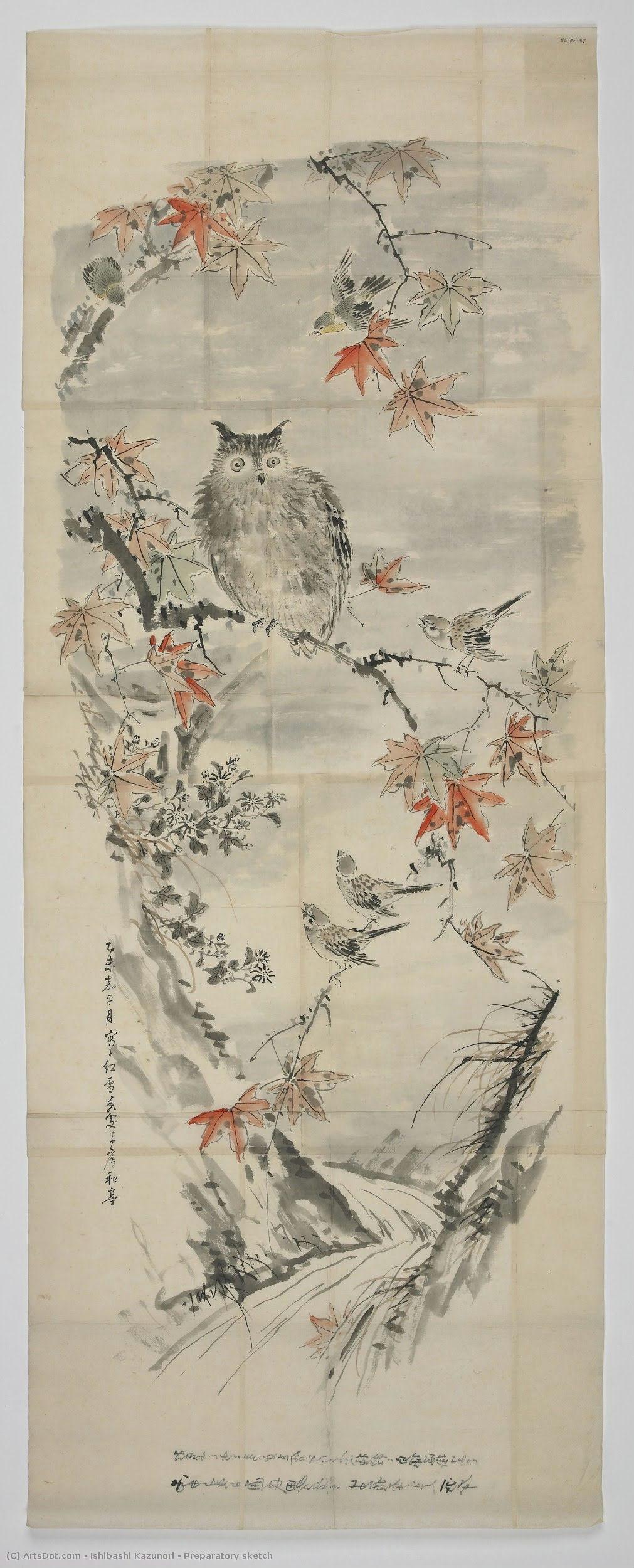
A delicate preparatory sketch by Ishibashi Kazunori featuring an owl amidst vibrant red flowers, showcasing a masterful blend of Meiji era Yōga and Nihonga styles that invites you to explore this timeless Japanese beauty.
Ishibashi Kazunori (1876-1928): Pintor japonés que fusiona el Yōga y el Nihonga. Famoso por 'Mujer Leyendo Poesía', sus retratos e innovadora forma de pintar influyeron a Kishida Ryūsei. ¡Explora su arte!
Descubre la rica historia y colecciones impresionantes de los Museos Nacionales de Liverpool! Arte, marinería, cultura e innovación te esperan en este destino cultural único.
Ishibashi Kazunori: Bridging Tradition and Innovation in Japanese Landscape Painting
Ishibashi Kazunori (石橋 和訓; 1876–1928) stands as a pivotal figure in the late Meiji era’s artistic landscape, embodying a remarkable synthesis of Western influences—particularly Yōga—with the enduring traditions of Nihonga. Born in Shimane Prefecture, he embarked on an ambitious journey to master both styles, ultimately achieving renown for his evocative depictions of nature and his masterful execution of ink wash techniques. His legacy continues to inspire artists today, cementing his place as one of Japan’s most celebrated painters.
Early Life and Artistic Influences
Kazunori's formative years were marked by a deep immersion in the teachings of Taki Katei, a prominent proponent of Yōga—the Western style of painting championed during Japan’s modernization process. This exposure instilled in him an appreciation for bold color palettes and expressive brushstrokes, characteristics distinctly absent from earlier Nihonga traditions. However, Kazunori recognized that true artistic advancement demanded embracing the richness of Japanese aesthetics, propelling him to study at the Royal Academy Schools in London where he honed his skills alongside fellow artists like Bernard Leach. This transatlantic exchange profoundly shaped his artistic vision.
A Unique Synthesis: Yōga and Nihonga Combined
Kazunori’s distinctive style emerged from a deliberate effort to reconcile these seemingly disparate influences. He skillfully navigated the complexities of both Yōga and Nihonga, creating artworks that transcended stylistic boundaries while retaining an unmistakable Japanese sensibility. Unlike many artists of his time who adhered rigidly to one tradition, Kazunori sought to capture the essence of nature—particularly birds and flowering branches—through a nuanced blend of Western color theory and Eastern compositional principles. This approach resulted in paintings imbued with both vibrancy and serenity, reflecting the profound connection between artist and subject.
“Woman Reading Poetry”: A Masterpiece Defined
Perhaps Kazunori’s most enduring achievement is “Woman Reading Poetry,” currently housed at the Shimane Art Museum. Considered his magnum opus by critics and scholars alike, this portrait exemplifies Kazunori's ability to convey emotion through subtle detail and masterful brushwork. The subject—a woman absorbed in literature—was modeled after an English actress, a deliberate choice that underscores Kazunori’s engagement with Western artistic conventions. Yet, the painting retains a distinctly Japanese aesthetic quality, achieved through meticulous observation of light and shadow and a restrained palette dominated by muted earth tones. It stands as a testament to Kazunori's unwavering commitment to capturing the human spirit within the framework of traditional Japanese art.
Symbolism and Emotional Resonance
The imagery employed in Kazunori’s paintings resonates with deep symbolic significance rooted in Buddhist cosmology and Confucian philosophy. Birds, frequently depicted in Nihonga landscapes, symbolize freedom, longevity, and auspicious fortune—themes central to Japanese cultural heritage. Similarly, flowering branches evoke notions of beauty, renewal, and the cyclical rhythms of nature. Kazunori's artworks invite contemplation on these profound concepts, fostering a sense of harmony between humanity and the natural world. They are not merely representations of scenery; they are expressions of inner reflection and spiritual aspiration—qualities that continue to captivate audiences worldwide.
Technique and Materials: The Art of Ink Wash
Kazunori’s technique exemplifies the mastery of ink wash painting (墨絵), a cornerstone of Nihonga tradition. He employed thin washes of ink layered upon one another with painstaking precision, utilizing brushes of varying sizes and shapes to achieve remarkable textural effects. Careful attention was paid to capturing subtle gradations of tone—a hallmark of Japanese landscape art—creating images that shimmer with luminosity and depth. The artist’s meticulous approach ensured that every stroke conveyed a sense of deliberate intention, reflecting the profound respect for nature inherent in Nihonga aesthetics. This dedication to craft elevates Kazunori's paintings beyond mere visual spectacle, transforming them into enduring symbols of artistic excellence.