The Morning Paper: A Study in Quiet Reflection
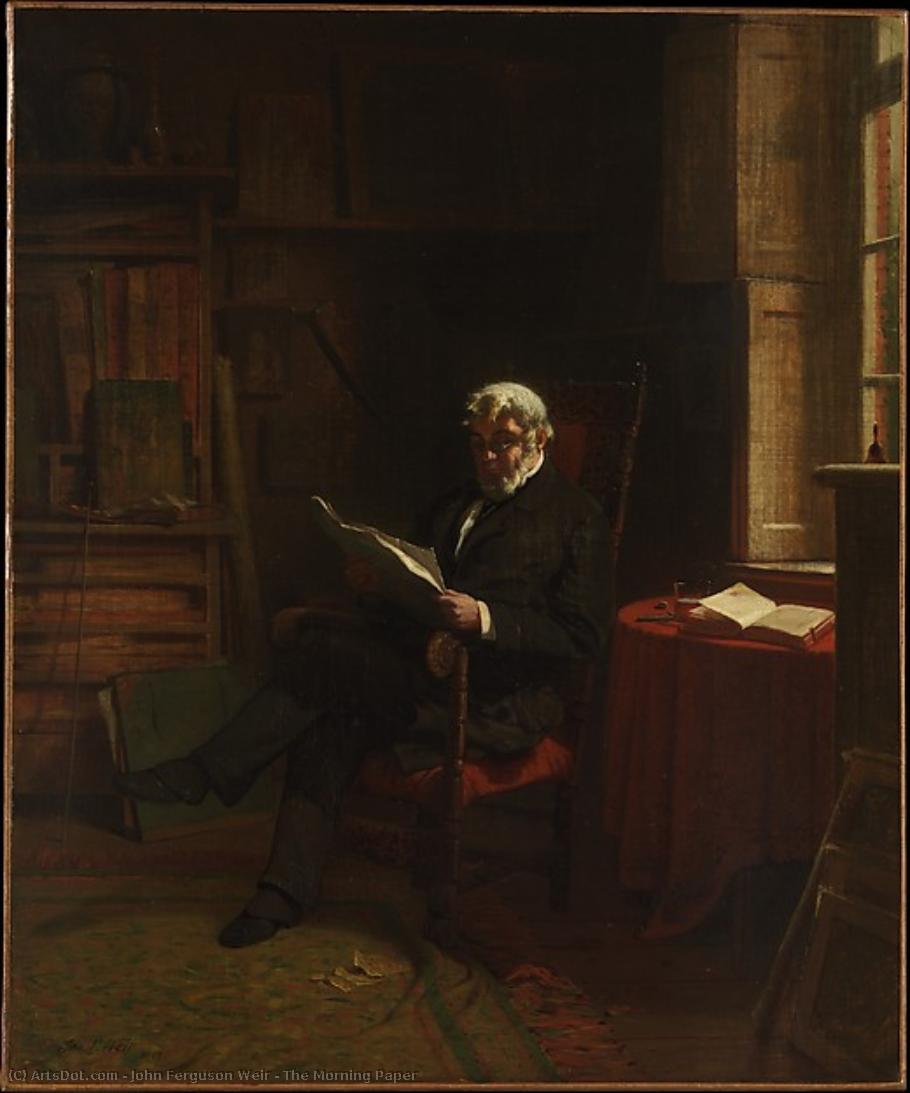
John Ferguson Weir’s “The Morning Paper” (1868) isn't merely a depiction of an elderly gentleman absorbed in reading; it’s a masterful distillation of the American spirit during its formative years. Painted against a backdrop of muted browns and grays—characteristic hues of Hudson River School landscapes—the artwork speaks volumes about Victorian sensibilities and the pursuit of intellectual solace amidst industrial progress. Weir, son of Robert Walter Weir, himself a celebrated educator at West Point and influential figure in shaping the artistic vision of future leaders, inherited a legacy of meticulous observation and expressive technique. This painting exemplifies his dedication to capturing both realism and psychological nuance.
- Composition & Perspective: The central figure dominates the canvas, seated comfortably in a chair positioned strategically at the corner of what appears to be a modestly furnished studio. Weir employs a flattened perspective—a stylistic choice common in academic art—creating an illusion of depth through layering objects and manipulating light. This deliberate framing draws the viewer’s gaze directly to the man's face and the open book, emphasizing the core subject matter: contemplation and knowledge acquisition.
- Technique & Materiality: Weir’s brushwork is remarkably detailed, particularly evident in rendering the textures of fabric—the chair upholstery and the gentleman’s waistcoat—and capturing subtle variations in skin tone. Oil paints on canvas provide a rich surface that allows for nuanced shading and blending, contributing to an overall sense of atmospheric realism. The artist skillfully utilizes light and shadow to sculpt form and convey emotion, mirroring the dramatic chiaroscuro favored by Rembrandt and Caravaggio.
- Symbolism & Context: Beyond its visual beauty, “The Morning Paper” resonates with deeper symbolic meanings. The newspaper symbolizes access to information and societal discourse—a crucial element of Victorian intellectual life—while the book represents wisdom and erudition. The solitary figure embodies introspection and quiet contemplation, reflecting a broader cultural preoccupation with moral virtue and spiritual growth during the Civil War era.
- Color Palette & Mood: Weir’s restrained color palette—dominated by earthy tones—creates an atmosphere of solemnity and tranquility. Ochres and browns evoke warmth and stability, juxtaposed against cooler grays that convey a sense of melancholy and thoughtfulness. The overall mood is one of quiet contemplation, inviting viewers to consider the profound beauty found in simple moments of intellectual engagement.
- Notable Reproduction: Currently housed at The Metropolitan Museum of Art (Accession Number 60.72), “The Morning Paper” stands as a testament to Weir’s artistic prowess and his contribution to American art history. Its enduring appeal lies not only in its technical brilliance but also in its ability to evoke empathy for the human condition—a timeless exploration of aging, learning, and inner peace.