The Heart of a French Landscape
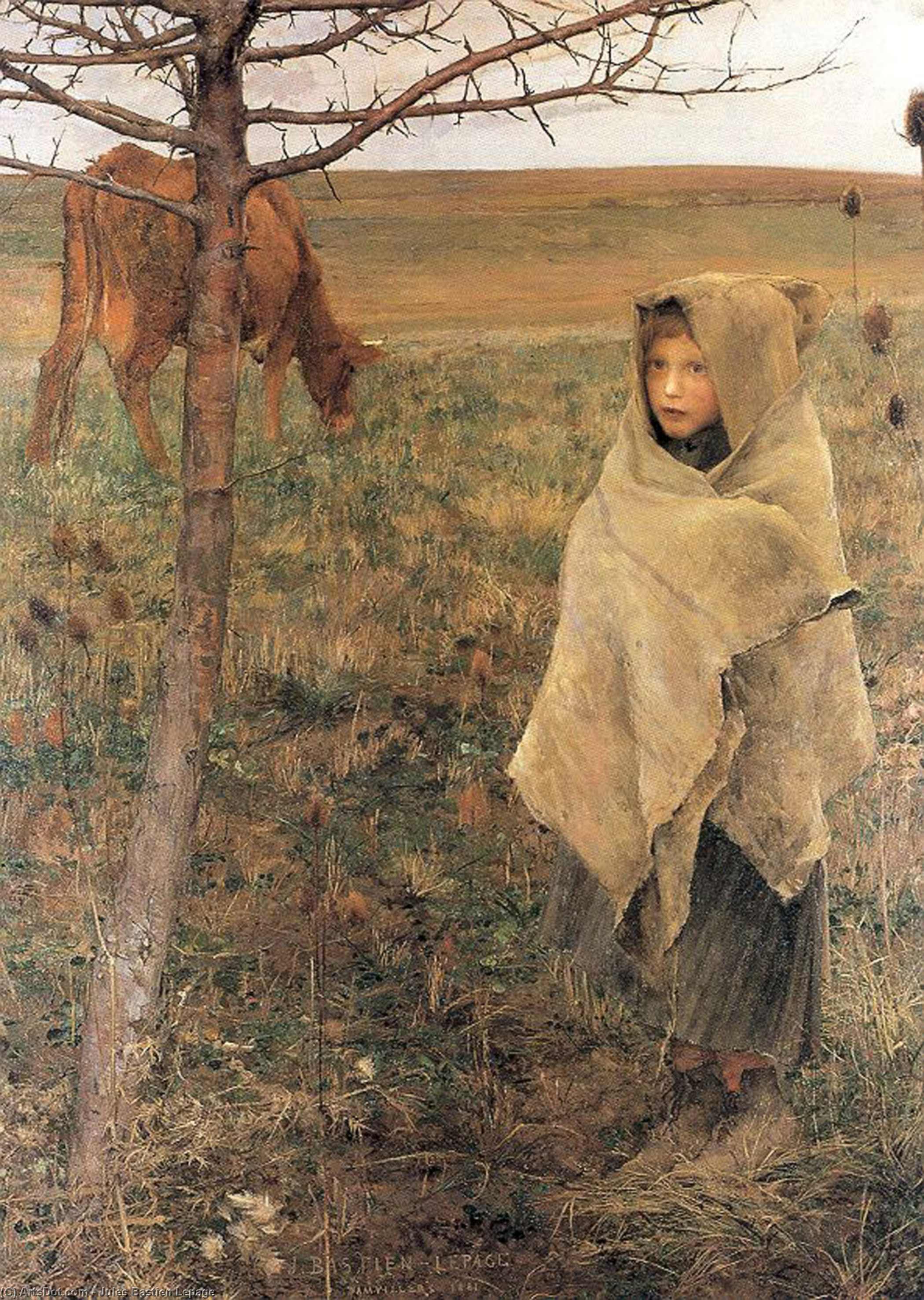
Jules Bastien-Lepage’s “Pauvre Fauvette” (Poor Little Wild Girl) isn't merely a depiction of a young peasant child; it’s a poignant distillation of rural life in 19th-century France, imbued with a quiet dignity and profound melancholy. Painted in 1881, the artwork captures a fleeting moment – a girl, no older than seven or eight, huddled beneath a skeletal tree against the backdrop of a bleak winter landscape. The scene unfolds within the artist’s native region of Damvillers, Meuse, imbuing it with an authenticity that transcends simple representation and speaks to a deeply felt connection between the artist and his roots.

Naturalism’s Gentle Hand
Bastien-Lepage, a pivotal figure bridging Realism and Impressionism, belonged to the burgeoning Naturalist movement. Unlike the often idealized portrayals of peasant life prevalent at the time, he sought to capture the raw reality of rural existence – its hardships, its beauty, and its inherent dignity. “Pauvre Fauvette” exemplifies this approach. The girl’s face, etched with a subtle sadness, is rendered with remarkable detail; every wrinkle, every shadow speaks volumes about her life. The artist masterfully employs a muted palette—ochres, browns, and greys—to evoke the austerity of the winter season, emphasizing the vulnerability of the subject within this harsh environment. Bastien-Lepage’s technique is characterized by loose, expressive brushstrokes that create a sense of immediacy and movement, while simultaneously maintaining a meticulous attention to detail in capturing the textures of the girl's ragged clothing and the weathered bark of the tree.
Symbolism Woven into the Scene
Beyond its immediate depiction, “Pauvre Fauvette” is rich with symbolic resonance. The girl’s simple shawl, offering scant protection from the cold, represents the precariousness of her existence and the lack of material comforts. The tree itself, stripped bare by winter, symbolizes loss and hardship. Yet, despite this bleak setting, the girl's gaze—directed towards an unseen point beyond the canvas—suggests a quiet resilience, a sense of observation and perhaps even hope. The presence of the cows in the background further reinforces the theme of rural life, highlighting the symbiotic relationship between humans and nature. The composition’s asymmetry – with the girl positioned slightly off-center – creates a dynamic tension that draws the viewer's eye and amplifies the emotional impact of the scene.
A Legacy of Emotional Truth
Jules Bastien-Lepage’s “Pauvre Fauvette” remains a powerful testament to his artistic vision and his commitment to portraying the human condition with honesty and empathy. It's a painting that invites contemplation, prompting viewers to consider the lives of those often overlooked by society. The work’s enduring appeal lies in its ability to evoke a deep sense of emotion—a mixture of sadness, compassion, and perhaps even admiration for the girl’s quiet dignity. Reproductions of this masterpiece offer an opportunity to bring this evocative scene into any interior space, serving as a reminder of the beauty and fragility of life in rural France and the enduring power of art to capture the essence of human experience.