A Glimpse into 17th-Century Dutch Society
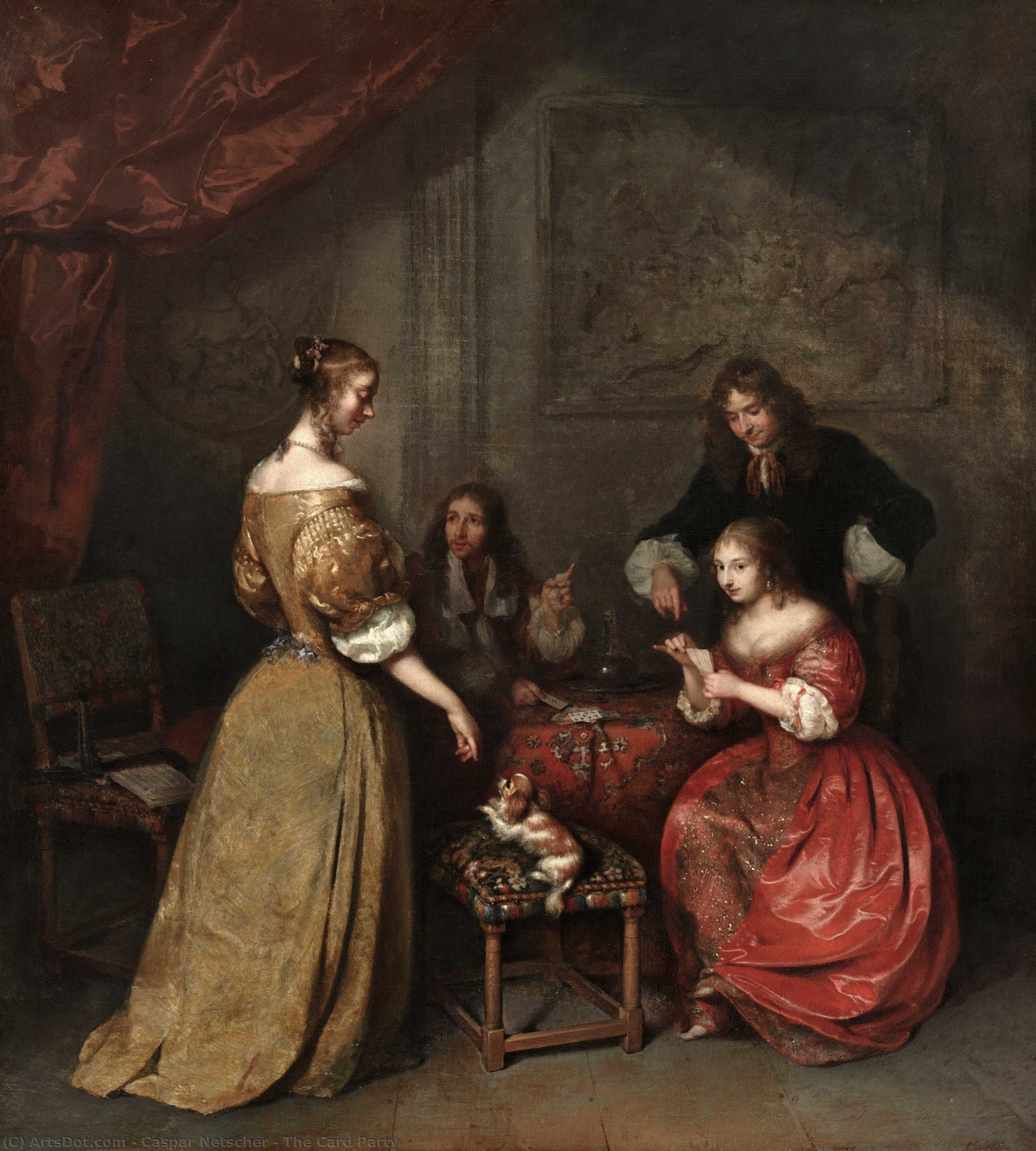
Caspar Netscher’s “The Card Party,” painted in 1665, isn't merely a depiction of a game; it’s a meticulously crafted window into the vibrant social life of the Dutch Golden Age. This oil on canvas work, measuring a modest 50 x 45 cm, transports us to a richly furnished room, brimming with the subtle pleasures and carefully constructed appearances of a prosperous household. Netscher, a master of capturing both the outward elegance and the underlying psychology of his subjects, has created an image that speaks volumes about wealth, status, and the rituals of social interaction during this period of remarkable artistic and economic flourishing.
The scene unfolds around a table laden with the trappings of leisure – overflowing wine glasses, delicate porcelain cups, and, most prominently, a collection of intricately patterned oriental rugs. These rugs weren’t simply decorative; they were symbols of status and trade, reflecting the Dutch Republic's extensive connections to the East. Their presence immediately establishes the scene’s affluence and hints at the family’s engagement with global commerce. The inclusion of such luxurious details underscores a key characteristic of Dutch art – a commitment to realism that extended beyond mere representation to encompass the social and economic realities of the time.
The Art of Netscher: Detail, Light, and Psychological Depth
Netscher’s technique is characterized by an almost obsessive attention to detail. Every fold in the fabric, every glint of light on a wine glass, every expression on the faces of the players is rendered with painstaking precision. This meticulousness isn't simply about accuracy; it’s a deliberate strategy to draw the viewer into the scene and invite them to contemplate the nuances of human interaction. The artist masterfully employs chiaroscuro – the dramatic contrast between light and shadow – to sculpt the figures, creating a sense of volume and depth that is remarkably lifelike.
Notice how Netscher uses light not just to illuminate the scene but also to guide our eye. The primary source of illumination appears to be coming from an unseen window, casting long shadows across the table and highlighting the faces of those engaged in the game. This strategic use of light creates a sense of intimacy and drama, drawing us into the heart of the gathering. Furthermore, Netscher’s brushwork is remarkably subtle, layering colors with incredible delicacy to achieve a luminous quality that is both captivating and deeply satisfying to the eye.
Symbolism and Social Commentary
The card game itself holds multiple layers of meaning. While ostensibly a pastime, it represents more than just casual entertainment. In 17th-century Dutch society, gambling was often associated with risk, fortune, and even deception. The women exchanging cards – particularly the central figure – are not simply participants in a game; they’re engaging in a subtle dance of social maneuvering, potentially testing each other's wit and assessing their worth within the confines of their social circle. The dog at the lower left corner adds a touch of domesticity and warmth to the scene, reminding us that even amidst the complexities of social interaction, there is always room for companionship.
Beyond the immediate depiction of a card game, “The Card Party” offers a valuable glimpse into the broader cultural context of the Dutch Golden Age. It reflects a society that valued both wealth and intellectual pursuits, where art flourished alongside commerce and innovation. Netscher’s masterpiece stands as a testament to this remarkable era – an era defined by its artistic brilliance, economic prosperity, and sophisticated social customs.
A Timeless Masterpiece
Currently residing in the Metropolitan Museum of Art in New York, “The Card Party” continues to captivate viewers with its exquisite detail, psychological depth, and evocative portrayal of a bygone era. Whether you’re an art enthusiast, a collector seeking a stunning addition to your collection, or simply someone who appreciates the beauty of masterful painting, this work offers a profound and rewarding experience.