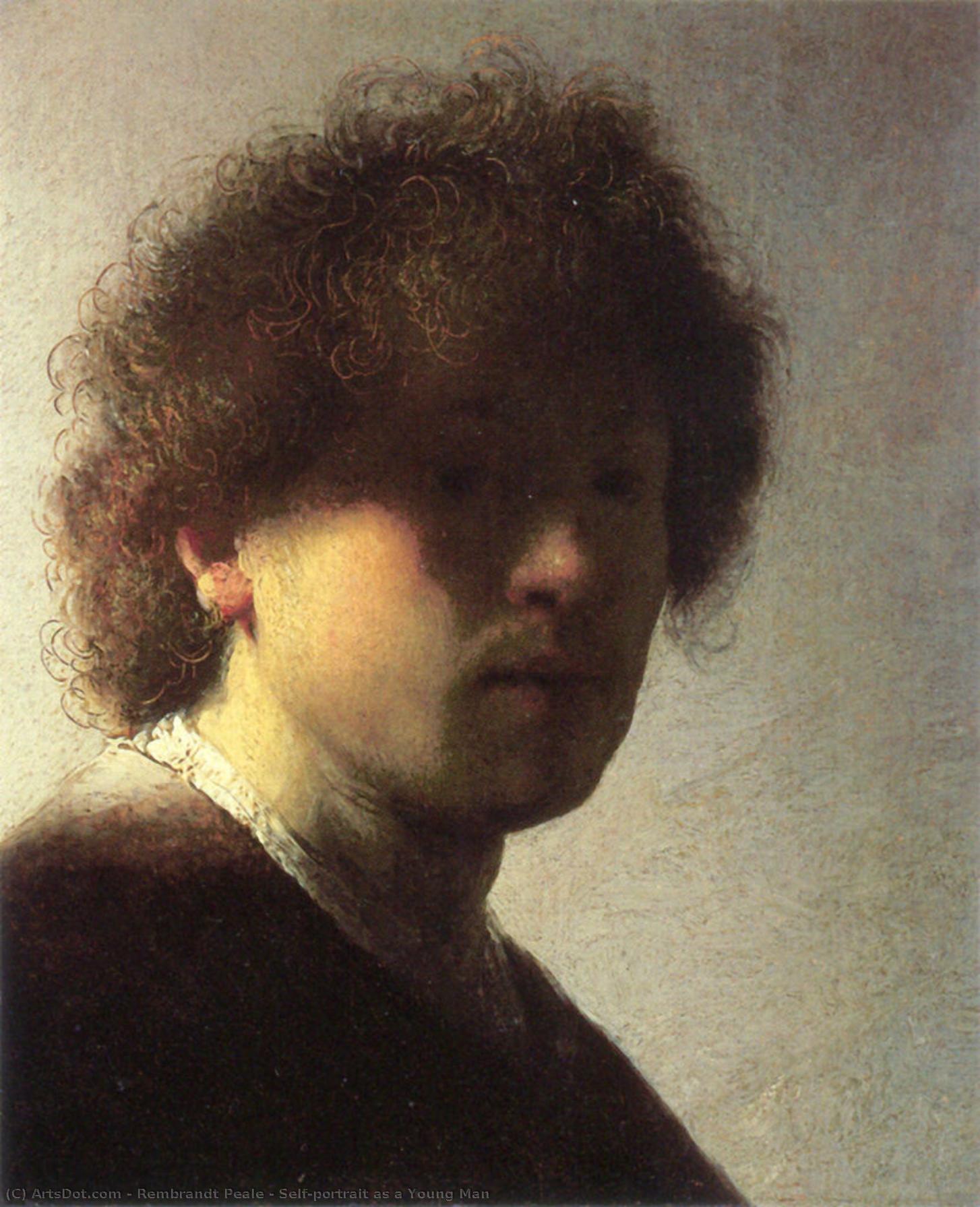
Explore Rembrandt Peale's captivating self-portrait as a young man (1628), capturing a contemplative gaze and subtle chair detail – a testament to his father’s influence and early artistic talent.
Descubre a Rembrandt Peale (1778-1860), artista neoclásico estadounidense famoso por retratos de Washington y Jefferson. ¡Explora su legado museístico y réplicas detalladas!
Rijksmuseum
(Amsterdam, Netherlands)
Descubre el Rijksmuseum de Ámsterdam: arte e historia holandesa en un impresionante edificio neorrenacentista. Admira obras maestras de Rembrandt, Vermeer y Van Gogh.
A Portrait Steeped in Tradition: Rembrandt Peale’s Self-Portrait as a Young Man
The canvas holds a gaze—a direct confrontation with the viewer—that speaks volumes about ambition, introspection, and the enduring legacy of artistic lineage. Rembrandt Peale's “Self-portrait as a Young Man,” completed in 1628, transcends mere likeness; it embodies the spirit of its time and stands as a testament to Charles Willson Peale’s vision for his son—a vision rooted in the profound influence of European artistic heritage. This striking depiction captures not just a young man's physical appearance but also an inner world brimming with intellectual curiosity and artistic aspiration.
Subject Matter and Composition
The portrait presents Rembrandt Peale himself, rendered with meticulous detail against a muted backdrop dominated by a chair—a seemingly simple element that serves as a powerful compositional device. The chair’s placement on the right side subtly directs the eye back to the central figure, creating a balanced visual rhythm. Peale's posture exudes confidence and composure; he sits upright, gazing intently at the viewer with an expression that blends seriousness and thoughtfulness. This gaze isn’t merely observational; it suggests a deliberate engagement—a desire to communicate something beyond the surface appearance. The artist’s hands rest calmly on his lap, hinting at artistic contemplation and conveying a sense of quiet dignity.
Style and Technique: Baroque Influence
Peale's style is undeniably informed by the Baroque aesthetic prevalent in Europe during his formative years. Characteristic of the era are dramatic chiaroscuro—the masterful manipulation of light and shadow—which sculpts Peale’s form with remarkable realism. Light illuminates his face and hands, highlighting their contours and creating a palpable sense of depth. The subtle gradations of tone contribute to an overall atmosphere of solemn grandeur, mirroring the artistic conventions favored by painters like Caravaggio and Rubens. Peale skillfully employs oil paint on canvas, layering thin glazes to achieve luminous color and textural richness—a technique that allows for nuanced rendering of skin tones and fabric textures.
Historical Context: The Enlightenment’s Artistic Roots
Painted during the burgeoning Enlightenment period, “Self-portrait as a Young Man” reflects the intellectual fervor of its time. The Enlightenment championed reason and observation, influencing artistic endeavors to prioritize accuracy and psychological insight. Peale's father, Charles Willson Peale, was instrumental in establishing the Philadelphia Museum—a pioneering institution dedicated to showcasing scientific specimens alongside artworks—demonstrating the era’s belief in art’s capacity to educate and inspire. This portrait isn’t simply a depiction of an individual; it represents a broader cultural movement striving for clarity and understanding.
Symbolism: The Chair as Reflection
The inclusion of the chair is more than just a compositional element; it carries symbolic weight. Traditionally, chairs have represented stability, authority, and contemplation—qualities that Peale wished to convey about himself. Its placement on the right side subtly draws attention away from the figure’s gaze, prompting viewers to consider his inner thoughts and aspirations alongside his outward appearance. The chair serves as a visual anchor, grounding Peale's presence within a framework of intellectual seriousness.
Emotional Impact: A Window into Artistic Soul
Ultimately, “Self-portrait as a Young Man” succeeds in capturing the essence of artistic ambition—the desire to portray oneself with honesty and conviction. Peale’s gaze invites contemplation, prompting viewers to consider not only his physical likeness but also his inner spirit. The painting's subdued palette and masterful chiaroscuro evoke a sense of quiet dignity and intellectual curiosity, resonating with audiences today who appreciate the profound beauty of artistic introspection. It remains an enduring emblem of artistic heritage and a captivating glimpse into the soul of a young man determined to leave his mark on the world.