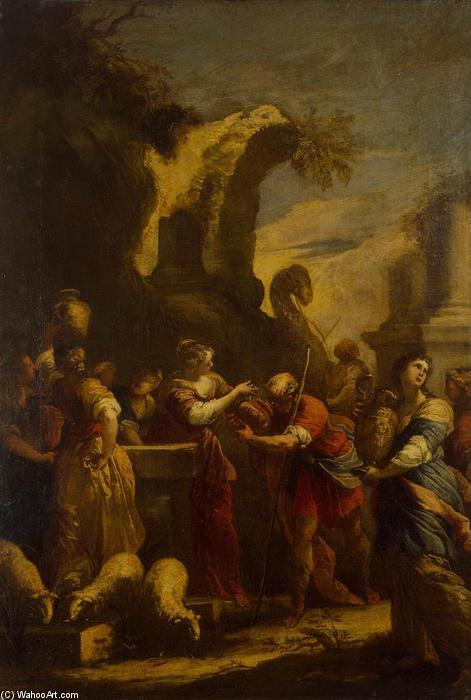
Explore Valerio Castello’s masterpiece, ‘Rebecca at the Well,’ depicting a biblical scene with vibrant colors and dynamic brushstrokes—a testament to Genoese Baroque artistry.
Descubre Valerio Castello: Pintor barroco genovés (1624-1659) reconocido por escenas épicas y composiciones dramáticas, influenciado por Tintoretto y Veronese. ¡Un artista esencial de la pintura liguria!
Descubre el Hermitage de San Petersburgo: ¡una colección artística mundial impresionante! Desde el Renacimiento hasta la modernidad, un viaje cultural inolvidable te espera en palacios históricos.
Valerio Castello’s Rebecca at the Well: A Genoa Baroque Masterpiece
A captivating portrait of Rebecca at the well—a poignant biblical tale recounted in Genesis—stands as testament to Valerio Castello's exceptional talent and artistic vision during Genoa’s illustrious Baroque period. Painted in 1644, this artwork transcends mere representation; it embodies the spirit of its time, reflecting the fervent religious piety and humanist ideals that characterized aristocratic patronage in Liguria.
The Artist and His Context
Valerio Castello (1624-1659) emerged from a lineage marked by both privilege and hardship—his father’s untimely demise leaving his family facing considerable financial difficulties. Despite these challenges, Castello relentlessly pursued artistic excellence, securing invaluable apprenticeships with Domenico Fiasella and Giovanni Andrea De Ferrari, experiences that solidified his foundational skills and exposed him to the burgeoning artistic dialogues of Italy. Genoa itself was experiencing a renaissance under the Medici influence, fostering an environment where artists like Castello could flourish, attracting commissions from wealthy families eager to adorn their homes with masterpieces reflecting moral virtue and intellectual sophistication.
Style and Technique: Baroque Dynamism
Castello’s Rebecca at the Well exemplifies the hallmarks of Genoese Baroque painting—characterized by dramatic lighting, dynamic composition, and expressive brushwork. The artist skillfully employs rapid, energetic strokes to convey movement and emotion, capturing the palpable tension between Rebecca and her companions as she approaches the wellspring of salvation. Castello's meticulous attention to detail is evident in the rendering of fabrics – particularly Rebecca’s scarlet gown—which commands immediate visual interest and contributes significantly to the painting’s overall impact. The artist utilizes chiaroscuro—the interplay of light and shadow—to sculpt form, creating a palpable sense of depth and realism that draws the viewer into the scene.
Symbolism: Faith and Redemption
The biblical narrative itself serves as a rich source of symbolism. Rebecca's journey to the well represents humanity’s quest for spiritual renewal and divine grace – themes central to Baroque art’s preoccupation with moral contemplation. The scarlet gown symbolizes purity and nobility, highlighting Rebecca’s virtue amidst the surrounding figures. Furthermore, the inclusion of sheep underscores the pastoral imagery prevalent in Baroque art, evoking notions of innocence, humility, and communion with God. Castello subtly communicates these profound ideas through visual cues, inviting viewers to engage in a contemplative dialogue about faith and redemption.
Emotional Impact: A Moment Frozen in Time
Looking upon Rebecca at the Well is akin to stepping back into a moment imbued with palpable emotion—a testament to Castello’s ability to capture not merely what he saw but also what he felt. The painting's luminous palette, combined with its masterful execution, evokes a sense of serenity and solemn reverence. It speaks to the enduring power of biblical storytelling and its capacity to inspire contemplation on fundamental human values. This artwork remains an unforgettable emblem of Genoa’s Baroque artistic heritage, continuing to captivate audiences centuries later with its beauty and profound spiritual resonance.