

 Ver en contexto
 Enviar
 Compartir
 Detalles

 Descargar
 Similares
 Radiografía
 Presentación de diapositivas
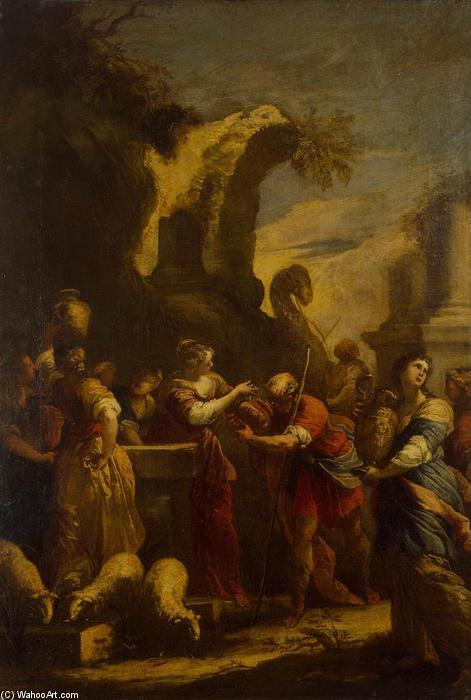
Rebecca at the Well
 Acrylic On Canvas
- WallArt
- Italian Baroque
 1644
1644 80.0 x 56.0 cm
 Museo del Hermitage
 Ver más
Reproducción al óleo hecha a mano
Óleo sobre lienzo pintado a mano en el tamaño y marco de su elección, realizado por encargo por nuestros artistas. ( Comprar impresión Comprar imagen)




P118B $10

P118H $10

P118W $10

P438Z $10

P508JH $12

P508YH $12

P805H $10

P805Z $10

P919BZ $10

P919G $10

P919XJ $10

P959ZH $10

P968JZ $12

W106C $8

W218G $10

W218JH $8

W218Y $10

W307PJ $10

W316G $10

W316PJ $8

W316Y $10

W398PJ $8

W4111J $10

W500HY $15

W500JH $15

W692G $12

W849H $8

W940BG $15

W953PJ $8




Elija entre nuestros tamaños predefinidos que respetan las proporciones originales de la obra.

Puede ingresar sus propias dimensiones para adaptarse a un marco o espacio específico. Si el tamaño seleccionado no coincide con las proporciones de la imagen original, recortaremos la obra o extenderemos la pintura con elementos adicionales pintados a mano. Se le enviará una maqueta digital para su aprobación antes de comenzar la producción.
Tenga en cuenta que la vista previa en pantalla no refleja el recorte o la extensión reales. Solo la maqueta mostrará con precisión la composición final.
Si bien existen tamaños personalizados, recomendamos seleccionar una dimensión de la lista predefinida para preservar las proporciones originales.
Tras realizar el pedido, el equipo de ArtsDot.com enviará un correo electrónico al cliente para solicitar instrucciones y proporcionarle una vista previa del boceto.
Envío a todo el mundo () en 3-4 semanas en lugar de las 5 semanas estándar. (27 agosto). Sin comprometer la calidad.

Envío exprés gratuito a todo el mundo

Lienzo de lino de alta calidad

Seguro de envío total

Garantía de reembolso de impuestos aduaneros

Garantía de fidelidad cromática exacta

Política de devolución de 60 días (solo por defectos)

Garantía de devolución del 100% del dinero

Descuento por cantidad
 La opción de vidrio solo está disponible en tamaños inferiores a 110 cm.

Rebecca at the Well
Técnica de reproducción
Dimensiones de la reproducción
-


Precio total final
$ 263
Descripción de la obra
Valerio Castello’s Rebecca at the Well: A Genoa Baroque Masterpiece
A captivating portrait of Rebecca at the well—a poignant biblical tale recounted in Genesis—stands as testament to Valerio Castello's exceptional talent and artistic vision during Genoa’s illustrious Baroque period. Painted in 1644, this artwork transcends mere representation; it embodies the spirit of its time, reflecting the fervent religious piety and humanist ideals that characterized aristocratic patronage in Liguria.The Artist and His Context
Valerio Castello (1624-1659) emerged from a lineage marked by both privilege and hardship—his father’s untimely demise leaving his family facing considerable financial difficulties. Despite these challenges, Castello relentlessly pursued artistic excellence, securing invaluable apprenticeships with Domenico Fiasella and Giovanni Andrea De Ferrari, experiences that solidified his foundational skills and exposed him to the burgeoning artistic dialogues of Italy. Genoa itself was experiencing a renaissance under the Medici influence, fostering an environment where artists like Castello could flourish, attracting commissions from wealthy families eager to adorn their homes with masterpieces reflecting moral virtue and intellectual sophistication.Style and Technique: Baroque Dynamism
Castello’s Rebecca at the Well exemplifies the hallmarks of Genoese Baroque painting—characterized by dramatic lighting, dynamic composition, and expressive brushwork. The artist skillfully employs rapid, energetic strokes to convey movement and emotion, capturing the palpable tension between Rebecca and her companions as she approaches the wellspring of salvation. Castello's meticulous attention to detail is evident in the rendering of fabrics – particularly Rebecca’s scarlet gown—which commands immediate visual interest and contributes significantly to the painting’s overall impact. The artist utilizes chiaroscuro—the interplay of light and shadow—to sculpt form, creating a palpable sense of depth and realism that draws the viewer into the scene.Symbolism: Faith and Redemption
The biblical narrative itself serves as a rich source of symbolism. Rebecca's journey to the well represents humanity’s quest for spiritual renewal and divine grace – themes central to Baroque art’s preoccupation with moral contemplation. The scarlet gown symbolizes purity and nobility, highlighting Rebecca’s virtue amidst the surrounding figures. Furthermore, the inclusion of sheep underscores the pastoral imagery prevalent in Baroque art, evoking notions of innocence, humility, and communion with God. Castello subtly communicates these profound ideas through visual cues, inviting viewers to engage in a contemplative dialogue about faith and redemption.Emotional Impact: A Moment Frozen in Time
Looking upon Rebecca at the Well is akin to stepping back into a moment imbued with palpable emotion—a testament to Castello’s ability to capture not merely what he saw but also what he felt. The painting's luminous palette, combined with its masterful execution, evokes a sense of serenity and solemn reverence. It speaks to the enduring power of biblical storytelling and its capacity to inspire contemplation on fundamental human values. This artwork remains an unforgettable emblem of Genoa’s Baroque artistic heritage, continuing to captivate audiences centuries later with its beauty and profound spiritual resonance.Obras relacionadas

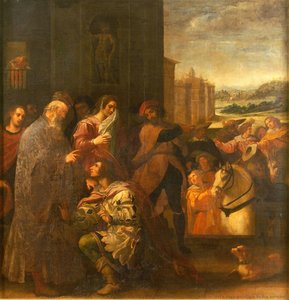
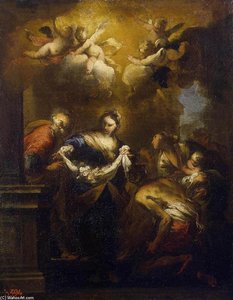
Biografía del artista
Valerio Castello: A Genoa Baroque Pioneer
Valerio Castello (1624-1659) stands as a singular figure in the artistic landscape of Genoa and Liguria during the Baroque period—a testament to ambition born from circumstance and nurtured by patronage. Born into a noble family grappling with financial hardship following his father’s untimely death, Castello's formative years instilled within him an appreciation for discerning taste and artistic aspiration—qualities that would irrevocably shape his career trajectory. Unlike many artists of his time destined for scholarly pursuits, Castello possessed a natural inclination towards drawing, fostered by the encouragement of influential patrons who recognized his talent and secured him an apprenticeship with Domenico Fiasella and later Giovanni Andrea De Ferrari – experiences that honed his technical skills and exposed him to the artistic currents circulating throughout Italy. His early training instilled in him a meticulous attention to detail and a profound understanding of perspective—skills he would skillfully employ throughout his prolific output. Castello’s journey to Milan and Parma between 1640 and 1645 proved pivotal, immersing him in the vibrant atmosphere of Venetian art and fostering admiration for Camillo Procaccini's dramatic style. This exposure fueled his desire for innovation and propelled him towards exploring new artistic avenues—a characteristic that distinguishes him from many of his contemporaries who adhered rigidly to established conventions. He sought inspiration from Tintoretto’s theatrical dynamism and Veronese’s opulent grandeur, blending these influences into a distinctive visual language. Castello's talent shone particularly brightly in depicting battle scenes—a genre favored by artists across Europe—demonstrating a masterful command of composition, perspective, and expressive brushwork. His monumental frescoes adorning the basilica della santissima annunziata del vastato in Genoa stand as enduring symbols of Genoese Baroque artistry, alongside collaborative projects with Andrea Sghizzi on the Palazzo Balbi – testament to his reputation as a skilled artist sought after by prominent commissions. These works exemplify Castello’s ability to convey emotion and grandeur simultaneously, capturing the fervor and drama inherent in historical narratives. Castello's artistic vision was characterized by a synthesis of influences, notably Tintoretto’s theatrical dynamism and Veronese’s opulent grandeur. He captivated young Domenico Piola, who regarded Castello as an exemplar of Baroque artistry—a student whose own artistic endeavors would later reflect Castello’s profound impact on Ligurian painting. Furthermore, he acknowledged the influence of Antony van Dyck, whose refined portraiture served as a model for artists striving to achieve stylistic excellence during his era. Castello's pupils included Bartolomeo Biscaino, Giovanni Paolo Cervetto, and Stefano Magnasco – individuals who carried forward his artistic legacy and contributed to the flourishing artistic environment of Genoa. Castello’s contribution to Genoa’s artistic heritage solidified his place as one of the foremost painters of his time—a figure whose dramatic compositions and masterful technique continue to resonate with art historians today. His legacy endures not merely in the surviving artworks but also in the inspiration he instilled within subsequent generations of artists, ensuring that Valerio Castello's name would forever be associated with the grandeur and innovation of Genoese Baroque painting.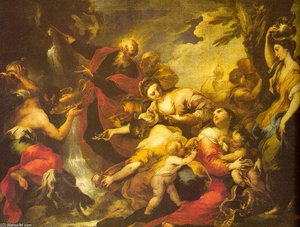
Valerio Castello
1624 - 1659 , Italia
Datos clave
- Artistic Movement Or Style: Baroque
- Artists Who Influenced This Artist:
- Tintoretto
- Veronese
- Date Of Birth: 1624 Genoa Italy
- Date Of Death: 1659
- Full Name: Valerio Castello
- Nationality: Italian
- Notable Artworks:
- Miracle of Saint Zita
- Sacra famiglia e angeli
- The Adoration of the Magi
- Place Of Birth: Genoa Italy
Artículos relacionados

Drama Barroca: Llevando la Grandeza y la Emoción a los Interiores Contemporáneos
Descubre cómo el drama y la grandeza del arte barroco pueden transformar tus interiores. Guía experta, inspiración y reproducciones de alta calidad en .

The Dramatic Flourish: Exploring the Baroque Movement's Enduring Legacy in Art History
Explore the dramatic world of Baroque art! Discover iconic artists like Caravaggio & Rubens, defining techniques, and its lasting impact on art history. Expert insights for collectors & enthusiasts at ArtsDot.

Barroco Sublime: 10 Obras Maestras que Definieron una Época |
Descubre las 10 obras maestras del Barroco que marcaron una época. Caravaggio, Bernini y Velázquez cobran vida en . Reproducciones de arte de calidad museo para decorar tu hogar con elegancia. ¡Explora la colección online!

The Visceral Stage: Exploring Dramatic Narratives & Emotional Intensity in Baroque Art
Explore the dramatic world of Baroque art! Discover iconic masters like Caravaggio & Rembrandt, their techniques, and the movement's lasting impact. Expert insights for collectors & enthusiasts at ArtsDot.
Theatricality & Triumph: Baroque Drama in Painting & Sculpture
Explore the dramatic world of Baroque art! Discover its history, defining characteristics, & lasting influence on painting & sculpture. Expert insights into Caravaggio, Zurbarán, and Bernini – plus high-quality reproductions at ArtsDot.

