

 Ver en contexto
 Enviar
 Compartir
 Detalles

 Descargar
 Similares
 Radiografía
 Presentación de diapositivas
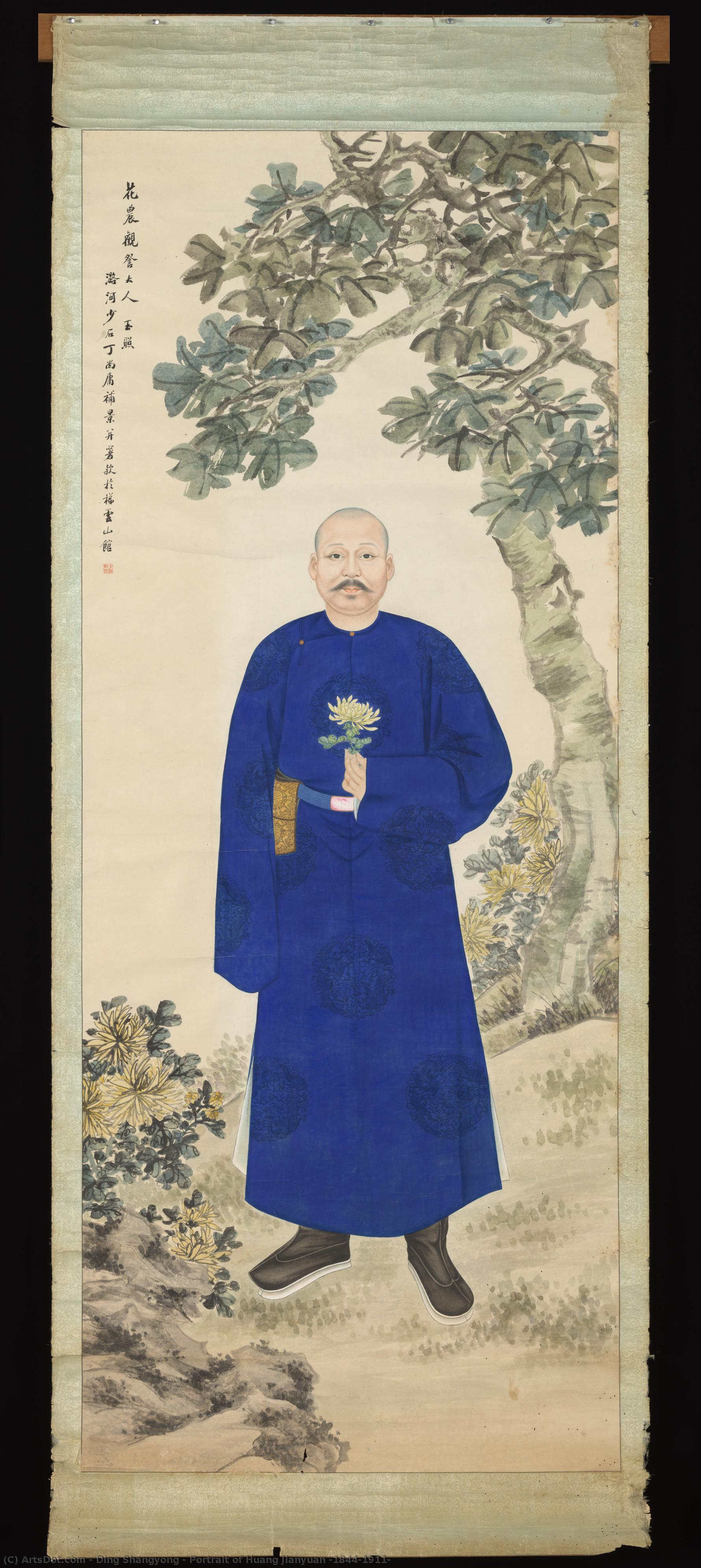
Portrait of Huang Jianyuan (1844–1911)
 130.0 x 92.0 cm
 Ver más
Reproducción al óleo hecha a mano
Óleo sobre lienzo pintado a mano en el tamaño y marco de su elección, realizado por encargo por nuestros artistas. ( Comprar impresión Comprar imagen)




































Elija entre nuestros tamaños predefinidos que respetan las proporciones originales de la obra.

Puede ingresar sus propias dimensiones para adaptarse a un marco o espacio específico. Si el tamaño seleccionado no coincide con las proporciones de la imagen original, recortaremos la obra o extenderemos la pintura con elementos adicionales pintados a mano. Se le enviará una maqueta digital para su aprobación antes de comenzar la producción.
Tenga en cuenta que la vista previa en pantalla no refleja el recorte o la extensión reales. Solo la maqueta mostrará con precisión la composición final.
Si bien existen tamaños personalizados, recomendamos seleccionar una dimensión de la lista predefinida para preservar las proporciones originales.
Tras realizar el pedido, el equipo de ArtsDot.com enviará un correo electrónico al cliente para solicitar instrucciones y proporcionarle una vista previa del boceto.
Envío a todo el mundo () en 3-4 semanas en lugar de las 5 semanas estándar. (5 septiembre). Sin comprometer la calidad.

Envío exprés gratuito a todo el mundo

Lienzo de lino de alta calidad

Seguro de envío total

Garantía de reembolso de impuestos aduaneros

Garantía de fidelidad cromática exacta

Política de devolución de 60 días (solo por defectos)

Garantía de devolución del 100% del dinero

Descuento por cantidad
 La opción de vidrio solo está disponible en tamaños inferiores a 110 cm.

Portrait of Huang Jianyuan (1844–1911)
Técnica de reproducción
Dimensiones de la reproducción
-


Precio total final
$ 263
Obras relacionadas









Biografía del artista
Ding Yanyong: Bridging East and West Through Innovative Brushstrokes
Ding Yanyong (丁衍鏞), born April 15, 1902, in Maoming County, Guangdong Province, China, stands as a pivotal figure in the history of Chinese art—a painter who dared to synthesize traditional techniques with Western modernist sensibilities. Often hailed as “Matisse of the East” and “Bada Shanren of Modern Times,” Ding’s legacy extends far beyond his prolific output; he championed the revival of ancient Chinese painting while simultaneously embracing the dynamism of European artistic movements, establishing him as a true pioneer of his era.Early Life and Artistic Formation
Ding’s upbringing instilled in him an appreciation for aesthetics from a young age. Following his father's guidance, he pursued formal education at Maoming County Middle School, laying the groundwork for his future artistic endeavors. Recognizing his innate talent, Ding embarked on a transformative journey to Japan in 1920, enrolling in the prestigious Tokyo Fine Arts School—a decision that would profoundly shape his artistic trajectory. There, amidst the burgeoning influence of Impressionism and Fauvism, he honed his skills under Wada Eisaku, mastering Western oil painting techniques while simultaneously absorbing the spirit of Japanese art culture. This formative period cemented his conviction that artistic innovation demanded engagement with diverse traditions. He studied diligently under Wada Eisaku, immersing himself in the stylistic precepts of Impressionism and Fauvist painters—artists who prioritized capturing fleeting moments of light and color—a departure from the academic conventions prevalent at the time.The Rise of Modern Chinese Art
Returning to Shanghai in 1926, Ding joined forces with Chen Baoyi and Hong Ye to establish the Chinese Art Association—a bold initiative aimed at disseminating Western art principles within China. He quickly ascended to positions of influence at Zhonghua University of Fine Arts, where he served as Chair Professor and spearheaded the creation of a graduate school, fostering generations of artists dedicated to preserving and advancing Chinese artistic heritage. During this time, Ding’s stylistic evolution mirrored broader trends in the art world—moving away from strict realism toward expressive linear styles inspired by Bada Shanren, the celebrated seventeenth-century landscape painter who championed simplicity and profound observation. He tirelessly advocated for the integration of Western artistic concepts into Chinese painting practice, fostering a dialogue between tradition and innovation that continues to resonate today.Influences and Artistic Style
Ding Yanyong's artistic vision was deeply rooted in the traditions of literati painting—a genre characterized by meticulous brushwork, subtle tonal variations, and a focus on capturing the essence of nature. He drew inspiration from Zhu Xi and Shi Tao, masters of the Ming Dynasty who epitomized the spirit of contemplative artistry. Furthermore, Ding’s fascination with Bada Shanren profoundly impacted his oeuvre, prompting him to explore connections between archaic seals and modern Western art. His paintings—particularly depictions of flowers and birds—were imbued with a distinctive naïveté and expressive power—a testament to his unwavering commitment to conveying emotion through restrained technique. Notably, he skillfully blended oil paints with traditional ink wash methods, achieving remarkable textural depth and rhythmic cadence. He meticulously studied the techniques employed by Bada Shanren—renowned for his serene landscapes and masterful use of brushstrokes—incorporating elements of this style into his own compositions.Legacy and Recognition
Ding Yanyong’s artistic achievements garnered international acclaim throughout his lifetime. Exhibitions showcasing his work spanned continents, cementing his reputation as a visionary artist who bridged East and West. His paintings are held in museums worldwide and continue to inspire artists today. Following his death in 1978, Ding Yanyong Memorial exhibitions were organized in Hong Kong and Taipei—a poignant celebration of his enduring contribution to Chinese art history. His influence extends beyond the realm of painting; he established the “Ding Yanyong Academic Achievement Award” and “Ding Yanyong Art Award,” nurturing artistic talent and furthering scholarly research into Chinese art traditions. Ding Shangyong’s work remains a beacon of innovation, demonstrating that artistic excellence can flourish at the intersection of cultural heritage and contemporary experimentation. His enduring legacy serves as an inspiration for artists striving to honor tradition while embracing new perspectives—a testament to his profound understanding of both Eastern and Western artistic ideals.
ding shangyong
1902 - 1978 , China
Datos clave
- Artistic Movement Or Style: Modern Chinese Art; Matisse of the East
- Artists Or Movements Influenced By This Artist: ['Bada Shanren']
- Artists Who Influenced This Artist:
- Matisse
- Picasso
- Date Of Birth: April 15, 1902
- Full Name: Ding Shangyong
- Nationality: China
- Notable Artworks:
- Portrait of Huang Jianyuan
- Crane in the Wait for Flight
- Place Of Birth: Guangzhou, China

