 Ver en contexto
 Enviar
 Compartir
 Detalles

 Descargar
 Similares
 Radiografía
 Presentación de diapositivas
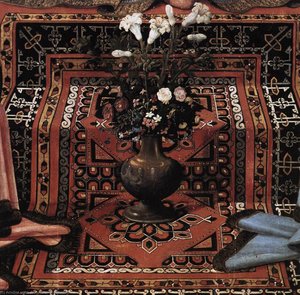
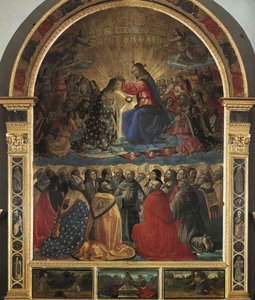
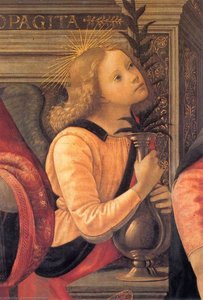
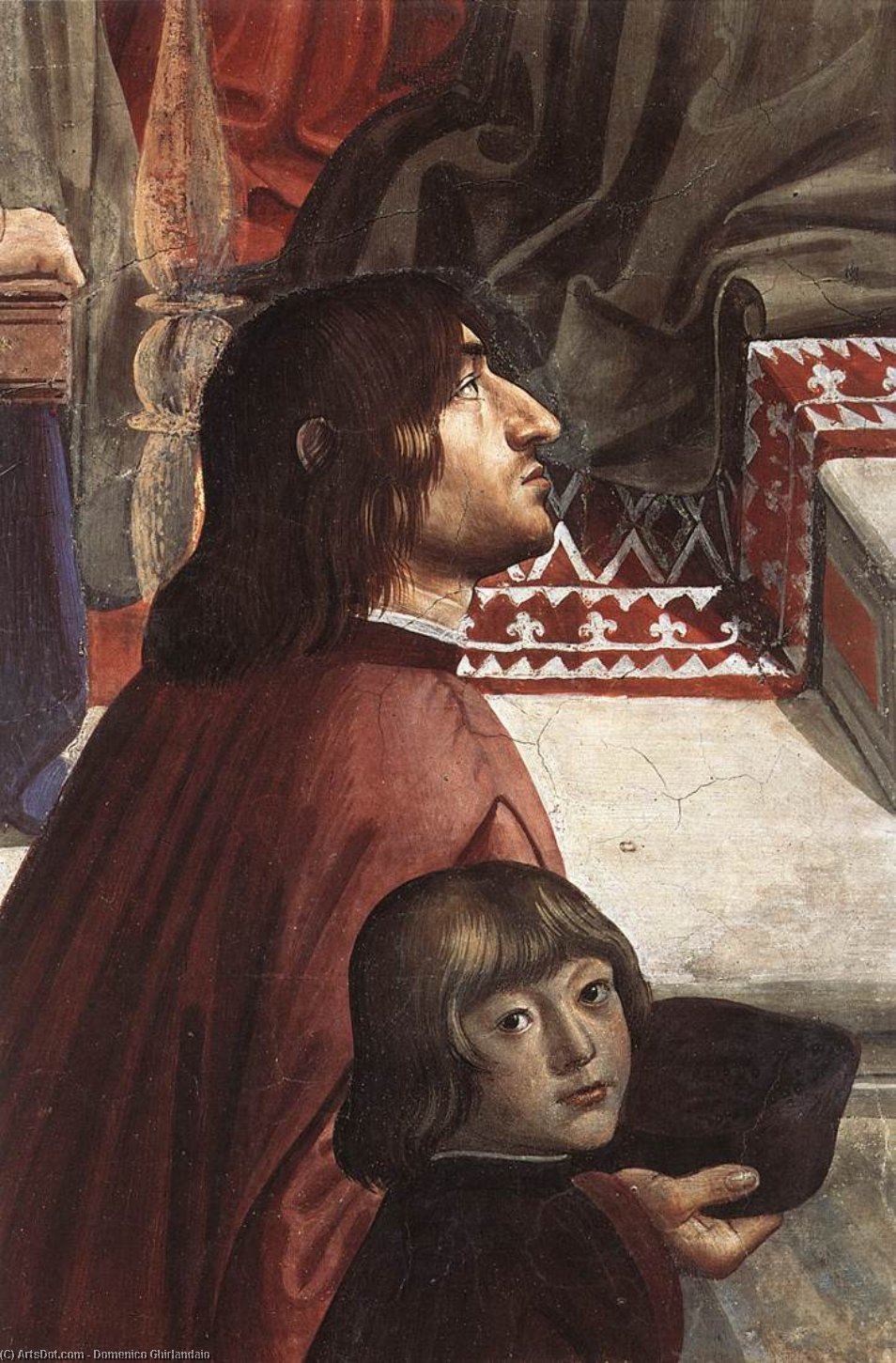
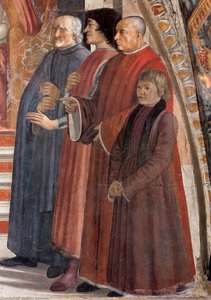
Confirmation of the Rule (detail)


 Ver más
Reproducción al óleo hecha a mano
Óleo sobre lienzo pintado a mano en el tamaño y marco de su elección, realizado por encargo por nuestros artistas. ( Comprar impresión Comprar imagen)




P118B $10

P118H $10

P118W $10

P438Z $10

P508JH $12

P508YH $12

P805H $10

P805Z $10

P919BZ $10

P919G $10

P919XJ $10

P959ZH $10

P968JZ $12

W106C $8

W218G $10

W218JH $8

W218Y $10

W307PJ $10

W316G $10

W316PJ $8

W316Y $10

W398PJ $8

W4111J $10

W500HY $15

W500JH $15

W692G $12

W849H $8

W940BG $15

W953PJ $8




Elija entre nuestros tamaños predefinidos que respetan las proporciones originales de la obra.

Puede ingresar sus propias dimensiones para adaptarse a un marco o espacio específico. Si el tamaño seleccionado no coincide con las proporciones de la imagen original, recortaremos la obra o extenderemos la pintura con elementos adicionales pintados a mano. Se le enviará una maqueta digital para su aprobación antes de comenzar la producción.
Tenga en cuenta que la vista previa en pantalla no refleja el recorte o la extensión reales. Solo la maqueta mostrará con precisión la composición final.
Si bien existen tamaños personalizados, recomendamos seleccionar una dimensión de la lista predefinida para preservar las proporciones originales.
Tras realizar el pedido, el equipo de ArtsDot.com enviará un correo electrónico al cliente para solicitar instrucciones y proporcionarle una vista previa del boceto.
Envío a todo el mundo () en 3-4 semanas en lugar de las 5 semanas estándar. (27 agosto). Sin comprometer la calidad.

Envío exprés gratuito a todo el mundo

Lienzo de lino de alta calidad

Seguro de envío total

Garantía de reembolso de impuestos aduaneros

Garantía de fidelidad cromática exacta

Política de devolución de 60 días (solo por defectos)

Garantía de devolución del 100% del dinero

Descuento por cantidad
 La opción de vidrio solo está disponible en tamaños inferiores a 110 cm.

Confirmation of the Rule (detail)
Técnica de reproducción
Dimensiones de la reproducción
-


Precio total final
$ 263
Descripción de la obra
The Heart of Florentine Faith: Domenico Ghirlandaio’s “Confirmation of the Rule”
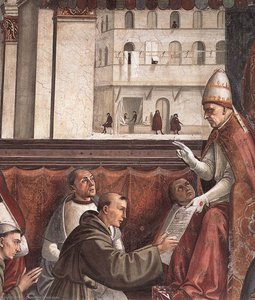
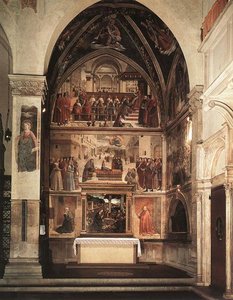
Domenico Ghirlandaio's "Confirmation of the Rule," a meticulously rendered fresco fragment from 1483, isn’t merely a depiction of a religious ceremony; it’s a vibrant snapshot of Renaissance Florence itself. Housed within the Santa Trinità church in Florence, this section – often referred to as “detail” due to its scale – offers an intimate glimpse into the burgeoning civic pride and artistic innovation that defined the era. The scene unfolds around a young boy receiving his Confirmation, a pivotal moment signifying entry into adulthood and membership within the Franciscan order. But beyond the formal ritual, Ghirlandaio masterfully weaves together elements of daily life, social hierarchy, and nascent humanist ideals, creating an artwork brimming with layered meaning.
- The Setting: The backdrop is instantly recognizable as Piazza della Signoria, Florence’s bustling public square. Ghirlandaio doesn't shy away from portraying the city’s grandeur – the imposing columns, the arched doorways, and the meticulously rendered buildings all speak to a thriving urban center. This inclusion elevates the scene beyond a purely religious one; it firmly grounds the event within the context of Florentine society.
- The Figures: Central figures include Angelo Poliziano, a prominent humanist scholar and courtier, alongside his students – recognizable by their youthful eagerness and attentive postures. The presence of these intellectual luminaries underscores the importance of education and learning during this period. Notice also the richly dressed dignitaries observing the ceremony; they represent the powerful families who shaped Florentine politics and culture.
A Symphony of Fresco Technique: Ghirlandaio’s Masterful Approach
Ghirlandaio's skill lies not just in his ability to capture likeness but in his masterful manipulation of fresco technique – a process demanding immense precision and patience. The delicate details, the subtle gradations of light and shadow, and the remarkably lifelike quality of the figures are all testaments to his expertise. He employed *sfumato*, a technique popularized by Leonardo da Vinci, creating soft transitions between colors and forms, lending an ethereal quality to the scene. Observe how he uses thin layers of pigment applied directly onto wet plaster – a process that requires incredible control and a deep understanding of material properties. The fresco’s luminosity, achieved through careful layering and glazing, continues to captivate viewers centuries later.
Note the meticulous rendering of fabrics—the folds in the robes, the sheen on the garments—a testament to Ghirlandaio's dedication to realism and his understanding of human anatomy.Symbolism and Social Commentary: Unpacking the Layers
Beyond its surface narrative, “Confirmation of the Rule” is rich with symbolic meaning. The act of Confirmation itself represents spiritual guidance and the transmission of faith from older generations to younger ones. The book held by one figure symbolizes knowledge and learning – a key tenet of Renaissance humanism. Furthermore, Ghirlandaio subtly critiques social hierarchies through his depiction of power dynamics. The prominent placement of Poliziano and his students highlights the importance of intellectual pursuits within the elite circles of Florentine society. The inclusion of everyday citizens observing the ceremony underscores the universality of faith and its role in shaping community values.
- The Young Recipient: The boy receiving Confirmation embodies innocence and potential, representing a new generation embracing religious ideals.
- The Franciscan Order: The presence of Franciscan friars reinforces the importance of charity and service to the poor – core values within the order.
A Timeless Masterpiece: Reproduction and Legacy
Reproductions of “Confirmation of the Rule” offer a remarkable opportunity to experience the beauty and complexity of this Renaissance masterpiece. When selecting a reproduction, consider the level of detail and accuracy – aiming for an image that faithfully captures Ghirlandaio’s original vision. This fresco fragment serves as a powerful reminder of Florence's artistic flourishing during the High Renaissance, a period defined by innovation, humanism, and a profound engagement with faith and society. It is a window into a world where art was not merely decorative but a vital expression of cultural identity.
Obras relacionadas

Biografía del artista
Primeros años y formación
Domenico di Tommaso Curradi di Doffo Bigordi, conocido como Domenico Ghirlandaio, fue un pintor del Renacimiento italiano nacido en Florencia, Italia (1449-1494). Formó parte de la llamada "tercera generación" del Renacimiento florentino, junto con Verrocchio, los hermanos Pollaiolo y Sandro Botticelli. La primera etapa de Ghirlandaio se caracteriza por su aprendizaje con su padre, un orfebre, donde desarrolló sus habilidades para crear tocados metálicos con forma de guirnalda que eran usados por las mujeres florentinas. Esto le valió el apodo de "il ghirlandaio" (fabricante de guirnaldas). Posteriormente estudió pintura y mosaico bajo la tutela de Alesso Baldovinetti.Carrera artística
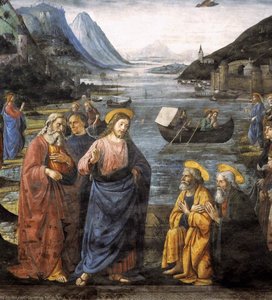
La carrera artística de Ghirlandaio se caracteriza por su excepcional talento para representar la vida contemporánea y los retratos dentro de narrativas religiosas. Esto le granjeó una enorme popularidad y numerosas comisiones importantes. Su taller, que incluía a sus hermanos Davide y Benedetto Ghirlandaio, era altamente eficiente y productivo.- Los trabajos más destacados de Ghirlandaio incluyen los ciclos de frescos en la capilla Sassetti de Santa Trinita (1482-1485) y la vocación de los apóstoles en la Capilla Sixtina (1483).
- Su estilo se caracteriza por su capacidad para representar escenas de la vida contemporánea y retratos dentro de narrativas religiosas, aportando un sentido de realismo a su obra.
- Su futuro cuñado, Sebastiano Mainardi, lo asistió en estas comisiones y en los frescos iniciales en San Gimignano.
Influencias y desarrollo
Ghirlandaio se vio influenciado por artistas como Alesso Baldovinetti y Andrea del Verrocchio, aprendiendo de sus técnicas y estilos. Sin embargo, desarrolló su propio enfoque distintivo al incorporar elementos realistas y contemporáneos en sus obras religiosas. Su habilidad para representar figuras humanas con gran detalle y precisión, así como su dominio de la perspectiva lineal, contribuyeron a su éxito y popularidad. El taller de Ghirlandaio se convirtió en un centro importante de producción artística, formando a numerosos aprendices, incluyendo al famoso Michelangelo.Obras destacadas y legado
Ve las obras de Domenico Ghirlandaio en ArtsDot- St. Jerome in his study (1480), una obra complementaria a la de Botticelli, Saint Augustine in his study, muestra la habilidad de Ghirlandaio en la pintura al fresco.
- La Apoteosis de St. Zenóbio (1482) en la sala del giglio, Palazzo Vecchio, es un ejemplo de su habilidad compositiva y perspectiva.
Museos y colecciones
El Museo San Giovanni (Siena, Italia) alberga una colección de obras de arte, incluyendo las del Renacimiento italiano. La Capilla Sixtina, donde Ghirlandaio trabajó en la vocación de los apóstoles, es reconocida por sus frescos y forma parte importante de la historia del arte. Aprende más sobre San Gimignano en Wikipedia.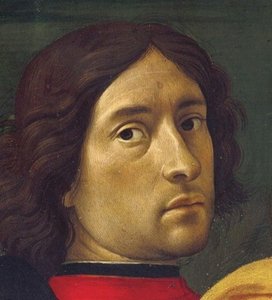
Domenico Ghirlandaio
1449 - 1494 , Italia
Datos clave
- Artistas Que Influyeron:
- Verrocchio
- Botticelli
- Alesso Baldovinetti
- Fecha De Muerte: 11 de enero de 1494
- Fecha De Nacimiento: 2 de junio de 1448
- Influenciado A Artistas: ['Michelangelo']
- Lugar De Nacimiento: Florencia, Italia
- Movimiento Artístico: Renacimiento italiano
- Nacionalidad: Italiana
- Nombre Completo: Domenico Ghirlandaio
- Obras Notables:
- St. Jerome in his Study
- Apoteosis of St. Zenobius
- Vocation of the Apostles
Artículos relacionados

Legado en las Paredes: Frescos Familiares que Trascienden el Tiempo
Descubre el arte del fresco muralístico para inmortalizar tu historia familiar. Expertos en frescos personalizados y técnicas ancestrales. Crea un legado visual único con .

The Enduring Legacy of Fresco Painting: Techniques, History & Contemporary Relevance
Explore the rich history & enduring artistry of fresco painting – from Giotto to Michelangelo! Discover techniques, conservation efforts, & modern applications. Learn how ArtsDot brings this timeless art form to your home.

The Enduring Legacy of Fresco: Technique, History & Artistic Expression Across Cultures
Explore the rich history & enduring legacy of fresco painting! Discover ancient techniques, Giotto's masterpieces, and modern applications. Expert insights for art lovers & professionals.

¿El Arte que Habita Contigo: El Poder Emocional de un Fresco Interior Personalizado?
Descubre el poder emocional de un fresco interior personalizado. Expertos en arte te guían para crear una obra única que refleje tu estilo y valore tu hogar. : calidad, confianza y diseño excepcional.
El Fresco a Través de los Siglos: Técnica, Historia y Expresión Artística Duradera
Descubre la historia y técnica del fresco, desde sus orígenes en la antigüedad hasta los maestros renacentistas. Guía completa sobre conservación, restauración y el legado artístico de este arte milenario.