 Ver en contexto
 Enviar
 Compartir
 Detalles

 Descargar
 Similares
 Radiografía
 Presentación de diapositivas
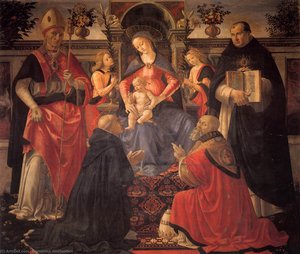
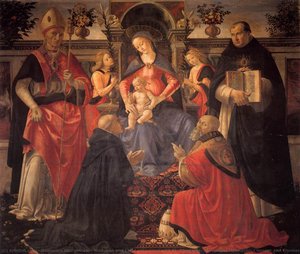
Madonna and Child Enthroned with Saints
 Acrílico sobre lienzo
- Arte de pared
- Renaissance
 1483
1483 191.0 x 200.0 cm
 Galería de los Uffizi
 Ver más
Giclée / Impresión de arte
Impresiones giclée o en lienzo de calidad de museo con producción rápida y opciones de acabado flexibles. ( Comprar pintura hecha a mano Comprar imagen)




P118B $10

P118H $10

P118W $10

P438Z $10

P508JH $12

P508YH $12

P805H $10

P805Z $10

P919BZ $10

P919G $10

P919XJ $10

P959ZH $10

P968JZ $12

W106C $8

W218G $10

W218JH $8

W218Y $10

W307PJ $10

W316G $10

W316PJ $8

W316Y $10

W398PJ $8

W4111J $10

W500HY $15

W500JH $15

W692G $12

W849H $8

W940BG $15

W953PJ $8




Elija entre nuestros tamaños predefinidos que respetan las proporciones originales de la obra.

Puede introducir sus propias dimensiones para adaptarse a un marco o espacio específico. Si el tamaño seleccionado no coincide con las proporciones de la imagen original, recortaremos la obra de arte o extenderemos la imagen con un borde con efecto espejo o de color sólido. Se enviará una maqueta digital para su aprobación antes de que comience la producción.
Tenga en cuenta que la vista previa en pantalla no refleja el recorte o la extensión real. Solo la maqueta mostrará con precisión la composición final.
Aunque existen tamaños personalizados, recomendamos seleccionar una dimensión de la lista predefinida para preservar las proporciones originales.
Envío a todo el mundo () en 2 semanas en lugar de las 4/5 semanas estándar. (24 agosto)

Envío exprés gratuito a todo el mundo

Lienzo de lino de alta calidad

Seguro de envío total

Garantía de reembolso de impuestos aduaneros

Garantía de fidelidad cromática exacta

Política de devolución de 60 días (solo por defectos)

Garantía de devolución del 100% del dinero

Descuento por cantidad
 La opción de vidrio solo está disponible en tamaños inferiores a 110 cm.

Madonna and Child Enthroned with Saints
Giclée / Impresión de arte
Dimensiones de la reproducción
-


Precio total final
$ 62
Descripción de la pieza
Domenico Ghirlandaio’s “Madonna and Child Enthroned with Saints”: A Florentine Masterpiece of Devotion
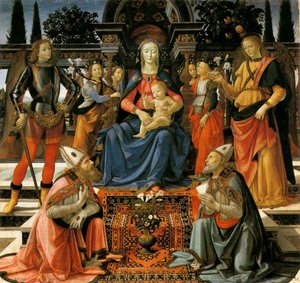
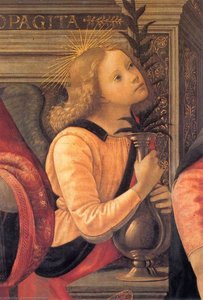
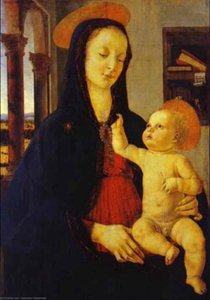
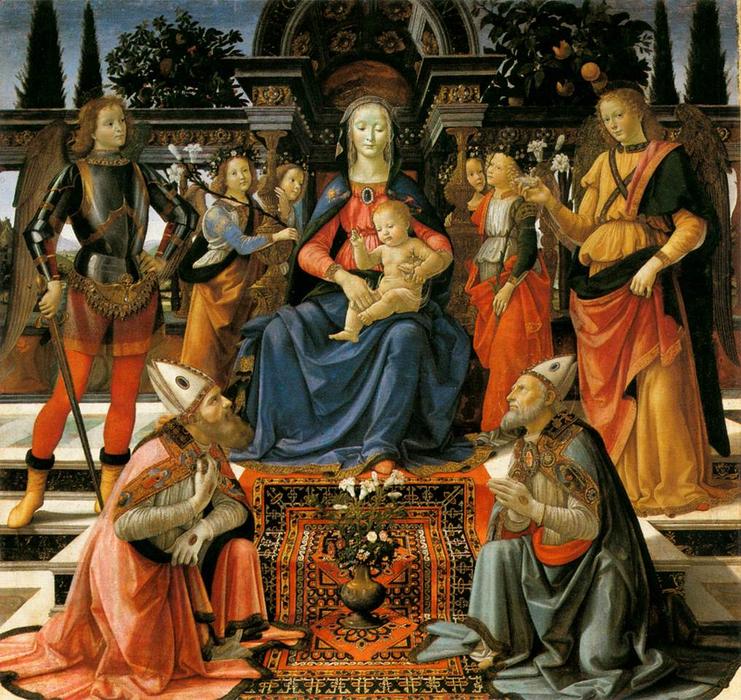
Domenico Ghirlandaio's "Madonna and Child Enthroned with Saints," painted in 1483, is more than just a religious depiction; it’s a vibrant snapshot of Renaissance Florence, brimming with artistic innovation and profound spiritual resonance. This magnificent work, now housed within the Uffizi Gallery in Florence, offers a captivating glimpse into the world of a master craftsman and his time. The painting immediately draws the eye to its central figures: Mary, serene and radiant, holding her infant son Jesus, who bestows blessings upon the assembled saints. The composition is meticulously balanced, radiating an aura of peace and reverence that speaks volumes about the era’s deep-seated faith.
Ghirlandaio's skill lies not only in his technical prowess but also in his ability to imbue the scene with a remarkable sense of realism. He masterfully captures the textures of fabrics – the rich velvet of the throne, the shimmering gold of the halos, and the delicate folds of Mary’s garments – demonstrating an acute attention to detail that was characteristic of Florentine painting during this period. The use of *sfumato*, a subtle blurring technique borrowed from Leonardo da Vinci, softens the edges and creates a sense of atmospheric depth, further enhancing the realism of the scene.
A Symphony of Saints: Symbolism and Patronage
The surrounding saints are not merely decorative elements; each figure carries significant symbolic weight. Dionysius the Areopagite, identifiable by his flowing robes and a scroll in hand, represents wisdom and theological knowledge. Thomas Aquinas, recognizable by the radiant sun on his chest – a symbol of divine illumination – embodies scholastic philosophy. Pope Clement I, kneeling with an air of solemnity, underscores the painting’s connection to papal authority and the importance of the Church. The inclusion of these specific saints reflects the patronage of the work, likely commissioned for a Dominican church in Florence, highlighting the Order's devotion to these figures.
The presence of several male saints, including St. Paul and St. Peter, alongside Mary and Christ is particularly noteworthy. This arrangement was common in Renaissance altarpieces, reflecting the belief that both the Virgin Mary and her divine son were central to Christian faith, yet also highlighting the importance of the apostles as intermediaries between God and humanity. The careful selection of saints demonstrates a deep understanding of theological symbolism and reflects the artistic conventions of the time.
The Florentine Renaissance in Miniature
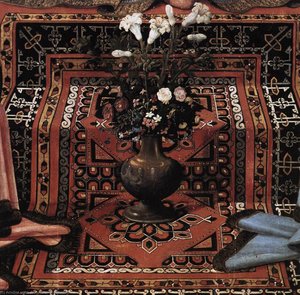
“Madonna and Child Enthroned with Saints” is a microcosm of the Florentine Renaissance, embodying its humanist ideals, artistic innovations, and profound religious devotion. Ghirlandaio’s masterful use of perspective, his realistic portrayal of figures and textures, and his incorporation of contemporary details – such as the elaborate carpet beneath the throne – all contribute to the painting's remarkable vitality. The influence of Flemish art is also evident in the luminous colors and delicate rendering of fabrics, reflecting the artistic trends that were circulating throughout Italy at the time.
Beyond its aesthetic qualities, the painting offers a valuable insight into Florentine society during the late 15th century. It reflects the city’s burgeoning wealth, its vibrant cultural scene, and its deep-seated religious faith. The work stands as a testament to Ghirlandaio's skill and his ability to capture the essence of his time in a single, breathtaking image.
A Timeless Masterpiece: Reproduction and Inspiration
Today, “Madonna and Child Enthroned with Saints” remains one of Domenico Ghirlandaio’s most celebrated works. Its beauty and significance have inspired countless artists and designers throughout the centuries. High-quality reproductions offer a wonderful opportunity to experience this masterpiece firsthand, bringing its serene atmosphere and intricate details into any space. Whether adorning a private residence or gracing a public gallery, a reproduction of this Florentine treasure will undoubtedly serve as a source of inspiration and contemplation for years to come.
Obras relacionadas
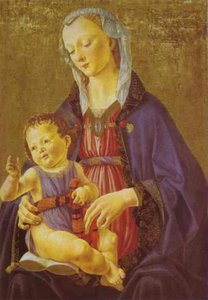
Biografía del artista
Primeros años y formación
Domenico di Tommaso Curradi di Doffo Bigordi, conocido como Domenico Ghirlandaio, fue un pintor del Renacimiento italiano nacido en Florencia, Italia (1449-1494). Formó parte de la llamada "tercera generación" del Renacimiento florentino, junto con Verrocchio, los hermanos Pollaiolo y Sandro Botticelli. La primera etapa de Ghirlandaio se caracteriza por su aprendizaje con su padre, un orfebre, donde desarrolló sus habilidades para crear tocados metálicos con forma de guirnalda que eran usados por las mujeres florentinas. Esto le valió el apodo de "il ghirlandaio" (fabricante de guirnaldas). Posteriormente estudió pintura y mosaico bajo la tutela de Alesso Baldovinetti.Carrera artística
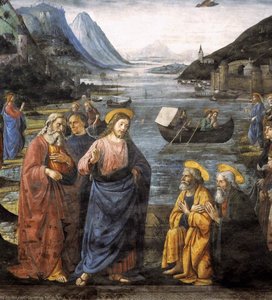
La carrera artística de Ghirlandaio se caracteriza por su excepcional talento para representar la vida contemporánea y los retratos dentro de narrativas religiosas. Esto le granjeó una enorme popularidad y numerosas comisiones importantes. Su taller, que incluía a sus hermanos Davide y Benedetto Ghirlandaio, era altamente eficiente y productivo.- Los trabajos más destacados de Ghirlandaio incluyen los ciclos de frescos en la capilla Sassetti de Santa Trinita (1482-1485) y la vocación de los apóstoles en la Capilla Sixtina (1483).
- Su estilo se caracteriza por su capacidad para representar escenas de la vida contemporánea y retratos dentro de narrativas religiosas, aportando un sentido de realismo a su obra.
- Su futuro cuñado, Sebastiano Mainardi, lo asistió en estas comisiones y en los frescos iniciales en San Gimignano.
Influencias y desarrollo
Ghirlandaio se vio influenciado por artistas como Alesso Baldovinetti y Andrea del Verrocchio, aprendiendo de sus técnicas y estilos. Sin embargo, desarrolló su propio enfoque distintivo al incorporar elementos realistas y contemporáneos en sus obras religiosas. Su habilidad para representar figuras humanas con gran detalle y precisión, así como su dominio de la perspectiva lineal, contribuyeron a su éxito y popularidad. El taller de Ghirlandaio se convirtió en un centro importante de producción artística, formando a numerosos aprendices, incluyendo al famoso Michelangelo.Obras destacadas y legado
Ve las obras de Domenico Ghirlandaio en ArtsDot- St. Jerome in his study (1480), una obra complementaria a la de Botticelli, Saint Augustine in his study, muestra la habilidad de Ghirlandaio en la pintura al fresco.
- La Apoteosis de St. Zenóbio (1482) en la sala del giglio, Palazzo Vecchio, es un ejemplo de su habilidad compositiva y perspectiva.
Museos y colecciones
El Museo San Giovanni (Siena, Italia) alberga una colección de obras de arte, incluyendo las del Renacimiento italiano. La Capilla Sixtina, donde Ghirlandaio trabajó en la vocación de los apóstoles, es reconocida por sus frescos y forma parte importante de la historia del arte. Aprende más sobre San Gimignano en Wikipedia.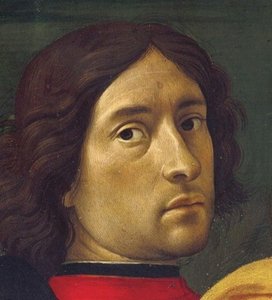
Domenico Ghirlandaio
1449 - 1494 , Italia
Datos clave
- Artistas Que Influyeron:
- Verrocchio
- Botticelli
- Alesso Baldovinetti
- Fecha De Muerte: 11 de enero de 1494
- Fecha De Nacimiento: 2 de junio de 1448
- Influenciado A Artistas: ['Michelangelo']
- Lugar De Nacimiento: Florencia, Italia
- Movimiento Artístico: Renacimiento italiano
- Nacionalidad: Italiana
- Nombre Completo: Domenico Ghirlandaio
- Obras Notables:
- St. Jerome in his Study
- Apoteosis of St. Zenobius
- Vocation of the Apostles
Artículos relacionados

Legado en las Paredes: Frescos Familiares que Trascienden el Tiempo
Descubre el arte del fresco muralístico para inmortalizar tu historia familiar. Expertos en frescos personalizados y técnicas ancestrales. Crea un legado visual único con .

The Enduring Legacy of Fresco: Technique, History & Artistic Expression Across Cultures
Explore the rich history & enduring legacy of fresco painting! Discover ancient techniques, Giotto's masterpieces, and modern applications. Expert insights for art lovers & professionals.

The Enduring Legacy of Fresco Painting: Techniques, History & Contemporary Relevance
Explore the rich history & enduring artistry of fresco painting – from Giotto to Michelangelo! Discover techniques, conservation efforts, & modern applications. Learn how ArtsDot brings this timeless art form to your home.
Rafael: Las 25 Obras Maestras que Definen al Genio del Renacimiento | ArtsDot
Descubre las 25 obras maestras de Rafael Sanzio, el genio del Renacimiento. Explora su historia, técnica y significado en pinturas icónicas como 'La Escuela de Atenas'. Reproducciones de arte de alta calidad para decorar tu hogar con elegancia. ¡Explora la colección completa en ArtsDot.com!
El Fresco a Través de los Siglos: Técnica, Historia y Expresión Artística Duradera
Descubre la historia y técnica del fresco, desde sus orígenes en la antigüedad hasta los maestros renacentistas. Guía completa sobre conservación, restauración y el legado artístico de este arte milenario.