

 Ver en contexto
 Enviar
 Compartir
 Detalles

 Descargar
 Similares
 Radiografía
 Presentación de diapositivas
 Estadísticas
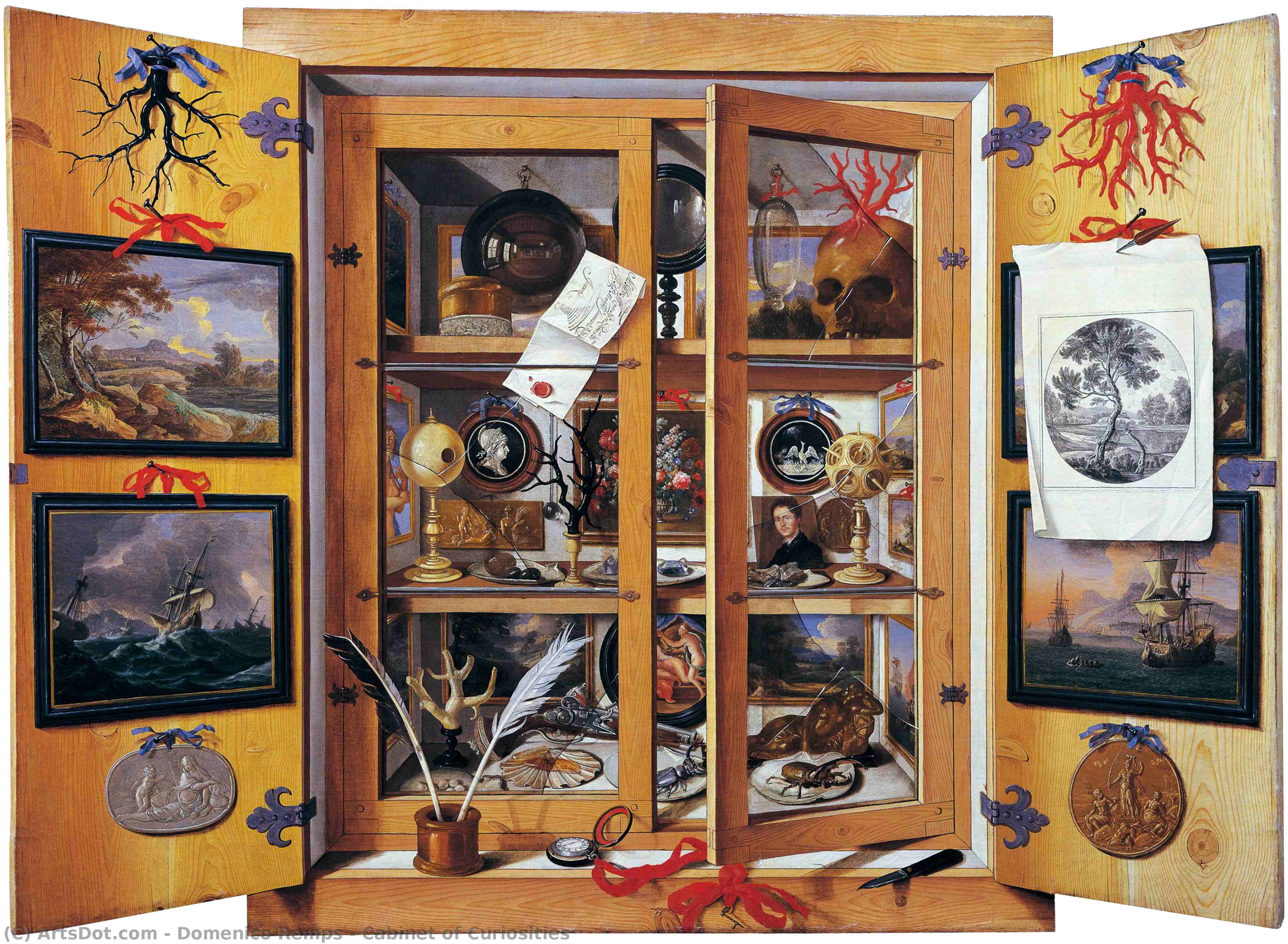
Cabinet of Curiosities
 Oil On Canvas
- WallArt
- Baroque
 1690
1690- Early Modern
 99.0 x 137.0 cm
 Museo dell'Opificio delle Pietre Dure
 Ver más
Adquiera una imagen digital de alta resolución y optimizada, muy superior a la vista previa en línea.
Cada archivo es preparado meticulosamente por nuestros especialistas internos mediante el uso de herramientas avanzadas y un experto retoque manual. Nos aseguramos de que cada imagen posea una claridad excepcional, una precisión cromática impecable y un detalle minucioso.
El archivo final se entrega por correo electrónico en un plazo de 72 horas, optimizado para su uso inmediato en entornos profesionales, editoriales y de impresión. Esta es la misma calidad en la que confían los estudios de diseño, las editoriales y las galerías de primer nivel.
Imagen Digital
Descarga un archivo de alta resolución para exhibición personal, impresión y proyectos creativos. ( Cambiar a Impresión Comprar pintura hecha a mano)
Incluido en cada pedido de imágenes digitales
Entrega digital experta, garantizada.
Al elegir ArtsDot.com, no solo está adquiriendo una imagen; está recibiendo una obra de arte digital mejorada profesionalmente, elaborada con precisión y respaldada por una garantía de satisfacción. Esto es todo lo que incluye su pedido, automáticamente:

Entrega rápida por email
Recibirá su archivo de imagen digital en alta resolución por correo electrónico en un plazo de 72 horas tras realizar su pedido, listo para su uso inmediato.

Archivo digital optimizado por IA
Su obra de arte se optimiza profesionalmente mediante herramientas avanzadas de IA y edición manual, garantizando el máximo detalle, claridad y precisión cromática.

Reenvío gratuito de por vida
¿Has borrado o perdido tu archivo por error? No te preocupes: te lo volveremos a enviar en cualquier momento, sin coste adicional.

Sin gastos de importación, siempre
Disfrute de su obra de arte al instante sin aduanas, aranceles ni gastos de envío; las descargas digitales siempre están libres de impuestos.

Garantía de fidelidad de color
Garantizamos que su imagen digital refleje los colores originales con la mayor fidelidad posible, mediante el uso de herramientas profesionales y gestión del color.

Garantía de satisfacción de 100 días
Si no está satisfecho con su imagen digital, la revisaremos o le reembolsaremos el 100% en un plazo de 100 días, sin preguntas.

100% Garantía de devolución de dinero
¿No está satisfecho? Obtenga un reembolso completo dentro de los 100 días posteriores a la recepción de su archivo digital, sin preguntas.

Descuentos por pedidos grandes
Compra 3 imágenes, ahorra 10% - Compra 5, ahorra 15% - Compra 10+, ahorra 20%. Ideal para proyectos creativos, galerías y agencias.
A Portal to the Baroque Mind
In the quiet halls of the Museo dell'Opificio delle Pietre Dure in Florence, there exists a window into another era—not a window made of glass, but one crafted from oil and canvas. Domenico Remps’s 1690 masterpiece, Cabinet of Curiosities, is far more than a mere depiction of a wooden cupboard; it is a breathtaking triumph of trompe-l'oeil artistry that challenges the very boundaries between reality and illusion. As the viewer approaches this expansive work, measuring 99 x 137 cm, the distinction between the physical room and the painted space begins to dissolve. Remps, a master of theatricality, utilizes a sophisticated manipulation of perspective to create an illusory cabinet with doors flung wide, inviting the soul to wander through a meticulously curated collection of the world's wonders.
The painting serves as a profound exploration of the 17th-century intellectual landscape, a time when the "Cabinet of Curiosities" acted as a precursor to the modern museum. Within these painted shelves, Remps has orchestrated a silent symphony of objects that speak to the era's insatiable hunger for knowledge and discovery. One might find themselves lost in the intricate details of scientific instruments—the precise curve of an astrolabe, the focused lens of a telescope, or the guiding needle of a compass—each representing humanity's burgeoning mastery over geography and astronomy. Interspersed with these tools of science are the softer notes of culture: the elegant silhouette of a lute, the delicate presence of books, and the scattered beauty of coins and fine ceramics, all arranged with a precision that suggests both scholarly rigor and aesthetic delight.
Symbolism and the Dance of Mortality
Beyond its surface-level splendor, the Cabinet of Curiosities is steeped in the heavy, evocative symbolism characteristic of the Baroque period. Remps masterfully weaves themes of memento mori into the very fabric of the composition. Amidst the treasures of wealth and wisdom, the presence of a skull serves as a haunting reminder of the transience of life, grounding the exuberant display of worldly possessions with a sobering reflection on mortality. This juxtaposition creates a powerful emotional tension; the viewer is simultaneously seduced by the beauty of the objects and reminded of the fleeting nature of time. The vibrant blue and red ribbons that adorn the cabinet act as visual anchors, providing splashes of color that guide the eye through the dense, complex arrangement, ensuring that the sense of abundance never overwhelters the underlying philosophical depth.
For the discerning collector or interior designer, this painting offers an unparalleled opportunity to introduce a sense of historical gravity and intellectual intrigue into a contemporary space. A high-quality, hand-painted reproduction of this work does not merely decorate a wall; it anchors a room with a narrative of discovery and wonder. The texture of the oil on canvas, capturing every shadow and highlight within the cabinet's depths, provides a tactile richness that inspires conversation and contemplation. Whether placed in a private library, a sophisticated study, or an avant-garde gallery setting, Remps’s masterpiece brings with it the enduring spirit of the Enlightenment, offering a timeless connection to the era when every object held a secret, and every shadow held a story.
Obras relacionadas
Biografía del artista
Domenico Remps: The Enigmatic Master of Illusion
Domenico Remps, a name often intertwined with the legendary El Greco, remains a figure shrouded in intriguing mystery and artistic brilliance. Born Andrea Domenico Remps around 1620 in or near Brescia, Italy – though his precise origins remain debated – he spent much of his career in Florence and Venice, leaving behind a legacy of captivating illusionistic paintings that continue to fascinate art historians today. His work is characterized by elongated figures, dramatic lighting, and a masterful manipulation of perspective, creating an atmosphere of theatricality and psychological depth rarely seen in his contemporaries. Remps’s life was marked by a nomadic existence, moving between Italy and Germany, reflecting the shifting artistic currents of the 17th century.Early Life and Artistic Training
The exact details of Remps's early life are scarce, contributing to the aura of enigma surrounding him. He likely received his initial training in Brescia, a region known for its strong tradition of oil painting. However, it was in Florence that he truly began to develop his distinctive style. There, he apprenticed under the renowned painter Giovanni Battista Caramante, absorbing influences from the Mannerist and early Baroque traditions prevalent at the time. Florence’s vibrant artistic scene provided fertile ground for experimentation, allowing Remps to hone his skills in composition, color theory, and the art of creating convincing illusions. Crucially, he encountered the works of artists like Caravaggio, whose dramatic use of light and shadow profoundly impacted Remps's own approach to painting.The Cabinet of Curiosities: A World of Illusion
Remps’s most celebrated work is undoubtedly his series of “Cabinet of Curiosities” paintings – a collection of large-scale, illusionistic scenes depicting fantastical interiors filled with bizarre objects, mythological creatures, and enigmatic figures. These works, often commissioned by wealthy patrons eager to display their erudition and worldly possessions, are not merely decorative; they represent meticulously constructed worlds designed to challenge the viewer’s perception. The paintings are replete with trompe-l'oeil effects – creating the illusion of three-dimensional space on a two-dimensional surface – and employ complex perspective techniques to draw the eye into the depths of the scene. The objects within these cabinets—ranging from exotic animals and ancient artifacts to alchemical instruments and astrological charts—were carefully chosen to evoke a sense of wonder, mystery, and intellectual curiosity. The “Cabinet of Curiosities” paintings exemplify Remps’s mastery of illusionism and his ability to transform a static image into a dynamic, immersive experience.Venetian Influence and Artistic Development
Around 1650, Remps moved to Venice, where he continued to refine his style under the influence of Venetian masters like Paolo Veronese and Titian. The vibrant colors, dramatic lighting, and theatrical compositions characteristic of Venetian painting found their way into Remps’s work, particularly in his religious scenes. He developed a distinctive approach to portraying figures, often exaggerating proportions and employing elongated forms – a trait that would later become synonymous with El Greco. During this period, he produced numerous altarpieces and devotional paintings for churches throughout the Veneto region, showcasing his technical skill and artistic versatility. His Venetian works demonstrate a growing confidence in his own style and a willingness to experiment with new techniques and approaches.Legacy and Historical Significance
Despite his considerable talent and prolific output, Remps’s name has often been overshadowed by that of El Greco (Domenico Theotokopoulos), who shared many stylistic similarities. However, recent scholarship is increasingly recognizing Remps as a significant figure in the development of 17th-century Italian painting. His “Cabinet of Curiosities” paintings stand as unique testaments to the power of illusionism and offer valuable insights into the intellectual and cultural climate of his time. Remps’s work reflects a fascination with knowledge, exploration, and the boundaries between reality and imagination – themes that continue to resonate with viewers today. His legacy lies not only in his stunning visual achievements but also in his contribution to the broader history of art, demonstrating how illusion can be used to create profound emotional and intellectual experiences. His paintings remain prized possessions in museums and private collections worldwide, offering a glimpse into the mind of an enigmatic master who skillfully blurred the lines between reality and fantasy.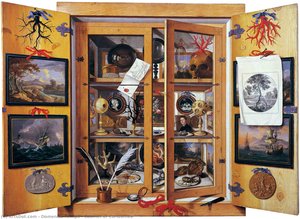
domenico remps
1620 - 1699
Breves datos
- Artistic Movement Or Style: Venetian & Spanish influences
- Artists Or Movements Influenced By This Artist: ['Spanish Renaissance']
- Artists Who Influenced This Artist: ['El Greco']
- Date Of Birth: 1620
- Date Of Death: 1699
- Full Name: Andrea Domenico Remps
- Nationality: Italian
- Notable Artworks:
- Cabinet of Curiosities
- Wunderkammer-Kabinet
- Place Of Birth: Germany