 Enviar
 Compartir
 Detalles

 Descargar
 Similares
 Presentación de diapositivas
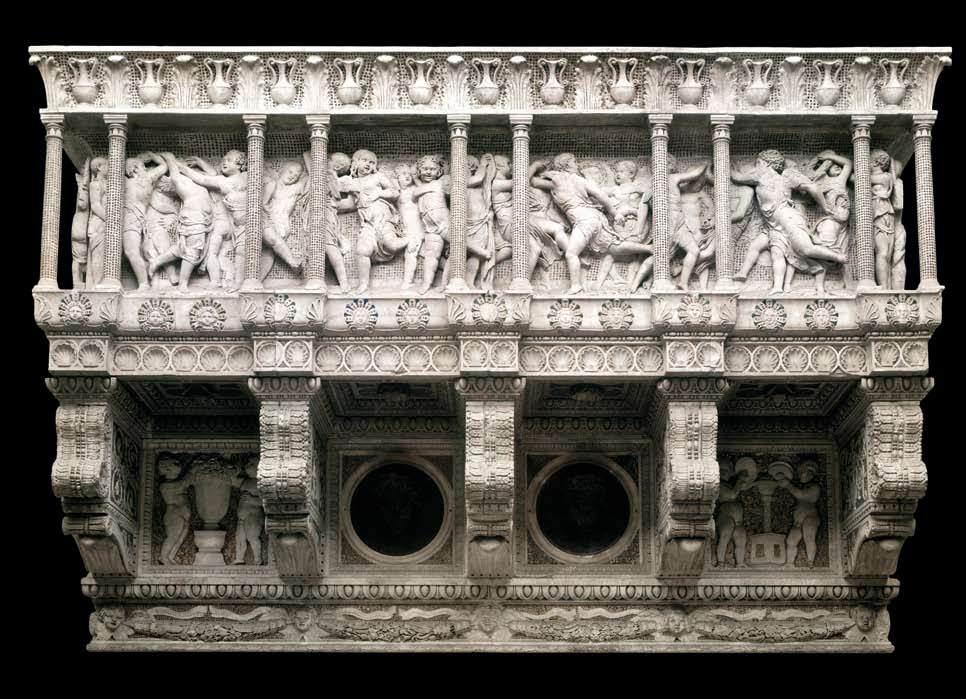
Cantoria
 Marble
- Sculpture
- Early Renaissance
 1439
1439- Renaissance
 348.0 x 570.0 cm
 Museo dell'Opera del Duomo
 Ver más
Giclée / Impresión de arte
Impresiones giclée o en lienzo de calidad de museo con producción rápida y opciones de acabado flexibles. ( Comprar pintura hecha a mano Comprar imagen)




































Elija entre nuestros tamaños predefinidos que respetan las proporciones originales de la obra.

Puede introducir sus propias dimensiones para adaptarse a un marco o espacio específico. Si el tamaño seleccionado no coincide con las proporciones de la imagen original, recortaremos la obra de arte o extenderemos la imagen con un borde con efecto espejo o de color sólido. Se enviará una maqueta digital para su aprobación antes de que comience la producción.
Tenga en cuenta que la vista previa en pantalla no refleja el recorte o la extensión real. Solo la maqueta mostrará con precisión la composición final.
Aunque existen tamaños personalizados, recomendamos seleccionar una dimensión de la lista predefinida para preservar las proporciones originales.
Envío a todo el mundo () en 2 semanas en lugar de las 4/5 semanas estándar. (28 agosto)

Envío exprés gratuito a todo el mundo

Lienzo de lino de alta calidad

Seguro de envío total

Garantía de reembolso de impuestos aduaneros

Garantía de fidelidad cromática exacta

Política de devolución de 60 días (solo por defectos)

Garantía de devolución del 100% del dinero

Descuento por cantidad
 La opción de vidrio solo está disponible en tamaños inferiores a 110 cm.

Cantoria
Giclée / Impresión de arte
Dimensiones de la reproducción
-


Precio total final
$ 62
A Symphony in Marble: The Divine Energy of Donatello’s Cantoria
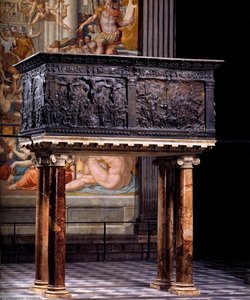
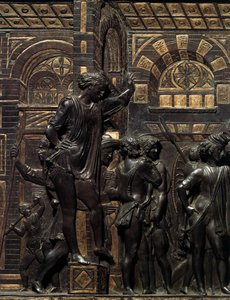
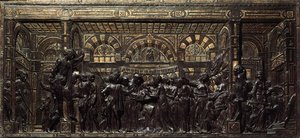
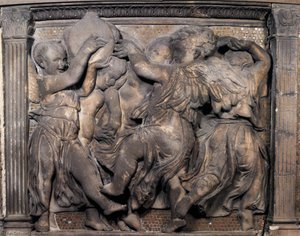
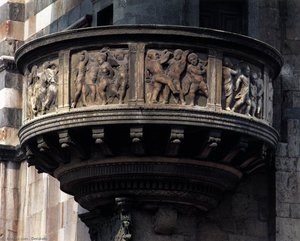
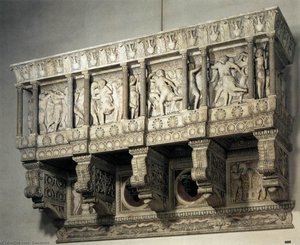
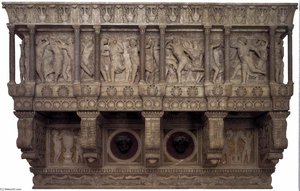
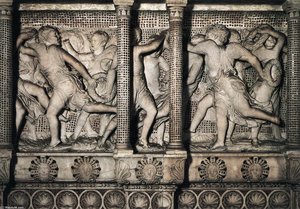
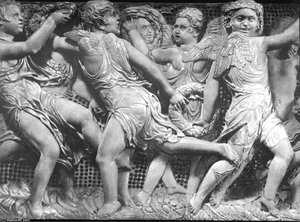
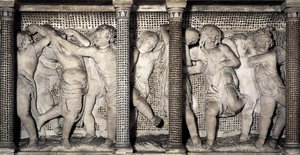
To stand before Donatello’s Cantoria is to witness the very moment the Renaissance found its pulse. Completed around 1439 for the Cathedral of Santa Maria del Fiore in Florence, this monumental marble relief is far more than a functional singers' gallery; it is a breathtaking explosion of movement and spiritual ecstasy. While much of the era’s sculpture remained tethered to the static, formal traditions of the Byzantine style, Donatello broke free, injecting his marble with a vitality that feels almost cinematic. The work captures a celestial choir—a group of putti or dancing angels—caught in a moment of unbridled joy, their limbs intertwined in a rhythmic celebration of divine glory.
The technical mastery displayed in this relief is nothing short of miraculous. Donatello utilized the medium of marble not merely to carve figures, but to breathe life into stone. Through a sophisticated application of high and low relief, he created a sense of profound depth and three-dimensionality that draws the viewer into the scene. The composition is anchored by five pairs of columns supported by elegant consoles, creating a structural rhythm that guides the eye across the frieze. Behind these architectural elements, the figures emerge with such anatomical precision and fluid motion that one can almost hear the echoes of choral music rising from the stone. This interplay of light and shadow, achieved through meticulous carving, lends a shimmering quality to the surface, as if the marble itself were illuminated by an unseen, heavenly radiance.
Humanism and the Rebirth of Classical Grandeur
The Cantoria serves as a profound manifesto of Early Renaissance humanism. Drawing deep inspiration from the rediscovered aesthetics of ancient Greece and Rome, Donatello moved away from rigid iconography toward a style defined by psychological depth and physical realism. This was a period of intense intellectual ferment in Florence, where the principles of Brunelleschi and the influence of classical antiquity were reshaping the human understanding of the world. In the Cantoria, we see this transition embodied; the figures are not distant, symbolic icons, but fleshy, emotive beings whose gestures—reaching, dancing, and leaning—convey a palpable sense of human emotion and spiritual fervor.
For the modern collector or interior designer, a reproduction of this masterpiece offers more than mere decoration; it provides a focal point of historical gravity and artistic sophistication. The piece embodies a harmonious balance between classical restraint and exuberant energy, making it an ideal inspiration for spaces that seek to blend timeless elegance with dynamic character. Whether placed in a curated gallery setting or used to anchor a grand architectural space, the Cantoria invites contemplation of the enduring beauty found in the union of technical perfection and raw, human emotion.
Obras relacionadas

Biografía del artista
Vida temprana y carrera
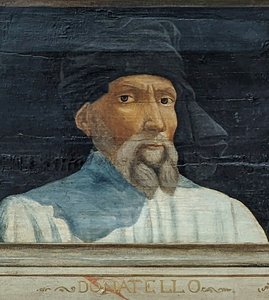
Donato di Niccolò di Betto Bardi, conocido como Donatello, nació en Florencia, Italia alrededor de 1386. Estudió escultura clásica, lo que influyó fuertemente en su desarrollo de un estilo del primer Renacimiento. Este nuevo enfoque hacia el arte y la cultura eventualmente se convertiría en la característica distintiva del florentino renacimiento.Obras clave e innovaciones
La obra más famosa de Donatello, David, fue la primera escultura masculina desnuda independiente desde la antigüedad. Comisionada por la familia Medici, mostró su estilo innovador y experiencia técnica. Otras obras notables incluyen:- San Luis de Tolosa (ahora en el museo de la Basílica di Santa Croce), que presentaba un marco clásico diseñado por Donatello.
- El sacrificio de Isaac, creado para el campanile de Santa Maria del Fiore en Florencia, se caracterizó por fuertes detalles de retrato.
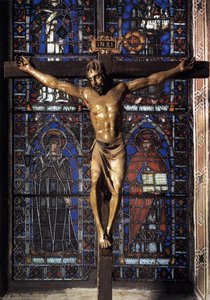
- Crucifijo (1425) para Santa Croce, que retrataba a Cristo en un momento de agonía.
Estilo artístico y legado
El estilo de Donatello puede dividirse en amplias fases, comenzando con el desarrollo de expresividad y monumentalidad clásica. Su obra no fue inmediatamente aceptada por la comunidad, pero eventualmente se convirtió en la más popular, influyendo a otros tribunales italianos y artistas europeos. Movimientos artísticos clave:Vida personal y estilo de trabajo
Donatello era conocido por ser afable y querido, pero pobre en el lado comercial de su carrera. Tendía a aceptar más comisiones de las que podía manejar, a menudo completando obras tarde o entregándolas a otros escultores. Obras de arte notables y artistas:- Leonardo da Vinci: Anunciación (detalle)
- Amico Aspertini: Estátua de Pan/León que azota a un caballo
- Miguel Ángel Buonarroti: Tondo Pitt
Museos y colecciones de arte
- Museo della Collegiata (Empoli, Italia): una joya oculta del renacimiento, con obras de Francesco Botticini y Raffaello Botticini.
- El movimiento artístico del primer Renacimiento italiano
Donatello
1386 - 1466 , Italia
Datos clave
- Artistas Que Influyeron:
- Lorenzo Ghiberti
- Nanni di Banco
- Fecha De Nacimiento: c. 1386
- Influenciado A Artistas:
- Leonardo da Vinci
- Michelangelo Buonarroti
- Lugar De Nacimiento: Florencia, Italia
- Movimiento Artístico: Renacimiento temprano
- Nacionalidad: Italiana
- Nombre Completo: Donatello (Donato di Niccolò)
- Obras Notables:
- David
- St. Louis of Toulouse
- Sacrifice of Isaac
- Crucifix (1425)
Artículos relacionados
The Enduring Allure of Marble in Art History: From Classical Sculpture to Modern Abstraction
Explore the captivating history of marble sculpture from ancient Greece to modern art. Discover renowned artists like Canova & Michelangelo, carving techniques, and investment insights at ArtsDot.

Esculturas de Bronce Legendarias: 10 Obras Maestras que Transformaron el Arte | ArtsDot
Descubre las 10 esculturas de bronce más legendarias que revolucionaron el arte. Explora la historia de Rodin, Degas y otros maestros del bronce. Encuentra reproducciones de alta calidad e inspiración para tu hogar en ArtsDot.com.

The Enduring Form: Exploring Themes & Techniques in Sculpture Across Historical Periods
Explore the rich history of sculpture from ancient masterpieces to contemporary innovations. Discover key techniques, influential artists & investment potential for discerning art collectors.

Las 10 Obras Maestras de Bronce que Revolucionaron la Historia del Arte | ArtsDot
Descubre las 10 esculturas de bronce más influyentes de la historia del arte. Explora obras maestras de Rodin, Degas y otros genios. Encuentra reproducciones de arte de calidad museo en ArtsDot.com.

The Enduring Form: Sculpture Across History, Technique & Emotional Resonance
Explore the rich history of sculpture with ArtsDot. Discover key techniques, influential artists & investment potential for discerning collectors. Expert insights into valuing and collecting timeless masterpieces.