 Ver en contexto
 Enviar
 Compartir
 Detalles

 Descargar
 Similares
 Radiografía
 Presentación de diapositivas
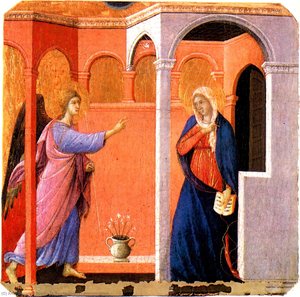
Anuncio de la Muerte de la Virgen (detalle)


 Ver más
Reproducción al óleo hecha a mano
Óleo sobre lienzo pintado a mano en el tamaño y marco de su elección, realizado por encargo por nuestros artistas. ( Comprar impresión Comprar imagen)




P118B $10

P118H $10

P118W $10

P438Z $10

P508JH $12

P508YH $12

P805H $10

P805Z $10

P919BZ $10

P919G $10

P919XJ $10

P959ZH $10

P968JZ $12

W106C $8

W218G $10

W218JH $8

W218Y $10

W307PJ $10

W316G $10

W316PJ $8

W316Y $10

W398PJ $8

W4111J $10

W500HY $15

W500JH $15

W692G $12

W849H $8

W940BG $15

W953PJ $8




Elija entre nuestros tamaños predefinidos que respetan las proporciones originales de la obra.

Puede ingresar sus propias dimensiones para adaptarse a un marco o espacio específico. Si el tamaño seleccionado no coincide con las proporciones de la imagen original, recortaremos la obra o extenderemos la pintura con elementos adicionales pintados a mano. Se le enviará una maqueta digital para su aprobación antes de comenzar la producción.
Tenga en cuenta que la vista previa en pantalla no refleja el recorte o la extensión reales. Solo la maqueta mostrará con precisión la composición final.
Si bien existen tamaños personalizados, recomendamos seleccionar una dimensión de la lista predefinida para preservar las proporciones originales.
Tras realizar el pedido, el equipo de ArtsDot.com enviará un correo electrónico al cliente para solicitar instrucciones y proporcionarle una vista previa del boceto.
Envío a todo el mundo () en 3-4 semanas en lugar de las 5 semanas estándar. (30 agosto). Sin comprometer la calidad.

Envío exprés gratuito a todo el mundo

Lienzo de lino de alta calidad

Seguro de envío total

Garantía de reembolso de impuestos aduaneros

Garantía de fidelidad cromática exacta

Política de devolución de 60 días (solo por defectos)

Garantía de devolución del 100% del dinero

Descuento por cantidad
 La opción de vidrio solo está disponible en tamaños inferiores a 110 cm.

Anuncio de la Muerte de la Virgen (detalle)
Técnica de reproducción
Dimensiones de la reproducción
-


Precio total final
$ 263
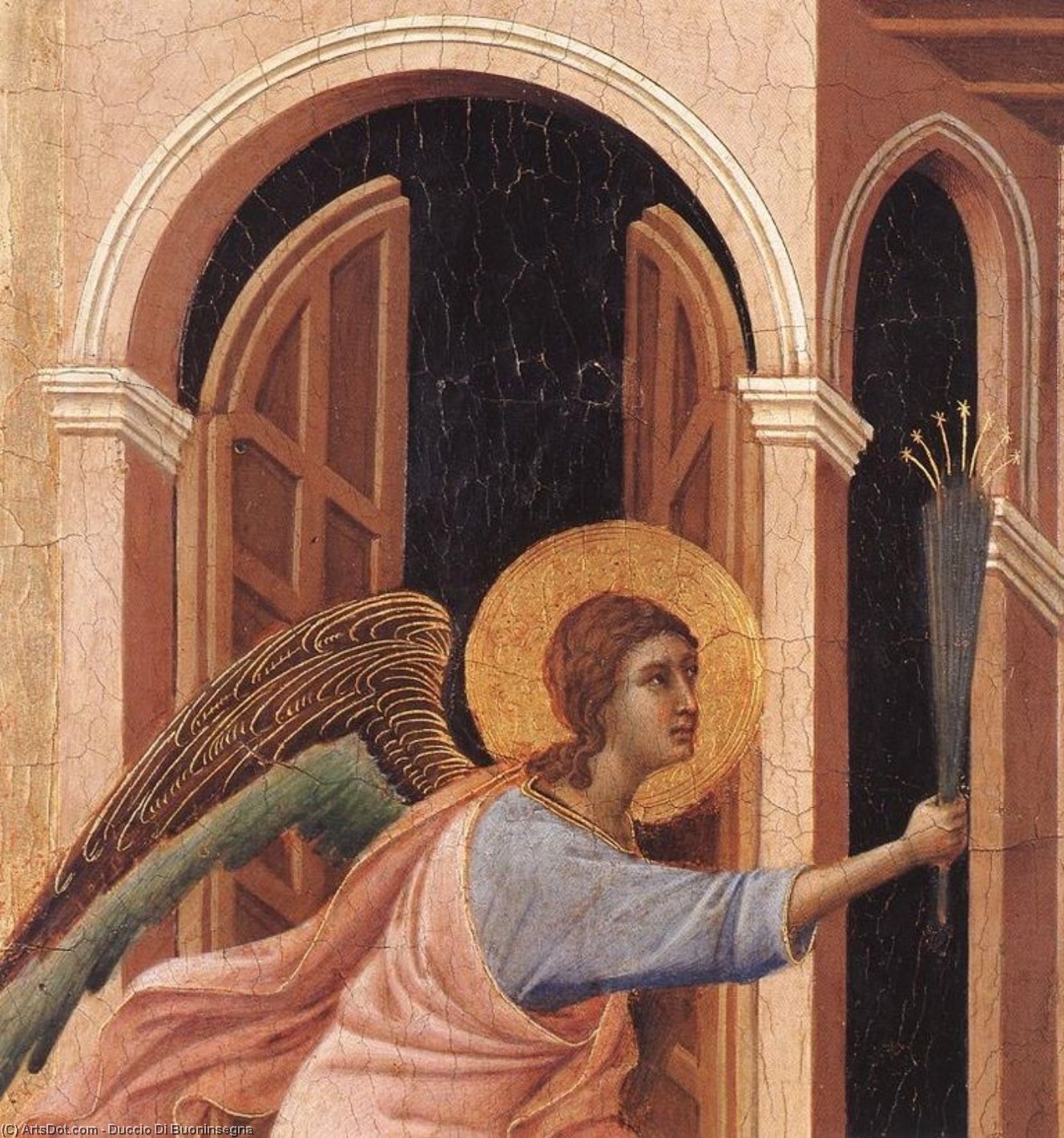
Announcement of Death to the Virgin (detail)
The Italian Renaissance, a period of unprecedented artistic and intellectual flourishing, produced countless masterpieces. Among these, few resonate with such poignant beauty and emotional depth as Duccio di Buoninsegna's “Announcement of Death to the Virgin” (detail), created in 1308 and currently housed within the Museo dell’Opera del Duomo in Siena. This tempera painting isn’t merely a depiction of a biblical event; it’s an intimate portrayal of grief, faith, and the profound mystery surrounding mortality – a subject rarely approached with such delicate sensitivity during that era.
At first glance, the scene is deceptively serene. The Virgin Mary, rendered in exquisite detail, holds her infant son Jesus close to her heart. Her expression isn’t one of overt despair, but rather a quiet contemplation, a profound understanding of the inevitable. The baby, seemingly oblivious to the impending tragedy, sleeps peacefully in her arms – a stark contrast to the weighty news she is receiving. The archway above them, a subtle architectural element, adds depth and a sense of sacred space, drawing the viewer’s eye towards this central moment of revelation.
- The Angels: Two angels flank the scene, their presence both comforting and ominous. They represent divine messengers, bearing the news of Mary's impending death – a reminder of humanity’s vulnerability in the face of God’s will. Their gestures are carefully considered, conveying a sense of solemn duty rather than overt sorrow.
- Color Palette: Duccio masterfully employs a restrained color palette dominated by muted blues, greens, and golds. These colors evoke a sense of tranquility and spirituality, while also subtly highlighting the emotional weight of the scene. The gold leaf accents, characteristic of Sienese painting at the time, add an ethereal quality to the figures and architectural elements.
- Compositional Balance: The composition is remarkably balanced, reflecting the harmony and order valued by Renaissance artists. Duccio skillfully arranges the figures within the frame, creating a visual equilibrium that draws attention to both Mary and her child while simultaneously emphasizing the significance of the angelic messengers.
A Pioneer of Sienese Art: Context and Innovation
Duccio di Buoninsegna stands as a pivotal figure in the development of Sienese painting, marking a significant departure from the rigid Byzantine style that had dominated Italian art for centuries. He was a true innovator, skillfully blending traditional techniques with emerging artistic trends – most notably, a greater emphasis on naturalism and emotional expression. His work reflects the growing interest in human experience during the early Renaissance, moving beyond purely symbolic representations to explore the complexities of faith and mortality.
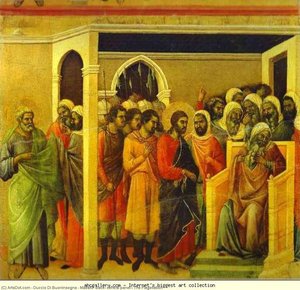
The Museo dell’Opera del Duomo in Siena serves as an invaluable repository for understanding Duccio's artistic legacy. The museum houses a remarkable collection of his paintings, including “Wedding at Cana,” “Christ Before Herod,” “Flight into Egypt,” and “The Three Marys at the Tomb” – each offering unique insights into his evolving style and techniques. These works demonstrate Duccio’s mastery of tempera paint and his ability to create emotionally charged scenes that resonate with viewers across time.
Symbolism and Spiritual Depth
Beyond its aesthetic beauty, “Announcement of Death to the Virgin” is rich in symbolism. The palm branch offered by the angel represents *palma mortis*, a traditional emblem of death and resurrection – a poignant reminder that even in sorrow, there is hope for eternal life. The sleeping infant Jesus symbolizes innocence and vulnerability, highlighting the tragic nature of Mary’s impending loss. The entire scene speaks to the profound mystery of faith, the acceptance of divine will, and the enduring power of maternal love.
Experience the Masterpiece: ArtsDot Reproductions
At ArtsDot, we are dedicated to preserving and celebrating the world’s greatest artworks. Our meticulously crafted oil painting reproductions capture the essence of Duccio di Buoninsegna's “Announcement of Death to the Virgin” (detail) with stunning accuracy and detail. Each reproduction is created by hand using traditional techniques, ensuring a timeless quality that rivals the original masterpiece.
- High-Quality Materials: We utilize only the finest pigments and archival canvas to ensure your reproduction will last for generations.
- Custom Sizes Available: We offer a wide range of sizes to suit your individual needs and preferences.
- Direct from Artist Support: A portion of every sale goes directly to supporting artists and art conservation efforts.
Discover the beauty of Sienese art in your own home with a ArtsDot reproduction of “Announcement of Death to the Virgin” (detail). Explore other works by Duccio Di Buoninsegna on our website today.
Obras relacionadas
Biografía del artista
vida temprana y carrera
Duccio di Buoninsegna, un renombrado pintor italiano de Siena, fue activo durante el tardo siglo XIII y principios del XIV. Nacido en 1255, la vida personal de Duccio permanece envuelta en misterio, con poco conocimiento sobre su origen familiar o sus primeros años. Sin embargo, sus contribuciones al estilo pictórico del trecento y la escuela sienesa están bien documentadas.estilo artístico e influencias
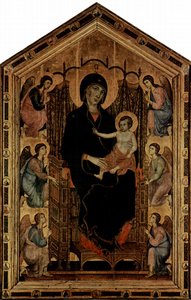
El trabajo de Duccio se caracteriza por su innovador uso del espacio y el color, como se ve en su obra maestra La Madonna de los Rucellai (1285). Esta pintura, que presenta a la Virgen María sosteniendo al Niño Jesús, rodeada de ángeles y santos, muestra el estilo único de Duccio, que combina el arte bizantino con nuevas técnicas. Su uso del modelado y su juego con la luz y los colores oscuros revelan figuras debajo de una vestidura pesada, creando una atmósfera acogedora y cálida.obras notables y legado
Algunas de las obras notables de Duccio incluyen:- Maestó (frontal, paneles de coronación), Partiendo de los apóstoles (arte gótico, óleo) - un testimonio de su enfoque innovador del espacio y el color.
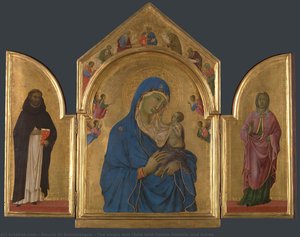
- Políptico No. 28 (La Virgen Santa con el Niño Jesús y cuatro santos) (arte gótico, óleo) - demuestra la maestría de Duccio en la composición y la narrativa.
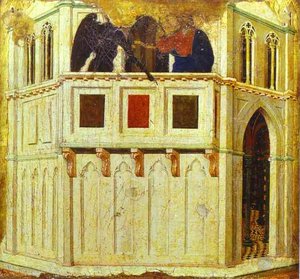
- Maestó (espalda, predela), Tentación en un pinnáculo del templo (arte gótico, óleo) - muestra su capacidad para equilibrar la luz y los colores oscuros.
legado y recuerdo
A pesar de tener dificultades con la gestión financiera, el legado artístico de Duccio supera ampliamente sus desafíos personales. Su obra se encuentra en varios museos y galerías, incluyendo la Galería de Arte de la Ciudad de Manchester, que alberga numerosas obras maestras de artistas destacados. Ver las obras de Duccio di Buoninsegna en ArtsDot.com Wikipedia: Duccio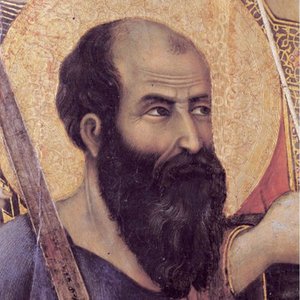
Duccio di Buoninsegna
1255 - 1319 , Italia
Datos clave
- Artistas Influenciados: ['Escuela Sienesa']
- Artistas Que Influyeron: ['Arte Bizantino']
- Fecha De Nacimiento: c. 1255
- Lugar De Nacimiento: Siena, Italia
- Movimiento Artístico: Gótico Sienés, Trecento
- Nacionalidad: Italiana
- Nombre Completo: Duccio di Buoninsegna
- Obras Notables:
- Madonna de Rucellai
- Maestà
- Vuelo a Egipto
Artículos relacionados

Giotto di Bondone: Las 25 Obras Maestras que Definieron el Renacimiento | ArtsDot
Descubre las 25 obras maestras de Giotto di Bondone, el pionero del Renacimiento. Explora la historia, técnica y simbolismo de sus frescos italianos más icónicos. Encuentra reproducciones de arte exclusivas para decorar tu hogar en ArtsDot.com.
10 Obras Maestras del Temple que Revolucionaron la Historia del Arte | ArtsDot
Descubre 10 obras maestras del temple sobre tabla que revolucionaron el arte medieval y renacentista. Explora la historia de Botticelli, Van Eyck y Giotto. Reproducciones de arte de museo para decorar tu hogar con elegancia en ArtsDot.com.
El Resplandor del Tiempo: Explorando la Técnica y el Legado de la Témpera sobre Tabla
Descubra la fascinante historia y técnica de la témpera sobre tabla. Explore los materiales, el simbolismo y la conservación de esta antigua forma de arte con ArtsDot.
Proto-Renacimiento: 10 Obras Maestras que Cambiaron la Historia del Arte | ArtsDot
Descubre las 10 obras maestras del Proto Renacimiento que revolucionaron el arte italiano. Explora la historia de Giotto, Duccio y Cimabue. Reproducciones de arte en ArtsDot.com para decorar tu hogar con belleza atemporal.
Illuminating History: A Comprehensive Exploration of Tempera Painting Techniques & Artistic Legacy
Explore the rich history & techniques of tempera painting! Discover Renaissance masters like Botticelli & Fra Angelico, conservation insights, and the enduring legacy of this captivating art form.