 Ver en contexto
 Enviar
 Compartir
 Detalles

 Descargar
 Similares
 Radiografía
 Presentación de diapositivas
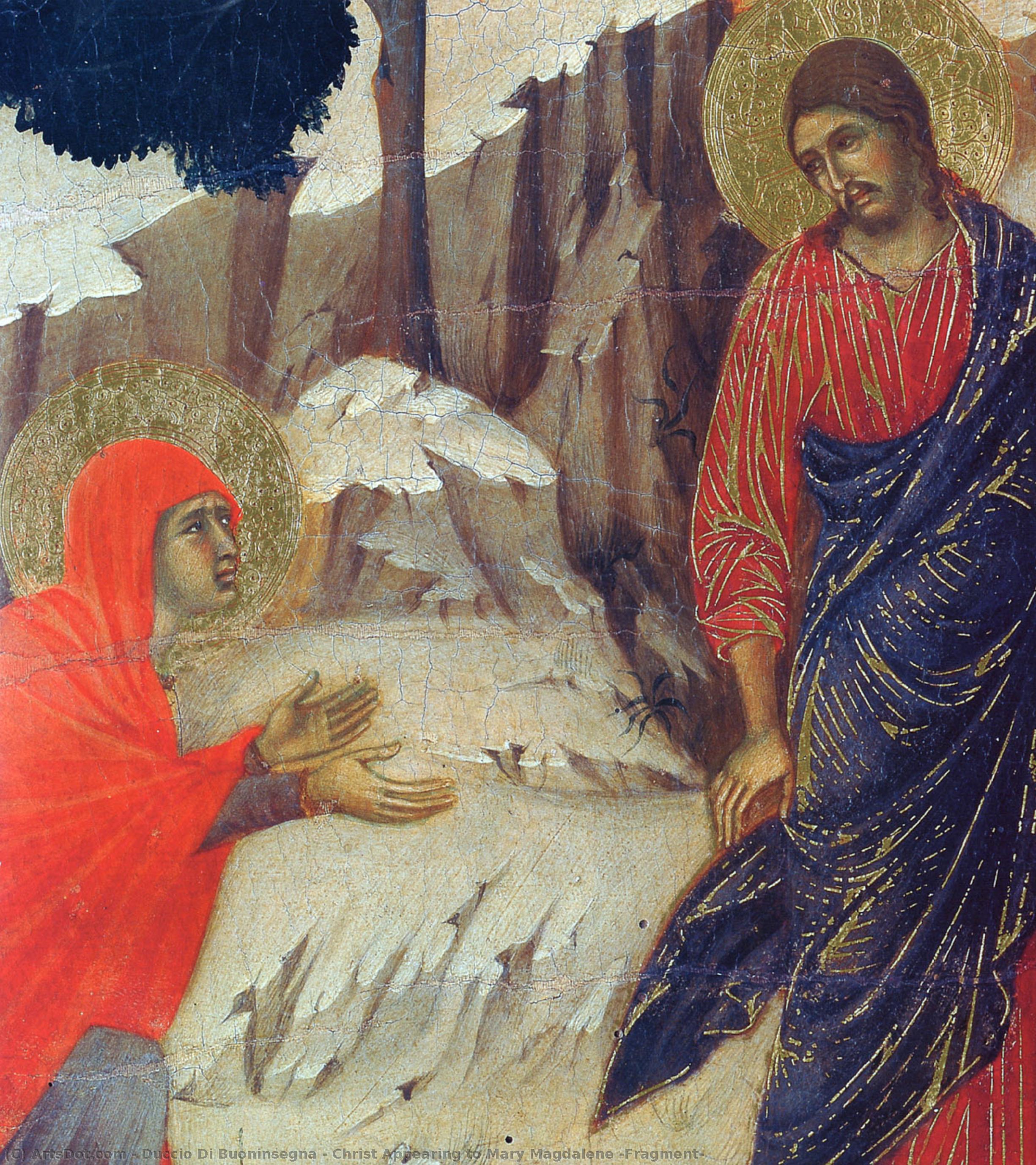
Christ Appearing to Mary Magdalene (Fragment)


 Ver más
Reproducción al óleo hecha a mano
Óleo sobre lienzo pintado a mano en el tamaño y marco de su elección, realizado por encargo por nuestros artistas. ( Comprar impresión Comprar imagen)




P118B $10

P118H $10

P118W $10

P438Z $10

P508JH $12

P508YH $12

P805H $10

P805Z $10

P919BZ $10

P919G $10

P919XJ $10

P959ZH $10

P968JZ $12

W106C $8

W218G $10

W218JH $8

W218Y $10

W307PJ $10

W316G $10

W316PJ $8

W316Y $10

W398PJ $8

W4111J $10

W500HY $15

W500JH $15

W692G $12

W849H $8

W940BG $15

W953PJ $8




Elija entre nuestros tamaños predefinidos que respetan las proporciones originales de la obra.

Puede ingresar sus propias dimensiones para adaptarse a un marco o espacio específico. Si el tamaño seleccionado no coincide con las proporciones de la imagen original, recortaremos la obra o extenderemos la pintura con elementos adicionales pintados a mano. Se le enviará una maqueta digital para su aprobación antes de comenzar la producción.
Tenga en cuenta que la vista previa en pantalla no refleja el recorte o la extensión reales. Solo la maqueta mostrará con precisión la composición final.
Si bien existen tamaños personalizados, recomendamos seleccionar una dimensión de la lista predefinida para preservar las proporciones originales.
Tras realizar el pedido, el equipo de ArtsDot.com enviará un correo electrónico al cliente para solicitar instrucciones y proporcionarle una vista previa del boceto.
Envío a todo el mundo () en 3-4 semanas en lugar de las 5 semanas estándar. (1 septiembre). Sin comprometer la calidad.

Envío exprés gratuito a todo el mundo

Lienzo de lino de alta calidad

Seguro de envío total

Garantía de reembolso de impuestos aduaneros

Garantía de fidelidad cromática exacta

Política de devolución de 60 días (solo por defectos)

Garantía de devolución del 100% del dinero

Descuento por cantidad
 La opción de vidrio solo está disponible en tamaños inferiores a 110 cm.

Christ Appearing to Mary Magdalene (Fragment)
Técnica de reproducción
Dimensiones de la reproducción
-


Precio total final
$ 263
A Divine Encounter Captured in Sienese Gold
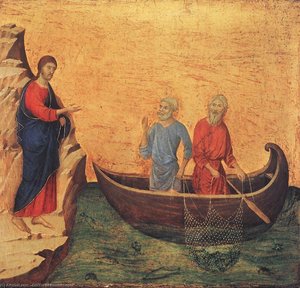
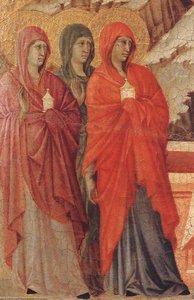
In the quiet stillness of a painted landscape, a profound moment of spiritual renewal unfolds. Duccio di Buoninsegna’s Christ Appearing to Mary Magdalene (Fragment) serves as a breathtaking window into the early 14th century, capturing the very second when the rigid formality of the Byzantine tradition began to breathe with a newfound, tender humanity. The scene depicts the poignant reappearance of Jesus Christ to Mary Magdalene in a garden setting, shortly after his crucifixion. It is not merely a depiction of a biblical event, but a masterclass in emotional intimacy; through the subtle tilt of a head or the gentle reach of a hand, Duccio invites the viewer to witness a pivotal moment of redemption and divine compassion.
The technique employed in this fragment showcases the brilliance of the Sienese School. Utilizing tempera paint on panel, Duccio achieved a luminous color palette that seems to glow from within, a hallmark of his ability to marry celestial splendor with earthly realism. While the drapery folds and facial expressions still carry the elegant, stylized echoes of Byzantine iconography, there is an unmistakable movement toward anatomical accuracy and naturalism. This delicate balance creates a sense of weight and presence in the figures, making their sacred conversation feel remarkably tangible, as if the viewer has stumbled upon a private, holy secret hidden within the hillside greenery.
Symbolism and the Landscape of Grace
Every element within this composition is laden with deep theological significance, designed to guide the contemplative mind. The hillside setting is far more than a mere backdrop; it serves as a symbolic representation of Paradise Lost and regained, mirroring the primordial landscape of Genesis and the restoration of the soul through Christ. The subdued, atmospheric lighting casts a veil of solemnity over the encounter, emphasizing the gravity of the moment. As Jesus extends his hand toward Mary Magdalene, the gesture becomes a universal emblem of divine mercy and the offering of forgiveness, reaffirming an unwavering love that transcends the suffering of the Passion.
For the discerning collector or interior designer, this artwork offers much more than visual beauty; it provides a focal point of profound emotional resonance. The fragment’s ability to evoke feelings of peace, solace, and spiritual reflection makes it an extraordinary piece for any curated space. Whether placed in a quiet study to inspire deep thought or as a centerpiece in a grand hall to command reverence, a high-quality reproduction of this Duccio masterpiece brings with it the enduring legacy of the Italian Trecento. It is an invitation to pause, to breathe, and to reconnect with the timeless beauty of human connection and divine grace.
Obras relacionadas
Biografía del artista
vida temprana y carrera
Duccio di Buoninsegna, un renombrado pintor italiano de Siena, fue activo durante el tardo siglo XIII y principios del XIV. Nacido en 1255, la vida personal de Duccio permanece envuelta en misterio, con poco conocimiento sobre su origen familiar o sus primeros años. Sin embargo, sus contribuciones al estilo pictórico del trecento y la escuela sienesa están bien documentadas.estilo artístico e influencias
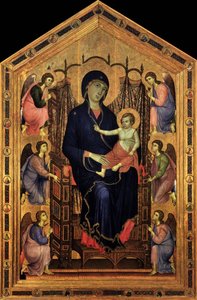
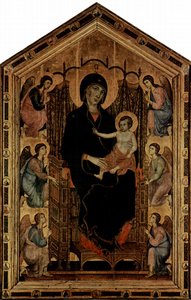
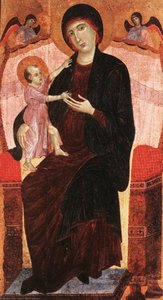
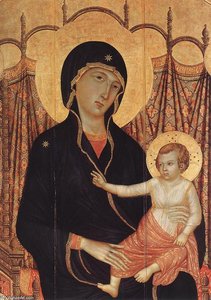
El trabajo de Duccio se caracteriza por su innovador uso del espacio y el color, como se ve en su obra maestra La Madonna de los Rucellai (1285). Esta pintura, que presenta a la Virgen María sosteniendo al Niño Jesús, rodeada de ángeles y santos, muestra el estilo único de Duccio, que combina el arte bizantino con nuevas técnicas. Su uso del modelado y su juego con la luz y los colores oscuros revelan figuras debajo de una vestidura pesada, creando una atmósfera acogedora y cálida.obras notables y legado
Algunas de las obras notables de Duccio incluyen:- Maestó (frontal, paneles de coronación), Partiendo de los apóstoles (arte gótico, óleo) - un testimonio de su enfoque innovador del espacio y el color.
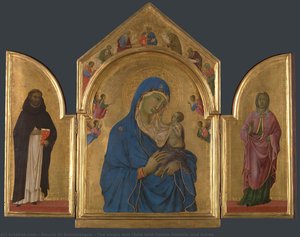
- Políptico No. 28 (La Virgen Santa con el Niño Jesús y cuatro santos) (arte gótico, óleo) - demuestra la maestría de Duccio en la composición y la narrativa.
- Maestó (espalda, predela), Tentación en un pinnáculo del templo (arte gótico, óleo) - muestra su capacidad para equilibrar la luz y los colores oscuros.
legado y recuerdo
A pesar de tener dificultades con la gestión financiera, el legado artístico de Duccio supera ampliamente sus desafíos personales. Su obra se encuentra en varios museos y galerías, incluyendo la Galería de Arte de la Ciudad de Manchester, que alberga numerosas obras maestras de artistas destacados. Ver las obras de Duccio di Buoninsegna en ArtsDot.com Wikipedia: Duccio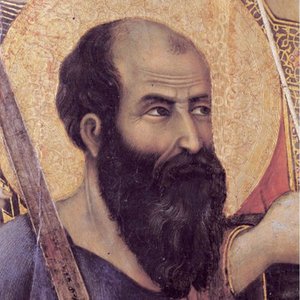
Duccio di Buoninsegna
1255 - 1319 , Italia
Datos clave
- Artistas Influenciados: ['Escuela Sienesa']
- Artistas Que Influyeron: ['Arte Bizantino']
- Fecha De Nacimiento: c. 1255
- Lugar De Nacimiento: Siena, Italia
- Movimiento Artístico: Gótico Sienés, Trecento
- Nacionalidad: Italiana
- Nombre Completo: Duccio di Buoninsegna
- Obras Notables:
- Madonna de Rucellai
- Maestà
- Vuelo a Egipto
Artículos relacionados
Sacred Narratives Embodied: A Comprehensive Exploration of Religious Iconography in Art History
Explore the rich history of religious iconography in art! Discover symbolism, movements & masterpieces from Byzantine to Renaissance periods. Expert insights for collectors and enthusiasts at ArtsDot.
Sacred Narratives on Canvas: Exploring Religious Scenes & Their Enduring Influence
Explore the rich history of religious art from Giotto to the Renaissance masters with ArtsDot. Discover symbolism, techniques & enduring legacies. Museum-quality reproductions available.

Illuminating Faith: Biblical Narrative & Artistic Expression Through the Ages
Explore the rich history of biblical art from Giotto to the Renaissance masters with ArtsDot. Discover symbolism, techniques & enduring legacies. Museum-quality reproductions & expert insights.
Sacred Narratives on Canvas: Exploring Religious Painting Through History
Explore the rich history of religious painting with ArtsDot.com! Discover iconic artworks, symbolism & techniques from antiquity to the Renaissance. Enhance your art appreciation today.

Sacred Visions: Exploring Faith & Devotion in Religious Art Across Cultures
Explore the rich history of religious art across cultures! Discover symbolism, Renaissance masterpieces & the power of color in devotional works. Expert insights for collectors and enthusiasts.