 Ver en contexto
 Enviar
 Compartir
 Detalles

 Descargar
 Similares
 Radiografía
 Presentación de diapositivas
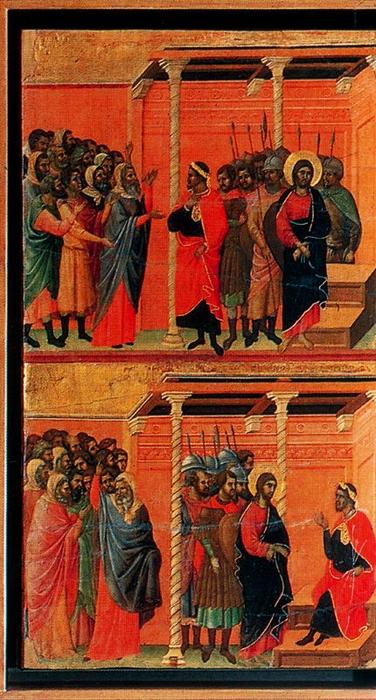
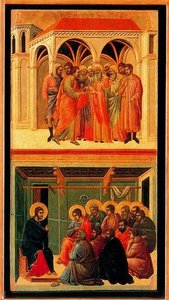
La Maestá. Cristo acusado por los fariseos y Cristo interrogado por Pilatos


 Ver más
Giclée / Impresión de arte
Impresiones giclée o en lienzo de calidad de museo con producción rápida y opciones de acabado flexibles. ( Comprar pintura hecha a mano Comprar imagen)




P118B $10

P118H $10

P118W $10

P438Z $10

P508JH $12

P508YH $12

P805H $10

P805Z $10

P919BZ $10

P919G $10

P919XJ $10

P959ZH $10

P968JZ $12

W106C $8

W218G $10

W218JH $8

W218Y $10

W307PJ $10

W316G $10

W316PJ $8

W316Y $10

W398PJ $8

W4111J $10

W500HY $15

W500JH $15

W692G $12

W849H $8

W940BG $15

W953PJ $8




Elija entre nuestros tamaños predefinidos que respetan las proporciones originales de la obra.

Puede introducir sus propias dimensiones para adaptarse a un marco o espacio específico. Si el tamaño seleccionado no coincide con las proporciones de la imagen original, recortaremos la obra de arte o extenderemos la imagen con un borde con efecto espejo o de color sólido. Se enviará una maqueta digital para su aprobación antes de que comience la producción.
Tenga en cuenta que la vista previa en pantalla no refleja el recorte o la extensión real. Solo la maqueta mostrará con precisión la composición final.
Aunque existen tamaños personalizados, recomendamos seleccionar una dimensión de la lista predefinida para preservar las proporciones originales.
Envío a todo el mundo () en 2 semanas en lugar de las 4/5 semanas estándar. (4 septiembre)

Envío exprés gratuito a todo el mundo

Lienzo de lino de alta calidad

Seguro de envío total

Garantía de reembolso de impuestos aduaneros

Garantía de fidelidad cromática exacta

Política de devolución de 60 días (solo por defectos)

Garantía de devolución del 100% del dinero

Descuento por cantidad
 La opción de vidrio solo está disponible en tamaños inferiores a 110 cm.

La Maestá. Cristo acusado por los fariseos y Cristo interrogado por Pilatos
Giclée / Impresión de arte
Dimensiones de la reproducción
-


Precio total final
$ 62
A Dramatic Tableau of Faith: Duccio’s “La Maestá”
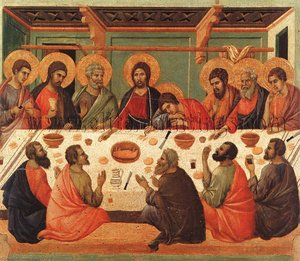
Duccio di Buoninsegna's "La Maestà," or "The Majesty," stands as a monumental achievement, a cornerstone of Sienese painting and a profound expression of religious devotion. Completed around 1308-1310, this extraordinary work transcends mere illustration; it’s a carefully constructed drama, a poignant meditation on Christ's suffering and judgment, rendered with the technical mastery that defined Duccio’s legacy. The painting depicts not just a biblical scene – the trial of Christ by Pontius Pilate and his subsequent interrogation before Jesus – but an entire theological argument played out in visual form. It is a testament to the burgeoning humanist spirit within the medieval world, subtly shifting focus towards human emotion and interaction within sacred narratives.
- Subject Matter: The central scene portrays the pivotal moment of Christ’s trial before Pilate and Caiaphas, representing the core theological conflict between divine justice and earthly authority.
- Composition: Duccio masterfully employs a pyramidal composition, drawing the viewer's eye upwards towards Christ, who is presented as both Judge and Victim. The surrounding figures – including Roman officials, Jewish elders, and witnesses – are meticulously arranged to heighten the dramatic tension of the scene.
Technique and Materials: A Synthesis of Byzantine and Italian Innovation
Duccio’s skill lies in his ability to seamlessly blend the established conventions of Byzantine art with the emerging stylistic trends of Italy. The painting is executed in tempera on a gesso panel, a technique favored by Sienese artists for its luminosity and detail. Noticeable are the rich, jewel-toned pigments – ultramarine blues derived from lapis lazuli, vibrant reds from vermilion, and shimmering golds – all meticulously applied to create an opulent and otherworldly effect. The drapery is rendered with remarkable realism, achieved through careful observation of folds and textures. Duccio’s use of glazing techniques—applying thin layers of translucent paint over dried underlayers—creates a sense of depth and atmospheric perspective that was revolutionary for its time.
- Glazing Technique: The extensive use of glazing contributes to the painting's luminous quality and three-dimensional effect.
- Pigment Innovation: Duccio’s masterful handling of pigments, particularly ultramarine, demonstrates his understanding of color theory and his ability to create a visually arresting image.
Symbolism and Emotional Resonance
"La Maestà" is laden with symbolic meaning. Christ's pose, reminiscent of the Byzantine iconographic tradition, represents divine authority and judgment. The figures surrounding him are not merely bystanders; they embody various aspects of human response to faith – doubt, skepticism, obedience, and fear. Pilate’s questioning gaze and Jesus’s sorrowful expression evoke a profound sense of empathy and invite contemplation on themes of guilt, innocence, and redemption. The painting's emotional impact is undeniable, capturing the intensity of a moment that has resonated through centuries of religious thought and artistic interpretation. It’s not simply a depiction of an event; it’s an experience—a visceral engagement with humanity’s most fundamental questions.
A Legacy of Artistic Influence
Duccio's "La Maestà" profoundly influenced the development of Sienese painting and served as a model for generations of artists. Its innovative composition, technical virtuosity, and emotional depth established Duccio as one of the leading figures of the International Gothic style. Today, reproductions of this masterpiece offer an unparalleled opportunity to experience the power and beauty of Duccio’s vision, bringing a timeless work of art into any setting.
Obras relacionadas
Biografía del artista
vida temprana y carrera
Duccio di Buoninsegna, un renombrado pintor italiano de Siena, fue activo durante el tardo siglo XIII y principios del XIV. Nacido en 1255, la vida personal de Duccio permanece envuelta en misterio, con poco conocimiento sobre su origen familiar o sus primeros años. Sin embargo, sus contribuciones al estilo pictórico del trecento y la escuela sienesa están bien documentadas.estilo artístico e influencias
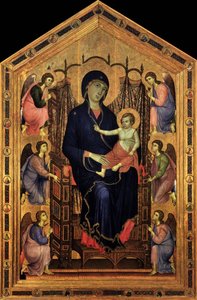
El trabajo de Duccio se caracteriza por su innovador uso del espacio y el color, como se ve en su obra maestra La Madonna de los Rucellai (1285). Esta pintura, que presenta a la Virgen María sosteniendo al Niño Jesús, rodeada de ángeles y santos, muestra el estilo único de Duccio, que combina el arte bizantino con nuevas técnicas. Su uso del modelado y su juego con la luz y los colores oscuros revelan figuras debajo de una vestidura pesada, creando una atmósfera acogedora y cálida.obras notables y legado
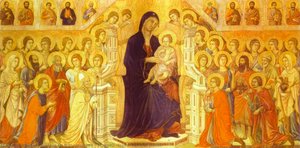
Algunas de las obras notables de Duccio incluyen:- Maestó (frontal, paneles de coronación), Partiendo de los apóstoles (arte gótico, óleo) - un testimonio de su enfoque innovador del espacio y el color.
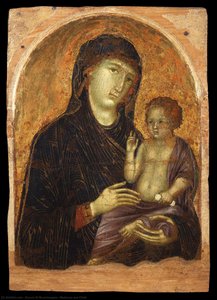
- Políptico No. 28 (La Virgen Santa con el Niño Jesús y cuatro santos) (arte gótico, óleo) - demuestra la maestría de Duccio en la composición y la narrativa.
- Maestó (espalda, predela), Tentación en un pinnáculo del templo (arte gótico, óleo) - muestra su capacidad para equilibrar la luz y los colores oscuros.
legado y recuerdo
A pesar de tener dificultades con la gestión financiera, el legado artístico de Duccio supera ampliamente sus desafíos personales. Su obra se encuentra en varios museos y galerías, incluyendo la Galería de Arte de la Ciudad de Manchester, que alberga numerosas obras maestras de artistas destacados. Ver las obras de Duccio di Buoninsegna en ArtsDot.com Wikipedia: Duccio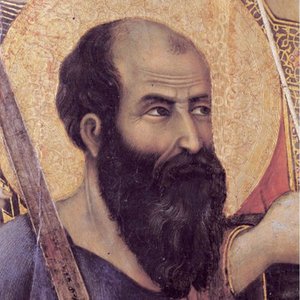
Duccio di Buoninsegna
1255 - 1319 , Italia
Datos clave
- Artistas Influenciados: ['Escuela Sienesa']
- Artistas Que Influyeron: ['Arte Bizantino']
- Fecha De Nacimiento: c. 1255
- Lugar De Nacimiento: Siena, Italia
- Movimiento Artístico: Gótico Sienés, Trecento
- Nacionalidad: Italiana
- Nombre Completo: Duccio di Buoninsegna
- Obras Notables:
- Madonna de Rucellai
- Maestà
- Vuelo a Egipto
Artículos relacionados
Giotto di Bondone: Las 25 Obras Maestras que Definieron el Renacimiento | ArtsDot
Descubre las 25 obras maestras de Giotto di Bondone, el pionero del Renacimiento. Explora la historia, técnica y simbolismo de sus frescos italianos más icónicos. Encuentra reproducciones de arte exclusivas para decorar tu hogar en ArtsDot.com.
La Biennale de Venecia: 25 Obras Maestras para Inspirar tu Hogar | ArtsDot
Descubre las 25 obras maestras de la Bienal de Venecia. Explora la historia, artistas y técnicas detrás de iconos del arte renacentista, moderno y contemporáneo. Encuentra reproducciones de alta calidad e inspira tu hogar con ArtsDot.com.
Proto-Renacimiento: 10 Obras Maestras que Cambiaron la Historia del Arte | ArtsDot
Descubre las 10 obras maestras del Proto Renacimiento que revolucionaron el arte italiano. Explora la historia de Giotto, Duccio y Cimabue. Reproducciones de arte en ArtsDot.com para decorar tu hogar con belleza atemporal.
10 Obras Maestras Medievales que Definen el Arte (y tu Hogar)
Descubre 10 obras maestras del arte medieval, desde Duccio a Van Eyck. Explora la historia, simbolismo y belleza de Giotto, Simone Martini y más. Encuentra reproducciones de alta calidad para decorar tu hogar en ArtsDot.com.
10 Obras Maestras del Temple que Revolucionaron la Historia del Arte | ArtsDot
Descubre 10 obras maestras del temple sobre tabla que revolucionaron el arte medieval y renacentista. Explora la historia de Botticelli, Van Eyck y Giotto. Reproducciones de arte de museo para decorar tu hogar con elegancia en ArtsDot.com.