 Ver en contexto
 Enviar
 Compartir
 Detalles

 Descargar
 Similares
 Radiografía
 Presentación de diapositivas
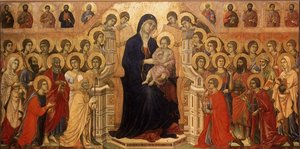
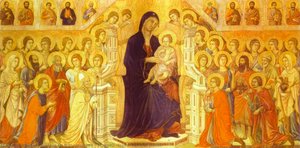
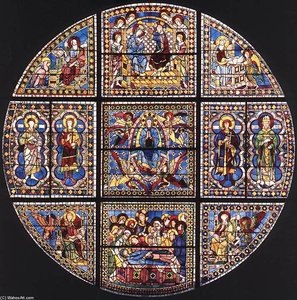
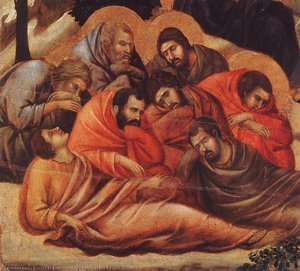
La Maestà (Duccio)


 Ver más
Reproducción al óleo hecha a mano
Óleo sobre lienzo pintado a mano en el tamaño y marco de su elección, realizado por encargo por nuestros artistas. ( Comprar impresión Comprar imagen)




P118B $10

P118H $10

P118W $10

P438Z $10

P508JH $12

P508YH $12

P805H $10

P805Z $10

P919BZ $10

P919G $10

P919XJ $10

P959ZH $10

P968JZ $12

W106C $8

W218G $10

W218JH $8

W218Y $10

W307PJ $10

W316G $10

W316PJ $8

W316Y $10

W398PJ $8

W4111J $10

W500HY $15

W500JH $15

W692G $12

W849H $8

W940BG $15

W953PJ $8




Elija entre nuestros tamaños predefinidos que respetan las proporciones originales de la obra.

Puede ingresar sus propias dimensiones para adaptarse a un marco o espacio específico. Si el tamaño seleccionado no coincide con las proporciones de la imagen original, recortaremos la obra o extenderemos la pintura con elementos adicionales pintados a mano. Se le enviará una maqueta digital para su aprobación antes de comenzar la producción.
Tenga en cuenta que la vista previa en pantalla no refleja el recorte o la extensión reales. Solo la maqueta mostrará con precisión la composición final.
Si bien existen tamaños personalizados, recomendamos seleccionar una dimensión de la lista predefinida para preservar las proporciones originales.
Tras realizar el pedido, el equipo de ArtsDot.com enviará un correo electrónico al cliente para solicitar instrucciones y proporcionarle una vista previa del boceto.
Envío a todo el mundo () en 3-4 semanas en lugar de las 5 semanas estándar. (23 agosto). Sin comprometer la calidad.

Envío exprés gratuito a todo el mundo

Lienzo de lino de alta calidad

Seguro de envío total

Garantía de reembolso de impuestos aduaneros

Garantía de fidelidad cromática exacta

Política de devolución de 60 días (solo por defectos)

Garantía de devolución del 100% del dinero

Descuento por cantidad
 La opción de vidrio solo está disponible en tamaños inferiores a 110 cm.

La Maestà (Duccio)
Técnica de reproducción
Dimensiones de la reproducción
-


Precio total final
$ 338
Descripción de la obra
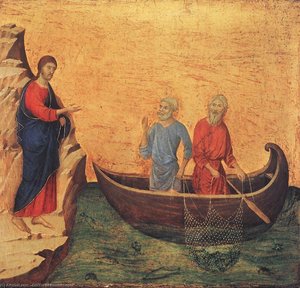
A Glimpse into Divine Debate: Duccio’s ‘Disputation with the Doctors’ (detail)
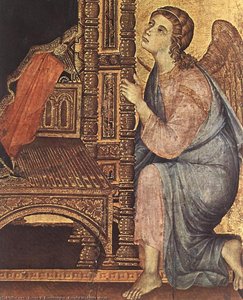
Within the vast and breathtaking Maestà, Duccio di Buoninsegna's monumental altarpiece created for Siena Cathedral, lies a wealth of narrative detail. This particular section, often viewed as a compelling standalone work – ‘Disputation with the Doctors’ (detail) – offers a captivating window into the artistic and spiritual world of early Renaissance Italy. Painted in 1308, it isn't merely a depiction of a biblical scene; it is a testament to Duccio’s evolving style, his masterful technique, and the burgeoning humanist spirit that was beginning to permeate Italian art.
The scene itself portrays the twelve-year-old Jesus engaging in theological debate with learned doctors in the Temple of Jerusalem. It's an episode brimming with intellectual tension and foreshadowing – a young boy challenging established authority with wisdom beyond his years. Duccio doesn’t present this as a grand, dramatic confrontation, but rather as a focused, almost intimate exchange. The figures are clustered together, their gestures animated yet restrained, creating a sense of concentrated thought. The artist's use of tempera on wood panel lends itself to the delicate rendering of fabrics and expressions, while the earthy palette – ochres, terracottas, muted browns – evokes both the materiality of the setting and a sense of ancient reverence.
Bridging Byzantine Tradition with Emerging Renaissance Sensibilities
Duccio di Buoninsegna, born in Siena around 1255, stood at a pivotal moment in art history. He was deeply rooted in the Byzantine tradition – evident in the use of gold (though less prominent in this detail), stylized figures, and symbolic representation. However, unlike his predecessors who rigidly adhered to these conventions, Duccio began to infuse his work with a new sense of naturalism and emotional depth. In ‘Disputation with the Doctors’, we see this transition beautifully illustrated. While the perspective remains relatively flat – characteristic of the period – there’s a palpable attempt to create spatial relationships between figures and objects. The faces are more individualized, conveying curiosity, skepticism, and awe. This subtle shift towards realism wasn’t about mimicking life exactly; it was about making the sacred narrative more relatable and emotionally resonant for the viewer.
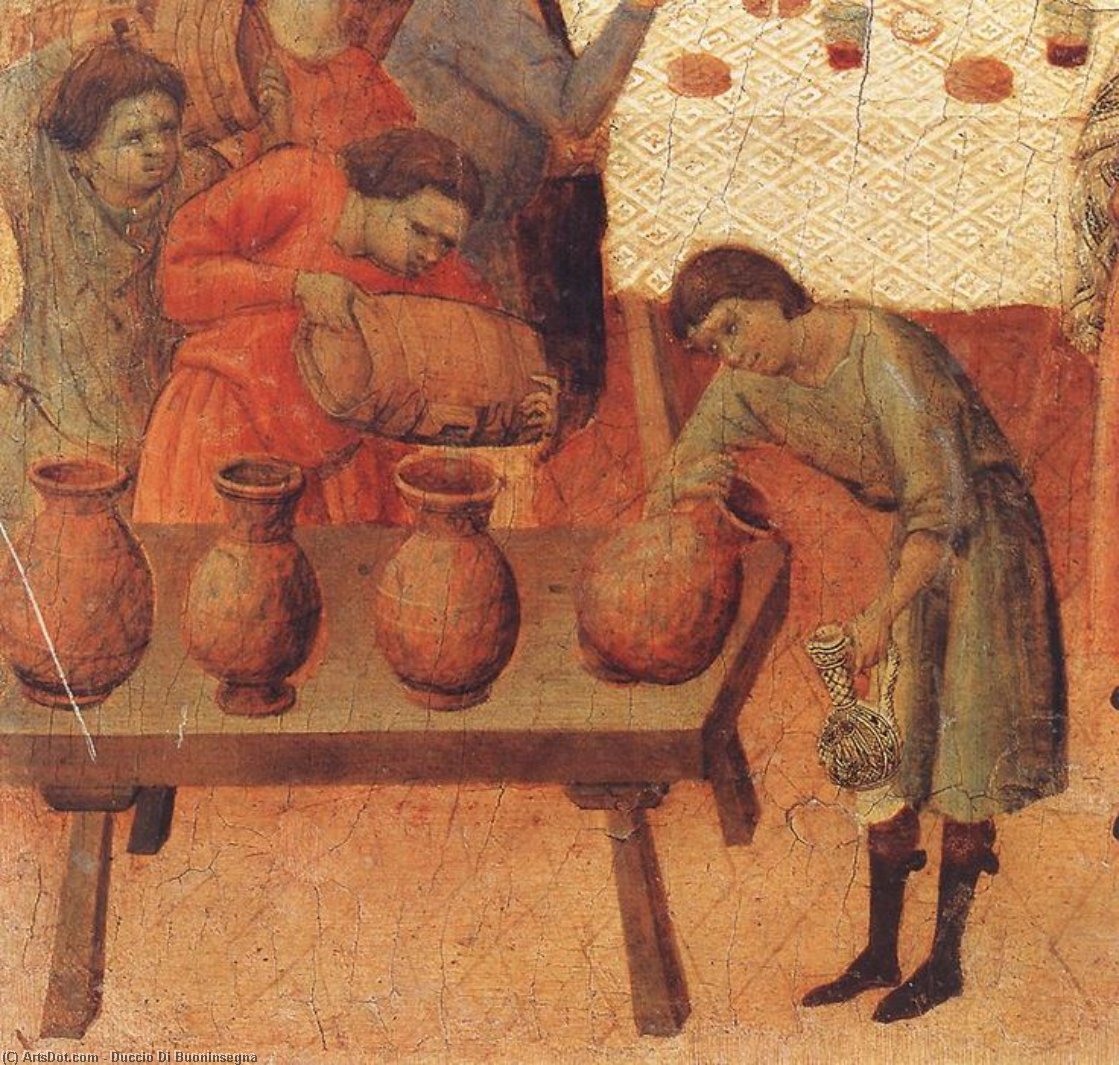
The artist’s meticulous attention to detail extends beyond mere visual representation. Consider the pottery visible on the table – a deliberate inclusion that transcends its decorative function. It symbolizes fertility, abundance, and crucially, the vessel of knowledge—a concept central to theological discourse during this era. Duccio skillfully employs tempera paint on wood panel, achieving remarkable luminosity and capturing subtle nuances in texture and color. The subdued palette contributes to an atmosphere of solemn contemplation, mirroring the spiritual significance of the depicted event.
Symbolism Woven into Craftsmanship
Beyond its theological core, ‘Disputation with the Doctors’ is rich in symbolic gestures. Observe how Duccio portrays Jesus and his companions—their postures conveying both intellectual engagement and profound humility. The artist’s masterful technique ensures that every brushstroke contributes to the overall impression of solemn reverence.
Owning a reproduction of this exquisite detail allows one to possess not just a beautiful image, but a tangible connection to Duccio's genius and the transformative period in which he lived. It’s a piece that invites contemplation, sparking dialogue about faith, knowledge, and the enduring power of artistic expression.
The Maestà itself—a monumental achievement—represents a decisive break from Byzantine formalism, embracing humanist ideals while retaining spiritual depth. Duccio’s innovative approach solidified Siena as a beacon of artistic innovation during the Trecento, influencing generations of artists to come.
Obras relacionadas
Biografía del artista
vida temprana y carrera
Duccio di Buoninsegna, un renombrado pintor italiano de Siena, fue activo durante el tardo siglo XIII y principios del XIV. Nacido en 1255, la vida personal de Duccio permanece envuelta en misterio, con poco conocimiento sobre su origen familiar o sus primeros años. Sin embargo, sus contribuciones al estilo pictórico del trecento y la escuela sienesa están bien documentadas.estilo artístico e influencias
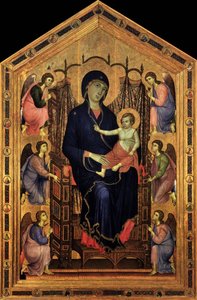
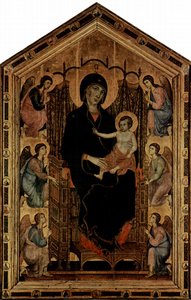
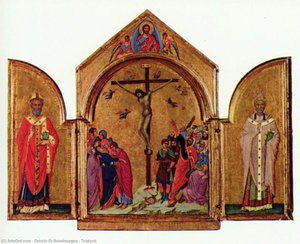
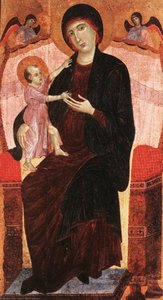
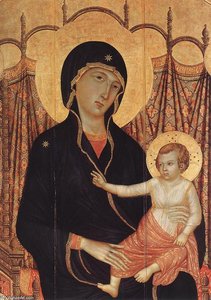
El trabajo de Duccio se caracteriza por su innovador uso del espacio y el color, como se ve en su obra maestra La Madonna de los Rucellai (1285). Esta pintura, que presenta a la Virgen María sosteniendo al Niño Jesús, rodeada de ángeles y santos, muestra el estilo único de Duccio, que combina el arte bizantino con nuevas técnicas. Su uso del modelado y su juego con la luz y los colores oscuros revelan figuras debajo de una vestidura pesada, creando una atmósfera acogedora y cálida.obras notables y legado
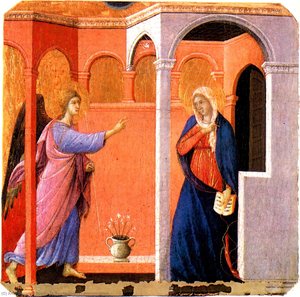
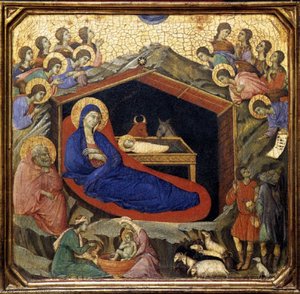
Algunas de las obras notables de Duccio incluyen:- Maestó (frontal, paneles de coronación), Partiendo de los apóstoles (arte gótico, óleo) - un testimonio de su enfoque innovador del espacio y el color.
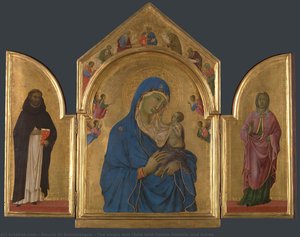
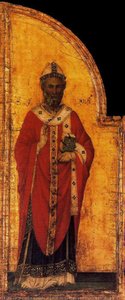
- Políptico No. 28 (La Virgen Santa con el Niño Jesús y cuatro santos) (arte gótico, óleo) - demuestra la maestría de Duccio en la composición y la narrativa.
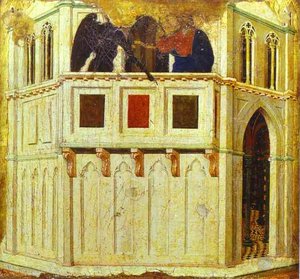
- Maestó (espalda, predela), Tentación en un pinnáculo del templo (arte gótico, óleo) - muestra su capacidad para equilibrar la luz y los colores oscuros.
legado y recuerdo
A pesar de tener dificultades con la gestión financiera, el legado artístico de Duccio supera ampliamente sus desafíos personales. Su obra se encuentra en varios museos y galerías, incluyendo la Galería de Arte de la Ciudad de Manchester, que alberga numerosas obras maestras de artistas destacados. Ver las obras de Duccio di Buoninsegna en ArtsDot.com Wikipedia: Duccio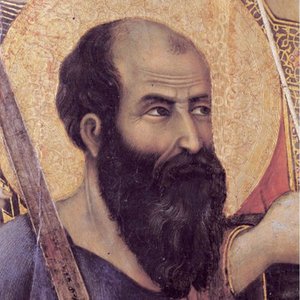
Duccio di Buoninsegna
1255 - 1319 , Italia
Datos clave
- Artistas Influenciados: ['Escuela Sienesa']
- Artistas Que Influyeron: ['Arte Bizantino']
- Fecha De Nacimiento: c. 1255
- Lugar De Nacimiento: Siena, Italia
- Movimiento Artístico: Gótico Sienés, Trecento
- Nacionalidad: Italiana
- Nombre Completo: Duccio di Buoninsegna
- Obras Notables:
- Madonna de Rucellai
- Maestà
- Vuelo a Egipto
Artículos relacionados

Giotto di Bondone: Las 25 Obras Maestras que Definieron el Renacimiento | ArtsDot
Descubre las 25 obras maestras de Giotto di Bondone, el pionero del Renacimiento. Explora la historia, técnica y simbolismo de sus frescos italianos más icónicos. Encuentra reproducciones de arte exclusivas para decorar tu hogar en ArtsDot.com.
La Biennale de Venecia: 25 Obras Maestras para Inspirar tu Hogar | ArtsDot
Descubre las 25 obras maestras de la Bienal de Venecia. Explora la historia, artistas y técnicas detrás de iconos del arte renacentista, moderno y contemporáneo. Encuentra reproducciones de alta calidad e inspira tu hogar con ArtsDot.com.
Proto-Renacimiento: 10 Obras Maestras que Cambiaron la Historia del Arte | ArtsDot
Descubre las 10 obras maestras del Proto Renacimiento que revolucionaron el arte italiano. Explora la historia de Giotto, Duccio y Cimabue. Reproducciones de arte en ArtsDot.com para decorar tu hogar con belleza atemporal.
10 Obras Maestras del Temple que Revolucionaron la Historia del Arte | ArtsDot
Descubre 10 obras maestras del temple sobre tabla que revolucionaron el arte medieval y renacentista. Explora la historia de Botticelli, Van Eyck y Giotto. Reproducciones de arte de museo para decorar tu hogar con elegancia en ArtsDot.com.
10 Obras Maestras Medievales que Definen el Arte (y tu Hogar)
Descubre 10 obras maestras del arte medieval, desde Duccio a Van Eyck. Explora la historia, simbolismo y belleza de Giotto, Simone Martini y más. Encuentra reproducciones de alta calidad para decorar tu hogar en ArtsDot.com.