 Ver en contexto
 Enviar
 Compartir
 Detalles

 Descargar
 Similares
 Radiografía
 Presentación de diapositivas
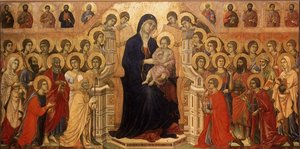
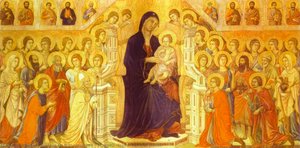
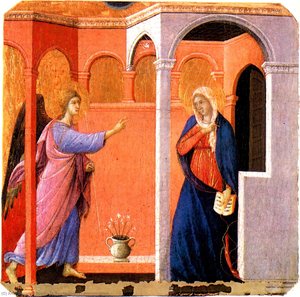
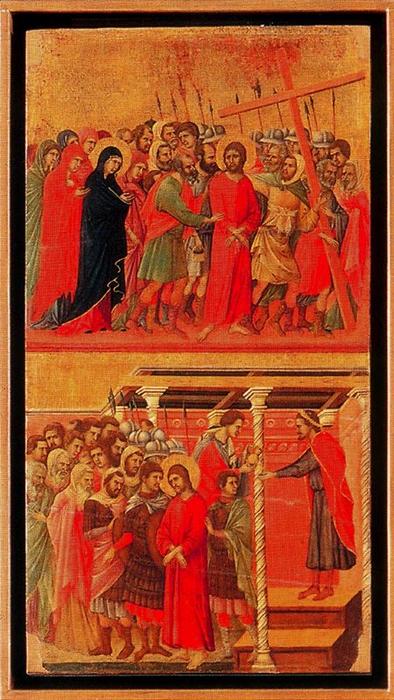
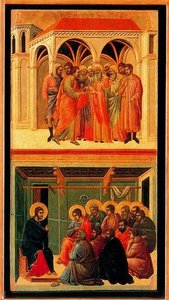
La Maestá. La subida al Calvario y Pilatos se lava las manos


 Ver más
Giclée / Impresión de arte
Impresiones giclée o en lienzo de calidad de museo con producción rápida y opciones de acabado flexibles. ( Comprar pintura hecha a mano Comprar imagen)




P118B $10

P118H $10

P118W $10

P438Z $10

P508JH $12

P508YH $12

P805H $10

P805Z $10

P919BZ $10

P919G $10

P919XJ $10

P959ZH $10

P968JZ $12

W106C $8

W218G $10

W218JH $8

W218Y $10

W307PJ $10

W316G $10

W316PJ $8

W316Y $10

W398PJ $8

W4111J $10

W500HY $15

W500JH $15

W692G $12

W849H $8

W940BG $15

W953PJ $8




Elija entre nuestros tamaños predefinidos que respetan las proporciones originales de la obra.

Puede introducir sus propias dimensiones para adaptarse a un marco o espacio específico. Si el tamaño seleccionado no coincide con las proporciones de la imagen original, recortaremos la obra de arte o extenderemos la imagen con un borde con efecto espejo o de color sólido. Se enviará una maqueta digital para su aprobación antes de que comience la producción.
Tenga en cuenta que la vista previa en pantalla no refleja el recorte o la extensión real. Solo la maqueta mostrará con precisión la composición final.
Aunque existen tamaños personalizados, recomendamos seleccionar una dimensión de la lista predefinida para preservar las proporciones originales.
Envío a todo el mundo () en 2 semanas en lugar de las 4/5 semanas estándar. (5 septiembre)

Envío exprés gratuito a todo el mundo

Lienzo de lino de alta calidad

Seguro de envío total

Garantía de reembolso de impuestos aduaneros

Garantía de fidelidad cromática exacta

Política de devolución de 60 días (solo por defectos)

Garantía de devolución del 100% del dinero

Descuento por cantidad
 La opción de vidrio solo está disponible en tamaños inferiores a 110 cm.

La Maestá. La subida al Calvario y Pilatos se lava las manos
Giclée / Impresión de arte
Dimensiones de la reproducción
-


Precio total final
$ 62
La Maestá. La subida al Calvario y Pilatos se lava las manos – A Gothic Masterpiece of Sorrow and Reflection
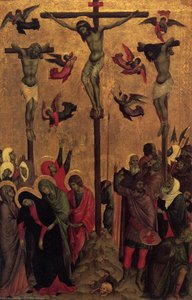
Duccio di Buoninsegna’s “La Maestà,” specifically the panel depicting “La subida al Calvario y Pilatos se lava las manos” (Pilate Washing his Hands), stands as a monumental achievement, a cornerstone of Sienese Gothic art, and a profoundly moving meditation on faith, guilt, and human fallibility. Executed around 1308-1310, this large-scale altarpiece fragment offers an unparalleled glimpse into the artistic innovations of Duccio, a master who dared to temper Byzantine formality with burgeoning Italian naturalism and emotional depth. The scene meticulously rendered captures a pivotal moment from the Passion narrative – Pontius Pilate’s agonizing act of washing his hands, symbolizing his deliberate avoidance of responsibility for Jesus's crucifixion.
- Subject Matter: The composition centers on the dramatic event of Pilate’s ritualistic cleansing, framed by the larger context of Christ’s ascent to the cross. This juxtaposition immediately establishes a complex moral tension, forcing the viewer to confront questions of power, justice, and divine judgment.
- Style & Technique: Duccio's mastery is evident in his use of *tempera* on panel, creating surfaces rich with luminous color and subtle gradations. The figures are rendered with a remarkable sense of volume and plasticity, achieved through careful modeling of drapery and musculature – a significant departure from the flatter styles prevalent in earlier Byzantine art. Note the delicate handling of fabrics, particularly in Christ’s garments, conveying both grandeur and vulnerability.
- Compositional Dynamics: The arrangement is carefully constructed to guide the viewer's eye. Pilate dominates the foreground, his posture conveying a sense of profound anguish and regret. Jesus, centrally positioned on the cross, embodies suffering and sacrifice. The figures surrounding them – Roman soldiers, onlookers – contribute to the scene’s dramatic intensity.
Symbolism and Iconography: A Tapestry of Meaning
Beyond its narrative power, “La Maestà” is laden with symbolic meaning deeply rooted in Christian iconography. Pilate's act isn't simply a historical detail; it represents the broader theme of human complicity in evil. The cup he uses to wash his hands echoes the biblical imagery of baptism, suggesting a futile attempt to cleanse himself of sin. Christ’s crucifixion, the central element of the scene, symbolizes redemption and salvation. The inclusion of figures like the Roman soldiers underscores the political and social forces contributing to Jesus's death.
- Color Palette: Duccio employs a rich palette dominated by blues, reds, and golds – colors traditionally associated with royalty, divinity, and sacrifice. The deep ultramarine blue, painstakingly crafted through grinding lapis lazuli, was particularly prized during this period and signifies the heavens and Christ’s divine nature.
- Gestural Language: The expressive gestures of the figures—Pilate's bowed head, Jesus's outstretched arms—are imbued with emotional weight, reflecting Duccio’s commitment to portraying human experience within a sacred context.
Historical Context and Artistic Innovation
“La Maestà” emerged during a crucial period of artistic transition in Italy. While influenced by the enduring legacy of Byzantine art – particularly its emphasis on stylized figures and hierarchical composition – Duccio was one of the first Sienese artists to embrace a more naturalistic approach, anticipating the developments of the International Gothic style. This work represents a pivotal moment in the evolution of Italian painting, demonstrating a move towards greater emotional realism and individual expression within religious art. Duccio’s influence extended far beyond Siena, shaping the artistic landscape of Tuscany and contributing significantly to the development of Western European iconography for centuries to come.
This exceptional reproduction captures every nuance of Duccio's genius, offering a timeless testament to his skill and vision. It is an ideal piece for collectors seeking a profound statement of faith, or for interior designers desiring a touch of Gothic grandeur and contemplative beauty.
Obras relacionadas
Biografía del artista
vida temprana y carrera
Duccio di Buoninsegna, un renombrado pintor italiano de Siena, fue activo durante el tardo siglo XIII y principios del XIV. Nacido en 1255, la vida personal de Duccio permanece envuelta en misterio, con poco conocimiento sobre su origen familiar o sus primeros años. Sin embargo, sus contribuciones al estilo pictórico del trecento y la escuela sienesa están bien documentadas.estilo artístico e influencias
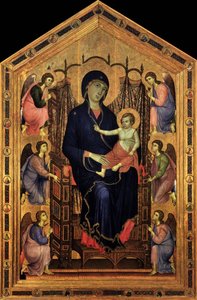
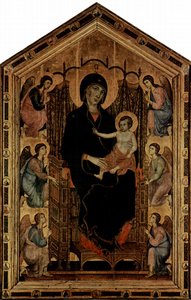
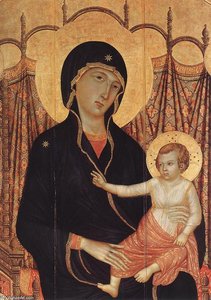
El trabajo de Duccio se caracteriza por su innovador uso del espacio y el color, como se ve en su obra maestra La Madonna de los Rucellai (1285). Esta pintura, que presenta a la Virgen María sosteniendo al Niño Jesús, rodeada de ángeles y santos, muestra el estilo único de Duccio, que combina el arte bizantino con nuevas técnicas. Su uso del modelado y su juego con la luz y los colores oscuros revelan figuras debajo de una vestidura pesada, creando una atmósfera acogedora y cálida.obras notables y legado
Algunas de las obras notables de Duccio incluyen:- Maestó (frontal, paneles de coronación), Partiendo de los apóstoles (arte gótico, óleo) - un testimonio de su enfoque innovador del espacio y el color.
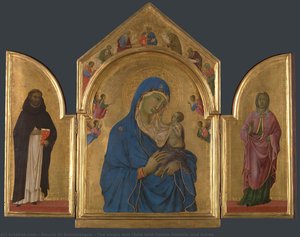
- Políptico No. 28 (La Virgen Santa con el Niño Jesús y cuatro santos) (arte gótico, óleo) - demuestra la maestría de Duccio en la composición y la narrativa.
- Maestó (espalda, predela), Tentación en un pinnáculo del templo (arte gótico, óleo) - muestra su capacidad para equilibrar la luz y los colores oscuros.
legado y recuerdo
A pesar de tener dificultades con la gestión financiera, el legado artístico de Duccio supera ampliamente sus desafíos personales. Su obra se encuentra en varios museos y galerías, incluyendo la Galería de Arte de la Ciudad de Manchester, que alberga numerosas obras maestras de artistas destacados. Ver las obras de Duccio di Buoninsegna en ArtsDot.com Wikipedia: Duccio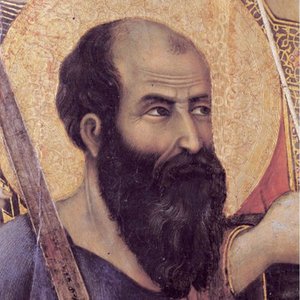
Duccio di Buoninsegna
1255 - 1319 , Italia
Datos clave
- Artistas Influenciados: ['Escuela Sienesa']
- Artistas Que Influyeron: ['Arte Bizantino']
- Fecha De Nacimiento: c. 1255
- Lugar De Nacimiento: Siena, Italia
- Movimiento Artístico: Gótico Sienés, Trecento
- Nacionalidad: Italiana
- Nombre Completo: Duccio di Buoninsegna
- Obras Notables:
- Madonna de Rucellai
- Maestà
- Vuelo a Egipto
Artículos relacionados
Giotto di Bondone: Las 25 Obras Maestras que Definieron el Renacimiento | ArtsDot
Descubre las 25 obras maestras de Giotto di Bondone, el pionero del Renacimiento. Explora la historia, técnica y simbolismo de sus frescos italianos más icónicos. Encuentra reproducciones de arte exclusivas para decorar tu hogar en ArtsDot.com.
La Biennale de Venecia: 25 Obras Maestras para Inspirar tu Hogar | ArtsDot
Descubre las 25 obras maestras de la Bienal de Venecia. Explora la historia, artistas y técnicas detrás de iconos del arte renacentista, moderno y contemporáneo. Encuentra reproducciones de alta calidad e inspira tu hogar con ArtsDot.com.
Simone Martini: Innovation, Spirituality & Courtly Refinement in Sienese Painting
Explore the captivating world of Simone Martini, a pivotal figure in Sienese painting & the International Gothic style. Discover his innovative techniques, spiritual depth, and lasting influence on early Renaissance art.
10 Obras Maestras Medievales que Definen el Arte (y tu Hogar)
Descubre 10 obras maestras del arte medieval, desde Duccio a Van Eyck. Explora la historia, simbolismo y belleza de Giotto, Simone Martini y más. Encuentra reproducciones de alta calidad para decorar tu hogar en ArtsDot.com.
Proto-Renacimiento: 10 Obras Maestras que Cambiaron la Historia del Arte | ArtsDot
Descubre las 10 obras maestras del Proto Renacimiento que revolucionaron el arte italiano. Explora la historia de Giotto, Duccio y Cimabue. Reproducciones de arte en ArtsDot.com para decorar tu hogar con belleza atemporal.