 Ver en contexto
 Enviar
 Compartir
 Detalles

 Descargar
 Similares
 Radiografía
 Presentación de diapositivas
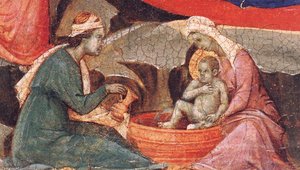
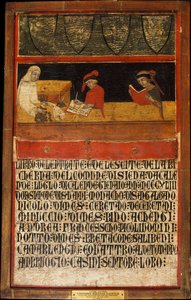
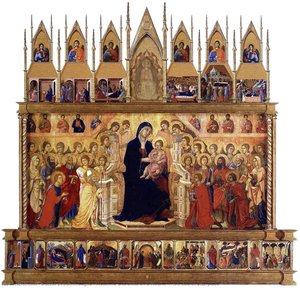
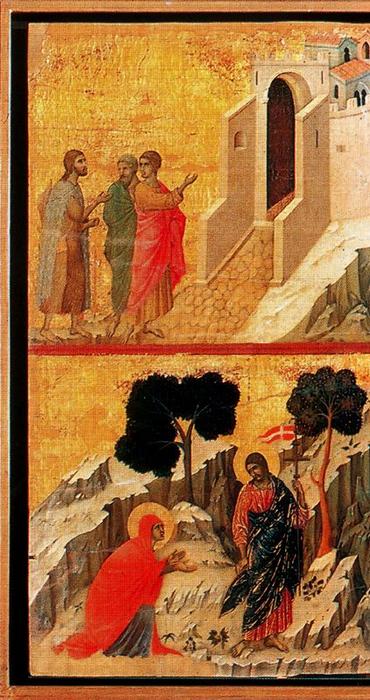
La Maestà. Parte Posterior

 Ver más
Giclée / Impresión de arte
Impresiones giclée o en lienzo de calidad de museo con producción rápida y opciones de acabado flexibles. ( Comprar pintura hecha a mano Comprar imagen)




P118B $10

P118H $10

P118W $10

P438Z $10

P508JH $12

P508YH $12

P805H $10

P805Z $10

P919BZ $10

P919G $10

P919XJ $10

P959ZH $10

P968JZ $12

W106C $8

W218G $10

W218JH $8

W218Y $10

W307PJ $10

W316G $10

W316PJ $8

W316Y $10

W398PJ $8

W4111J $10

W500HY $15

W500JH $15

W692G $12

W849H $8

W940BG $15

W953PJ $8




Elija entre nuestros tamaños predefinidos que respetan las proporciones originales de la obra.

Puede introducir sus propias dimensiones para adaptarse a un marco o espacio específico. Si el tamaño seleccionado no coincide con las proporciones de la imagen original, recortaremos la obra de arte o extenderemos la imagen con un borde con efecto espejo o de color sólido. Se enviará una maqueta digital para su aprobación antes de que comience la producción.
Tenga en cuenta que la vista previa en pantalla no refleja el recorte o la extensión real. Solo la maqueta mostrará con precisión la composición final.
Aunque existen tamaños personalizados, recomendamos seleccionar una dimensión de la lista predefinida para preservar las proporciones originales.
Envío a todo el mundo () en 2 semanas en lugar de las 4/5 semanas estándar. (23 agosto)

Envío exprés gratuito a todo el mundo

Lienzo de lino de alta calidad

Seguro de envío total

Garantía de reembolso de impuestos aduaneros

Garantía de fidelidad cromática exacta

Política de devolución de 60 días (solo por defectos)

Garantía de devolución del 100% del dinero

Descuento por cantidad
 La opción de vidrio solo está disponible en tamaños inferiores a 110 cm.

La Maestà. Parte Posterior
Giclée / Impresión de arte
Dimensiones de la reproducción
-


Precio total final
$ 62
Descripción de la pieza
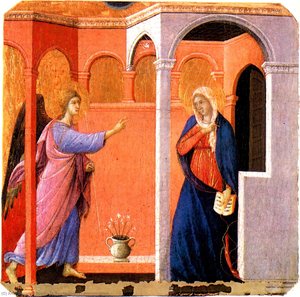
A Window Into Medieval Faith: Exploring Duccio’s ‘La Maestà’
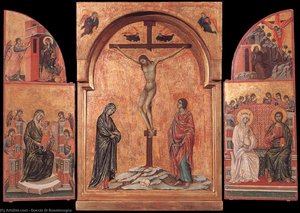
- Subject Matter & Narrative The painting, “La Maestà,” or “The Majesty,” depicts a monumental religious scene centered around Jesus Christ flanked by Mary Magdalene and Saint John the Evangelist. It's not merely an illustration of biblical scripture; rather, it represents a profound meditation on divine majesty and humility—a deliberate departure from the stylized conventions of Byzantine art.
- Style & Technique: Florentine Innovation Duccio’s masterpiece marks a significant step toward the Florentine Renaissance style. Unlike the flattened perspective and rigid drapery characteristic of Byzantium, “La Maestà” employs a more naturalistic approach to depiction, particularly evident in the figures' musculature and facial expressions. The artist skillfully utilized tempera paint on panel—a technique favored by Sienese artists—resulting in luminous colors and remarkable detail. Historical Context: Siena’s Artistic Ascendancy
- Siena during Duccio's lifetime was a vibrant hub of artistic activity, fueled by papal patronage and a fervent devotion to Christianity. The painting emerged from this environment, reflecting the spiritual fervor of the era and embodying the ideals of piety and contemplation.
- It stands as one of the most influential artworks produced in Italy during the 13th century, establishing Duccio’s reputation as a visionary artist who championed humanist values alongside religious orthodoxy. The commission itself underscores the importance of faith within medieval society.
- Symbolism & Composition The pyramidal composition—a cornerstone of Byzantine iconography—is reimagined with subtle dynamism, guiding the viewer’s gaze towards Jesus at its apex. The mountainous landscape serves as a backdrop, symbolizing eternity and conveying a sense of grandeur. Furthermore, the inclusion of Mary Magdalene and Saint John adds layers of theological significance, representing repentance and divine witness respectively.
- Emotional Impact “La Maestà” transcends mere visual representation; it aspires to evoke profound emotion—a feeling of awe and reverence for God’s glory. The artist's masterful use of color and texture contributes to this emotional resonance, inviting contemplation and fostering a connection with the spiritual realm.
Technical Considerations: Tempera Paint & Panel Support
- Duccio’s choice of tempera paint—pigments bound together with egg yolk—was revolutionary for its time. This medium allowed for unparalleled brilliance and luminosity, surpassing the muted tones achievable with fresco or oil painting.
- The panel support—typically poplar wood—provided stability and facilitated meticulous detail work. The painstaking layering of translucent glazes created depth and richness, enhancing the overall visual impact of the artwork.
Legacy & Influence
- "La Maestà" profoundly impacted subsequent generations of artists, establishing Duccio as a precursor to the Florentine Renaissance. Its humanist sensibilities and naturalistic style foreshadowed the artistic breakthroughs that would characterize the era.
- Reproductions of this iconic artwork continue to inspire designers and collectors alike, capturing the enduring beauty and spiritual power of medieval art—a testament to Duccio’s genius and his contribution to Western artistic heritage.
Obras relacionadas
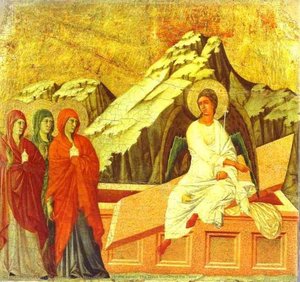
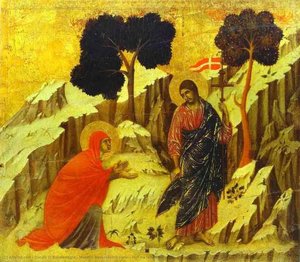
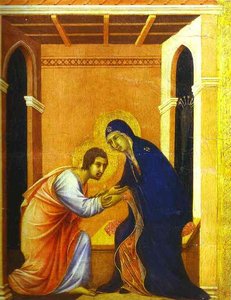
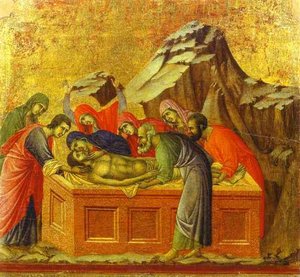
Biografía del artista
vida temprana y carrera
Duccio di Buoninsegna, un renombrado pintor italiano de Siena, fue activo durante el tardo siglo XIII y principios del XIV. Nacido en 1255, la vida personal de Duccio permanece envuelta en misterio, con poco conocimiento sobre su origen familiar o sus primeros años. Sin embargo, sus contribuciones al estilo pictórico del trecento y la escuela sienesa están bien documentadas.estilo artístico e influencias
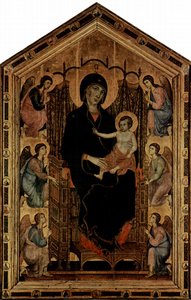
El trabajo de Duccio se caracteriza por su innovador uso del espacio y el color, como se ve en su obra maestra La Madonna de los Rucellai (1285). Esta pintura, que presenta a la Virgen María sosteniendo al Niño Jesús, rodeada de ángeles y santos, muestra el estilo único de Duccio, que combina el arte bizantino con nuevas técnicas. Su uso del modelado y su juego con la luz y los colores oscuros revelan figuras debajo de una vestidura pesada, creando una atmósfera acogedora y cálida.obras notables y legado
Algunas de las obras notables de Duccio incluyen:- Maestó (frontal, paneles de coronación), Partiendo de los apóstoles (arte gótico, óleo) - un testimonio de su enfoque innovador del espacio y el color.
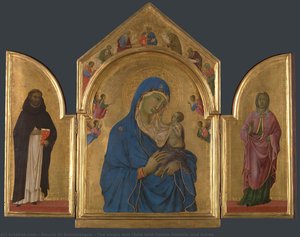
- Políptico No. 28 (La Virgen Santa con el Niño Jesús y cuatro santos) (arte gótico, óleo) - demuestra la maestría de Duccio en la composición y la narrativa.
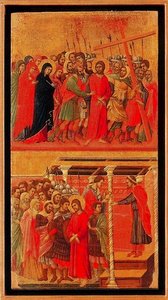
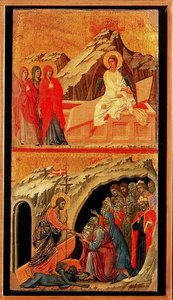
- Maestó (espalda, predela), Tentación en un pinnáculo del templo (arte gótico, óleo) - muestra su capacidad para equilibrar la luz y los colores oscuros.
legado y recuerdo
A pesar de tener dificultades con la gestión financiera, el legado artístico de Duccio supera ampliamente sus desafíos personales. Su obra se encuentra en varios museos y galerías, incluyendo la Galería de Arte de la Ciudad de Manchester, que alberga numerosas obras maestras de artistas destacados. Ver las obras de Duccio di Buoninsegna en ArtsDot.com Wikipedia: Duccio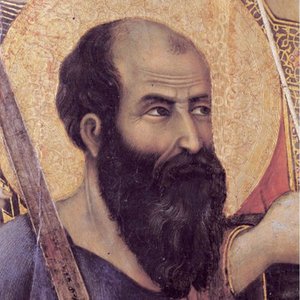
Duccio di Buoninsegna
1255 - 1319 , Italia
Datos clave
- Artistas Influenciados: ['Escuela Sienesa']
- Artistas Que Influyeron: ['Arte Bizantino']
- Fecha De Nacimiento: c. 1255
- Lugar De Nacimiento: Siena, Italia
- Movimiento Artístico: Gótico Sienés, Trecento
- Nacionalidad: Italiana
- Nombre Completo: Duccio di Buoninsegna
- Obras Notables:
- Madonna de Rucellai
- Maestà
- Vuelo a Egipto
Artículos relacionados

Legado en las Paredes: Frescos Familiares que Trascienden el Tiempo
Descubre el arte del fresco muralístico para inmortalizar tu historia familiar. Expertos en frescos personalizados y técnicas ancestrales. Crea un legado visual único con .

The Enduring Legacy of Fresco Painting: Techniques, History & Contemporary Relevance
Explore the rich history & enduring artistry of fresco painting – from Giotto to Michelangelo! Discover techniques, conservation efforts, & modern applications. Learn how ArtsDot brings this timeless art form to your home.

The Enduring Legacy of Fresco: Technique, History & Artistic Expression Across Cultures
Explore the rich history & enduring legacy of fresco painting! Discover ancient techniques, Giotto's masterpieces, and modern applications. Expert insights for art lovers & professionals.

¿El Arte que Habita Contigo: El Poder Emocional de un Fresco Interior Personalizado?
Descubre el poder emocional de un fresco interior personalizado. Expertos en arte te guían para crear una obra única que refleje tu estilo y valore tu hogar. : calidad, confianza y diseño excepcional.
Frescos Legendarios: 10 Obras Maestras que Revolucionaron la Historia del Arte | ArtsDot
Descubre los 10 frescos más legendarios de la historia del arte, desde Miguel Ángel y Rafael hasta Giotto. Explora sus técnicas, historias y el impacto cultural que perdura. Reproducciones de alta calidad en ArtsDot.com.