 Enviar
 Compartir
 Detalles

 Descargar
 Similares
 Presentación de diapositivas
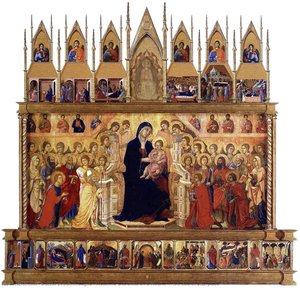
La Virgen y el niño con Santos, Profetas y Ángeles 3


 Ver más
Giclée / Impresión de arte
Impresiones giclée o en lienzo de calidad de museo con producción rápida y opciones de acabado flexibles. ( Comprar pintura hecha a mano Comprar imagen)




































Elija entre nuestros tamaños predefinidos que respetan las proporciones originales de la obra.

Puede introducir sus propias dimensiones para adaptarse a un marco o espacio específico. Si el tamaño seleccionado no coincide con las proporciones de la imagen original, recortaremos la obra de arte o extenderemos la imagen con un borde con efecto espejo o de color sólido. Se enviará una maqueta digital para su aprobación antes de que comience la producción.
Tenga en cuenta que la vista previa en pantalla no refleja el recorte o la extensión real. Solo la maqueta mostrará con precisión la composición final.
Aunque existen tamaños personalizados, recomendamos seleccionar una dimensión de la lista predefinida para preservar las proporciones originales.
Envío a todo el mundo () en 2 semanas en lugar de las 4/5 semanas estándar. (3 septiembre)

Envío exprés gratuito a todo el mundo

Lienzo de lino de alta calidad

Seguro de envío total

Garantía de reembolso de impuestos aduaneros

Garantía de fidelidad cromática exacta

Política de devolución de 60 días (solo por defectos)

Garantía de devolución del 100% del dinero

Descuento por cantidad
 La opción de vidrio solo está disponible en tamaños inferiores a 110 cm.

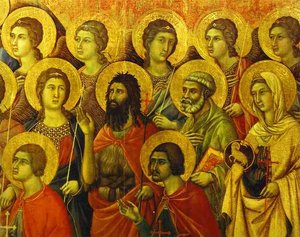
La Virgen y el niño con Santos, Profetas y Ángeles 3
Giclée / Impresión de arte
Dimensiones de la reproducción
-


Precio total final
$ 62
A Celestial Gathering: The Divine Majesty of Duccio
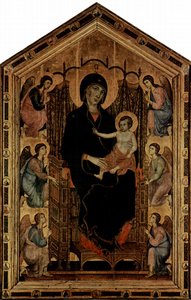
In the hallowed annals of the Sienese School, few works command as much reverence as Duccio di Buoninsegna’s La Virgen y el niño con Santos, Profetas y Ángeles. This monumental masterpiece serves as a breathtaking bridge between two worlds: the rigid, golden austerity of the Byzantine tradition and the burgeoning warmth of Italian humanism. As one gazes upon this sacred assembly, the viewer is not merely observing a painting but is invited into a celestial court. The composition is anchored by the profound presence of the Madonna and Child, seated atop a throne that radiates with the splendor of imperial Constantinople. Duccio masterfully employs a pyramidal structure to instill a sense of eternal stability, ensuring that while the scene is populated by a multitude of saints, prophets, and angels, the spiritual focus remains unshakable and serene.
The visual language of the piece is a symphony of light and symbolic color. Duccio utilizes a palette deeply rooted in the Byzantine legacy, where subdued blues and luminous golds are not merely decorative but theological. The gold leaf, meticulously applied, catches the light to create an ethereal glow, suggesting the uncreated light of the divine realm. This brilliance is balanced by the delicate, more naturalistic treatment of the figures, a hallmark of Duccio’s revolutionary approach. Through subtle shifts in drapery and the tender expressions on the faces of the saints, the artist breathes human emotion into the iconographic tradition, transforming distant deities into relatable, compassionate intercessors for the faithful.
Technique and the Legacy of Sienese Grandeur
To appreciate this work is to appreciate the laborious pursuit of perfection inherent in the fresco and tempera techniques of the late 13th and early 14th centuries. Every brushstroke reflects a lifetime of disciplined apprenticeship, where the artist had to balance the permanence of the medium with the delicacy of the narrative. The intricate details—from the architectural elements like the clock tower that ground the scene in a sense of earthly time, to the celestial figures floating in the upper registers—demonstrate a sophisticated command over spatial depth and complex layering. This technical prowess allows for a dense, multi-layered storytelling experience that rewards the contemplative eye.
For the discerning collector or interior designer, a high-quality reproduction of this masterpiece offers more than mere decoration; it provides a focal point of profound historical and spiritual gravity. The painting’s ability to harmonize grand architectural motifs with intimate religious devotion makes it an ideal centerpiece for spaces that seek to evoke contemplation, elegance, and timelessness. Whether placed in a curated gallery setting or a sophisticated residential study, Duccio’s vision continues to inspire awe, reminding us of a period when art first began to find the human heart within the divine light.
Obras relacionadas
Biografía del artista
vida temprana y carrera
Duccio di Buoninsegna, un renombrado pintor italiano de Siena, fue activo durante el tardo siglo XIII y principios del XIV. Nacido en 1255, la vida personal de Duccio permanece envuelta en misterio, con poco conocimiento sobre su origen familiar o sus primeros años. Sin embargo, sus contribuciones al estilo pictórico del trecento y la escuela sienesa están bien documentadas.estilo artístico e influencias
El trabajo de Duccio se caracteriza por su innovador uso del espacio y el color, como se ve en su obra maestra La Madonna de los Rucellai (1285). Esta pintura, que presenta a la Virgen María sosteniendo al Niño Jesús, rodeada de ángeles y santos, muestra el estilo único de Duccio, que combina el arte bizantino con nuevas técnicas. Su uso del modelado y su juego con la luz y los colores oscuros revelan figuras debajo de una vestidura pesada, creando una atmósfera acogedora y cálida.obras notables y legado
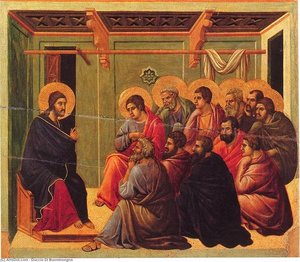
Algunas de las obras notables de Duccio incluyen:- Maestó (frontal, paneles de coronación), Partiendo de los apóstoles (arte gótico, óleo) - un testimonio de su enfoque innovador del espacio y el color.
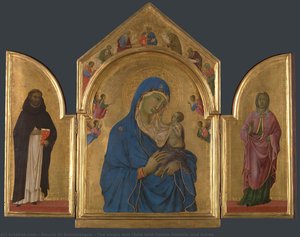
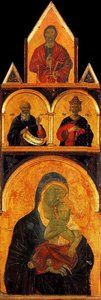
- Políptico No. 28 (La Virgen Santa con el Niño Jesús y cuatro santos) (arte gótico, óleo) - demuestra la maestría de Duccio en la composición y la narrativa.
- Maestó (espalda, predela), Tentación en un pinnáculo del templo (arte gótico, óleo) - muestra su capacidad para equilibrar la luz y los colores oscuros.
legado y recuerdo
A pesar de tener dificultades con la gestión financiera, el legado artístico de Duccio supera ampliamente sus desafíos personales. Su obra se encuentra en varios museos y galerías, incluyendo la Galería de Arte de la Ciudad de Manchester, que alberga numerosas obras maestras de artistas destacados. Ver las obras de Duccio di Buoninsegna en ArtsDot.com Wikipedia: Duccio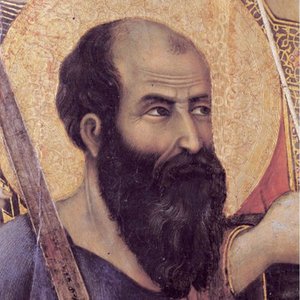
Duccio di Buoninsegna
1255 - 1319 , Italia
Datos clave
- Artistas Influenciados: ['Escuela Sienesa']
- Artistas Que Influyeron: ['Arte Bizantino']
- Fecha De Nacimiento: c. 1255
- Lugar De Nacimiento: Siena, Italia
- Movimiento Artístico: Gótico Sienés, Trecento
- Nacionalidad: Italiana
- Nombre Completo: Duccio di Buoninsegna
- Obras Notables:
- Madonna de Rucellai
- Maestà
- Vuelo a Egipto
Artículos relacionados

Giotto di Bondone: Las 25 Obras Maestras que Definieron el Renacimiento | ArtsDot
Descubre las 25 obras maestras de Giotto di Bondone, el pionero del Renacimiento. Explora la historia, técnica y simbolismo de sus frescos italianos más icónicos. Encuentra reproducciones de arte exclusivas para decorar tu hogar en ArtsDot.com.
Simone Martini: Innovation, Spirituality & Courtly Refinement in Sienese Painting
Explore the captivating world of Simone Martini, a pivotal figure in Sienese painting & the International Gothic style. Discover his innovative techniques, spiritual depth, and lasting influence on early Renaissance art.
Proto-Renacimiento: 10 Obras Maestras que Cambiaron la Historia del Arte | ArtsDot
Descubre las 10 obras maestras del Proto Renacimiento que revolucionaron el arte italiano. Explora la historia de Giotto, Duccio y Cimabue. Reproducciones de arte en ArtsDot.com para decorar tu hogar con belleza atemporal.
10 Obras Maestras Medievales que Definen el Arte (y tu Hogar)
Descubre 10 obras maestras del arte medieval, desde Duccio a Van Eyck. Explora la historia, simbolismo y belleza de Giotto, Simone Martini y más. Encuentra reproducciones de alta calidad para decorar tu hogar en ArtsDot.com.
La Sombra de la Fe: Explorando la Intensidad Espiritual y la Innovación Arquitectónica del Arte Gótico
Descubre la profunda espiritualidad y la innovadora arquitectura del arte gótico. Explora la Basílica de Saint-Denis, su simbolismo cristiano y el legado duradero de este fascinante estilo. Análisis experto en ArtsDot.