 Ver en contexto
 Enviar
 Compartir
 Detalles

 Descargar
 Similares
 Radiografía
 Presentación de diapositivas
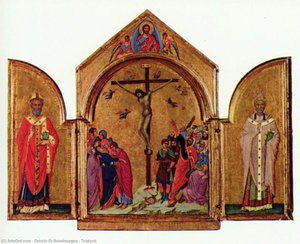
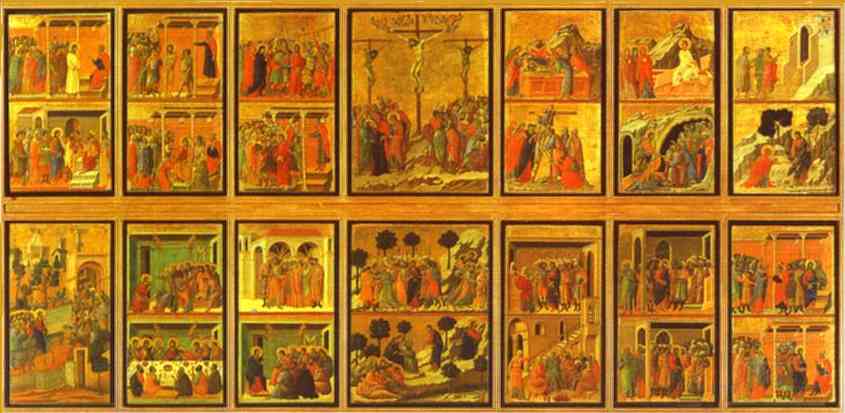
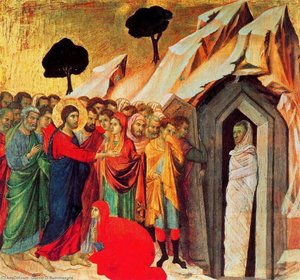
MaestÓ (back with 26 scenes of the Passion)

 Ver más
Reproducción al óleo hecha a mano
Óleo sobre lienzo pintado a mano en el tamaño y marco de su elección, realizado por encargo por nuestros artistas. ( Comprar impresión Comprar imagen)




P118B $10

P118H $10

P118W $10

P438Z $10

P508JH $12

P508YH $12

P805H $10

P805Z $10

P919BZ $10

P919G $10

P919XJ $10

P959ZH $10

P968JZ $12

W106C $8

W218G $10

W218JH $8

W218Y $10

W307PJ $10

W316G $10

W316PJ $8

W316Y $10

W398PJ $8

W4111J $10

W500HY $15

W500JH $15

W692G $12

W849H $8

W940BG $15

W953PJ $8




Elija entre nuestros tamaños predefinidos que respetan las proporciones originales de la obra.

Puede ingresar sus propias dimensiones para adaptarse a un marco o espacio específico. Si el tamaño seleccionado no coincide con las proporciones de la imagen original, recortaremos la obra o extenderemos la pintura con elementos adicionales pintados a mano. Se le enviará una maqueta digital para su aprobación antes de comenzar la producción.
Tenga en cuenta que la vista previa en pantalla no refleja el recorte o la extensión reales. Solo la maqueta mostrará con precisión la composición final.
Si bien existen tamaños personalizados, recomendamos seleccionar una dimensión de la lista predefinida para preservar las proporciones originales.
Tras realizar el pedido, el equipo de ArtsDot.com enviará un correo electrónico al cliente para solicitar instrucciones y proporcionarle una vista previa del boceto.
Envío a todo el mundo () en 3-4 semanas en lugar de las 5 semanas estándar. (31 agosto). Sin comprometer la calidad.

Envío exprés gratuito a todo el mundo

Lienzo de lino de alta calidad

Seguro de envío total

Garantía de reembolso de impuestos aduaneros

Garantía de fidelidad cromática exacta

Política de devolución de 60 días (solo por defectos)

Garantía de devolución del 100% del dinero

Descuento por cantidad
 La opción de vidrio solo está disponible en tamaños inferiores a 110 cm.

MaestÓ (back with 26 scenes of the Passion)
Técnica de reproducción
Dimensiones de la reproducción
-


Precio total final
$ 263
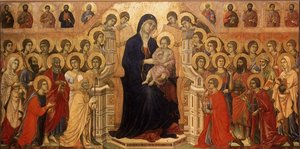
The Majesty of Faith: Duccio’s *Maestó* – A Window into Medieval Spirituality
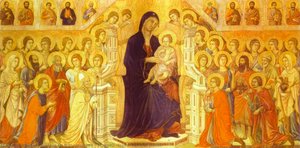
Duccio di Buoninsegna's *Maestó*, completed between 1308 and 1311, isn’t merely a painting; it’s an immersive experience. Created during the vibrant heart of the Sienese School of painting, this monumental altarpiece transcends its original purpose as a church decoration to become a profound meditation on faith, humanity, and divine grace. The work, now housed within the Museo dell'Opera del Duomo in Siena, stands as a testament to Duccio’s innovative approach – one that subtly shifted the artistic landscape of Italy away from the rigid formality of Byzantine influence towards a more emotionally resonant and humanistic style.
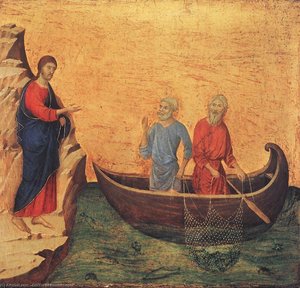
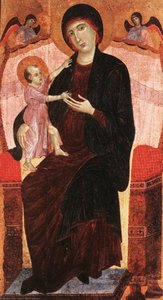
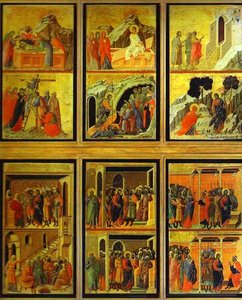
At first glance, the *Maestó* presents a breathtaking spectacle: a central panel depicting the Virgin Mary cradling the Christ Child, surrounded by an array of saints, angels, and prophets. But it’s the reverse side of the altarpiece that truly captivates – a meticulously rendered sequence of twenty-six scenes from the Passion of Christ. This dual presentation was revolutionary for its time, offering viewers a complete narrative journey through both the birth and death of Jesus, a powerful visual sermon on redemption and sacrifice. The sheer scale of the work—approximately 7 by 13 feet—demands attention, drawing the viewer into a world of intricate detail and profound spiritual contemplation.
A Symphony of Tempera and Gold: Technique and Materials
Duccio’s mastery lies not only in his narrative vision but also in his technical execution. The *Maestó* is primarily composed of tempera paint on wood panels, a medium known for its luminosity and rich colors. Crucially, the entire surface is lavishly adorned with gold leaf – a technique deeply rooted in Byzantine tradition, yet employed here with a distinctly Italian sensibility. This shimmering gold wasn’t simply decorative; it symbolized divine light, holiness, and the glory of God. The careful layering of tempera and gold creates an ethereal quality, lending the figures a sense of otherworldly beauty and emphasizing their sacred status.
The use of *sfumato*, a technique pioneered by Duccio himself, subtly blurs outlines and softens transitions between colors, creating a hazy, atmospheric effect. This contributes to the painting’s emotional depth, imbuing the figures with a sense of vulnerability and humanity. Notice how he doesn't depict the figures as static icons but rather as individuals experiencing profound emotion – grief, sorrow, compassion, and even fear.
Scenes of Suffering and Redemption: Symbolism in the Passion
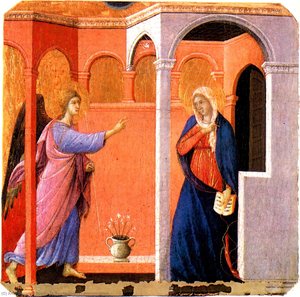
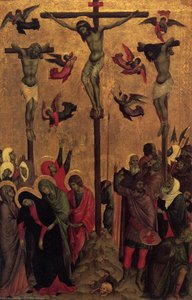
The scenes from the Passion on the reverse side are particularly poignant. Duccio masterfully captures the drama and emotional intensity of these pivotal events. The inclusion of specific figures—such as St. Peter’s initial denial, the Raising of Lazarus, and the Healing of the Blind Man—is not arbitrary; each scene carries a symbolic weight, reinforcing the central themes of sacrifice, forgiveness, and divine mercy. The depiction of Christ's suffering is particularly striking – Duccio avoids overly dramatic or violent portrayals, instead focusing on conveying the profound sorrow and humanity of the dying savior.
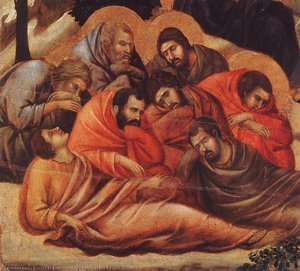
Consider the detail in *St. Peter First Denying Jesus*. The figure’s slumped posture, his averted gaze, and the subtle expression of shame communicate a deep sense of regret and remorse. Duccio doesn't simply depict an event; he captures the psychological impact on those involved – the betrayal, the anguish, and the potential for redemption.
A Legacy of Innovation: The *Maestó’s* Influence
The *Maestó* exerted a profound influence on Sienese art and beyond. It marked a crucial turning point in Italian painting, moving away from the stylized rigidity of Byzantine models towards a more naturalistic and emotionally expressive style. Artists like Giotto, who would later revolutionize Western art, were undoubtedly inspired by Duccio’s innovations – his use of perspective, his focus on human emotion, and his masterful handling of color and light. The *Maestó* stands as a cornerstone of the Sienese School, demonstrating the region's artistic prowess and its contribution to the development of Renaissance painting.
Today, a high-quality reproduction of this masterpiece offers a remarkable opportunity to experience Duccio’s genius firsthand. ArtsDot.com provides meticulously crafted reproductions that capture the essence of the original – the shimmering gold, the delicate details, and the profound spiritual depth of this iconic work.
Obras relacionadas
Biografía del artista
vida temprana y carrera
Duccio di Buoninsegna, un renombrado pintor italiano de Siena, fue activo durante el tardo siglo XIII y principios del XIV. Nacido en 1255, la vida personal de Duccio permanece envuelta en misterio, con poco conocimiento sobre su origen familiar o sus primeros años. Sin embargo, sus contribuciones al estilo pictórico del trecento y la escuela sienesa están bien documentadas.estilo artístico e influencias
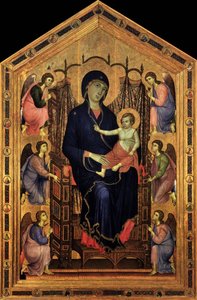
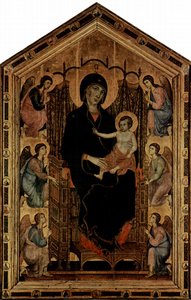
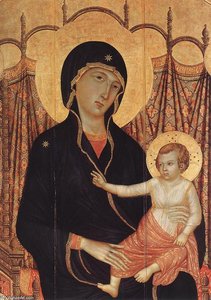
El trabajo de Duccio se caracteriza por su innovador uso del espacio y el color, como se ve en su obra maestra La Madonna de los Rucellai (1285). Esta pintura, que presenta a la Virgen María sosteniendo al Niño Jesús, rodeada de ángeles y santos, muestra el estilo único de Duccio, que combina el arte bizantino con nuevas técnicas. Su uso del modelado y su juego con la luz y los colores oscuros revelan figuras debajo de una vestidura pesada, creando una atmósfera acogedora y cálida.obras notables y legado
Algunas de las obras notables de Duccio incluyen:- Maestó (frontal, paneles de coronación), Partiendo de los apóstoles (arte gótico, óleo) - un testimonio de su enfoque innovador del espacio y el color.
- Políptico No. 28 (La Virgen Santa con el Niño Jesús y cuatro santos) (arte gótico, óleo) - demuestra la maestría de Duccio en la composición y la narrativa.
- Maestó (espalda, predela), Tentación en un pinnáculo del templo (arte gótico, óleo) - muestra su capacidad para equilibrar la luz y los colores oscuros.
legado y recuerdo
A pesar de tener dificultades con la gestión financiera, el legado artístico de Duccio supera ampliamente sus desafíos personales. Su obra se encuentra en varios museos y galerías, incluyendo la Galería de Arte de la Ciudad de Manchester, que alberga numerosas obras maestras de artistas destacados. Ver las obras de Duccio di Buoninsegna en ArtsDot.com Wikipedia: Duccio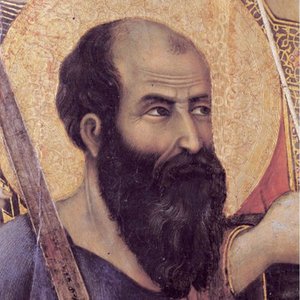
Duccio di Buoninsegna
1255 - 1319 , Italia
Datos clave
- Artistas Influenciados: ['Escuela Sienesa']
- Artistas Que Influyeron: ['Arte Bizantino']
- Fecha De Nacimiento: c. 1255
- Lugar De Nacimiento: Siena, Italia
- Movimiento Artístico: Gótico Sienés, Trecento
- Nacionalidad: Italiana
- Nombre Completo: Duccio di Buoninsegna
- Obras Notables:
- Madonna de Rucellai
- Maestà
- Vuelo a Egipto
Artículos relacionados

Giotto di Bondone: Las 25 Obras Maestras que Definieron el Renacimiento | ArtsDot
Descubre las 25 obras maestras de Giotto di Bondone, el pionero del Renacimiento. Explora la historia, técnica y simbolismo de sus frescos italianos más icónicos. Encuentra reproducciones de arte exclusivas para decorar tu hogar en ArtsDot.com.
10 Obras Maestras Medievales que Definen el Arte (y tu Hogar)
Descubre 10 obras maestras del arte medieval, desde Duccio a Van Eyck. Explora la historia, simbolismo y belleza de Giotto, Simone Martini y más. Encuentra reproducciones de alta calidad para decorar tu hogar en ArtsDot.com.
La Biennale de Venecia: 25 Obras Maestras para Inspirar tu Hogar | ArtsDot
Descubre las 25 obras maestras de la Bienal de Venecia. Explora la historia, artistas y técnicas detrás de iconos del arte renacentista, moderno y contemporáneo. Encuentra reproducciones de alta calidad e inspira tu hogar con ArtsDot.com.
La Sombra de la Fe: Explorando la Intensidad Espiritual y la Innovación Arquitectónica del Arte Gótico
Descubre la profunda espiritualidad y la innovadora arquitectura del arte gótico. Explora la Basílica de Saint-Denis, su simbolismo cristiano y el legado duradero de este fascinante estilo. Análisis experto en ArtsDot.
El Crepúsculo Radiante de la Visión Medieval: Fe, Forma y Emotividad en el Arte Gótico Tardío (c. 1300-1500)
Explore el esplendor del arte gótico tardío (c. 1300-1500). Descubra la síntesis de fe, forma y emoción en la pintura internacional, los retablos medievales y la influencia de Giotto. Análisis experto.