 Ver en contexto
 Enviar
 Compartir
 Detalles

 Descargar
 Similares
 Radiografía
 Presentación de diapositivas
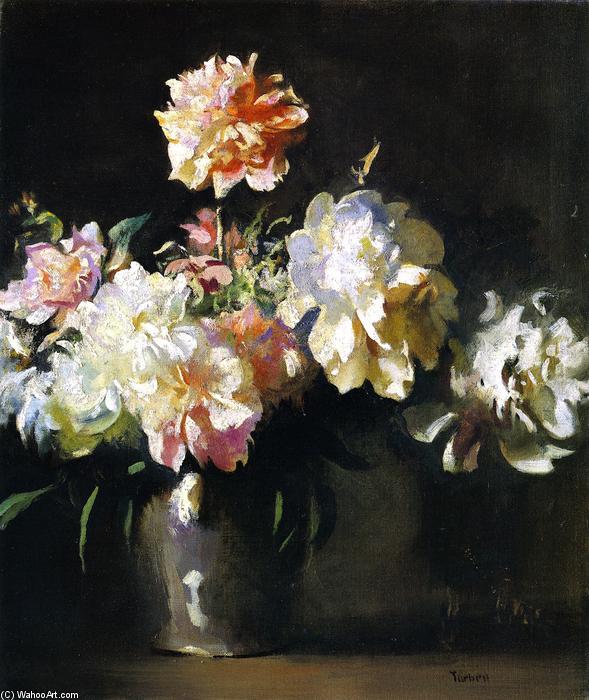
Still LIfe: Vase of Peonies


 Ver más
Giclée / Impresión de arte
Impresiones giclée o en lienzo de calidad de museo con producción rápida y opciones de acabado flexibles. ( Comprar pintura hecha a mano Comprar imagen)




P118B $10

P118H $10

P118W $10

P438Z $10

P508JH $12

P508YH $12

P805H $10

P805Z $10

P919BZ $10

P919G $10

P919XJ $10

P959ZH $10

P968JZ $12

W106C $8

W218G $10

W218JH $8

W218Y $10

W307PJ $10

W316G $10

W316PJ $8

W316Y $10

W398PJ $8

W4111J $10

W500HY $15

W500JH $15

W692G $12

W849H $8

W940BG $15

W953PJ $8




Elija entre nuestros tamaños predefinidos que respetan las proporciones originales de la obra.

Puede introducir sus propias dimensiones para adaptarse a un marco o espacio específico. Si el tamaño seleccionado no coincide con las proporciones de la imagen original, recortaremos la obra de arte o extenderemos la imagen con un borde con efecto espejo o de color sólido. Se enviará una maqueta digital para su aprobación antes de que comience la producción.
Tenga en cuenta que la vista previa en pantalla no refleja el recorte o la extensión real. Solo la maqueta mostrará con precisión la composición final.
Aunque existen tamaños personalizados, recomendamos seleccionar una dimensión de la lista predefinida para preservar las proporciones originales.
Envío a todo el mundo () en 2 semanas en lugar de las 4/5 semanas estándar. (25 agosto)

Envío exprés gratuito a todo el mundo

Lienzo de lino de alta calidad

Seguro de envío total

Garantía de reembolso de impuestos aduaneros

Garantía de fidelidad cromática exacta

Política de devolución de 60 días (solo por defectos)

Garantía de devolución del 100% del dinero

Descuento por cantidad
 La opción de vidrio solo está disponible en tamaños inferiores a 110 cm.

Still LIfe: Vase of Peonies
Giclée / Impresión de arte
Dimensiones de la reproducción
-


Precio total final
$ 62
Descripción de la pieza
A Moment Frozen in Time: The Elegance of Tarbell’s Peonies
Edmund Charles Tarbell's “Still Life: Vase of Peonies” (1925) isn’t merely a depiction of flowers; it’s an invitation to step into a quiet, contemplative space. This oil painting captures the fleeting beauty of peonies within a vase, rendered with a masterful blend of realism and impressionistic technique that speaks volumes about the artist's understanding of light, texture, and emotion. The scene unfolds against a dramatic, almost velvety black background – a deliberate choice that amplifies the luminosity of the blossoms and creates an atmosphere of hushed intimacy.
Tarbell, a key figure in the American Impressionist movement, possessed a remarkable ability to distill the essence of a subject, imbuing it with a sense of immediacy and feeling. His work often focused on domestic scenes – portraits of family members, glimpses into everyday life – but he approached these subjects with an artist’s eye for detail and a deep appreciation for the subtleties of light and color. Born in Groton, Massachusetts, Tarbell's early training instilled in him a respect for traditional artistic principles, which he skillfully integrated with his own innovative style.
The Language of Flowers: Symbolism and Meaning
Peonies themselves are rich in symbolism, deeply rooted in both Eastern and Western traditions. In Chinese culture, they represent wealth, honor, and prosperity – a testament to their association with imperial gardens and the elite. Western interpretations often link them to romance, beauty, and good fortune, reflecting their vibrant colors and delicate form. Tarbell’s choice to feature these flowers within an ornate silver vase subtly reinforces this dual symbolism, suggesting a harmonious blend of cultures and artistic influences.
The inclusion of the dark background is particularly significant. It's not simply a void; it acts as a stage, drawing all attention to the luminous blossoms and creating a sense of depth and drama. The careful layering of paint – visible brushstrokes that build up texture and form – contributes to this effect, inviting the viewer to examine the painting’s surface closely.
A Masterclass in Technique: Impressionism Revisited
Tarbell's technique is a testament to his command of oil paints. He employs a broken color approach, applying thin layers of paint that blend optically when viewed from a distance. This creates an illusion of shimmering light and movement, capturing the ephemeral quality of the peonies’ petals. The artist’s use of impasto – thick applications of paint – adds tactile richness to the blossoms, emphasizing their velvety texture and inviting touch. Notice how he subtly suggests the folds and curves of the vase through carefully placed highlights and shadows.
The painting's composition is vertically oriented, mirroring the elegant form of the vase and drawing the eye upwards towards the flowers. The shallow perspective creates a sense of intimacy, as if we are standing close to this still life, observing it with quiet admiration. It’s a scene frozen in time—a moment of beauty captured for posterity.
Beyond Reproduction: Understanding the Original
While reproductions offer an accessible way to appreciate Tarbell's work, they can never fully replicate the experience of encountering the original painting. The subtle nuances of color, texture, and light – qualities that are so integral to its impact – are often lost in translation. To truly understand “Still Life: Vase of Peonies,” one must consider it within the context of Tarbell’s broader artistic vision—a vision shaped by his training, his personal life, and his deep appreciation for the beauty of the natural world.
Obras relacionadas
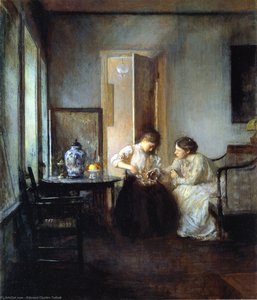
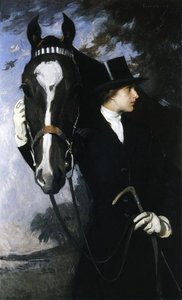
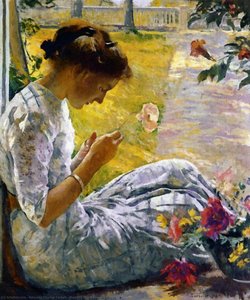
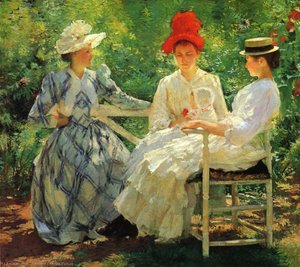
Biografía del artista
Vida Temprana y Educación
- Nacido: Groton, Estados Unidos de América (1862)
- Fallecido: 1938
- Edmund Charles Tarbell nació en una familia con profundas raíces americanas. Su padre, Edmund Whitney, falleció cuando Tarbell era joven, dejando a su madre, Mary Sophia Fernald, para que se casara de nuevo y los criara a él y a su hermana en West Groton, Massachusetts.
- Su primera formación artística comenzó en la Escuela Normal de Arte de Massachusetts.
- Perfeccionó aún más sus habilidades mediante un aprendizaje en Forbes Lithographic Company en Boston.
- De 1879 a 1880, estudió bajo Otto Grundmann en la Escuela del Museo de Bellas Artes de Boston, un período crucial que moldeó su base artística.
Carrera Artística y Estilo
- La carrera de Tarbell abarcó ilustración, enseñanza privada de arte y pintura de retratos. Se casó con Emeline Souther en 1888, quien también estudió arte.
- Su estilo se caracteriza como Impresionismo Americano, reflejando un enfoque en capturar momentos fugaces de luz y atmósfera.
- Era conocido por sus luminosos retratos, escenas domésticas íntimas y representaciones de interiores de la época del Renacimiento Colonial.
- Obras notables incluyen Autorretrato, Benjamin Rush y Después del Baile.
- En el Huerto (1891) se considera una obra definitoria, que muestra su capacidad para retratar la vida cotidiana con sensibilidad y habilidad.
Membresía en "Diez Pintores Americanos" y Gremio de Artistas de Boston
- Tarbell fue miembro fundador del influyente grupo conocido como “Diez Pintores Americanos”, formado en 1897. Este colectivo tenía como objetivo promover el arte americano y proporcionar un lugar alternativo de exposición a instituciones establecidas.
- El grupo incluía artistas destacados como John H. White, Joseph Penway Dodge, y otros que compartían un compromiso con la representación de la vida contemporánea con realismo y técnicas impresionistas.
- En 1914, cofundó el Gremio de Artistas de Boston y sirvió como su primer presidente hasta 1924, demostrando aún más su dedicación a apoyar a sus colegas artistas y fomentar una comunidad artística.
Logros Mayores y Legado
- Las obras de Tarbell se encuentran en colecciones prestigiosas incluyendo el Museo Smithsonian de Arte Americano, la Galería Corcoran de Arte, la Academia Nacional de Diseño e incluso la Casa Blanca.
- Su capacidad para capturar la esencia de la vida doméstica y retratar a las personas con calidez y autenticidad le valió un amplio reconocimiento durante su vida.
- Es recordado como una figura significativa en el Impresionismo Americano, contribuyendo al desarrollo de una voz artística estadounidense distintiva.
- La influencia de Tarbell se puede ver en generaciones posteriores de artistas que adoptaron su enfoque en temas cotidianos y su compromiso con la representación de la vida con honestidad y sensibilidad.
Significado Histórico
- Como miembro de "Diez Pintores Americanos", Tarbell jugó un papel crucial en desafiar el dominio de los estilos artísticos europeos y promover una estética estadounidense única.
- Su obra refleja el cambiante panorama social de finales del siglo XIX y principios del XX en Estados Unidos, capturando los valores y aspiraciones de una clase media emergente.
- El legado de Tarbell se extiende más allá de sus pinturas individuales; ayudó a establecer Boston como un centro de innovación artística y contribuyó al crecimiento del arte americano a nivel nacional.
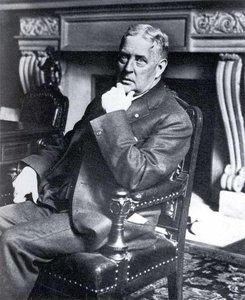
Edmund Charles Tarbell
1862 - 1938 , Estados Unidos de América
Datos clave
- Artistas Que Influyeron: ['Otto Grundmann']
- Fecha De Fallecimiento: 1938
- Fecha De Nacimiento: 26 de abril de 1862
- Lugar De Nacimiento: Groton, EE. UU.
- Movimiento Artístico: Impresionismo americano
- Nacionalidad: Estadounidense
- Nombre Completo: Edmund Charles Tarbell
- Obras Notables:
- En el huerto
- Autorretrato
- Después del baile
Artículos relacionados
Edmund Charles Tarbell: Illuminating American Life Through Intimate Realism
Explore the captivating world of Edmund Charles Tarbell, a leading American Impressionist. Discover his luminous portraits, mastery of light, and lasting influence on the Boston School. Learn about his life, art, and legacy at ArtsDot.
Blossoming Symbolism: A Historical Journey Through Flowers in Western Painting
Explore the rich history of flower symbolism in Western painting! Discover how artists from the Renaissance to Modernism used blossoms to convey meaning, emotion & beauty. Learn about iconic artworks and movements.

The Enduring Legacy of Oil on Canvas: Technique, History & Aesthetic Impact
Explore the rich history & techniques of oil painting – from Renaissance masters to Impressionism. Discover pigments, layering methods, and why this timeless medium endures. Expert insights for artists & art enthusiasts.

El Óleo sobre Lienzo: Historia, Técnica y la Persistencia de un Medio Artístico Atemporal
Descubre la historia y técnica del óleo sobre lienzo. Explora reproducciones fieles hechas a mano, personalización artística y consejos de expertos con ArtsDot. ¡Colecciona arte con confianza!
Silent Narratives: Exploring the Enduring Appeal of Still Life Painting Across Centuries
Explore the rich history of still life painting with ArtsDot. Discover Dutch Masters, decode vanitas symbolism & learn about collecting timeless art. Expert insights and museum-quality reproductions.