Ver en contexto
 Enviar
 Compartir
 Detalles

 Descargar
 Similares
 Radiografía
 Presentación de diapositivas
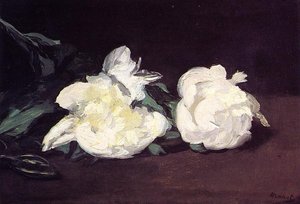
Branch of white peonies with pruning shears

 Ver más
Reproducción al óleo hecha a mano
Óleo sobre lienzo pintado a mano en el tamaño y marco de su elección, realizado por encargo por nuestros artistas. ( Comprar impresión Comprar imagen)




P118B $10

P118H $10

P118W $10

P438Z $10

P508JH $12

P508YH $12

P805H $10

P805Z $10

P919BZ $10

P919G $10

P919XJ $10

P959ZH $10

P968JZ $12

W106C $8

W218G $10

W218JH $8

W218Y $10

W307PJ $10

W316G $10

W316PJ $8

W316Y $10

W398PJ $8

W4111J $10

W500HY $15

W500JH $15

W692G $12

W849H $8

W940BG $15

W953PJ $8




Elija entre nuestros tamaños predefinidos que respetan las proporciones originales de la obra.

Puede ingresar sus propias dimensiones para adaptarse a un marco o espacio específico. Si el tamaño seleccionado no coincide con las proporciones de la imagen original, recortaremos la obra o extenderemos la pintura con elementos adicionales pintados a mano. Se le enviará una maqueta digital para su aprobación antes de comenzar la producción.
Tenga en cuenta que la vista previa en pantalla no refleja el recorte o la extensión reales. Solo la maqueta mostrará con precisión la composición final.
Si bien existen tamaños personalizados, recomendamos seleccionar una dimensión de la lista predefinida para preservar las proporciones originales.
Tras realizar el pedido, el equipo de ArtsDot.com enviará un correo electrónico al cliente para solicitar instrucciones y proporcionarle una vista previa del boceto.
Envío a todo el mundo () en 3-4 semanas en lugar de las 5 semanas estándar. (22 agosto). Sin comprometer la calidad.

Envío exprés gratuito a todo el mundo

Lienzo de lino de alta calidad

Seguro de envío total

Garantía de reembolso de impuestos aduaneros

Garantía de fidelidad cromática exacta

Política de devolución de 60 días (solo por defectos)

Garantía de devolución del 100% del dinero

Descuento por cantidad
 La opción de vidrio solo está disponible en tamaños inferiores a 110 cm.

Branch of white peonies with pruning shears
Técnica de reproducción
Dimensiones de la reproducción
-


Precio total final
$ 263
Descripción de la obra
A Moment Frozen in Light: Manet’s ‘Branch of White Peonies with Pruning Shears’
Édouard Manet's “Branch of White Peonies with Pruning Shears” isn’t merely a still life; it’s a carefully constructed tableau, a fleeting capture of beauty and the subtle intrusion of human action. Painted in 1864, this work stands as a pivotal moment in the transition from the rigid formality of academic art to the vibrant, emotionally resonant Impressionism that would soon dominate the Parisian art scene. The painting immediately draws the eye with its delicate balance – two pristine white peonies, their petals unfurling in an almost ethereal glow, positioned against the muted tones of a simple wooden table and the dark silhouette of pruning shears.
Manet’s technique is remarkably loose and expressive, a deliberate departure from the meticulous detail favored by his predecessors. He employs rapid, broken brushstrokes, layering colors rather than blending them smoothly. This creates a sense of movement and luminosity, as if the light itself is dancing across the petals and leaves. The peonies aren't rendered with photographic accuracy; instead, Manet focuses on capturing their essence – their delicate texture, their subtle variations in color, and the way they interact with the surrounding light. Notice how he uses darker shades to create depth and shadow, subtly suggesting the form of the stems and leaves without resorting to precise outlines.
The Context of Modernity
To understand “Branch of White Peonies,” one must consider the broader artistic and social landscape of 1864 Paris. The city was undergoing rapid transformation – industrialization, urbanization, and a growing sense of modernity were reshaping its identity. Traditional academic art, with its emphasis on historical narratives and mythological subjects, struggled to capture this new reality. Manet, along with artists like Monet and Renoir, sought to depict the everyday lives of ordinary people, using contemporary settings and subjects. The inclusion of the pruning shears is particularly significant; they represent a deliberate intrusion of human activity into the natural world, subtly commenting on the relationship between man and nature – a theme that would become increasingly important in Impressionist art.
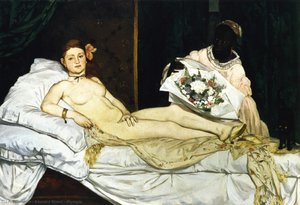
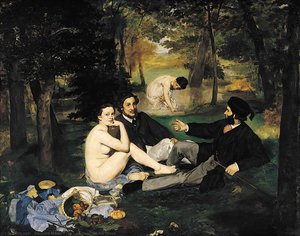
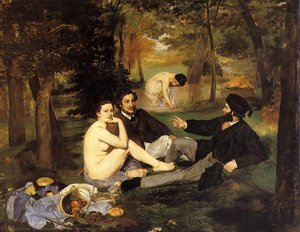
The painting’s placement within Manet's oeuvre further illuminates its significance. Following his controversial early works like “Le Déjeuner sur l’herbe” and "Olympia," Manet was navigating a complex relationship with the Salon, the official art exhibition of the Académie des Beaux-Arts. These paintings challenged conventional notions of beauty and morality, sparking heated debate among critics and artists alike. “Branch of White Peonies,” while less overtly provocative than these earlier works, still represented a bold departure from tradition, signaling Manet’s commitment to portraying modern life with honesty and directness.
Symbolism and Emotional Resonance
Beyond its technical merits, "Branch of White Peonies" is rich in symbolic meaning. The white peonies themselves are associated with purity, innocence, and beauty – qualities that contrast sharply with the darker tones of the shears. This juxtaposition creates a subtle tension within the composition, suggesting a fleeting moment of perfection threatened by human intervention. The simple setting—a rustic wooden table—evokes a sense of domesticity and tranquility, while the pruning shears subtly remind us of the cycle of life and death, growth and decay.
The painting’s emotional impact is equally compelling. It evokes a feeling of quiet contemplation – a moment suspended in time, capturing the beauty of nature before it fades away. The soft light and delicate colors create a sense of serenity, while the presence of the shears adds a touch of melancholy, reminding us that all things are transient. It’s a poignant meditation on beauty, mortality, and the relationship between humanity and the natural world.
A Timeless Masterpiece – Reproduction Options
Reproductions of “Branch of White Peonies with Pruning Shears” offer an accessible way to bring this iconic artwork into your home or office. ArtsDot offers meticulously crafted hand-painted reproductions that faithfully capture Manet’s unique style and luminous palette. Each reproduction is created using archival-quality materials, ensuring its longevity and vibrancy for generations to come. Whether you're a seasoned art collector or simply seeking to add a touch of artistic elegance to your space, our reproductions provide an authentic and affordable way to experience the timeless beauty of this masterpiece.
Obras relacionadas
Biografía del artista
vida temprana y carrera
Édouard Manet, un pintor modernista francés, nació el 23 de enero de 1832 en París. Desafiando sus raíces acomodadas y una trayectoria naval predeterminada, Manet emergió como un audaz pintor modernista francés cuyas lienzos capturaban la vitalidad de la vida del siglo XIX. Es ampliamente aclamado por su papel pionero en el impresionismo, guiando el arte hacia territorios inexplorados fuera del realismo.obras notables
Las primeras obras maestras de Manet, el almuerzo en el césped (Le déjeuner sur l'herbe) (1863) y Olympia (1865), fueron radicales, desafiando las normas artísticas y provocando indignación entre los tradicionalistas. Estas obras provocadoras merecieron el aplauso de sus compañeros visionarios, sembrando las semillas del impresionismo. * el almuerzo en el césped (Le déjeuner sur l'herbe) (1863) - una pintura que provocó controversia tanto entre críticos como la academia de bellas artes. * Olympia (1865) - una obra que causó gran revuelo debido a su representación de una mujer desnuda blanca acompañada por una criada negra.museos y colecciones
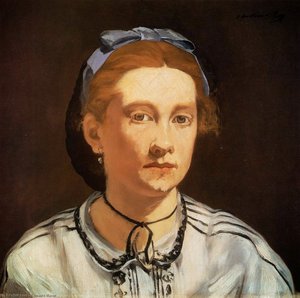
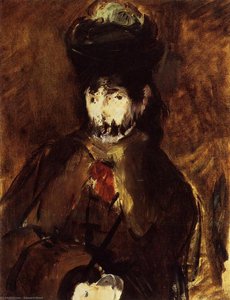
Las obras de Manet se pueden encontrar en varios museos de todo el mundo, incluyendo: * Musée d'Orsay (París, Francia) - hogar de una extensa colección de pinturas de Manet, incluyendo Olympia. * Museo de Bellas Artes (Boston, Estados Unidos) - presenta el retrato de Victorine Meurent, una obra notable en su obra.legado e influencia
El estilo innovador de Manet, caracterizado por pinceladas amplias y rápidas, iluminación de estudio y profundidad superficial, ha sido una gran influencia para los pintores futuros. Su legado se puede ver en las obras de numerosos artistas que han seguido sus pasos.- Impresionismo: su trabajo pionero en este estilo lo ha convertido en un nombre familiar entre los entusiastas del arte.
- Realismo: su rechazo de los enfoques realistas tradicionales allanó el camino para una nueva generación de artistas.
- Arte moderno: las contribuciones de Manet a la evolución del arte moderno son innegables, consolidando su lugar en los anales de la historia del arte.
lectura adicional y exploración
* Descubra más sobre la vida y obra de Édouard Manet en ArtsDot. * Explore la colección del Musée d'Orsay, que presenta una amplia gama de pinturas de Manet, incluyendo Olympia, en ArtsDot's página del museo.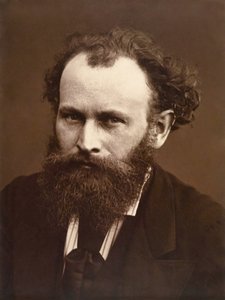
Édouard Manet
1832 - 1883 , Francia
Datos clave
- Artistas Influenciados:
- Claude Monet
- Pierre-Auguste Renoir
- Edgar Degas
- Artistas Que Influyeron:
- Thomas Couture
- Gustave Courbet
- Diego Velázquez
- Fecha De Muerte: 1883
- Fecha De Nacimiento: 23 de enero de 1832
- Lugar De Nacimiento: París, Francia
- Movimiento Artístico: Impresionismo, Realismo
- Nacionalidad: Francés
- Nombre Completo: Édouard Manet
- Obras Notables:
- Le Déjeuner sur l'herbe
- Olympia
- Madame Manet
- Un joven pelando una pera
Artículos relacionados
Édouard Manet: Las 25 Obras Maestras del Impresionismo para Decorar tu Hogar con Arte
Descubre las 25 obras maestras de Édouard Manet, el rebelde del impresionismo. Explora su historia, técnica y significado en cada cuadro famoso. Reproducciones de arte de museo para decorar tu hogar con estilo. ¡Explora la colección completa en ArtsDot.com!

Blanco Sublime: Los 10 Cuadros Más Famosos Dominados por la Luz y el Color
Descubre los 10 cuadros blancos más emblemáticos de la historia del arte. Explora Monet, Van Gogh y Klimt, y su magistral uso de la luz y el color. Encuentra reproducciones de alta calidad e inspírate para tu decoración en .

Paul Cézanne: Las 25 Obras Maestras que Definieron el Arte Moderno | ArtsDot
Descubre las 25 obras maestras de Paul Cézanne que revolucionaron el arte moderno. Explora su técnica, inspiración y significado en paisajes, bodegones y retratos. Reproducciones de alta calidad para decorar tu hogar con arte inolvidable. ¡Explora la colección completa en ArtsDot.com!

Impresionismo: 10 Obras Maestras que Capturan la Luz y el Momento
Descubre 10 obras maestras del impresionismo de Monet, Renoir y Degas. Explora la luz, el color y las historias detrás de estos icónicos cuadros. Reproducciones de arte en ArtsDot.com para decorar tu hogar con estilo.
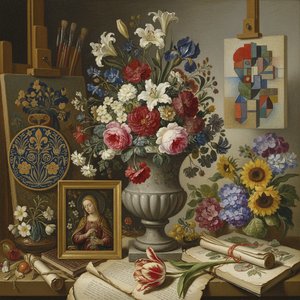
Blossoming Symbolism: A Historical Journey Through Flowers in Western Painting
Explore the rich history of flower symbolism in Western painting! Discover how artists from the Renaissance to Modernism used blossoms to convey meaning, emotion & beauty. Learn about iconic artworks and movements.