

 Ver en contexto
 Enviar
 Compartir
 Detalles

 Descargar
 Similares
 Radiografía
 Presentación de diapositivas
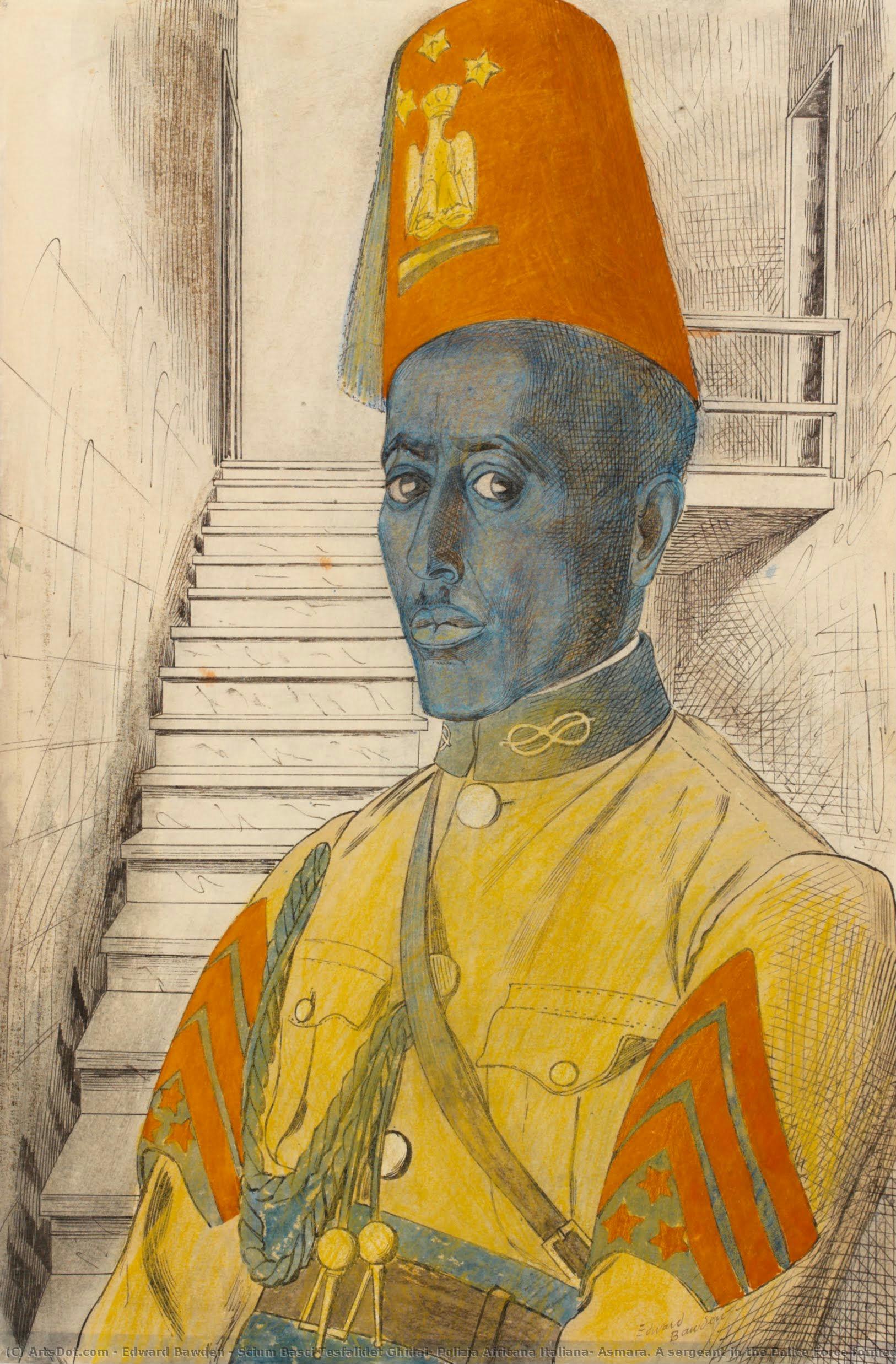
Scium Basci Tesfalidet Ghidai: Polizia Africana Italiana, Asmara. A sergeant in the Police Force formed by the Italians
 Acrylic On Canvas
- WallArt
- British War Art
 1942
1942 33.0 x 50.0 cm
 Museos de la Guerra Imperial
 Ver más
Reproducción al óleo hecha a mano
Óleo sobre lienzo pintado a mano en el tamaño y marco de su elección, realizado por encargo por nuestros artistas. ( Comprar impresión Comprar imagen)




P118B $10

P118H $10

P118W $10

P438Z $10

P508JH $12

P508YH $12

P805H $10

P805Z $10

P919BZ $10

P919G $10

P919XJ $10

P959ZH $10

P968JZ $12

W106C $8

W218G $10

W218JH $8

W218Y $10

W307PJ $10

W316G $10

W316PJ $8

W316Y $10

W398PJ $8

W4111J $10

W500HY $15

W500JH $15

W692G $12

W849H $8

W940BG $15

W953PJ $8




Elija entre nuestros tamaños predefinidos que respetan las proporciones originales de la obra.

Puede ingresar sus propias dimensiones para adaptarse a un marco o espacio específico. Si el tamaño seleccionado no coincide con las proporciones de la imagen original, recortaremos la obra o extenderemos la pintura con elementos adicionales pintados a mano. Se le enviará una maqueta digital para su aprobación antes de comenzar la producción.
Tenga en cuenta que la vista previa en pantalla no refleja el recorte o la extensión reales. Solo la maqueta mostrará con precisión la composición final.
Si bien existen tamaños personalizados, recomendamos seleccionar una dimensión de la lista predefinida para preservar las proporciones originales.
Tras realizar el pedido, el equipo de ArtsDot.com enviará un correo electrónico al cliente para solicitar instrucciones y proporcionarle una vista previa del boceto.
Envío a todo el mundo () en 3-4 semanas en lugar de las 5 semanas estándar. (2 septiembre). Sin comprometer la calidad.

Envío exprés gratuito a todo el mundo

Lienzo de lino de alta calidad

Seguro de envío total

Garantía de reembolso de impuestos aduaneros

Garantía de fidelidad cromática exacta

Política de devolución de 60 días (solo por defectos)

Garantía de devolución del 100% del dinero

Descuento por cantidad
 La opción de vidrio solo está disponible en tamaños inferiores a 110 cm.

Scium Basci Tesfalidet Ghidai: Polizia Africana Italiana, Asmara. A sergeant in the Police Force formed by the Italians
Técnica de reproducción
Dimensiones de la reproducción
-


Precio total final
$ 263
A Sergeant’s Gaze: Bawden Captures Asmara's Vitality
Edward Bawden’s “Scium Basci Tesfalidet Ghidai: Polizia Africana Italiana, Asmara,” painted in 1942, is more than a simple portrait; it’s a vibrant snapshot of a pivotal moment – the British advance into Ethiopia and the burgeoning presence of Italian colonial forces. Bawden, already renowned for his meticulous illustrations and distinctive graphic style, found himself documenting this complex transition as an official war artist, tasked with capturing the essence of a rapidly changing landscape and its inhabitants. The painting immediately draws the eye to the central figure: a sergeant in the Polizia Africana Italiana, seated with a quiet intensity that belies the turbulent events unfolding around him. His uniform, a striking yellow punctuated by a bold red hat, speaks volumes about his role – a symbol of Italian authority amidst a shifting power dynamic. Yet, it’s not merely military attire; there's an undeniable theatricality to the garment, hinting at a carefully constructed image designed to project strength and control.A Watercolor World: Technique and Atmosphere
Bawden’s masterful use of watercolor is central to the painting’s impact. He eschews photographic realism in favor of a looser, more expressive approach, capturing not just the physical appearance of the sergeant but also the atmosphere of Asmara itself. The background – a pale wash of muted blues and greens – creates a sense of distance and suggests an expansive, almost dreamlike quality to the city. Bawden’s brushstrokes are visible, adding texture and movement to the scene. Notice how he builds up layers of color to define the sergeant's uniform, using subtle variations in tone to create depth and form. The careful rendering of his face – a slight furrow of the brow, a hint of weariness in his eyes – conveys a quiet dignity and an underlying sense of observation. The inclusion of two figures in the background, one on the left and another further back on the right, adds a layer of narrative complexity, hinting at the social fabric of this colonial outpost.Echoes of Colonialism: Context and Symbolism
Painted during World War II, “Scium Basci Tesfalidet Ghidai” offers a poignant glimpse into the complexities of colonialism. The Polizia Africana Italiana was comprised largely of Italian nationals serving in East Africa, alongside indigenous African recruits. Bawden’s portrayal subtly acknowledges this hybridity, presenting the sergeant as an individual caught between two worlds – representing both Italian authority and the realities of colonial administration. The title itself—a direct translation from Italian—underscores the painting's historical context. It speaks to the specific unit depicted and the broader military campaign unfolding in Ethiopia. The choice of Asmara, a strategically important city and a hub for Italian operations, highlights the significance of this moment in the war’s trajectory. The vibrant colors of the uniform stand out against the subdued background, symbolizing the assertive presence of the Italian forces within the region.A Moment Frozen in Time: Emotional Resonance
Beyond its historical and artistic merits, “Scium Basci Tesfalidet Ghidai” possesses a remarkable emotional resonance. The sergeant’s gaze – direct and unwavering – invites the viewer to contemplate his thoughts and experiences. There's a sense of quiet contemplation, perhaps even melancholy, in his expression, suggesting the weight of responsibility and the uncertainties of war. Bawden masterfully captures this intangible quality, transforming a simple portrait into a powerful meditation on identity, power, and the human condition. The painting’s enduring appeal lies not only in its technical skill but also in its ability to evoke a sense of place and time, transporting us back to a pivotal moment in history—a moment captured with remarkable sensitivity and artistic vision. Reproductions of this artwork offer a tangible connection to this fascinating period, allowing viewers to appreciate Bawden’s artistry and the historical context of this compelling image.Obras relacionadas
Biografía del artista
Edward Bawden: Una Vida en el Arte
- Nacido: 10 de marzo de 1903, Braintree, Essex, Inglaterra
- Fallecido: 21 de noviembre de 1989
- Nacionalidad: Inglés
- Conocido por: Pintura, Ilustración, Arte Gráfico, Grabados, Portadas de Libros, Carteles, Muebles de Jardín de Metal
Primeros Años y Educación
- La primera infancia de Bawden estuvo marcada por una vida solitaria dedicada a dibujar y explorar la naturaleza. Sus padres, cristianos metodistas, fomentaron sus inclinaciones artísticas.
- Asistió a Braintree High School y posteriormente al Friends’ School en Saffron Walden.
- De 1919 a 1921, estudió en Cambridge School of Art.
- En 1922, recibió una beca para la Royal College of Art School of Design en Londres, donde estudió ilustración hasta 1925. Fue aquí donde conoció a Eric Ravilious, formando una importante asociación artística.
- Durante este período, Bawden demostró un talento temprano con encargos como las baldosas para el London Underground expuestas en la Exposición Internacional de Construcción y Comercio en 1928.
Desarrollo Artístico y Obras Clave
- Primeros Trabajos Comerciales: La carrera de Bawden incluyó una extensa labor comercial para empresas como London Transport, Westminster Bank, Twinings, Poole Potteries, Shell-Mex & BP, the Folio Society, Chatto & Windus y Penguin Books. Esto perfeccionó sus habilidades en diseño gráfico e ilustración.
- Mural en Morley College: Un proyecto temprano importante fue el mural creado con Ravilious y Charles Mahoney para Morley College en Londres (1928-1930).
- Los Artistas de Great Bardfield: Bawden se convirtió en una figura central del Grupo de Arte de Great Bardfield, junto con artistas como Eric Ravilious. Esta comunidad fomentó la colaboración y los valores artísticos compartidos.
- Artista de Guerra: Durante la Segunda Guerra Mundial, Bawden sirvió como artista oficial del ejército británico, documentando sus experiencias en Francia, el norte de África, Oriente Medio e Irak. Estas obras proporcionan un valioso registro histórico de la vida durante la guerra.
- Estilo Distintivo: Bawden desarrolló un estilo distintivo caracterizado por una observación detallada, precisión lineal y una mezcla de humor y melancolía. Sus acuarelas son particularmente celebradas por sus evocadoras representaciones de paisajes y escenas cotidianas.
Influencias y Legado
- Primeras Influencias: Bawden estuvo influenciado por artistas como Louis Wain, Burne Jones, Aubrey Beardsley, Richard Doyle y William Morris.
- Colaboración Contemporánea: Su estrecha colaboración con Eric Ravilious moldeó significativamente su desarrollo artístico.
- Reconocimiento Posterior: La obra de Bawden ganó un reconocimiento más amplio a finales de su vida, influyendo en artistas gráficos como Edward Gorey y David Gentleman.
- Significado Histórico: Las contribuciones de Bawden al arte británico son significativas por su versatilidad como ilustrador, pintor y diseñador. Su documentación de la guerra proporciona una perspectiva única de la época, mientras que sus diseños comerciales ayudaron a dar forma al paisaje visual de la Gran Bretaña de mediados del siglo XX.
Familia y Años Posteriores
- En 1932, Bawden se casó con Charlotte Epton, también artista y alfarera. Tuvieron dos hijos, Joanna y Richard, ambos artistas.
- La pareja vivió en Great Bardfield, Essex, durante varias décadas, convirtiéndose en parte integral de la comunidad artística local.
- Después de la muerte de su esposa en 1970, Bawden se mudó a Saffron Walden donde continuó trabajando hasta su muerte en 1989.
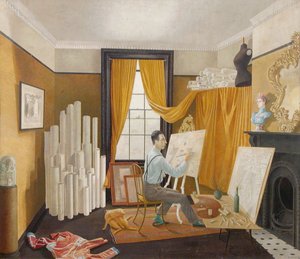
Edward Bawden
1903 - 1989 , Reino Unido
Datos clave
- Artistas Influenciados:
- Edward Gorey
- David Gentleman
- Artistas Que Influyeron:
- Louis Wain
- Burne Jones
- Fecha De Fallecimiento: 21 de noviembre de 1989
- Fecha De Nacimiento: 10 de marzo de 1903
- Lugar De Nacimiento: Braintree, Reino Unido
- Movimiento Artístico: Arte gráfico, Ilustración
- Nacionalidad: Inglés
- Nombre Completo: Edward Bawden
Artículos relacionados

Acuarelas Legendarias: 10 Obras Maestras que Transformaron el Arte | ArtsDot
Descubre 10 acuarelas legendarias de Turner, Monet y Sargent que revolucionaron el arte. Explora la historia, técnica y belleza de estas obras maestras impresionistas y románticas. Reproducciones de museo en ArtsDot.com.
Edward Hopper: Las 25 Obras Maestras que Definen la Soledad Moderna | ArtsDot
Descubre las 25 obras maestras de Edward Hopper, el pintor de la soledad moderna. Explora su realismo americano, luz y sombra, e icónicas escenas urbanas. Reproducciones de arte en ArtsDot.com para decorar tu hogar con estilo.

Ephemeral Visions: Exploring the Artistic Legacy & Contemporary Practice of Watercolor Painting
Explore the captivating world of watercolor painting! Discover its rich history, essential techniques, influential artists & collecting tips. A comprehensive guide for art enthusiasts from ArtsDot.

Visiones Efímeras: Historia y Resonancia Emocional de la Pintura Acuarela
Descubre la fascinante historia de la acuarela, desde sus orígenes hasta su expresión contemporánea. Explora técnicas, artistas clave como Paul Klee y encuentra reproducciones de alta calidad en ArtsDot.

Ephemeral Visions: Exploring the Artistic Legacy & Nuances of Watercolor Painting
Explore the captivating world of watercolor painting! Discover its rich history, essential techniques, influential artists & collecting tips from art experts. A comprehensive guide for enthusiasts.

