 Ver en contexto
 Enviar
 Compartir
 Detalles

 Descargar
 Similares
 Radiografía
 Presentación de diapositivas
 Estadísticas
Love Among the Ruins


 Ver más
Reproducción al óleo hecha a mano
Óleo sobre lienzo pintado a mano en el tamaño y marco de su elección, realizado por encargo por nuestros artistas. ( Cambiar a Impresión Cambiar a imagen digital)




P118B $10

P118H $10

P118W $10

P438Z $10

P508JH $12

P508YH $12

P805H $10

P805Z $10

P919BZ $10

P919G $10

P919XJ $10

P959ZH $10

P968JZ $12

W106C $8

W218G $10

W218JH $8

W218Y $10

W307PJ $10

W316G $10

W316PJ $8

W316Y $10

W398PJ $8

W4111J $10

W500HY $15

W500JH $15

W692G $12

W849H $8

W940BG $15

W953PJ $8




Elija entre nuestros tamaños predefinidos que respetan las proporciones originales de la obra.

Puede ingresar sus propias dimensiones para adaptarse a un marco o espacio específico. Si el tamaño seleccionado no coincide con las proporciones de la imagen original, recortaremos la obra o extenderemos la pintura con elementos adicionales pintados a mano. Se le enviará una maqueta digital para su aprobación antes de comenzar la producción.
Tenga en cuenta que la vista previa en pantalla no refleja el recorte o la extensión reales. Solo la maqueta mostrará con precisión la composición final.
Si bien existen tamaños personalizados, recomendamos seleccionar una dimensión de la lista predefinida para preservar las proporciones originales.
Tras realizar el pedido, el equipo de ArtsDot.com enviará un correo electrónico al cliente para solicitar instrucciones y proporcionarle una vista previa del boceto.
Envío a todo el mundo () en 3-4 semanas en lugar de las 5 semanas estándar. (12 septiembre). Sin comprometer la calidad.

Envío exprés gratuito a todo el mundo

Lienzo de lino de alta calidad

Seguro de envío total

Garantía de reembolso de impuestos aduaneros

Garantía de fidelidad cromática exacta

Política de devolución de 100 días (solo por defectos)

Garantía de devolución del 100% del dinero

Descuento por cantidad
 La opción de vidrio solo está disponible en tamaños inferiores a 110 cm.

Love Among the Ruins
Técnica de reproducción
Dimensiones de la reproducción
-


Precio total final
$ 263
A Vision of Eternal Connection
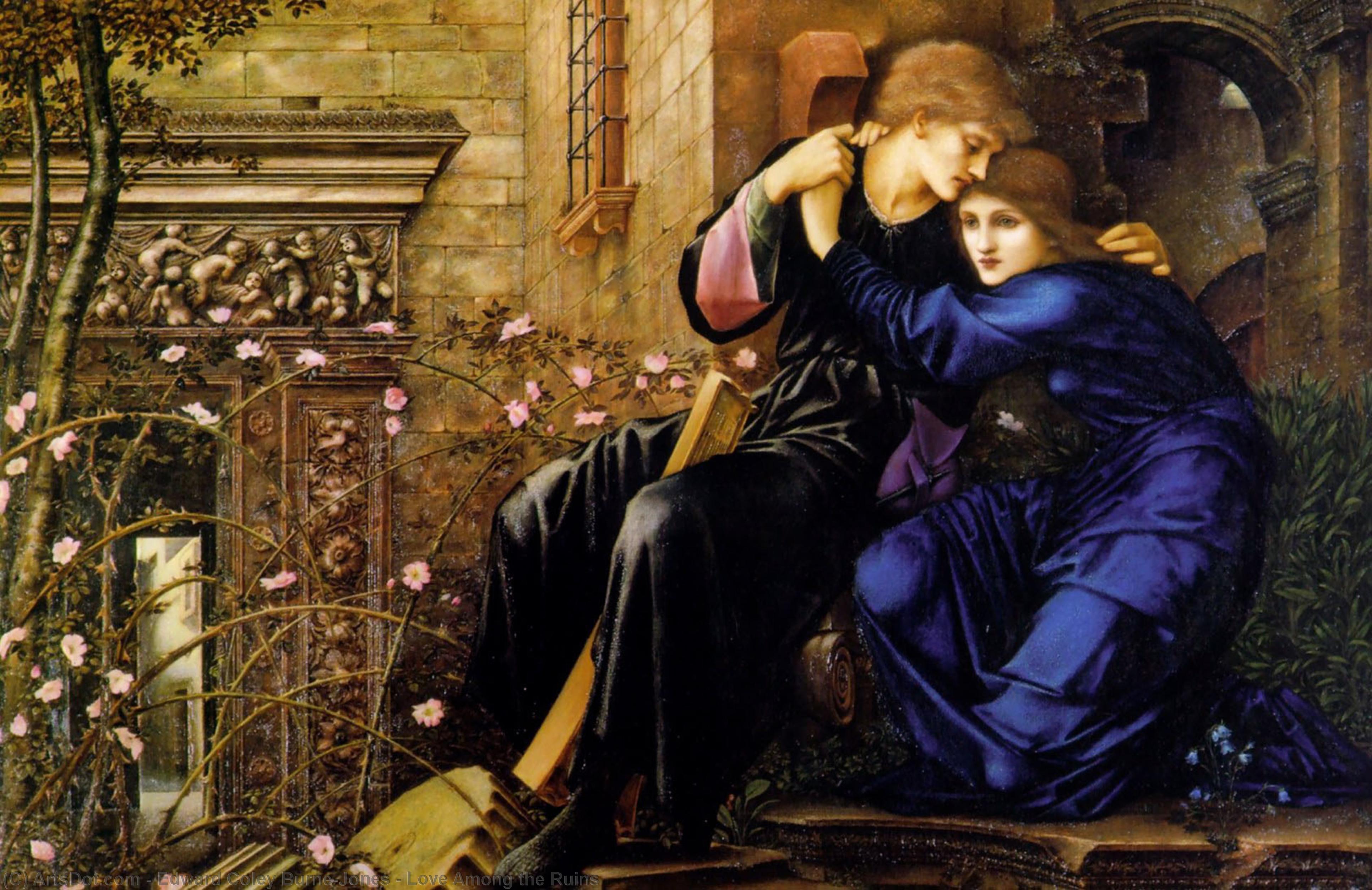
In the hauntingly beautiful masterpiece Love Among the Ruins, Sir Edward Coley Burne-Jones invites us into a dreamscape where time seems to have surrendered to the weight of emotion. Created in 1894, this work stands as a profound testament to the late Pre-Raphaelite spirit, blending a melancholic reverence for the past with an enduring hope for human connection. The painting captures a tender, intimate moment between two figures seated amidst the skeletal remains of a forgotten era. Dressed in somber black, their embrace serves as a focal point of warmth and vitality against the cold, decaying architecture of the ruins. As they hold one another, the surrounding world—populated by distant, spectral figures and a solitary bird watching from above—seems to fade into a soft, atmospheric haze, leaving only the raw essence of their devotion.
The composition is a masterclass in the Aesthetic Movement's ability to weave narrative through atmosphere rather than overt action. Burne-Jones utilizes a palette that feels both ancient and ethereal, where the muted tones of the stone and earth harmonize with the deep, velvety shadows of the lovers' attire. His technique, characterized by a delicate, almost rhythmic application of color, creates a sense of movement within the stillness. The way light filters through the scene suggests a twilight hour, a liminal space between day and night, or perhaps between life and memory. For the discerning collector or interior designer, this piece offers a sophisticated layer of depth; it is not merely a depiction of a scene, but an invitation to contemplate the resilience of the human heart amidst the inevitable decay of civilization.
Symbolism and the Pre-Raphaelite Legacy
Beyond its surface beauty, Love Among the Ruins is rich with the symbolic language that defined Burne-Jones's illustrious career. The ruins themselves are not merely background elements but powerful metaphors for the passage of time and the transience of worldly power. In the shadow of these crumbling monuments, the central embrace represents a triumph of the eternal over the ephemeral. The presence of other figures, drifting like echoes through the landscape, suggests a shared human experience—a collective memory of love and loss that transcends individual identity. Even the small bird in the upper corner acts as a silent witness, a symbol of the soul or the fleeting nature of inspiration that hovers above the terrestrial struggles of man.
To possess a reproduction of this work is to bring a piece of Victorian romanticism into a modern space. It serves as an evocative anchor for a room, providing a conversation piece that speaks of history, myth, and the profound beauty found in vulnerability. Whether placed in a curated gallery setting or used to add a touch of soulful elegance to a contemporary living area, this painting resonates with anyone moved by the idea that even when empires fall and stones crumble, the capacity for love remains an unbreakable force. It is a work that does not just decorate a wall; it transforms an environment into a sanctuary for reflection and wonder.
Obras relacionadas
Biografía del artista
Primeros años y educación
Edward Coley Burne-Jones, un renombrado artista y diseñador británico, nació el 28 de agosto de 1833 en Birmingham, Reino Unido. Su temprana vida estuvo marcada por la muerte de su madre, Elizabeth Coley Jones, seis días después de su nacimiento. Criado por su padre, Edward Richard Jones, y la ama de llaves familiar Ann Sampson, Burne-Jones asistió al King Edward VI Grammar School desde 1844 y posteriormente estudió en la Birmingham School of Art de 1848 a 1852.Trayectoria académica y la Hermandad
Burne-Jones cursó estudios de teología en Exeter College, Oxford, donde se hizo amigo de William Morris. Junto con un grupo de amigos de Birmingham, conocidos como "el círculo de Birmingham", formaron una sociedad íntima llamada "la Hermandad". Este período vio la influencia de John Ruskin y Tennyson en su trabajo, así como visitas a iglesias y la veneración de la Edad Media.Carrera artística y obras notables
La carrera artística de Burne-Jones floreció en varios medios, incluyendo pintura, vidrieras y artes decorativas. Sus primeras pinturas estuvieron influenciadas por Dante Gabriel Rossetti, pero pronto desarrolló su propio estilo único. Obras notables incluyen:- El engaño de Merlín, expuesta en la Grosvenor Gallery en 1877, marcando su ascenso como una estrella del movimiento estético.
- Obras de vidrieras que se exhiben en varias iglesias, como la Catedral de San Felipe, Birmingham, y la Iglesia de la Santísima Trinidad, Sloane Square, Chelsea.
- Colaboraciones con William Morris en artes decorativas, incluyendo diseños para Morris, Marshall, Faulkner & Co.
Vida personal y años posteriores
Burne-Jones se casó con Georgiana "Georgie" Macdonald en 1860, con quien tuvo tres hijos. Sus últimos años estuvieron marcados por un apasionado romance con su modelo griega Maria Zambaco, que terminó con el intento de suicidio de ella. A pesar de esto, Burne-Jones permaneció con su esposa hasta su fallecimiento el 17 de junio de 1898.Legado e influencia
Las contribuciones de Edward Coley Burne-Jones al movimiento prerrafaelita y sus innovadoras obras de vidrieras han dejado una huella indeleble en el arte británico. Su influencia se puede ver en varios aspectos de las artes decorativas, desde baldosas cerámicas hasta joyería.- Explore más obras de Burne-Jones en ArtsDot.com.
- Descubra la colección del Consejo Británico, con artistas notables, en las colecciones de arte de ArtsDot.
Referencias:
- wikipedia: edward burne-jones
- Wabot art assistant de ArtsDot para obtener información sobre arte y artistas.
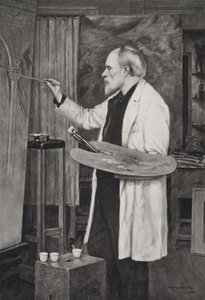
Edward Coley Burne-Jones
1833 - 1898 , Reino Unido
Datos clave
- Artistas Que Influyeron:
- Dante Gabriel Rossetti
- John Ruskin
- William Morris
- Fecha De Fallecimiento: 17 de junio de 1898
- Fecha De Nacimiento: 28 de agosto de 1833
- Influencia En Artistas:
- Arte decorativo británico
- Diseño de vidrieras
- Lugar De Nacimiento: Birmingham, Reino Unido
- Movimiento Artístico: Prerrafaelismo, Esteticismo
- Nacionalidad: Británico
- Nombre Completo: Edward Coley Burne-Jones
- Obras Notables:
- The Beguiling of Merlin
- El Sueño de Lancelot
- Tres figuras femeninas
Artículos relacionados
Dante Gabriel Rossetti: Las 25 Obras Maestras del Prerrafaelismo | ArtsDot
Descubre las 25 obras maestras de Dante Gabriel Rossetti, el máximo exponente del Prerrafaelismo. Explora su simbolismo, retratos victorianos y la belleza femenina en lienzos inolvidables. Reproducciones de arte exclusivas en ArtsDot.com.
Sir John Everett Millais: Pre-Raphaelite Rebellion & Victorian Narrative Detail
Explore the revolutionary art of Sir John Everett Millais & the Pre-Raphaelite Brotherhood. Discover their radical realism, symbolic narratives, and lasting impact on Victorian aesthetics. A deep dive into 19th-century masterpieces.
Ford Madox Brown: Pre-Raphaelite Visionary & Victorian Social Commentary
Explore the life & art of Ford Madox Brown, a pivotal Pre-Raphaelite painter renowned for his powerful social commentary and masterpiece 'Work'. Discover his lasting influence on British art history.
La Hermandad Prerrafaelita: Una Rebelión Estética y el Renacimiento Medieval en la Pintura Victoriana
Descubre la Hermandad Prerrafaelita: su rebelión contra el arte académico victoriano y su fascinante retorno a los maestros del Renacimiento. Análisis profundo, artistas clave y obras emblemáticas.
Arthur Hughes: Pre-Raphaelite Visions of Beauty & Melancholy
Explore the captivating world of Arthur Hughes (1832-1915), a leading Pre-Raphaelite painter. Discover his dreamy landscapes, poetic narratives & iconic Victorian artworks. Learn about his life, style & collecting today.