 Ver en contexto
 Enviar
 Compartir
 Detalles

 Descargar
 Similares
 Radiografía
 Presentación de diapositivas
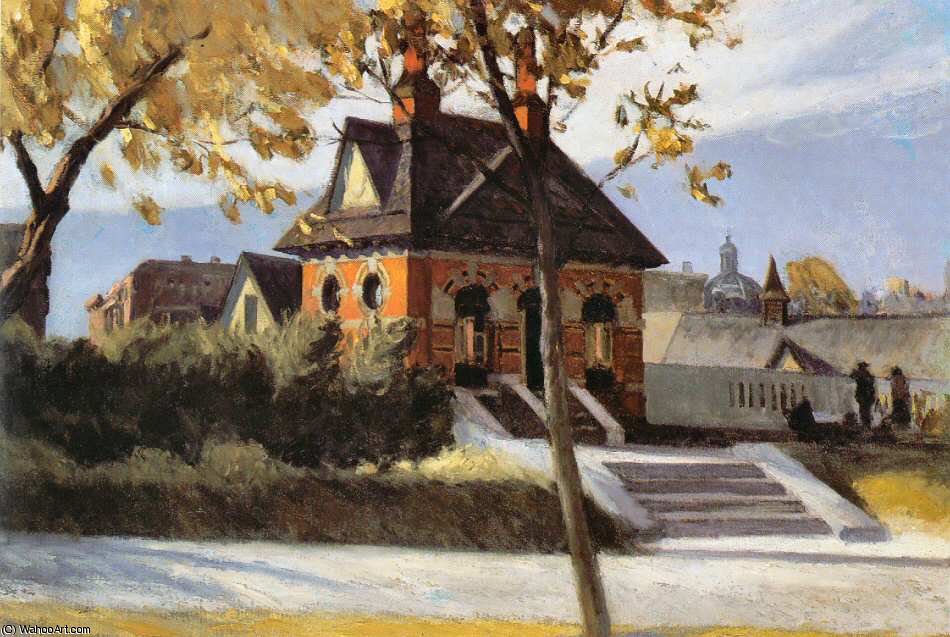
Small Town Station


 Ver más
Reproducción al óleo hecha a mano
Óleo sobre lienzo pintado a mano en el tamaño y marco de su elección, realizado por encargo por nuestros artistas. ( Comprar impresión Comprar imagen)




P118B $10

P118H $10

P118W $10

P438Z $10

P508JH $12

P508YH $12

P805H $10

P805Z $10

P919BZ $10

P919G $10

P919XJ $10

P959ZH $10

P968JZ $12

W106C $8

W218G $10

W218JH $8

W218Y $10

W307PJ $10

W316G $10

W316PJ $8

W316Y $10

W398PJ $8

W4111J $10

W500HY $15

W500JH $15

W692G $12

W849H $8

W940BG $15

W953PJ $8




Elija entre nuestros tamaños predefinidos que respetan las proporciones originales de la obra.

Puede ingresar sus propias dimensiones para adaptarse a un marco o espacio específico. Si el tamaño seleccionado no coincide con las proporciones de la imagen original, recortaremos la obra o extenderemos la pintura con elementos adicionales pintados a mano. Se le enviará una maqueta digital para su aprobación antes de comenzar la producción.
Tenga en cuenta que la vista previa en pantalla no refleja el recorte o la extensión reales. Solo la maqueta mostrará con precisión la composición final.
Si bien existen tamaños personalizados, recomendamos seleccionar una dimensión de la lista predefinida para preservar las proporciones originales.
Tras realizar el pedido, el equipo de ArtsDot.com enviará un correo electrónico al cliente para solicitar instrucciones y proporcionarle una vista previa del boceto.
Envío a todo el mundo () en 3-4 semanas en lugar de las 5 semanas estándar. (26 agosto). Sin comprometer la calidad.

Envío exprés gratuito a todo el mundo

Lienzo de lino de alta calidad

Seguro de envío total

Garantía de reembolso de impuestos aduaneros

Garantía de fidelidad cromática exacta

Política de devolución de 60 días (solo por defectos)

Garantía de devolución del 100% del dinero

Descuento por cantidad
 La opción de vidrio solo está disponible en tamaños inferiores a 110 cm.

Small Town Station
Técnica de reproducción
Dimensiones de la reproducción
-


Precio total final
$ 263
Descripción de la obra
Edward Hopper’s “Small Town Station”: A Portrait of American Solitude
Edward Hopper's "Small Town Station," painted between 1918 and 1920, isn’t merely a depiction of a rural American scene; it’s a distilled essence of the era’s burgeoning sense of isolation and quiet contemplation. This deceptively simple canvas—a red brick station building anchoring a small town against a backdrop of a towering church steeple – immediately draws the viewer into a world brimming with unspoken narratives and subtle emotional currents. Hopper, a master of capturing fleeting moments of human experience, expertly utilizes light and shadow to create an atmosphere both familiar and profoundly melancholic.
The painting’s composition is meticulously crafted. The station itself, rendered in muted tones, feels almost abandoned, its windows dark and reflecting the overcast sky. A few figures are present – a man leaning against a post, a woman seated on a bench – but they remain largely detached, lost in their own thoughts. Their presence doesn't inject life into the scene; instead, it subtly underscores the pervasive sense of solitude. Hopper’s signature use of geometric forms—the sharp angles of the building, the straight lines of the tracks—contrasts with the softer curves of the benches and the figures, creating a visual tension that mirrors the emotional landscape of the work.
The Language of Light and Shadow: Hopper's Technique
Hopper’s technical skill is evident in his masterful manipulation of light. He employs a limited palette – primarily browns, grays, and blues – to evoke a sense of stillness and introspection. The strong directional lighting, originating from an unseen source, casts dramatic shadows that emphasize the forms and create a palpable depth within the scene. Notice how the light catches the edges of the building, highlighting its solidity while simultaneously obscuring details, contributing to the painting’s enigmatic quality. Hopper's brushwork is generally smooth and controlled, reflecting his commitment to realism, yet he subtly introduces textural variations—particularly in the depiction of the brick – to prevent the image from feeling overly sterile.
Interestingly, early versions of this work, as evidenced by a painting held at the Whitney Museum (accession number 70.1209), reveal a more vibrant color scheme and a greater degree of activity. This suggests that Hopper experimented with different approaches before settling on the subdued palette and contemplative mood that define the final version. The evolution demonstrates his process—a careful balancing act between observation, technique, and artistic intent.
Symbolism and the American Psyche
"Small Town Station" resonates deeply within the context of early 20th-century America. Following the rapid industrialization and urbanization of the late Victorian era, many Americans experienced a growing sense of displacement and alienation. Hopper’s work captures this feeling with remarkable precision. The station itself can be interpreted as a symbol of transition—a point between journeys, both literal and metaphorical. The church steeple, towering above the town, represents faith and tradition, perhaps offering a counterpoint to the prevailing sense of isolation.
Furthermore, the painting speaks to the broader themes explored by Hopper throughout his career: loneliness, urban alienation, and the search for meaning in a rapidly changing world. He wasn’t simply depicting a place; he was portraying an emotional state—a quiet yearning for connection amidst the vastness of modern life. As art critic Edward Hopper described it, "I paint what I see, not necessarily what I think I see."
A Timeless Masterpiece: Reproduction and Beyond
ArtsDot offers meticulously crafted hand-painted reproductions of “Small Town Station,” allowing you to experience the profound beauty and emotional resonance of this iconic work in your own space. Our artists carefully replicate Hopper’s nuanced use of light, color, and composition, ensuring that the reproduction captures the essence of the original painting. Whether displayed as a statement piece in a contemporary interior or as a nostalgic reminder of America's past, “Small Town Station” continues to captivate viewers with its quiet power and enduring appeal. Explore our high-quality reproductions today and bring this poignant portrait of American solitude into your home.
Obras relacionadas
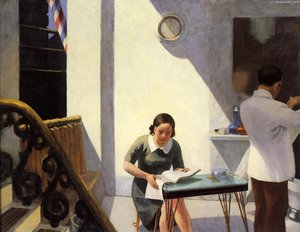
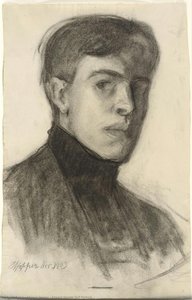
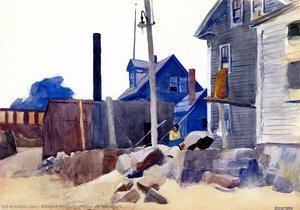
Biografía del artista
**vida temprana e influencias**
edward hopper, un destacado pintor y grabador realista estadounidense, nació el 22 de julio de 1882 en Upper Nyack, Nueva York. Su familia, de ascendencia mayoritariamente holandesa, proporcionó una crianza cómoda que le permitió perseguir sus inclinaciones artísticas desde temprana edad. - **inspiraciones:** La obra de Hopper fue influenciada por las escrituras de Ralph Waldo Emerson y los maestros impresionistas franceses Édouard Manet y Edgar Degas. - **formación inicial:** Comenzó estudios de arte con un curso por correspondencia en 1899, posteriormente transfiriéndose a la Escuela de Arte y Diseño de Nueva York.**estilo artístico y temas**
edward hopper's representaciones cuidadosas y con un diseño preciso reflejaban su visión personal de la vida moderna estadounidense. Su obra se puede caracterizar por: - **escenas urbanas y rurales:** Ambos entornos fueron retratados con una mezcla única de realismo y profundidad emocional. - **iluminación:** Un dominio de la luz, a menudo utilizada para evocar sentimientos de aislamiento o contemplación. - **figuras:** A menudo sin rostro o en segundo plano, enfatizando al entorno sobre las figuras.**obras notables y su significado**
- House by the Railroad (Museo de Arte Moderno, Nueva York, Estados Unidos), un ejemplo de la capacidad de Hopper para evocar una sensación de melancolía a través de una composición simple pero poderosa. - Reclining Nude (50 x 35 cm, Nuevo Realismo, acuarela), que muestra su versatilidad para capturar la forma humana.**legado e influencia**
- **influencia en artistas futuros:** El estilo único de Hopper ha influido a numerosos artistas, incluyendo Pierre Sanford Ross, conocido por sus escenas urbanas y rurales. - **popularidad perdurable:** Sus obras continúan cautivando al público con sus temas atemporales de soledad y la condición humana.**explora más en ArtsDot**
- [https://ArtsDot.com/@/edward-hopper](obras de Edward Hopper) - /es/art/show/art-8xyffg-es/compra arte inspirado por los maestros)- Profundiza en el mundo del arte con la extensa colección de ArtsDot.
- Descubre cómo el legado de Edward Hopper continúa inspirando a artistas y amantes del arte.
**referencias**
- [https://ArtsDot.com/@/edward-hopper](Wikipedia: Edward Hopper) - [https://en.wikipedia.org/wiki/edward_hopper](Wikipedia: Biografía de Edward Hopper)
Edward Hopper
1931 - 1967 , Estados Unidos de América
Datos clave
- Artistas Influenciados: ['Pierre Sanford Ross']
- Artistas Que Influyeron:
- Ralph Waldo Emerson
- Édouard Manet
- Edgar Degas
- Fecha De Muerte: 1967
- Fecha De Nacimiento: 22 de julio de 1882
- Lugar De Nacimiento: Upper Nyack, EE. UU.
- Movimiento Artístico: Realismo americano
- Nacionalidad: Estadounidense
- Nombre Completo: Edward Hopper
- Obras Notables:
- House by the Railroad
- Reclining Nude
- Nighthawks
- Gas
- Chop Suey
Artículos relacionados
Edward Hopper: Las 25 Obras Maestras que Definen la Soledad Moderna | ArtsDot
Descubre las 25 obras maestras de Edward Hopper, el pintor de la soledad moderna. Explora su realismo americano, luz y sombra, e icónicas escenas urbanas. Reproducciones de arte en ArtsDot.com para decorar tu hogar con estilo.
Realismo Estadounidense: 10 Obras Maestras que Cambiaron el Arte y la Decoración
Descubre 10 obras maestras del Realismo Estadounidense: Winslow Homer, Edward Hopper y más. Explora la historia, técnica y emoción de estos icónicos cuadros. Encuentra reproducciones de arte de museo en ArtsDot.com.

Realismo Americano: Comentario Social y Representación Artística en la Pintura del Siglo XX
Explora el Realismo Americano del siglo XX: un análisis profundo de sus artistas clave (Vertis Hayes, William Aiken Walker), técnicas y su poderoso comentario social. Descubre cómo este movimiento plasmó la identidad estadounidense.

Realismo Contemporáneo: 10 Obras Maestras que Transformaron el Arte |
Descubre 10 obras maestras del Realismo Contemporáneo que revolucionaron el arte. Explora la historia, técnica y emociones de artistas como Lucian Freud y Gerhard Richter. Reproducciones de alta calidad en .
Grant Wood & American Regionalism: Identity, Myth & the Rural Landscape
Explore the world of Grant Wood & American Regionalism with ArtsDot. Discover the symbolism behind 'American Gothic', recurring themes, and the movement's lasting impact on art history. High-quality reproductions available.