 Ver en contexto
 Enviar
 Compartir
 Detalles

 Descargar
 Similares
 Radiografía
 Presentación de diapositivas
Портрет художника Карла Заковска


 Ver más
Giclée / Impresión de arte
Impresiones giclée o en lienzo de calidad de museo con producción rápida y opciones de acabado flexibles. ( Comprar pintura hecha a mano Comprar imagen)




P118B $10

P118H $10

P118W $10

P438Z $10

P508JH $12

P508YH $12

P805H $10

P805Z $10

P919BZ $10

P919G $10

P919XJ $10

P959ZH $10

P968JZ $12

W106C $8

W218G $10

W218JH $8

W218Y $10

W307PJ $10

W316G $10

W316PJ $8

W316Y $10

W398PJ $8

W4111J $10

W500HY $15

W500JH $15

W692G $12

W849H $8

W940BG $15

W953PJ $8




Elija entre nuestros tamaños predefinidos que respetan las proporciones originales de la obra.

Puede introducir sus propias dimensiones para adaptarse a un marco o espacio específico. Si el tamaño seleccionado no coincide con las proporciones de la imagen original, recortaremos la obra de arte o extenderemos la imagen con un borde con efecto espejo o de color sólido. Se enviará una maqueta digital para su aprobación antes de que comience la producción.
Tenga en cuenta que la vista previa en pantalla no refleja el recorte o la extensión real. Solo la maqueta mostrará con precisión la composición final.
Aunque existen tamaños personalizados, recomendamos seleccionar una dimensión de la lista predefinida para preservar las proporciones originales.
Envío a todo el mundo () en 2 semanas en lugar de las 4/5 semanas estándar. (24 agosto)

Envío exprés gratuito a todo el mundo

Lienzo de lino de alta calidad

Seguro de envío total

Garantía de reembolso de impuestos aduaneros

Garantía de fidelidad cromática exacta

Política de devolución de 60 días (solo por defectos)

Garantía de devolución del 100% del dinero

Descuento por cantidad
 La opción de vidrio solo está disponible en tamaños inferiores a 110 cm.

Портрет художника Карла Заковска
Giclée / Impresión de arte
Dimensiones de la reproducción
-


Precio total final
$ 62
Descripción de la pieza
An Encounter with Expressionist Intensity
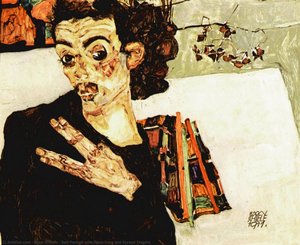
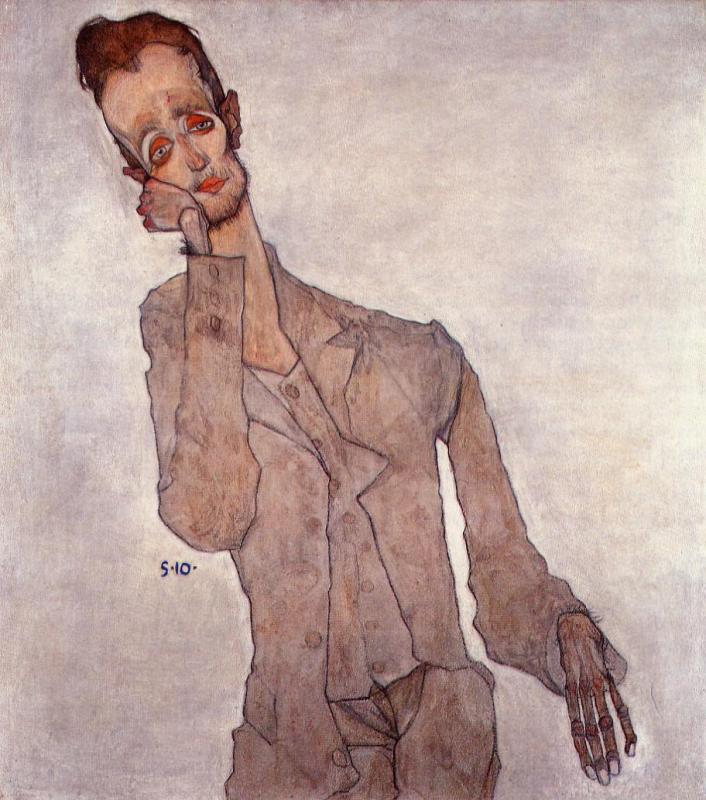
In the hauntingly beautiful Portrait of the Painter Karl Zakovsek, Egon Schiele invites us into a psychological landscape that transcends the boundaries of traditional portraiture. Created in 1910, this masterpiece serves as a profound window into the soul of the subject and the burgeoning spirit of the Expressionist movement. The painting does not merely capture the likeness of Zakovsek, a fellow artist and contemporary of Schiele at the Vienna Academy of Fine Arts; rather, it captures a moment of raw, unshielded human vulnerability. As we gaze upon the sitter, we are met with an unsettling yet captivating intensity, where every furrowed line and shadowed contour speaks to an inner turmoil that was characteristic of the Viennese avant-garde.
The composition is a masterclass in tension and emotional weight. Schiele utilizes a striking, almost skeletal line work—a hallmark of his mature style—to define the features of Zakovsek. The subject’s hand, pressed against his face in a gesture that suggests both deep introspection and a desperate attempt to shield himself from the world, creates a focal point of profound intimacy. This physical contact between hand and face draws the viewer into the sitter's private struggle, making the experience of viewing the painting feel almost voyeuristic. The stark, minimalist background acts as a void, stripping away all worldly distractions to ensure that nothing remains but the raw, psychological presence of the man himself.
The Alchemy of Line and Color
Technically, the work is an extraordinary feat of medium and method. Schiele’s use of oil, tempera, and charcoal on canvas allows for a rich, multi-layered texture that gives the skin a translucent, almost fragile quality. The artist employs bold, jagged lines that seem to vibrate with nervous energy, mirroring the anxieties of an era standing on the precipende of monumental change. These dark, decisive strokes are contrasted against more muted, earthy tones, creating a chromatic tension that heightens the painting's emotional impact. The interplay of light and shadow—the chiaroscuro of the soul—emphasizes the hollows of the eyes and the tension in the jaw, forcing the viewer to confront the existential weight carried by the subject.
For the discerning collector or interior designer, this piece offers more than just aesthetic beauty; it provides a profound narrative anchor for any space. The painting’s ability to command attention through its sheer emotional gravity makes it an ideal centerpiece for collections focused on modernism, psychological depth, or the transformative power of the Expressionist era. A high-quality reproduction of this work allows one to bring the brooding elegance and historical significance of Schiele's vision into a contemporary setting, offering a sophisticated dialogue between the turbulent history of the early 20th century and the refined atmosphere of modern living.
Biografía del artista
Egon Schiele: Vida y Legado
Primeros Años e Influencias
- Nacido el 12 de junio de 1890 en Tulln an der Donau, Baja Austria, Egon Schiele experimentó una infancia moldeada tanto por la inclinación artística como por las dificultades personales.
- Su padre, Adolf Schiele, era jefe de estación, instando en el joven Egon una fascinación por los trenes – un motivo que aparecería sutilmente más tarde en su obra.
- El temprana fallecimiento de su padre a causa de sífilis cuando Schiele tenía 14 años lo impactó profundamente, llevando a su crianza por parte de su tío materno, Leopold Czihaczek.
- Czihaczek brindó apoyo pero también ejerció una influencia controladora, que contribuyó al complejo paisaje emocional reflejado en el arte de Schiele.
Trayectoria Artística y Desarrollo
- La formación artística de Schiele comenzó en la Kunstgewerbeschule (Escuela de Artes y Oficios) en Viena, pero pronto se trasladó a la Akademie der bildenden Künste (Academia de Bellas Artes).
- Pronto se sintió decepcionado con el enfoque conservador de la Academia, encontrándola sofocante para su visión expresiva. Finalmente, abandonó la formación formal.
- Las influencias tempranas incluyeron a Gustav Klimt, una figura destacada en la Sezión Vienesa, cuyo estilo decorativo y exploración del simbolismo resonaron con Schiele. Sin embargo, Schiele pronto desarrolló un estilo distintivamente individual.
- Sus primeras obras a menudo presentaban retratos y autorretratos inquietantes, caracterizados por figuras distorsionadas y una intensa emotividad.
Características y Temas Clave
- El arte de Schiele es reconocido por su honestidad cruda y profundidad psicológica. Exploró sin miedo temas de sexualidad, muerte, ansiedad e aislamiento.
- Su estilo distintivo presenta figuras alargadas, poses contorsionadas y líneas expresivas que transmiten una sensación de vulnerabilidad y tormento emocional.
- Autorretratos constituyen una parte significativa de su obra, ofreciendo atisbos íntimos en su mundo interior.
- También creó numerosos retratos de otros, a menudo representando a las personas con un realismo sin tapujos e insight psicológico.
- La pintura de paisajes jugó un papel en su trabajo, demostrando su dominio de la forma y el color, aunque fue menos central que sus obras figurativas.
Logros Importantes y Reconocimiento
- A pesar de enfrentar censura y desafíos legales (incluyendo una breve prisión por supuestamente corromper a menores con su arte), Schiele ganó reconocimiento en los círculos vanguardistas de Viena.
- Co-fundó el Neues Wiener Kunstgruppe (Nuevo Grupo de Arte Vienés) en 1909, mostrando su obra junto con otros artistas progresistas.
- Obras significativas incluyen Autorretrato con Physalis, Pareja Abraza y Paisaje de Campo (Kreuzberg cerca de Krumau).
- Para el tiempo de su prematura muerte, Schiele se había establecido como una figura destacada en el Expresionismo Austríaco.
Significado Histórico y Legado
- Egon Schiele murió en 1918 durante la pandemia de gripe española a los 28 años, truncando una prometedora carrera.
- Su obra influyó profundamente en las generaciones posteriores de artistas, particularmente aquellos interesados en explorar temas psicológicos y desafiar las normas artísticas convencionales.
- El enfoque audaz de Schiele en la forma y el tema sigue resonando con el público actual, convirtiéndolo en una de las figuras más importantes e influyentes del arte del siglo XX temprano.
- Sus pinturas se conservan ahora en importantes colecciones de museos en todo el mundo, y las reproducciones de su obra están ampliamente disponibles, asegurando que su legado artístico perdure.
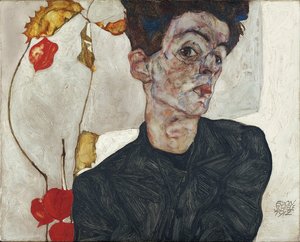
Egon Schiele
1890 - 1918 , Croacia
Datos clave
- Artistas Que Influyeron: ['Gustav Klimt']
- Fecha De Muerte: 1918
- Fecha De Nacimiento: 12 de junio de 1890
- Influenciado A Artistas: ['Generaciones posteriores']
- Lugar De Nacimiento: Viena, Croacia
- Movimiento Artístico: Expresionismo
- Nacionalidad: Austriaco
- Nombre Completo: Egon Schiele
- Obras Notables:
- Autorretrato con Physalis
- Pareja Abraza
- Paisaje de Campo (Kreuzberg)
Artículos relacionados
Egon Schiele: Las 25 Obras Maestras que Definen su Genio | ArtsDot
Descubre las 25 obras maestras de Egon Schiele, el expresionismo austriaco en su máxima expresión. Explora la historia, técnica y emociones detrás de cada pintura. Reproducciones de arte exclusivas en ArtsDot.com. ¡Explora la colección completa online!
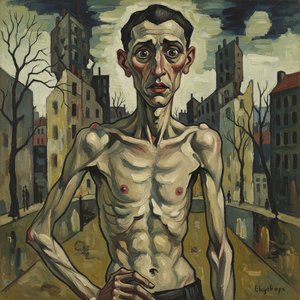
Egon Schiele: Expressionism, Anxiety & the Modern Condition – A Comprehensive Exploration
Explore the emotionally charged world of Egon Schiele (1890-1918). Discover his Expressionist masterpieces, psychological themes, and lasting impact on modern art. A comprehensive guide for collectors & enthusiasts.
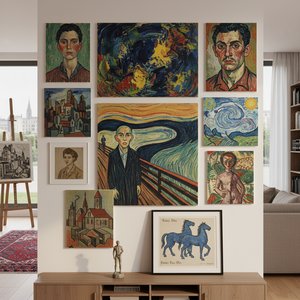
Expresionismo: 10 Obras Maestras que Revolucionaron el Arte |
Descubre las 10 obras maestras del Expresionismo que marcaron un hito en la historia del arte. Explora a Munch, Kirchner y Kandinsky en . Reproducciones de arte de museo para transformar tu hogar.
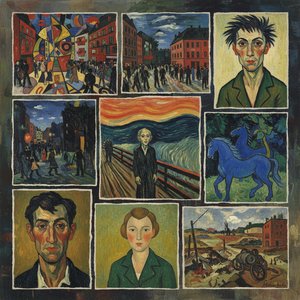
Expresionismo Pictórico: 10 Obras Maestras que Definieron un Movimiento Revolucionario | ArtsDot
Descubre las 10 obras maestras del expresionismo que revolucionaron el arte moderno. Explora la historia de Munch, Kirchner, Kandinsky y más. Reproducciones de alta calidad para decorar tu hogar con emoción y estilo en ArtsDot.com.
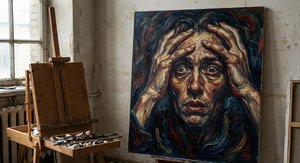
Expresionismo Figurado: Intensidad Emocional y Realidad Subjetiva en el Arte del Siglo XX
Explora la intensidad emocional del Expresionismo Figurado alemán. Descubre sus orígenes, artistas clave como Munch y Kirchner, y su legado en el arte moderno. Análisis experto y profundo.