 Ver en contexto
 Enviar
 Compartir
 Detalles

 Descargar
 Similares
 Radiografía
 Presentación de diapositivas
 Estadísticas
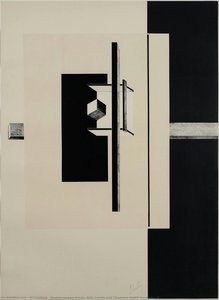
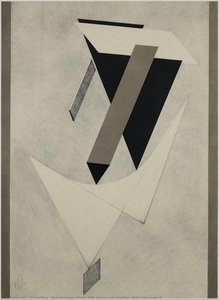
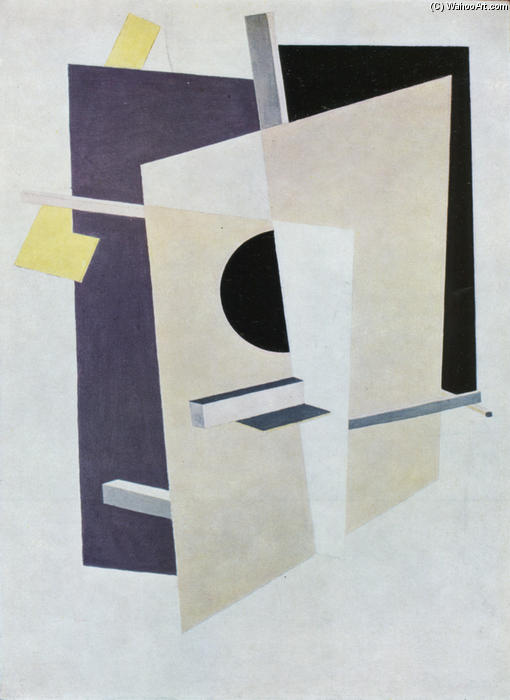
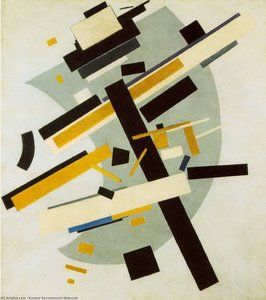
Proun Interpenetrating Planes


 Ver más
Giclée / Impresión de arte
Impresiones giclée o en lienzo de calidad de museo con producción rápida y opciones de acabado flexibles. ( Comprar pintura hecha a mano Cambiar a imagen digital)




P118B $10

P118H $10

P118W $10

P438Z $10

P508JH $12

P508YH $12

P805H $10

P805Z $10

P919BZ $10

P919G $10

P919XJ $10

P959ZH $10

P968JZ $12

W106C $8

W218G $10

W218JH $8

W218Y $10

W307PJ $10

W316G $10

W316PJ $8

W316Y $10

W398PJ $8

W4111J $10

W500HY $15

W500JH $15

W692G $12

W849H $8

W940BG $15

W953PJ $8




Elija entre nuestros tamaños predefinidos que respetan las proporciones originales de la obra.

Puede introducir sus propias dimensiones para adaptarse a un marco o espacio específico. Si el tamaño seleccionado no coincide con las proporciones de la imagen original, recortaremos la obra de arte o extenderemos la imagen con un borde con efecto espejo o de color sólido. Se enviará una maqueta digital para su aprobación antes de que comience la producción.
Tenga en cuenta que la vista previa en pantalla no refleja el recorte o la extensión real. Solo la maqueta mostrará con precisión la composición final.
Aunque existen tamaños personalizados, recomendamos seleccionar una dimensión de la lista predefinida para preservar las proporciones originales.
Envío a todo el mundo () en 2 semanas en lugar de las 4/5 semanas estándar. (9 septiembre)

Envío exprés gratuito a todo el mundo

Lienzo de lino de alta calidad

Seguro de envío total

Garantía de reembolso de impuestos aduaneros

Garantía de fidelidad cromática exacta

Política de devolución de 100 días (solo por defectos)

Garantía de devolución del 100% del dinero

Descuento por cantidad
 La opción de vidrio solo está disponible en tamaños inferiores a 110 cm.

Proun Interpenetrating Planes
Giclée / Impresión de arte
Dimensiones de la reproducción
-


Precio total final
$ 62
A Revolutionary Geometry: Exploring El Lissitzky’s *Proun Interpenetrating Planes*
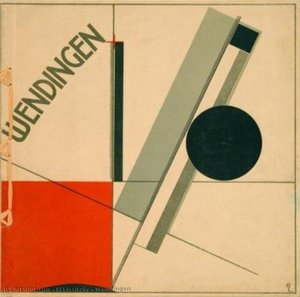
El Lissitzky's *Proun Interpenetrating Planes*, a seminal work from 1927, isn’t merely a painting; it’s an architectural manifesto rendered in color and form. Born Lazar Markovich Lissitzky in the Russian village of Pochinki in 1890, his artistic journey was one of relentless experimentation, fueled by a profound belief that art could actively shape the world around us. Initially trained as an architect and engineer – experiences tragically curtailed due to anti-Semitic restrictions – Lissitzky’s creative spirit quickly outgrew these constraints, leading him towards illustration and ultimately, a radical reimagining of visual space. This particular piece embodies his core concept of “Proun,” a term he coined to describe abstract planes that existed independently of any physical object, existing instead as pure geometric forms imbued with spiritual significance. It’s a testament to the artist's desire to dismantle traditional notions of representation and embrace a new language of form.
Deconstructing Space: Style and Technique
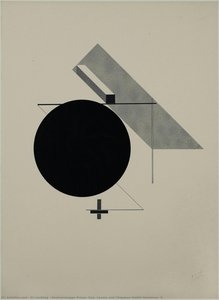
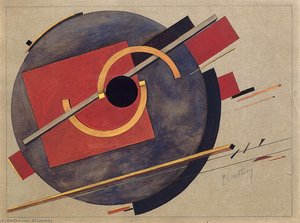
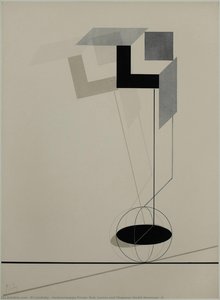
The painting immediately commands attention through its bold, reductive style. Lissitzky employs a strikingly simple palette – primarily shades of red, black, and white – to emphasize the interplay between positive and negative space. The dominant element is a large, circular form, seemingly suspended within a complex arrangement of overlapping planes and angles. This isn’t a realistic depiction of a building; rather, it's an abstracted representation, suggesting a structure viewed from multiple perspectives simultaneously. Lissitzky’s technique relies heavily on the principles of Constructivism, a Russian avant-garde movement that sought to integrate art with industry and social progress. He utilized a layering technique, applying paint in thin washes to create a sense of depth and transparency, allowing the underlying forms to subtly influence the appearance of those above. The precision of his lines and the deliberate flatness of the composition contribute to an almost mechanical quality, reflecting Lissitzky’s interest in rational design and functional aesthetics.
Symbolism and the Interpenetration of Planes
The title, *Proun Interpenetrating Planes*, is key to understanding the work's conceptual core. Lissitzky believed that these “Prouns” were not static entities but rather dynamic forces constantly interacting with each other. The overlapping circles and planes represent this interpenetration – a merging of forms, ideas, and perspectives. The central circle can be interpreted as a sun or a source of energy, radiating outwards and influencing the surrounding shapes. The smaller circles in the upper left corner might symbolize satellites orbiting this primary form, suggesting a hierarchical structure yet emphasizing interconnectedness. Lissitzky’s work was deeply influenced by Russian spiritualism and his own personal philosophy, seeking to create visual representations of universal principles and forces. He envisioned Prouns as tools for “spiritualization,” offering a pathway to transcend the limitations of everyday experience.
Historical Context: Suprematism and Soviet Propaganda
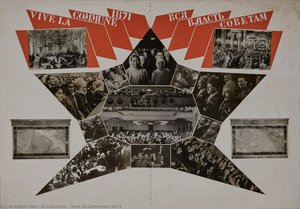
*Proun Interpenetrating Planes* emerged during a period of immense social and political upheaval in Russia. Lissitzky’s work was closely aligned with Suprematism, a movement pioneered by Kazimir Malevich that prioritized pure geometric abstraction. However, Lissitzky moved beyond the purely formal concerns of Suprematism, incorporating elements of architecture and design into his art. Following the Bolshevik Revolution, Lissitzky became involved in designing propaganda posters and exhibition displays for the Soviet government, utilizing his innovative visual language to promote socialist ideals. This piece reflects that period – a synthesis of artistic experimentation with practical application, demonstrating how abstract forms could be harnessed to communicate powerful messages. The stark geometry and bold colors resonate with the spirit of the era, capturing both its revolutionary fervor and its commitment to rational design.
A Timeless Vision: Reproduction and Interior Design
Today, *Proun Interpenetrating Planes* remains a powerfully evocative work. ArtsDot offers meticulously crafted hand-painted reproductions that faithfully capture the original’s vibrancy and depth. Whether adorning a modern gallery wall or integrated into a contemporary interior design scheme, this artwork brings a sense of dynamism and intellectual stimulation to any space. Its geometric forms provide a striking contrast to softer textures and organic shapes, injecting a dose of architectural precision and spiritual contemplation. Consider how the interplay of red, black, and white can be used to create focal points or establish a sophisticated color palette within your home – a testament to Lissitzky’s enduring legacy as a visionary artist.
Obras relacionadas
Biografía del artista
vida temprana y educación
El Lissitzky, un reconocido artista, diseñador, fotógrafo, tipógrafo, polémico y arquitecto ruso, nació el 23 de noviembre de 1890 en Pochinok, Rusia. Su vida temprana estuvo marcada por un interés innato en dibujar, lo que le llevó a recibir instrucción de Yehuda Pen, un artista judío local, a los 13 años.carrera e influencias
La carrera de Lissitzky se caracterizó por su colaboración con Kazimir Malevich en el desarrollo del suprematismo, influyendo significativamente en los movimientos Bauhaus y constructivista. Su obra, que abarcaba diversos medios, desempeñó un papel fundamental en la configuración del diseño gráfico del siglo XX.- Contribuciones clave:
- Desarrolló el grupo artístico suprematista Unovis con Kazimir Malevich
- Creó la serie Proun, una variante de la serie suprematista
- Sirvió como embajador cultural ruso a Weimar, Alemania, influyendo en las figuras clave del movimiento Bauhaus y De Stijl.
- Innovaciones:
- Tipografía
- Diseño de exposiciones
- Fotomontaje
- Diseño de libros
obras notables y legado
Algunas de las obras notables de Lissitzky incluyen:- El Constructor (1924), un fotomontaje autorretrato que presenta temas recurrentes como la mano de Dios, vinculando su herencia judía con los movimientos artísticos contemporáneos.
- Un cartel de propaganda soviético (1941), una de sus últimas obras, instando a la gente a construir más tanques para luchar contra la Alemania nazi.
museos y colecciones
La obra de Lissitzky se puede encontrar en varios museos, incluyendo:- Museo de Arte de Taganrog, Rusia /es/art/show/art-d3bb5m-es/
- Museo de Arte de Novokuznetsk, Rusia /es/art/show/art-d3akex-es/
fundación y catálogo razonado
En 2014, se estableció la Fundación Lissitzky en colaboración con el Museo Van Abbemuseum y académicos líderes de todo el mundo para preservar el legado del artista y preparar un catálogo razonado de su obra.- Para obtener más información sobre El Lissitzky, visite: https://ArtsDot.com/@/el-lissitzky
- Explore las obras expuestas en el Museo de Arte de Taganrog: /es/art/show/to-explore-the-artworks-exhibited-in-taganrog-art-museum/
referencias:
- https://en.wikipedia.org/wiki/el_lissitzky
- https://ArtsDot.com/@/el-lissitzky
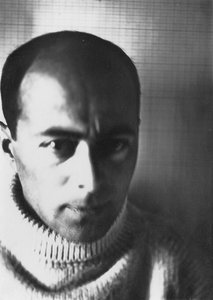
El Lissitzky
1890 - 1941 , Rusia
Datos clave
- Artistas Influenciados Por Este Artista:
- Bauhaus
- De Stijl
- Artistas Que Influyeron: ['Kazimir Malevich']
- Fecha De Muerte: 1941
- Fecha De Nacimiento: 23 de noviembre de 1890
- Lugar De Nacimiento: Pochinki, Rusia
- Movimiento Artístico: Suprematismo, Constructivismo
- Nacionalidad: Ruso
- Nombre Completo: El Lissitzky
- Obras Notables:
- El Constructor (1924)
- Serie Proun
- Cartel de propaganda soviético
Artículos relacionados

Abstracción Geométrica: 10 Obras Maestras que Transformaron el Arte Moderno | ArtsDot
Descubre las 10 obras maestras de la abstracción geométrica que revolucionaron el arte moderno. Explora a Mondrian, Malevich y Kandinsky en ArtsDot.com. Reproducciones de alta calidad para tu hogar.
Beyond Form & Color: Geometric Abstraction's Enduring Legacy in Art History
Explore the captivating world of geometric abstraction! Discover its origins, key artists like Malevich & Mondrian, and why this movement remains highly valued by art collectors today. Expert insights at ArtsDot.

El Greco: Las 25 Obras Maestras que Definen un Genio del Arte y la Fe
Descubre las 25 obras maestras de El Greco, el genio del Renacimiento español. Explora su arte religioso, manierismo y la historia detrás de cuadros icónicos como 'El Entierro del Conde de Orgaz'. Encuentra reproducciones de alta calidad en ArtsDot.com.
Geometric Design in Art: A Historical Survey & Contemporary Appeal for Collectors
Explore the enduring legacy of geometric abstraction! Discover key artists, historical movements & investment insights for discerning art collectors. Expert guidance from ArtsDot.
Beyond Form & Color: Geometric Abstraction's Evolution in 20th/21st Century Art
Explore the evolution of geometric abstraction from Cubism to contemporary art. Discover key artists like Malevich & Mondrian, investment insights, and expert collecting advice at ArtsDot.