

 Ver en contexto
 Enviar
 Compartir
 Detalles

 Descargar
 Similares
 Radiografía
 Presentación de diapositivas
 Stats
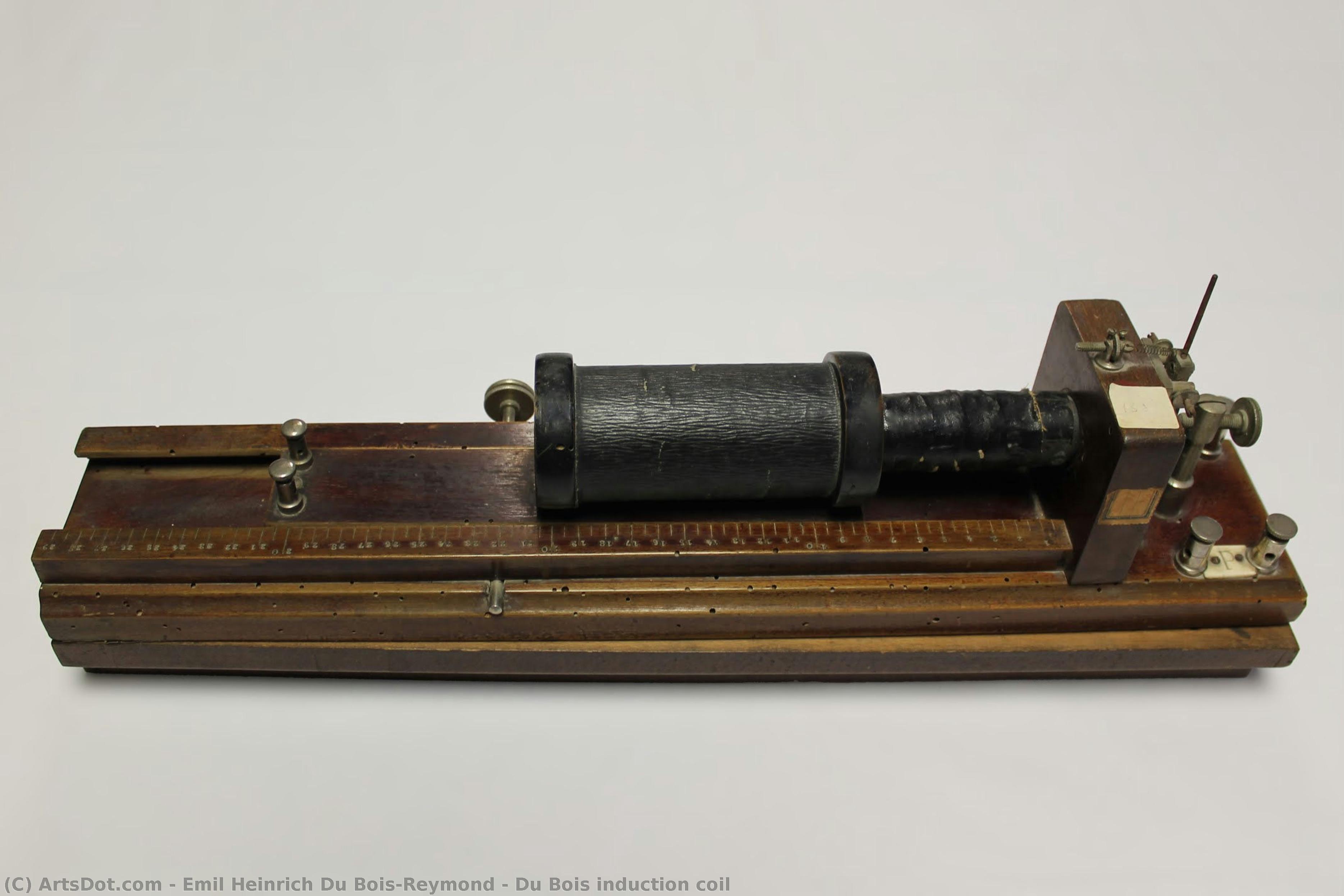
StatsDu Bois induction coil


 Ver más
Reproducción al óleo hecha a mano
Óleo sobre lienzo pintado a mano en el tamaño y marco de su elección, realizado por encargo por nuestros artistas. ( Switch to Print Switch to Digital Image)




P118B $10

P118H $10

P118W $10

P438Z $10

P508JH $12

P508YH $12

P805H $10

P805Z $10

P919BZ $10

P919G $10

P919XJ $10

P959ZH $10

P968JZ $12

W106C $8

W218G $10

W218JH $8

W218Y $10

W307PJ $10

W316G $10

W316PJ $8

W316Y $10

W398PJ $8

W4111J $10

W500HY $15

W500JH $15

W692G $12

W849H $8

W940BG $15

W953PJ $8




Elija entre nuestros tamaños predefinidos que respetan las proporciones originales de la obra.

Puede ingresar sus propias dimensiones para adaptarse a un marco o espacio específico. Si el tamaño seleccionado no coincide con las proporciones de la imagen original, recortaremos la obra o extenderemos la pintura con elementos adicionales pintados a mano. Se le enviará una maqueta digital para su aprobación antes de comenzar la producción.
Tenga en cuenta que la vista previa en pantalla no refleja el recorte o la extensión reales. Solo la maqueta mostrará con precisión la composición final.
Si bien existen tamaños personalizados, recomendamos seleccionar una dimensión de la lista predefinida para preservar las proporciones originales.
Tras realizar el pedido, el equipo de ArtsDot.com enviará un correo electrónico al cliente para solicitar instrucciones y proporcionarle una vista previa del boceto.
Envío a todo el mundo () en 3-4 semanas en lugar de las 5 semanas estándar. (8 septiembre). Sin comprometer la calidad.

Envío exprés gratuito a todo el mundo

Lienzo de lino de alta calidad

Seguro de envío total

Garantía de reembolso de impuestos aduaneros

Garantía de fidelidad cromática exacta

Política de devolución de 100 días (solo por defectos)

Garantía de devolución del 100% del dinero

Descuento por cantidad
 La opción de vidrio solo está disponible en tamaños inferiores a 110 cm.

Du Bois induction coil
Técnica de reproducción
Dimensiones de la reproducción
-


Precio total final
$ 263
Obras relacionadas
Biografía del artista
Emil Heinrich Du Bois-Reymond: Pioneer of Nerve Action Potential and Electrophysiology
Emil Heinrich du Bois-Reymond (7 November 1818 – 26 December 1896) was a German physiologist, the co-discoverer of nerve action potential, and the developer of experimental electrophysiology. His lectures on science and culture earned him great esteem during the latter half of the 19th century. He stands as a pivotal figure in bridging the gap between physics and biology, fundamentally reshaping our understanding of how nerves transmit signals – a legacy that continues to resonate within neuroscience today.Early Life and Education: A Huguenot Heritage
Du Bois-Reymond’s upbringing instilled in him an intellectual curiosity rooted in his family's Huguenot heritage—a tradition valuing education and critical thought. Born in Berlin, he descended from a wealthy immigrant family originating in Neuchâtel, Switzerland, where his father Felix Henri du Bois-Reymond practiced law and served as representative to the Prussian government. His mother Minette Henry was of noble lineage, carrying the influence of Huguenot culture—a diaspora fleeing religious persecution in France—which fostered a spirit of inquiry and independence within Emil’s formative years. Educated initially at the French College in Berlin, he pursued his studies diligently, demonstrating an early aptitude for diverse disciplines including theology, philosophy, and mathematics – preparing him for a lifetime dedicated to scientific exploration.The Spark of Electrophysiology: Matteucci's Influence
A transformative encounter occurred when Emil du Bois-Reymond was introduced to the groundbreaking research of Carlo Matteucci on animal electricity. Matteucci’s pioneering experiments demonstrated that animals could generate electrical currents, sparking Du Bois-Reymond’s fascination with bioelectricity—the electrochemical processes underpinning life itself. This inspiration propelled him toward a profound investigation into nerve cells and muscle fibers, recognizing their ability to transmit signals through electrical impulses. He meticulously documented these phenomena, establishing the foundation for what would become modern electrophysiology and fundamentally altering perceptions of biological function. Du Bois-Reymond’s gaze was captivated by Matteucci's daring assertion that animals possessed an inherent capacity for electricity—a concept radically opposed to prevailing mechanistic views—and this conviction fueled his determination to unravel the mysteries of nerve conduction.“Untersuchungen über thierische Elektricität”: A Monumental Contribution
Du Bois-Reymond’s magnum opus, *Untersuchungen über thierische Elektricität* (“Investigations of Animal Electricity”), published in two volumes between 1848 and 1884, cemented his place as a titan of scientific thought. This ambitious undertaking systematically dissected the electrical properties of muscle and nerve cells, integrating experimental data with theoretical models to illuminate the mechanisms of bioelectricity. Crucially, Du Bois-Reymond demonstrated that nerve impulses originate from depolarization—a shift in membrane potential—and propagate along axons as “waves of relative negativity.” His meticulous observations challenged prevailing vitalistic theories, advocating instead for a physicochemical explanation of biological processes – a paradigm shift that profoundly impacted subsequent scientific discourse and influenced thinkers like Sigmund Freud. The sheer scope of his research demanded unwavering dedication and intellectual rigor, reflecting the profound ambition of a scientist determined to reshape our understanding of life itself.The Helmholtz Collaboration: Shaping Scientific Discourse
Du Bois-Reymond’s intellectual partnership with Hermann Ludwig Ferdinand von Helmholtz—another luminary of German physiology—proved instrumental in shaping the trajectory of science during his era. Together, they championed a “physico-chemical program,” aiming to reduce physiology to fundamental physical principles and chemistry. This collaborative effort fostered groundbreaking research into topics ranging from nerve conduction to muscle contraction, establishing Berlin as a center for scientific innovation and profoundly impacting psychological theories—a testament to Du Bois-Reymond’s enduring influence on the intellectual landscape of the 19th century. Helmholtz's unwavering commitment to empirical observation complemented Du Bois-Reymond’s theoretical prowess, creating an unparalleled synergy that propelled advancements in neuroscience and solidified their legacy as architects of modern scientific thought.Legacy: Nerve Action Potential and Beyond
Emil du Bois-Reymond's discovery of nerve action potential remains one of the most significant breakthroughs in neuroscience history. His meticulous research laid the groundwork for understanding how neurons communicate, shaping our comprehension of brain function and influencing countless subsequent investigations into neurological disorders. Though later studies refined his initial model, Du Bois-Reymond’s foundational contribution continues to inspire scientists today—a legacy etched in the annals of scientific achievement.
Emil du Bois-Reymond
1818 - 1896 , Alemania
Datos clave
- Artistic Movement Or Style: Electrofisiología experimental
- Artists Who Influenced This Artist:
- Johannes Müller
- Helmholtz
- Date Of Birth: 7 noviembre 1818
- Date Of Death: 26 diciembre 1896
- Full Name: Emil Heinrich Du Bois-Reymond
- Nationality: Alemania
- Notable Artworks: ['Du Bois Induction Coil']
- Place Of Birth: Berlín, Alemania
Artículos relacionados
Echoes of Time: Exploring the Enduring Appeal of Vintage Artwork
Explore the captivating world of vintage art! Discover its history, enduring appeal, & how to build your own collection. Expert advice, custom reproductions & museum-quality prints at ArtsDot.
Echoes of Time: Nostalgia, Technique & Cultural Significance in Vintage Paintings
Explore the captivating world of vintage paintings! Discover key styles, cultural significance & collecting tips from art experts at ArtsDot. Find authentic reproductions and elevate your home décor.
El Siglo XIX en el Arte: 10 Obras Maestras para Decorar con Historia y Estilo
Descubre 10 obras maestras del siglo XIX: Monet, Goya y más. Explora el impresionismo, realismo y romanticismo que definieron una época. Encuentra reproducciones de arte exclusivas para decorar tu hogar con estilo en ArtsDot.com.
Ferdinand du Puigaudeau: Bridging Impressionism & Symbolism in Breton Landscapes
Discover Ferdinand du Puigaudeau's captivating Breton landscapes – a bridge between Impressionism & Symbolism. Explore his life, unique style, and enduring legacy with ArtsDot.

Echoes of Time: Exploring the Enduring Appeal & Historical Context of Vintage Art Prints
Explore the captivating world of vintage art prints! Discover their history, collecting tips & enduring appeal. Expert insights on chromolithography and building a legacy collection with ArtsDot.