 Ver en contexto
 Enviar
 Compartir
 Detalles

 Descargar
 Similares
 Radiografía
 Presentación de diapositivas
 Stats
StatsA Haida Village
 Oil On Canvas
- WallArt
- Modernism
 1929
1929 82.0 x 60.0 cm
 Colección de Arte McMichael Canadiense
 Ver más
Reproducción al óleo hecha a mano
Óleo sobre lienzo pintado a mano en el tamaño y marco de su elección, realizado por encargo por nuestros artistas. ( Switch to Print Switch to Digital Image)




P118B $10

P118H $10

P118W $10

P438Z $10

P508JH $12

P508YH $12

P805H $10

P805Z $10

P919BZ $10

P919G $10

P919XJ $10

P959ZH $10

P968JZ $12

W106C $8

W218G $10

W218JH $8

W218Y $10

W307PJ $10

W316G $10

W316PJ $8

W316Y $10

W398PJ $8

W4111J $10

W500HY $15

W500JH $15

W692G $12

W849H $8

W940BG $15

W953PJ $8




Elija entre nuestros tamaños predefinidos que respetan las proporciones originales de la obra.

Puede ingresar sus propias dimensiones para adaptarse a un marco o espacio específico. Si el tamaño seleccionado no coincide con las proporciones de la imagen original, recortaremos la obra o extenderemos la pintura con elementos adicionales pintados a mano. Se le enviará una maqueta digital para su aprobación antes de comenzar la producción.
Tenga en cuenta que la vista previa en pantalla no refleja el recorte o la extensión reales. Solo la maqueta mostrará con precisión la composición final.
Si bien existen tamaños personalizados, recomendamos seleccionar una dimensión de la lista predefinida para preservar las proporciones originales.
Tras realizar el pedido, el equipo de ArtsDot.com enviará un correo electrónico al cliente para solicitar instrucciones y proporcionarle una vista previa del boceto.
Envío a todo el mundo () en 3-4 semanas en lugar de las 5 semanas estándar. (8 septiembre). Sin comprometer la calidad.

Envío exprés gratuito a todo el mundo

Lienzo de lino de alta calidad

Seguro de envío total

Garantía de reembolso de impuestos aduaneros

Garantía de fidelidad cromática exacta

Política de devolución de 100 días (solo por defectos)

Garantía de devolución del 100% del dinero

Descuento por cantidad
 La opción de vidrio solo está disponible en tamaños inferiores a 110 cm.

A Haida Village
Técnica de reproducción
Dimensiones de la reproducción
-


Precio total final
$ 263
The Spirit of the Forest: An Encounter with a Tlingit Vision
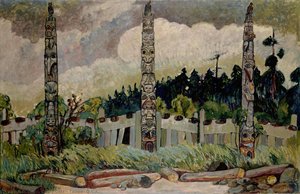
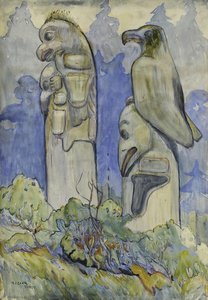
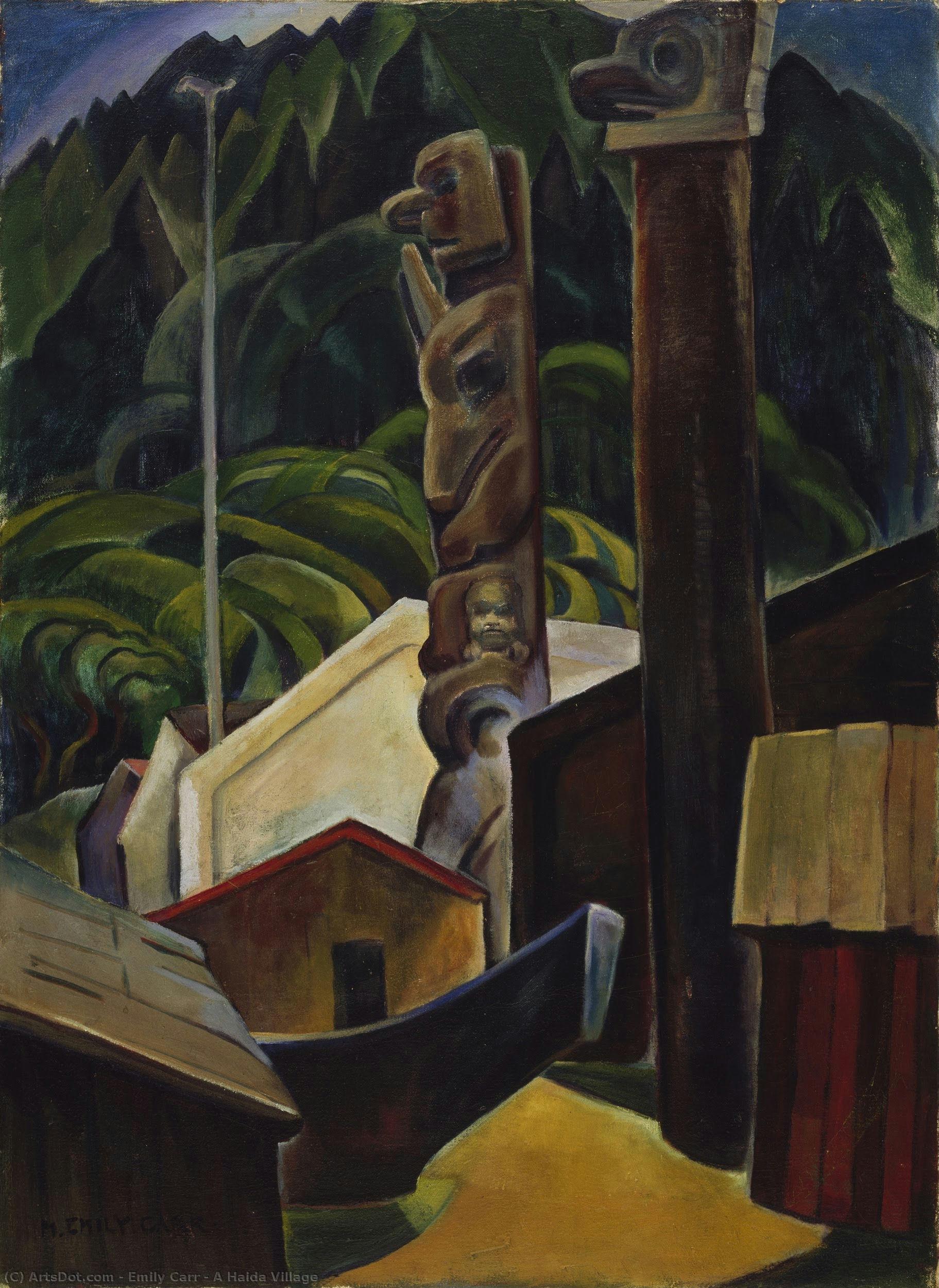
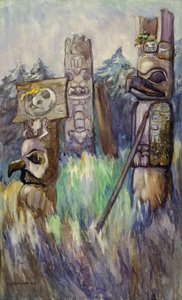
Emily Carr’s “A Haida Village,” painted in 1929, isn't merely a depiction of a coastal scene; it’s an immersive journey into the heart of Northwest Indigenous culture. This oil painting transcends simple representation, offering a glimpse into the profound connection between the Haida people and their ancestral land – Haida Gwaii, now known as Prince of Wales Island. Carr, a pivotal figure in Canadian modernism, masterfully blends elements of Post-Impressionism with her unique sensitivity to the natural world and the spiritual essence she perceived within it. The canvas breathes with the cool blues and greens of the Pacific Northwest forest, punctuated by the warm browns of cedar and earth – colors that speak directly to the landscape’s enduring presence.
The composition itself is strikingly deliberate. Vertical totem poles dominate the foreground, their imposing forms anchoring the scene and immediately establishing a sense of scale and reverence. These aren't simply structures; they are living records of clan history, lineage, and spiritual authority – visual narratives etched into wood and imbued with deep symbolic meaning. The low horizon line emphasizes the vastness of the surrounding wilderness, drawing the viewer’s eye upwards to the towering trees and hinting at an endless expanse of forest stretching beyond the frame. Carr's use of simplified forms and flattened perspective, characteristic of early 20th-century modernist painting, serves not to diminish the scene but rather to heighten its symbolic power.
Modernism Rooted in Tradition: A Unique Artistic Voice
Carr’s stylistic choices are particularly noteworthy. She deliberately departs from strict realism, opting instead for a stylized approach that prioritizes emotional resonance over photographic accuracy. Bold lines define the shapes of buildings and totem poles, creating a sense of rhythm and movement across the canvas. The use of geometric abstraction – rectangular forms and angular structures – reflects both the architectural elements of the village and the underlying structure of Haida cosmology. This isn’t an attempt to replicate reality; it's an interpretation filtered through Carr’s deeply felt understanding of the subject matter.
The painting’s dramatic lighting further enhances its impact. Strong contrasts between light and shadow create a sense of depth and drama, emphasizing the verticality of the totem poles and lending a solemn quality to the scene. Carr skillfully employs chiaroscuro – the interplay of light and dark – to draw attention to key elements and evoke a feeling of both grandeur and mystery. The muted color palette contributes to this atmosphere, creating a sense of timelessness and reinforcing the painting’s connection to its historical context.
Symbolism Woven into the Landscape
Beyond its formal qualities, “A Haida Village” is rich in symbolism. The totem poles themselves are central to understanding the artwork's meaning, representing not just individual clans but also the interconnectedness of all things within Haida society. The dwellings depicted – simple, functional structures built from natural materials – reflect a deep respect for the environment and a sustainable way of life. Carr’s deliberate choice of subject matter—a thriving village nestled within a primeval forest—underscores the enduring strength and resilience of the Haida people in the face of changing times.
Furthermore, the painting can be interpreted as a meditation on the relationship between humanity and nature. Carr's artistic vision seems to suggest that true understanding comes not from imposing one’s own perspective but from immersing oneself within the spirit of the land. The artwork invites contemplation on themes of heritage, spirituality, and the profound beauty of the natural world – elements deeply valued by both the Haida people and Emily Carr herself.
A Legacy in Reproduction: Bringing Tradition to Life
Reproductions of “A Haida Village” offer a remarkable opportunity to bring this powerful artwork into your home or office. Whether you choose a high-quality canvas print, a meticulously crafted giclée, or a framed original, you’ll be acquiring more than just a beautiful image; you'll be investing in a piece of Canadian art history and celebrating the enduring legacy of the Haida people. Consider framing options that complement the painting’s rich colors and bold lines – perhaps a natural wood frame to further emphasize its connection to the forest.
Obras relacionadas
Biografía del artista
Primeros años e influencias
- Nacimiento: 13 de diciembre de 1871, Victoria, Columbia Británica
- Fallecimiento: 2 de marzo de 1945, Victoria, Columbia Británica
- Antecedentes familiares: Emily Carr era la segunda más joven de nueve hijos nacidos de Richard y Emily (Saunders) Carr. Su padre fue un inmigrante inglés que estableció un negocio exitoso en Victoria.
- Inclinaciones artísticas tempranas: Animada por su padre, Emily demostró talento artístico desde una edad temprana. Recibió instrucción artística temprana y mostró un gran interés en representar el mundo natural que la rodeaba.
- Educación: Estudió en el San Francisco Art Institute (1890-1892) y en la Westminster School of Art de Londres (1899). Estas experiencias la expusieron a varios estilos artísticos, pero finalmente desarrolló una visión única.
- Influencias tempranas: Los paisajes de Columbia Británica, particularmente Vancouver Island, influyeron profundamente en el trabajo temprano de Carr. También se sintió atraída por el arte y la cultura de los pueblos indígenas que habitaban la región.
Desarrollo artístico y estilo
- Comienzos postimpresionistas: Inicialmente, el estilo de Carr tendía hacia el Postimpresionismo, influenciado por artistas europeos. Sin embargo, gradualmente se alejó de la representación convencional para desarrollar un enfoque más expresivo y personal.
- Enfoque en la cultura indígena: Un punto de inflexión importante en su carrera fue su exploración de las aldeas y el arte de los pueblos indígenas. Buscó capturar la esencia espiritual y la riqueza cultural de estas comunidades en sus pinturas.
- Aceptación del modernismo: Carr se convirtió en una de las primeras pintoras canadienses en adoptar el Modernismo, caracterizado por colores audaces, pinceladas dinámicas y una ruptura con el realismo tradicional.
- Estilo único: Su estilo se caracteriza por su intensidad emocional, paleta de colores vibrantes y uso distintivo de la textura. A menudo empleaba técnicas de empaste grueso para crear una sensación de movimiento y energía en sus pinturas.
Obras importantes y exposiciones
- Pinturas notables: Tanoo (acuarela), A Haida Village (óleo), The Indian Church (óleo) son algunas de sus obras más celebradas, que muestran su mezcla única de técnicas modernistas y temas indígenas.
- Exposiciones: Carr participó en varias exposiciones a lo largo de su carrera, incluida la "Exposición de arte de los pueblos modernos y primeros de las Primeras Naciones de la Costa Noroeste Canadiense" en la Galería Nacional de Canadá.
- Klee Wyck (1941): Su autobiografía, Klee Wyck, ganó el Premio Literario del Gobernador General para no ficción, lo que demuestra su talento como escritora y cronista de la vida en Columbia Británica.
Legado y significado histórico
- "Madre del arte canadiense moderno": Emily Carr es ampliamente considerada una pionera del arte canadiense moderno, allanando el camino para las futuras generaciones de artistas.
- Reconocimiento de la cultura indígena: Su trabajo ayudó a crear conciencia sobre la cultura y las tradiciones artísticas de los pueblos indígenas en Canadá.
- Influencia en artistas posteriores: Inspiró a numerosos artistas canadienses con su visión única y su compromiso inquebrantable con su oficio. Pegi Nicol Macleod es un ejemplo.
- Icono nacional: El legado de Carr se extiende más allá de su obra, ya que se ha convertido en un símbolo de independencia artística, exploración cultural y la belleza del paisaje de Columbia Británica. Un planeta menor, 5688 Kleewyck, fue nombrado en honor a su nombre anglicizado nativo.
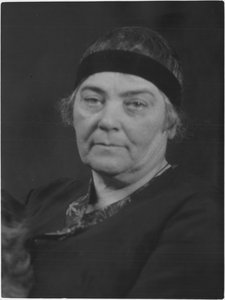
Emily Carr
1871 - 1945 , Canadá
Datos clave
- Artistas Que Influyeron:
- Van Gogh
- Monet
- Pissarro
- Matisse
- Fecha De Fallecimiento: 2 de marzo de 1945
- Fecha De Nacimiento: 13 de diciembre de 1871
- Influenciados Por Ella:
- Nicol Macleod
- Sophia Pemberton
- Lugar De Nacimiento: Victoria, Canadá
- Movimiento Artístico: Modernismo, Postimpresionismo
- Nacionalidad: Canadiense
- Nombre Completo: Emily Carr
- Obras Notables:
- Tanoo
- A Haida Village
- The Indian Church
Artículos relacionados

El Legado Duradero del Óleo sobre Lienzo: Técnica, Historia y Práctica Contemporánea
Descubre la historia y técnica del óleo sobre lienzo. Explora reproducciones fieles hechas a mano, personalización artística y consejos de expertos con .

El Óleo sobre Lienzo: Historia, Técnica y la Persistencia de un Medio Artístico Atemporal
Descubre la historia y técnica del óleo sobre lienzo. Explora reproducciones fieles hechas a mano, personalización artística y consejos de expertos con ArtsDot. ¡Colecciona arte con confianza!
10 Obras Maestras al Óleo sobre Tabla que Revolucionaron la Historia del Arte | ArtsDot
Descubre 10 obras maestras al óleo sobre tabla que revolucionaron el arte. Explora la historia de Van Gogh, Monet y otros artistas clave. Encuentra reproducciones de alta calidad e inspírate para decorar tu hogar con ArtsDot.com.

The Enduring Legacy of Oil on Canvas: Technique, History & Aesthetic Impact
Explore the rich history & techniques of oil painting – from Renaissance masters to Impressionism. Discover pigments, layering methods, and why this timeless medium endures. Expert insights for artists & art enthusiasts.

The Enduring Power of Painting: A Historical & Contemporary Exploration of Form and Emotion
Explore the rich history & enduring techniques of oil painting with ArtsDot. Discover masterpieces, learn about art collecting, and find authentic handmade reproductions crafted by skilled artists.