

 Ver en contexto
 Enviar
 Compartir
 Detalles

 Descargar
 Similares
 Radiografía
 Presentación de diapositivas
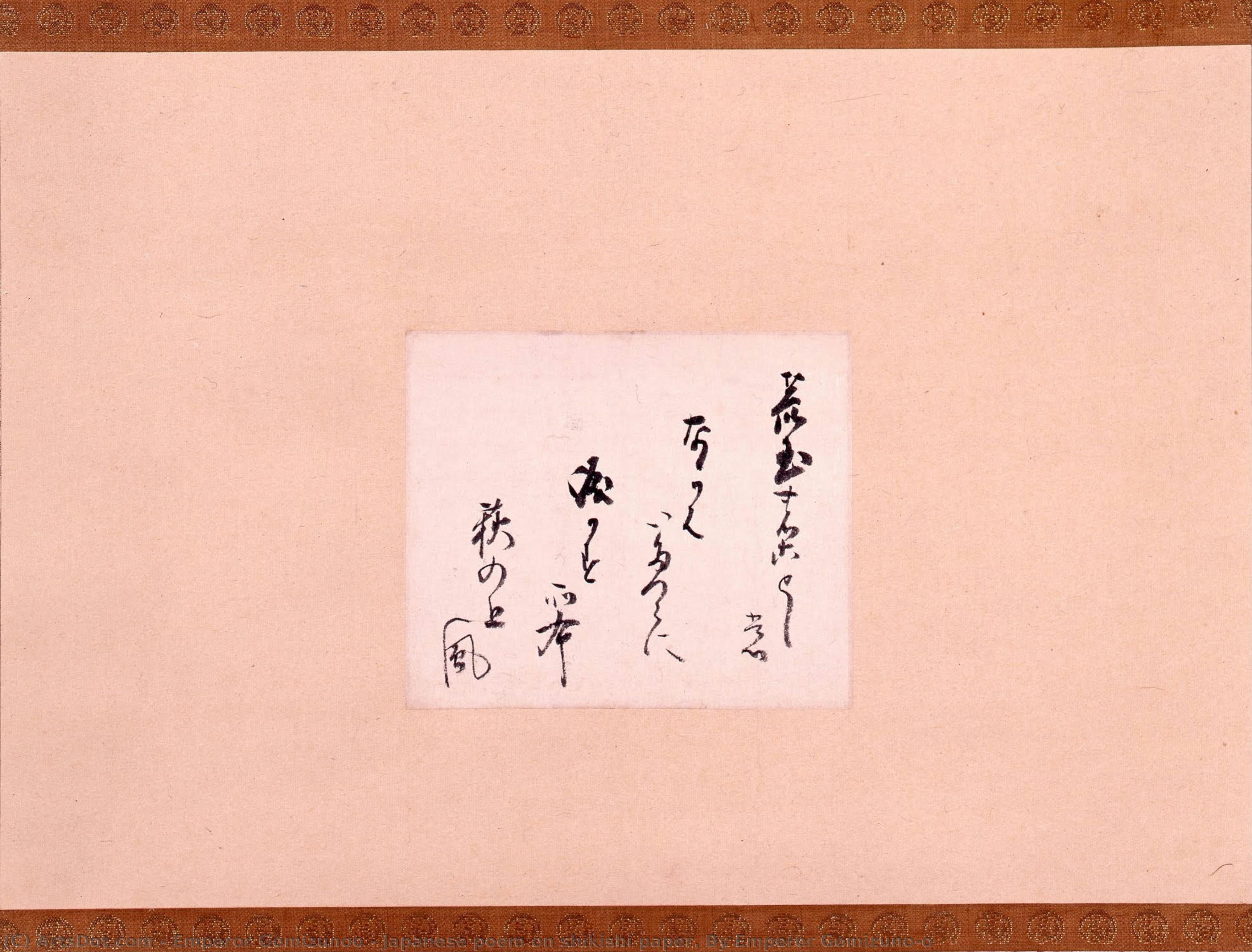
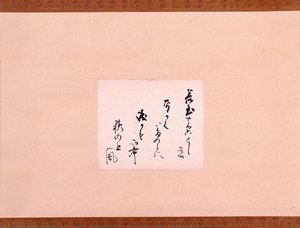
Japanese poem on shikishi paper. By Emperor Gomizuno-o


 Ver más
Adquiera una imagen digital de alta resolución y optimizada, muy superior a la vista previa en línea.
Cada archivo es preparado meticulosamente por nuestros especialistas internos mediante el uso de herramientas avanzadas y un experto retoque manual. Nos aseguramos de que cada imagen posea una claridad excepcional, una precisión cromática impecable y un detalle minucioso.
El archivo final se entrega por correo electrónico en un plazo de 72 horas, optimizado para su uso inmediato en entornos profesionales, editoriales y de impresión. Esta es la misma calidad en la que confían los estudios de diseño, las editoriales y las galerías de primer nivel.
Imagen Digital
Descarga un archivo de alta resolución para exhibición personal, impresión y proyectos creativos. ( Comprar impresión Comprar pintura hecha a mano)
Incluido en cada pedido de imágenes digitales
Entrega digital experta, garantizada.
Al elegir ArtsDot.com, no solo está adquiriendo una imagen; está recibiendo una obra de arte digital mejorada profesionalmente, elaborada con precisión y respaldada por una garantía de satisfacción. Esto es todo lo que incluye su pedido, automáticamente:

Entrega rápida por email
Recibirá su archivo de imagen digital en alta resolución por correo electrónico en un plazo de 72 horas tras realizar su pedido, listo para su uso inmediato.

Archivo digital optimizado por IA
Su obra de arte se optimiza profesionalmente mediante herramientas avanzadas de IA y edición manual, garantizando el máximo detalle, claridad y precisión cromática.

Reenvío gratuito de por vida
¿Has borrado o perdido tu archivo por error? No te preocupes: te lo volveremos a enviar en cualquier momento, sin coste adicional.

Sin gastos de importación, siempre
Disfrute de su obra de arte al instante sin aduanas, aranceles ni gastos de envío; las descargas digitales siempre están libres de impuestos.

Garantía de fidelidad de color
Garantizamos que su imagen digital refleje los colores originales con la mayor fidelidad posible, mediante el uso de herramientas profesionales y gestión del color.

Garantía de satisfacción de 60 días
Si no está satisfecho con su imagen digital, la revisaremos o le reembolsaremos el 100% en un plazo de 60 días, sin preguntas.

100% Garantía de devolución de dinero
¿No está satisfecho? Obtenga un reembolso completo dentro de los 60 días posteriores a la recepción de su archivo digital, sin necesidad de explicaciones.

Descuentos por pedidos grandes
Compra 3 imágenes, ahorra 10% - Compra 5, ahorra 15% - Compra 10+, ahorra 20%. Ideal para proyectos creativos, galerías y agencias.
Obras relacionadas
Biografía del artista
A Reign Reflected in Ink: The Art of Emperor Gomizunoo
Emperor Gomizunoo, born Kotohito in 1596 and passing in 1680, occupies a singular position in Japanese history. As the 108th emperor of Japan, his reign was entirely contained within the Edo period – a time of relative peace and flourishing arts under the Tokugawa shogunate. While political power resided with the shogun, Gomizunoo cultivated a profound legacy not through governance but through artistic expression, specifically in the delicate art of *shikishi*. He wasn’t merely a patron of the arts; he was a dedicated practitioner, imbuing his calligraphy and poetry with the weight of imperial tradition and a distinctly personal sensibility. His life unfolded against a backdrop of shifting power dynamics, yet he carved out a space for himself as a refined aesthete and a vital link to Japan's cultural past. Born the third son of Emperor Go-Yōzei and Konoe Sakiko – herself an adopted daughter of Toyotomi Hideyoshi – Gomizunoo’s lineage connected him to both the established imperial court and the recently diminished, yet still influential, Toyotomi clan. This unique position likely informed his cautious approach to political matters and his dedication to preserving cultural heritage.The Shikishi as a Mirror of Imperial Life
Gomizunoo’s artistic output is almost entirely focused on *shikishi*, small, rectangular slips of paper used for exchanging poems and calligraphy. These weren't grand pronouncements intended for public display; rather, they were intimate communications within the courtly circles – gifts exchanged between nobles, expressions of condolence, or simply elegant reflections on nature and life. The significance lies not in quantity—his surviving works are relatively few—but in their quality and the insight they offer into his inner world. He favored classical Chinese poetry as a vehicle for expression, meticulously copying verses from renowned Tang Dynasty poets like Du Fu and Li Bai. However, he wasn’t simply replicating; Gomizunoo infused these borrowed forms with his own unique style, characterized by a restrained elegance and subtle emotional depth. His calligraphy is notable for its precise brushwork, balanced composition, and the careful selection of ink tones. Each *shikishi* becomes a miniature world, reflecting not only the poem’s content but also the emperor's state of mind and his reverence for tradition. The act of creating these pieces was itself a form of meditation, a way to connect with past masters and express his own understanding of beauty and impermanence.Influences and Artistic Development
The artistic landscape surrounding Gomizunoo was one steeped in classical Japanese aesthetics. He received rigorous training in calligraphy and poetry from an early age, absorbing the principles of *waka* (Japanese poetry) and Chinese literary traditions. The influence of his predecessors – particularly Emperors Go-Yozei and Ogimachi, both known for their artistic inclinations – is palpable in his work. However, Gomizunoo distinguished himself through a deliberate refinement of existing styles. He moved away from the more flamboyant expressions favored by some earlier court poets, opting instead for a quiet dignity and understated grace. The political climate also played a role. The Edo period saw a rise in Confucianism, which emphasized social harmony and moral rectitude. This likely influenced Gomizunoo’s choice of subject matter – often focusing on themes of nature, solitude, and the transience of life—and his restrained artistic approach. He wasn't seeking to shock or innovate; he was striving for a timeless beauty rooted in classical principles.Legacy and Historical Significance
While Gomizunoo’s reign lacked significant political events, his cultural contributions were profound. His dedication to *shikishi* helped preserve the art form and elevate it as a symbol of imperial refinement. More importantly, he embodied a vision of the emperor as a guardian of tradition and a patron of the arts – a role that would become increasingly important in the centuries following his death. In an era where political power was concentrated elsewhere, Gomizunoo demonstrated the enduring influence of cultural authority. His *shikishi* offer invaluable insights into the aesthetic sensibilities of the Edo period court and provide a glimpse into the inner life of a man who navigated a complex world with grace and intelligence. His work stands as a testament to the power of art to transcend political limitations, offering a timeless expression of beauty, contemplation, and imperial dignity. The surviving examples are now treasured artifacts, studied by scholars and admired for their exquisite craftsmanship and subtle emotional resonance. They represent not just the artistry of an emperor but also the enduring spirit of Japanese culture.Exploring Gomizunoo’s Artistic Themes
- Nature as a Source of Inspiration: Recurring motifs in his *shikishi* include plum blossoms, bamboo, and landscapes – symbols of resilience, purity, and harmony.
- The Transience of Life (Mono no Aware): A central theme is the acceptance of impermanence, often expressed through poems reflecting on seasonal changes or the passage of time.
- Classical Chinese Poetry: His mastery of Tang Dynasty verse demonstrates his deep understanding of literary tradition and his ability to adapt it to a Japanese context.
- Imperial Identity: While subtle, his work reflects a sense of imperial dignity and a commitment to preserving cultural heritage.
emperor gomizunoo
1596 - 1680 , Japan
Breves datos
- Artistic Movement Or Style: Shikishi Art
- Date Of Birth: June 29, 1596
- Date Of Death: September 11, 1680
- Full Name: Kotohito (Masahito)
- Nationality: Japanese
- Notable Artworks: ['Japanese Poem on Shikishi Paper']
- Place Of Birth: Kyoto, Japan

