

 Ver en contexto
 Enviar
 Compartir
 Detalles

 Descargar
 Similares
 Radiografía
 Presentación de diapositivas
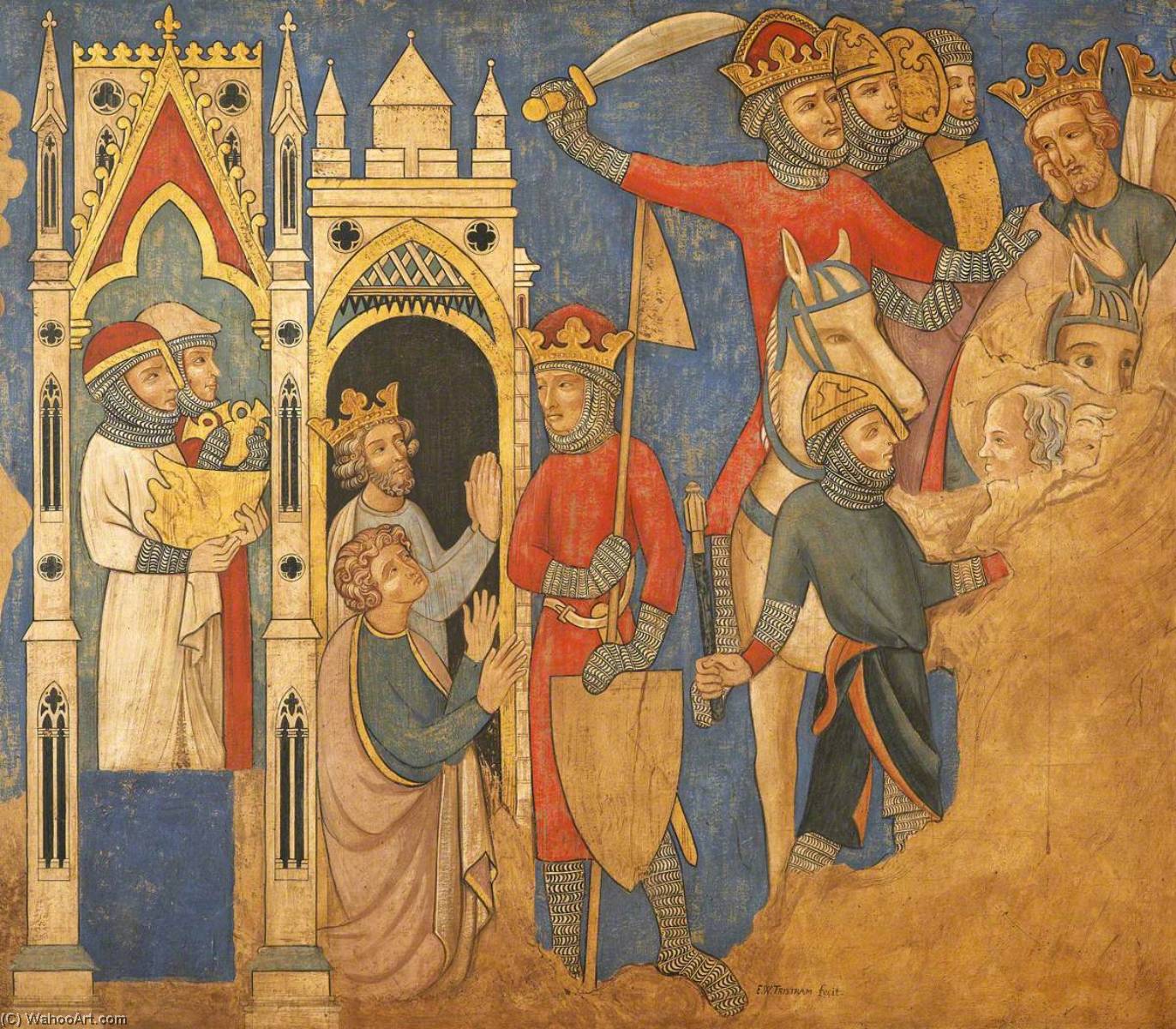
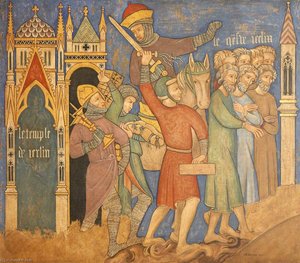
Reconstruction of Medieval Mural Painting, the Continuation of the Captivity of the Jews
 Gothic Revival
 1927
1927 107.0 x 122.0 cm
 Ver más
Reproducción al óleo hecha a mano
Óleo sobre lienzo pintado a mano en el tamaño y marco de su elección, realizado por encargo por nuestros artistas. ( Comprar impresión Comprar imagen)




































Elija entre nuestros tamaños predefinidos que respetan las proporciones originales de la obra.

Puede ingresar sus propias dimensiones para adaptarse a un marco o espacio específico. Si el tamaño seleccionado no coincide con las proporciones de la imagen original, recortaremos la obra o extenderemos la pintura con elementos adicionales pintados a mano. Se le enviará una maqueta digital para su aprobación antes de comenzar la producción.
Tenga en cuenta que la vista previa en pantalla no refleja el recorte o la extensión reales. Solo la maqueta mostrará con precisión la composición final.
Si bien existen tamaños personalizados, recomendamos seleccionar una dimensión de la lista predefinida para preservar las proporciones originales.
Tras realizar el pedido, el equipo de ArtsDot.com enviará un correo electrónico al cliente para solicitar instrucciones y proporcionarle una vista previa del boceto.
Envío a todo el mundo () en 3-4 semanas en lugar de las 5 semanas estándar. (24 agosto). Sin comprometer la calidad.

Envío exprés gratuito a todo el mundo

Lienzo de lino de alta calidad

Seguro de envío total

Garantía de reembolso de impuestos aduaneros

Garantía de fidelidad cromática exacta

Política de devolución de 60 días (solo por defectos)

Garantía de devolución del 100% del dinero

Descuento por cantidad
 La opción de vidrio solo está disponible en tamaños inferiores a 110 cm.

Reconstruction of Medieval Mural Painting, the Continuation of the Captivity of the Jews
Técnica de reproducción
Dimensiones de la reproducción
-


Precio total final
$ 363
Obras relacionadas
Biografía del artista
The Guardian of Medieval Splendor: The Life and Legacy of Ernest William Tristram
In the quiet, hallowed corridors of British art history, few figures possess the dual mastery of scientific precision and artistic soul quite like Ernest William Tristram. Born in 1882 in the historic town of Carmarthen, Wales, Tristram was a man whose life’s work served as a bridge between the fading echoes of the Middle Ages and the modern era of conservation. His journey began not merely with a brush in hand, but with an exceptional aptitude for chemistry—a discipline that would later allow him to peer beneath the layers of time, analyzing the very pigments that once adorned the walls of England’s most sacred spaces.
Tristram’s artistic identity was forged at the Royal College of Art, where he studied under the legendary W. R. Lethaby. This period of his life was transformative, instilling in him a profound respect for the decorative arts and the structural integrity of historical design. As he transitioned from student to scholar, Tristram became more than just a painter; he became a detective of the past. His fascination with the visual heritage of Britain led him to a career defined by the meticulous documentation of medieval wall paintings, a vocation that required both the eye of an artist and the rigor of an archaeologist.
A Visionary of Reconstruction and Conservation
To understand Tristram is to understand his unique ability to breathe life back into lost grandeur. While many historians were content with mere cataloging, Tristram sought to reconstruct. He did not simply observe the remnants of Gothic murals; he reimagined them in their full, luminous glory. His work on the chancel wall panels for St Elisabeth's Eastbourne and his contributions to York Minster stand as testaments to this creative resurrection. Through his use of tempera and a deep understanding of Byzantine and Gothic aesthetics, he was able to translate fragmented historical evidence into vibrant, symbolic narratives.
< Key Artistic Achievements:- The Reconstruction of Medieval Murals: His ability to interpret faded pigments into complete, cohesive scenes, such as the striking depictions of biblical figures and royal attendants.
- Academic Leadership: Serving as the Professor of Design at the Royal College of Art from 1926 to 1948, where he shaped the next generation of British designers.
- Scientific Conservation: Applying his background in chemistry to the preservation of medieval monuments, including significant work on King Edward's Chair in Westminster Abbey.
- Scholarly Publications: Authoring definitive texts such as English Medieval Wall Painting, which provided a foundational understanding of the twelfth and thirteenth centuries.
The Enduring Resonance of a Scholarly Artist
Tristram’s legacy is etched into the very stone and plaster of the cathedrals he loved. His work was never solely about the preservation of objects, but about the preservation of meaning. Through his paintings—ranging from the poignant "Story of Hezekiah" to the opulent, gold-flecked panels of royal figures—he ensured that the spiritual and social complexities of the medieval world remained accessible to the modern eye. His art was a dialogue between the centuries, a way of ensuring that the light of the past would not be extinguished by the passage of time.
Though he retired in 1948 and passed away in 1952, the impact of his meticulous research and evocative reconstructions continues to resonate. He remains a pioneer who proved that the conservation of art is not merely a technical necessity, but a profound act of cultural storytelling. In every reconstructed line and every carefully analyzed pigment, Ernest William Tristram lives on, reminding us that history is not just something we read, but something we can see, feel, and touch.
ernest william tristram
1882 - 1952
Datos clave
- Artistic Movement Or Style: Academic Art Style
- Artists Or Movements Influenced By This Artist: ['English Medieval Painting']
- Artists Who Influenced This Artist: ['W. R. Lethaby']
- Date Of Birth: 1882
- Date Of Death: 1952
- Full Name: Ernest William Tristram
- Nationality: British
- Notable Artworks:
- La Païva
- The Sir William Dunn School of Pathology
- Place Of Birth: Carmarthen, Wales
Artículos relacionados
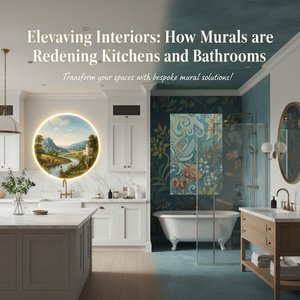
¿Murales en Cocinas y Baños? La Nueva Tendencia del Diseño de Interiores de Lujo
Descubre la tendencia de los murales en baños y cocinas. Expertos en diseño te guían para transformar tus espacios con arte impermeable y personalizado. ¡Encuentra inspiración y soluciones únicas!
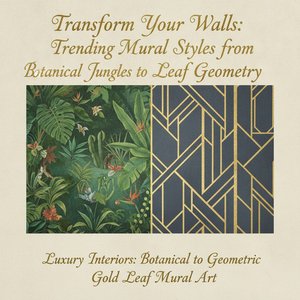
Tendencias Murales 2024: Del Realismo Salvaje a la Geometría Dorada
Descubre las tendencias más solicitadas en murales para hoteles. Expertos en diseño y arte te guían para transformar tu espacio con obras únicas. ¡Encuentra inspiración y soluciones personalizadas!
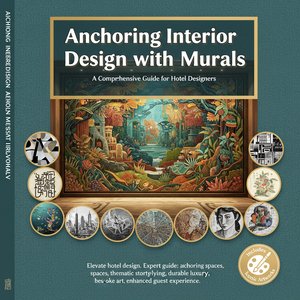
¿Murales como Pilar del Diseño Interior? Transformando Espacios con Arte Central
Descubre cómo los murales transforman espacios con arte central. Expertos en diseño de interiores te guían para crear ambientes únicos y sofisticados. ¡Inspírate!
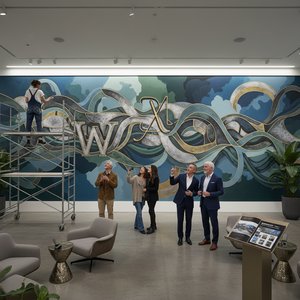
¿Cómo un Mural Personalizado Define la Identidad Visual de su Marca?
Descubra cómo un mural personalizado puede transformar la identidad de su marca. Expertos en diseño y arte para espacios comerciales. : calidad, personalización y soluciones exclusivas.
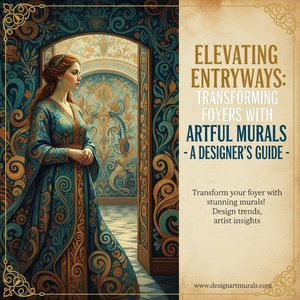
¿Transforme su Vestíbulo en una Obra de Arte? Murales para una Primera Impresión Inolvidable
Transforme su vestíbulo en una obra de arte inolvidable. Descubra ideas y consejos expertos para murales personalizados que causen una primera impresión impactante. ¡Diseñe con confianza!

