 Ver en contexto
 Enviar
 Compartir
 Detalles

 Descargar
 Similares
 Radiografía
 Presentación de diapositivas
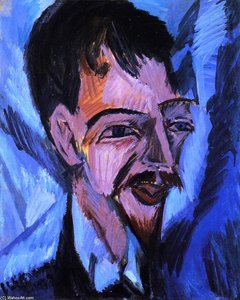
Herrenbildnis, Hans Frisch
 Óleo sobre lienzo
- Arte de pared
- Expressionism
 1907
1907 115.0 x 115.0 cm
 Ver más
Reproducción al óleo hecha a mano
Óleo sobre lienzo pintado a mano en el tamaño y marco de su elección, realizado por encargo por nuestros artistas. ( Comprar impresión Comprar imagen)




P118B $10

P118H $10

P118W $10

P438Z $10

P508JH $12

P508YH $12

P805H $10

P805Z $10

P919BZ $10

P919G $10

P919XJ $10

P959ZH $10

P968JZ $12

W106C $8

W218G $10

W218JH $8

W218Y $10

W307PJ $10

W316G $10

W316PJ $8

W316Y $10

W398PJ $8

W4111J $10

W500HY $15

W500JH $15

W692G $12

W849H $8

W940BG $15

W953PJ $8




Elija entre nuestros tamaños predefinidos que respetan las proporciones originales de la obra.

Puede ingresar sus propias dimensiones para adaptarse a un marco o espacio específico. Si el tamaño seleccionado no coincide con las proporciones de la imagen original, recortaremos la obra o extenderemos la pintura con elementos adicionales pintados a mano. Se le enviará una maqueta digital para su aprobación antes de comenzar la producción.
Tenga en cuenta que la vista previa en pantalla no refleja el recorte o la extensión reales. Solo la maqueta mostrará con precisión la composición final.
Si bien existen tamaños personalizados, recomendamos seleccionar una dimensión de la lista predefinida para preservar las proporciones originales.
Tras realizar el pedido, el equipo de ArtsDot.com enviará un correo electrónico al cliente para solicitar instrucciones y proporcionarle una vista previa del boceto.
Envío a todo el mundo () en 3-4 semanas en lugar de las 5 semanas estándar. (23 agosto). Sin comprometer la calidad.

Envío exprés gratuito a todo el mundo

Lienzo de lino de alta calidad

Seguro de envío total

Garantía de reembolso de impuestos aduaneros

Garantía de fidelidad cromática exacta

Política de devolución de 60 días (solo por defectos)

Garantía de devolución del 100% del dinero

Descuento por cantidad
 La opción de vidrio solo está disponible en tamaños inferiores a 110 cm.

Herrenbildnis, Hans Frisch
Técnica de reproducción
Dimensiones de la reproducción
-


Precio total final
$ 263
Descripción de la obra
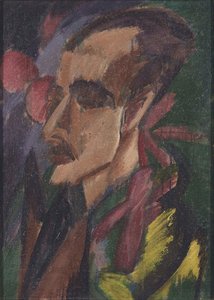
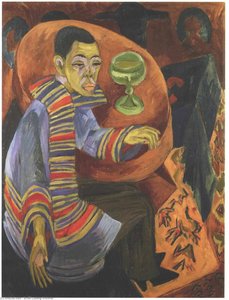
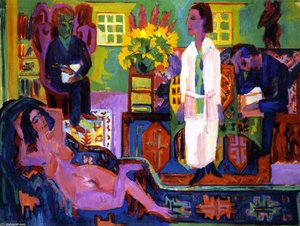
A Portrait of Modern Anxiety: Ernst Ludwig Kirchner’s *Herrenbildnis, Hans Frisch* (Portrait of Herr Hans Frisch)
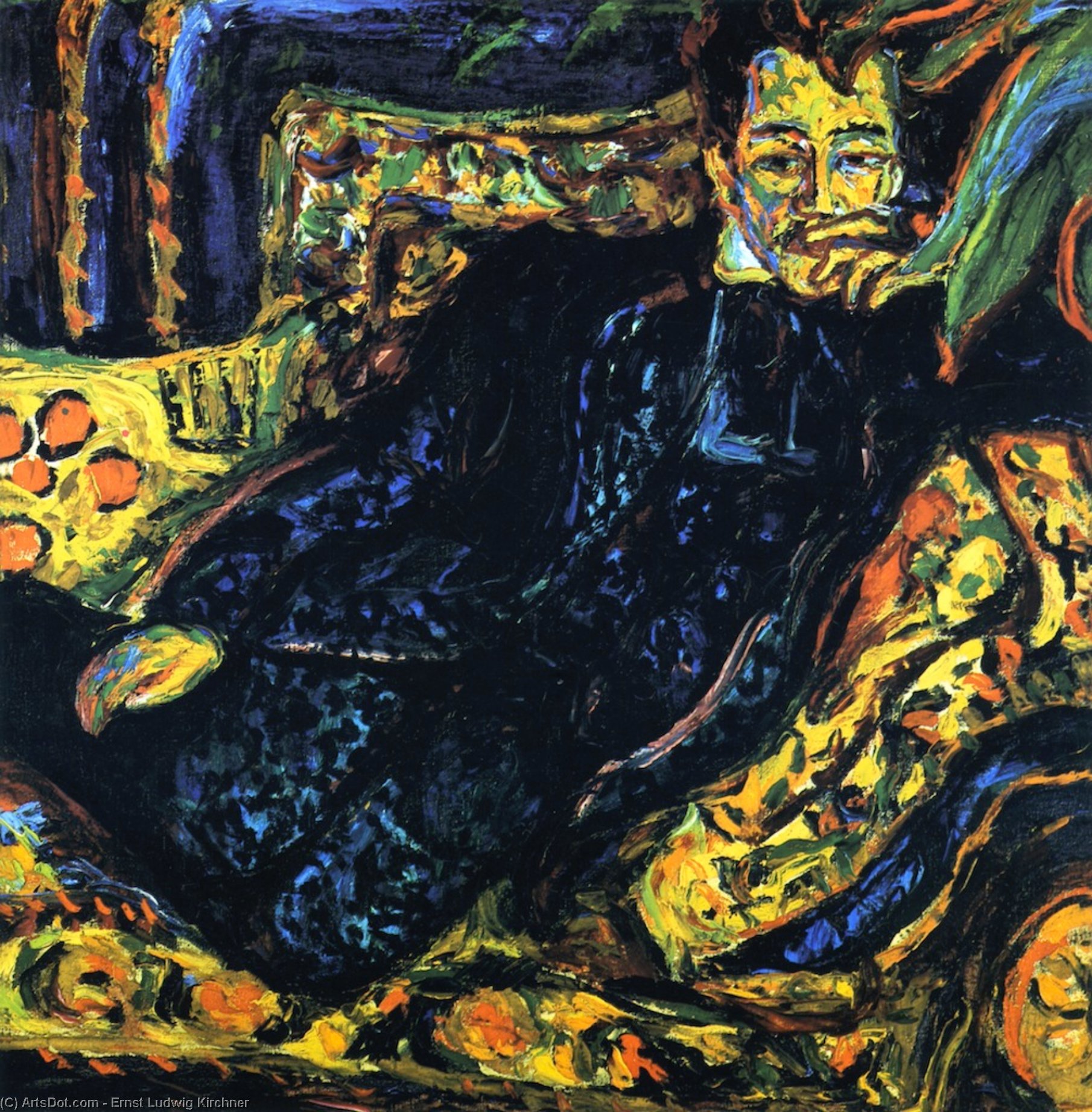
Ernst Ludwig Kirchner's 1907 painting, *Herrenbildnis, Hans Frisch*, is a striking example of early Expressionism – a movement that sought to convey subjective emotional experience rather than objective reality. This isn’t merely a portrait; it’s a psychological study rendered in bold color and unsettling form, offering a glimpse into the anxieties simmering beneath the surface of pre-war German society. Currently housed at the McNay Art Museum in San Antonio, Texas, this work continues to resonate with its raw emotional power.Subject and Composition
The painting centers on Hans Frisch, a friend of Kirchner’s, depicted seated on a couch in what appears to be an interior space. His clasped hands and direct gaze convey a sense of solemnity, perhaps even apprehension. The composition is deliberately claustrophobic; Frisch dominates the frame, creating an immediate intimacy but also a feeling of being trapped. A secondary figure is subtly present in the background, adding to the sense of unease – are they a source of comfort or another element contributing to Frisch’s internal tension? Details like the chair and clock punctuate the scene, hinting at the passage of time and the constraints of modern life. The potted plant offers a small gesture towards nature but feels somewhat isolated within the oppressive interior.Expressionist Style & Technique
Kirchner's masterful use of Expressionist techniques is central to the painting’s impact. He abandons traditional representational accuracy in favor of distorted forms and jarring color combinations. The angularity of Frisch’s features, the flattened perspective, and the swirling patterns in the background all contribute to a sense of instability and emotional turmoil. The brushwork is loose and agitated, reflecting the inner state of the subject rather than simply depicting his physical appearance. Kirchner employs a palette dominated by intense reds, blues, and greens – colors that evoke strong emotions and heighten the painting’s dramatic effect. The thick impasto adds texture and physicality, further emphasizing the artist's expressive intent.Historical Context & *Die Brücke*
*Herrenbildnis, Hans Frisch* was created during a pivotal moment in art history. Kirchner was a founding member of *Die Brücke* (The Bridge), a group of German artists who rejected academic traditions and sought to forge a new artistic language that reflected the anxieties and alienation of modern life. Influenced by artists like Edvard Munch, *Die Brücke* aimed to create art that was raw, emotional, and authentic. This painting embodies those ideals, capturing the psychological tension prevalent in early 20th-century Germany – a period marked by rapid industrialization, social upheaval, and growing political unrest.Symbolism & Emotional Impact
While not overtly symbolic, the painting’s power lies in its ability to evoke a specific mood. The enclosed space, the intense colors, and Frisch's somber expression all contribute to a feeling of isolation and psychological pressure. The clock could symbolize the relentless march of time or the constraints imposed by societal expectations. The overall effect is one of profound unease, inviting viewers to contemplate the hidden anxieties that lie beneath the surface of everyday life. The painting doesn’t offer answers; it presents a question – a visual exploration of the human condition in a rapidly changing world.For Collectors & Interior Designers
*Herrenbildnis, Hans Frisch* is more than just a historical artifact; it's a powerful statement about the human experience that continues to resonate today. Its bold colors and dynamic composition make it a striking focal point for any collection or interior space. A high-quality reproduction of this work would add depth and sophistication to a modern living room, study, or office. The painting’s emotional intensity pairs well with minimalist décor, allowing its expressive power to take center stage. Consider framing it in a simple black frame to accentuate the artwork's inherent drama.Further Exploration
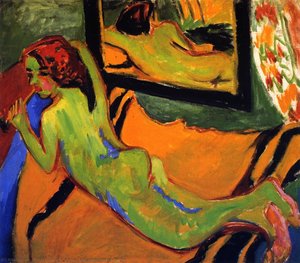
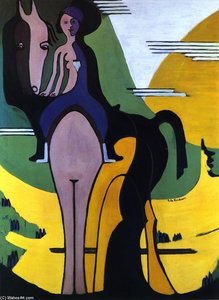
- Explore other works by Ernst Ludwig Kirchner: The Tent, Stehender Akt mit Hut (Standing Nude with Hat), and The Rider.
- Discover more about the *Die Brücke* movement at the Brücke Museum in Berlin.
- Visit the McNay Art Museum in San Antonio to experience this masterpiece firsthand.
Obras relacionadas
Biografía del artista
Ernst Ludwig Kirchner: Vida y Legado
Primeros Años y Educación
Ernst Ludwig Kirchner, una figura clave del Expresionismo alemán, nació el 6 de mayo de 1880 en Aschaffenburg, Baviera. Su herencia prusiana familiar y la ascendencia hugonota de su madre moldearon significativamente su identidad artística. Las frecuentes mudanzas durante su infancia – debido a la búsqueda de empleo de su padre – llevaron a Kirchner a asistir a escuelas en Frankfurt y Perlen antes de establecerse en Chemnitz cuando su padre consiguió un puesto en el colegio tecnológico local.
En 1901, Kirchner comenzó a estudiar arquitectura en la Königliche Technische Hochschule (Real Escuela Técnica) en Dresde. Sin embargo, pronto se sintió atraído por la pintura, encontrando inspiración en las obras de artistas como Albrecht Dürer y desarrollando una perspectiva radical sobre el arte junto con su amigo, Fritz Bleyl.
Formación de Die Brücke (El Puente)
Un punto de inflexión en la carrera de Kirchner llegó en 1905 cuando cofundó Die Brücke (“El Puente”) con Bleyl, Karl Schmidt-Rottluff y Erich Heckel. Este grupo tenía como objetivo cerrar la brecha entre los estilos académicos tradicionales y una forma de expresión más moderna y cargada emocionalmente. Buscaron inspiración en el arte primitivo, particularmente del África y Oceanía, así como en las obras de Vincent van Gogh y Edvard Munch.
Estilo Artístico y Características Clave
El estilo artístico de Kirchner se caracteriza por sus colores audaces, pinceladas expresivas y composiciones a menudo inquietantes. Representaba con frecuencia escenas urbanas, retratando la alienación y las ansiedades de la vida moderna a principios del siglo XX en Alemania. Su obra también presenta un número significativo de desnudos femeninos dentro de paisajes naturales, mostrando su fascinación por el movimiento y la forma.
- Paletas de Colores Audaces: Kirchner empleó colores vibrantes, a menudo no naturalistas, para transmitir emoción.
- Trabajo de Pincel Expresivo: Sus pinceladas son enérgicas y visibles, contribuyendo a la intensidad emocional general de sus pinturas.
- Formas Distorsionadas: Las figuras y los objetos a menudo están distorsionados o alargados, reflejando una realidad subjetiva más que objetiva.
- Temas Urbanos: Muchas de sus obras representan calles bulliciosas de la ciudad y el impacto psicológico de la vida urbana moderna.
Obras Principales y Logros
Algunas de las obras más notables de Kirchner incluyen:
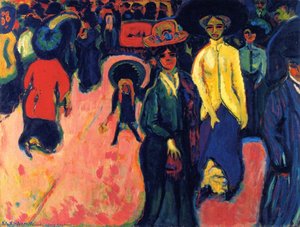
- La Calle (1908) – Una representación esencial de la vida callejera en Berlín, capturando su energía y alienación.
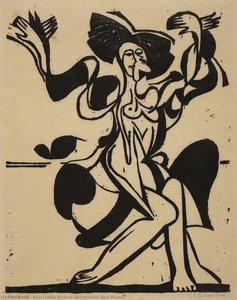
- Bailarina Saltando, Gret Palucca (1912) – Muestra su interés por el movimiento expresivo y la forma humana.
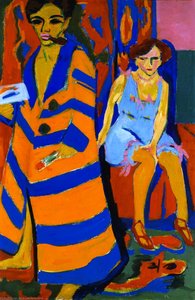
- Autorretrato con Modelo (1910) - Un ejemplo llamativo de su autoexploración a través del arte.
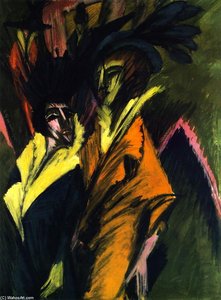
- Cinco Mujeres en la Calle (1913)
Vida Posterior, Desafíos y Legado
La vida de Kirchner estuvo marcada por el tormento personal. Sufrió un colapso mental durante la Primera Guerra Mundial y posteriormente se retiró a Suiza. El auge del nazismo trajo consigo nuevas dificultades; más de 600 de sus obras fueron confiscadas y consideradas “arte degenerado”. Enfrentando persecución y deterioro de su salud, Kirchner trágicamente se suicidó en Davos, Suiza, el 15 de junio de 1938.
A pesar de este trágico final, el legado de Ernst Ludwig Kirchner perdura. Sigue siendo una figura central del Expresionismo alemán, influyendo en generaciones de artistas con su estilo audaz y sus representaciones emocionalmente resonantes de la vida moderna. Su obra continúa expuesta en importantes museos de todo el mundo y es muy solicitada por coleccionistas.
Influencias e Impacto
Influenciado Por: Albrecht Dürer, Vincent van Gogh, Edvard Munch, Arte Primitivo (Africano y Oceanía)
Influyó en: La obra de Kirchner impactó profundamente a generaciones posteriores de artistas expresionistas y modernos. Su exploración de temas psicológicos y su uso innovador del color y la forma continúan inspirando prácticas artísticas contemporáneas.
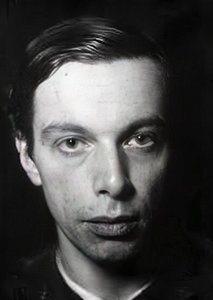
Ernst Ludwig Kirchner
1880 - 1938 , Alemania
Datos clave
- Artistas Que Influyeron:
- Albrecht Dürer
- Vincent van Gogh
- Edvard Munch
- Fecha De Fallecimiento: 15 de junio de 1938
- Fecha De Nacimiento: 6 de mayo de 1880
- Influenciado A: Expresionistas y artistas modernos
- Lugar De Nacimiento: Aschaffenburg, Alemania
- Movimiento Artístico: Expresionismo, Die Brücke
- Nacionalidad: Alemán
- Nombre Completo: Ernst Ludwig Kirchner
- Obras Notables:
- La calle
- Bailarina saltando
- Autorretrato con modelo
- Cinco mujeres en la calle
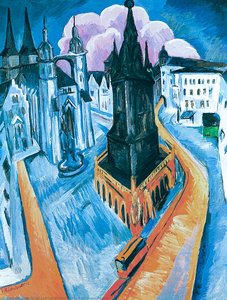
- Torre roja en Halle
Artículos relacionados
Expresionismo Alemán: 10 Obras Maestras que Transformaron el Arte | ArtsDot
Descubre las 10 obras maestras del Expresionismo Alemán: Kirchner, Munch y más. Explora la historia, técnica y emoción detrás de estos lienzos icónicos. Reproducciones de arte de museo en ArtsDot.com. ¡Inspira tu hogar con arte!
Expresionismo Abstracto: 10 Obras Maestras que Transformaron el Arte |
Descubre las 10 obras maestras del Expresionismo Abstracto: Pollock, Rothko y más. Explora la historia, técnica y significado de estos lienzos icónicos. Reproducciones de arte exclusivas en .

Kandinsky: Las 25 Obras Maestras del Pionero de la Abstracción | ArtsDot
Descubre las 25 obras maestras de Wassily Kandinsky, pionero del arte abstracto. Explora su expresionismo, composiciones únicas y la historia detrás de cada cuadro. Reproducciones de alta calidad para decorar tu hogar con arte moderno en ArtsDot.com.
Más Allá de la Representación: Explorando el Paisaje Emocional del Expresionismo Abstracto
Descubra el Expresionismo Abstracto en profundidad. Análisis de artistas clave como Rothko y Richter, su contexto histórico e inversión en arte. Guía experta para coleccionistas.
El Grito Visceral de una Nación: Explorando la Emoción y la Distorsión en el Expresionismo Alemán
Descubre el expresionismo alemán en profundidad. Analizamos sus orígenes, artistas clave como Kirchner y Kandinsky, técnicas innovadoras y su impacto duradero en el arte moderno. Guía para coleccionistas.