 Ver en contexto
 Enviar
 Compartir
 Detalles

 Descargar
 Similares
 Radiografía
 Presentación de diapositivas
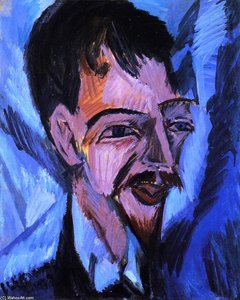
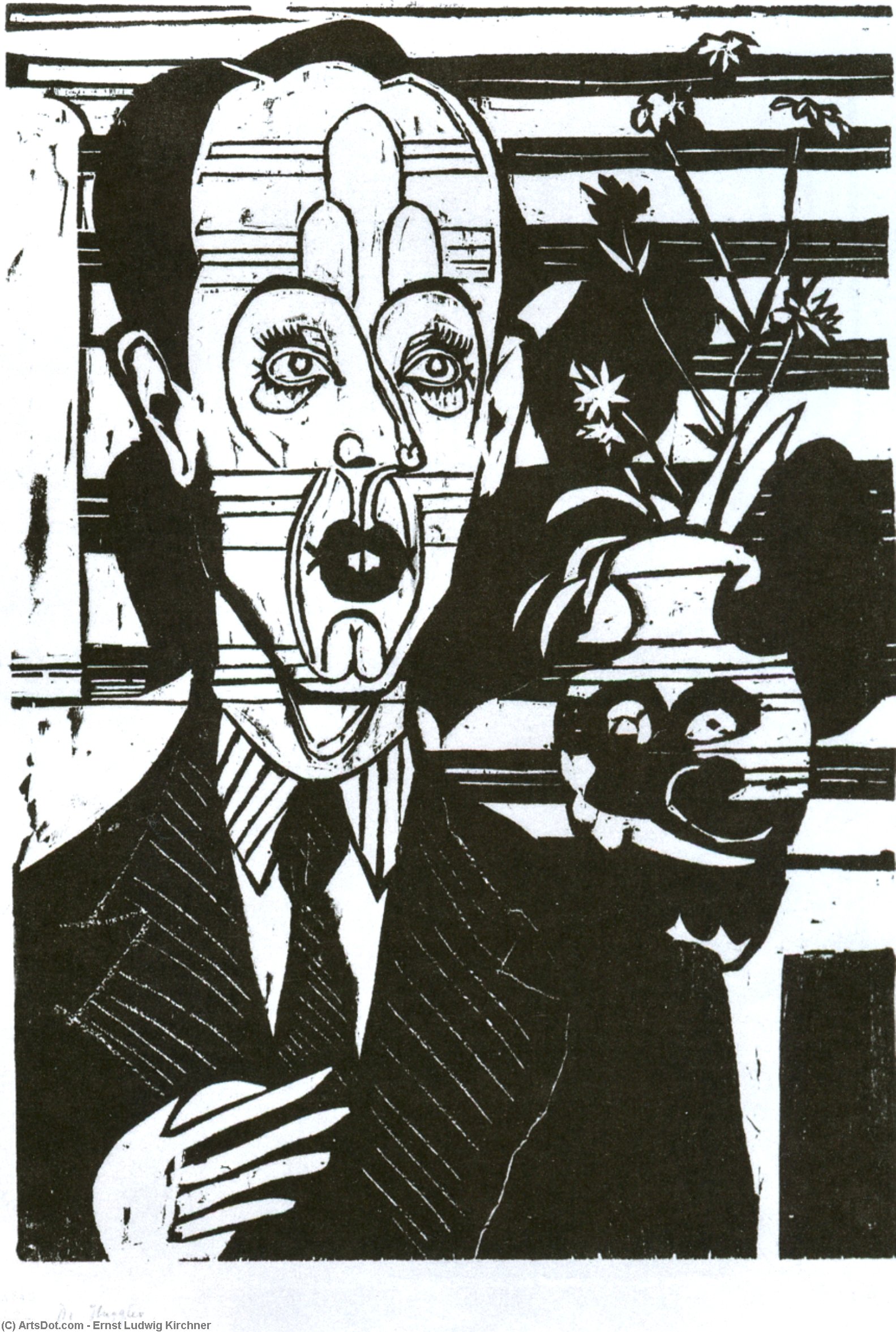
Portrait of Dr. Huggler
 Oil On Canvas
- WallArt
- German Expressionism
 1935
1935- 19th Century
 50.0 x 35.0 cm
 Ver más
Reproducción al óleo hecha a mano
Óleo sobre lienzo pintado a mano en el tamaño y marco de su elección, realizado por encargo por nuestros artistas. ( Comprar impresión Comprar imagen)




P118B $10

P118H $10

P118W $10

P438Z $10

P508JH $12

P508YH $12

P805H $10

P805Z $10

P919BZ $10

P919G $10

P919XJ $10

P959ZH $10

P968JZ $12

W106C $8

W218G $10

W218JH $8

W218Y $10

W307PJ $10

W316G $10

W316PJ $8

W316Y $10

W398PJ $8

W4111J $10

W500HY $15

W500JH $15

W692G $12

W849H $8

W940BG $15

W953PJ $8




Elija entre nuestros tamaños predefinidos que respetan las proporciones originales de la obra.

Puede ingresar sus propias dimensiones para adaptarse a un marco o espacio específico. Si el tamaño seleccionado no coincide con las proporciones de la imagen original, recortaremos la obra o extenderemos la pintura con elementos adicionales pintados a mano. Se le enviará una maqueta digital para su aprobación antes de comenzar la producción.
Tenga en cuenta que la vista previa en pantalla no refleja el recorte o la extensión reales. Solo la maqueta mostrará con precisión la composición final.
Si bien existen tamaños personalizados, recomendamos seleccionar una dimensión de la lista predefinida para preservar las proporciones originales.
Tras realizar el pedido, el equipo de ArtsDot.com enviará un correo electrónico al cliente para solicitar instrucciones y proporcionarle una vista previa del boceto.
Envío a todo el mundo () en 3-4 semanas en lugar de las 5 semanas estándar. (25 agosto). Sin comprometer la calidad.

Envío exprés gratuito a todo el mundo

Lienzo de lino de alta calidad

Seguro de envío total

Garantía de reembolso de impuestos aduaneros

Garantía de fidelidad cromática exacta

Política de devolución de 60 días (solo por defectos)

Garantía de devolución del 100% del dinero

Descuento por cantidad
 La opción de vidrio solo está disponible en tamaños inferiores a 110 cm.

Portrait of Dr. Huggler
Técnica de reproducción
Dimensiones de la reproducción
-


Precio total final
$ 263
Descripción de la obra
Portrait of Dr. Huggler: An Expressionist Echo
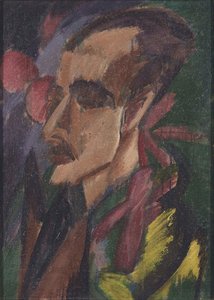
Ernst Ludwig Kirchner’s “Portrait of Dr. Huggler,” painted in 1935, is more than just a likeness; it's a distilled essence of the anxieties and uncertainties that defined the German Expressionist movement. This meticulously crafted oil painting reproduction, measuring 50 x 35 cm, offers an intimate glimpse into the mind of a man – perhaps a businessman, perhaps an intellectual – rendered with Kirchner’s signature intensity. The artwork immediately draws the viewer in with its stark contrasts and deliberate use of color, hallmarks of his approach to capturing not just physical appearance but also the emotional state beneath.
- Style & Technique: Kirchner's mastery lies in his expressive brushstrokes – thick, agitated lines that convey a palpable sense of unease. The vivid colors, though muted compared to some of his earlier works, are strategically employed to heighten the drama and draw attention to key elements within the composition. The painting’s texture itself speaks volumes, reflecting the artist's deliberate manipulation of the paint surface to evoke feeling.
- Composition & Symbolism: The inclusion of a vase in the background subtly introduces an element of fragility and perhaps even impending doom – a common motif within Expressionist art. The subject’s pensive expression, captured with remarkable detail, invites speculation about his inner thoughts and worries. His attire—a suit and tie—suggests a world of professional responsibility, yet the overall mood suggests a profound dissatisfaction.
A Window into the Zeitgeist: Kirchner and Expressionism
Created during a turbulent period in German history – just before the full horrors of World War II – “Portrait of Dr. Huggler” embodies the anxieties of a nation grappling with rapid industrialization, social upheaval, and a growing sense of alienation. Kirchner, along with other artists of the Expressionist movement, sought to reject the prevailing academic traditions and instead portray the raw emotions and psychological realities of modern life. His work reflects a deep concern for the human condition, particularly the feelings of isolation and despair that he observed around him.
Kirchner’s artistic journey began with an initial interest in architecture, but it was his encounter with the works of Albrecht Dürer and his growing disillusionment with academic conventions that ultimately led him to embrace Expressionism. He found kindred spirits in fellow artists like Fritz Bleyl and Karl Schmidt-Rottluff, forming a close-knit group dedicated to pushing the boundaries of artistic expression.
The Legacy of Kirchner: Trees and Beyond
“Portrait of Dr. Huggler” stands as one significant piece within Kirchner’s extensive oeuvre. It shares stylistic similarities with his other notable works, such as “Trees,” a pencil drawing also created in 1935. "Trees," like the portrait, utilizes bold lines and expressive marks to convey a sense of depth and dimension, reflecting Kirchner's fascination with nature and its ability to evoke powerful emotions. The recurring themes of isolation, anxiety, and the search for meaning are evident across his entire body of work.
Kirchner’s influence extends far beyond the Expressionist movement, continuing to resonate with artists today. His unflinching honesty and emotional intensity have cemented his place as one of the most important figures in 20th-century art. This reproduction offers a unique opportunity to own a piece of this pivotal artistic legacy.
Details & Acquisition
Artist: Ernst Ludwig Kirchner Birth Year: 1880 Death Year: 1938 Size: 50 x 35 cm Date: 1935
This handmade oil painting reproduction is available for purchase through ArtsDot.com, offering a high-quality representation of this iconic Expressionist masterpiece. Bring Kirchner’s powerful vision into your home or office and experience the emotional depth and artistic brilliance of one of Germany's most influential artists.
Obras relacionadas
Biografía del artista
Ernst Ludwig Kirchner: Vida y Legado
Primeros Años y Educación
Ernst Ludwig Kirchner, una figura clave del Expresionismo alemán, nació el 6 de mayo de 1880 en Aschaffenburg, Baviera. Su herencia prusiana familiar y la ascendencia hugonota de su madre moldearon significativamente su identidad artística. Las frecuentes mudanzas durante su infancia – debido a la búsqueda de empleo de su padre – llevaron a Kirchner a asistir a escuelas en Frankfurt y Perlen antes de establecerse en Chemnitz cuando su padre consiguió un puesto en el colegio tecnológico local.
En 1901, Kirchner comenzó a estudiar arquitectura en la Königliche Technische Hochschule (Real Escuela Técnica) en Dresde. Sin embargo, pronto se sintió atraído por la pintura, encontrando inspiración en las obras de artistas como Albrecht Dürer y desarrollando una perspectiva radical sobre el arte junto con su amigo, Fritz Bleyl.
Formación de Die Brücke (El Puente)
Un punto de inflexión en la carrera de Kirchner llegó en 1905 cuando cofundó Die Brücke (“El Puente”) con Bleyl, Karl Schmidt-Rottluff y Erich Heckel. Este grupo tenía como objetivo cerrar la brecha entre los estilos académicos tradicionales y una forma de expresión más moderna y cargada emocionalmente. Buscaron inspiración en el arte primitivo, particularmente del África y Oceanía, así como en las obras de Vincent van Gogh y Edvard Munch.
Estilo Artístico y Características Clave
El estilo artístico de Kirchner se caracteriza por sus colores audaces, pinceladas expresivas y composiciones a menudo inquietantes. Representaba con frecuencia escenas urbanas, retratando la alienación y las ansiedades de la vida moderna a principios del siglo XX en Alemania. Su obra también presenta un número significativo de desnudos femeninos dentro de paisajes naturales, mostrando su fascinación por el movimiento y la forma.
- Paletas de Colores Audaces: Kirchner empleó colores vibrantes, a menudo no naturalistas, para transmitir emoción.
- Trabajo de Pincel Expresivo: Sus pinceladas son enérgicas y visibles, contribuyendo a la intensidad emocional general de sus pinturas.
- Formas Distorsionadas: Las figuras y los objetos a menudo están distorsionados o alargados, reflejando una realidad subjetiva más que objetiva.
- Temas Urbanos: Muchas de sus obras representan calles bulliciosas de la ciudad y el impacto psicológico de la vida urbana moderna.
Obras Principales y Logros
Algunas de las obras más notables de Kirchner incluyen:
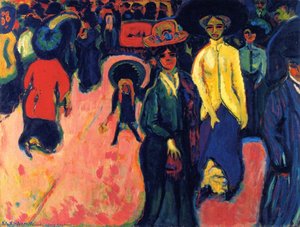
- La Calle (1908) – Una representación esencial de la vida callejera en Berlín, capturando su energía y alienación.
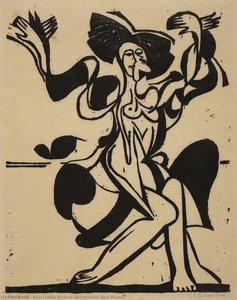
- Bailarina Saltando, Gret Palucca (1912) – Muestra su interés por el movimiento expresivo y la forma humana.
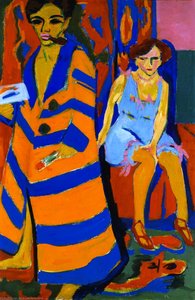
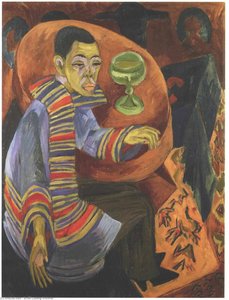
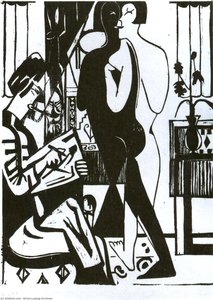
- Autorretrato con Modelo (1910) - Un ejemplo llamativo de su autoexploración a través del arte.
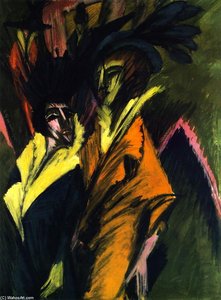
- Cinco Mujeres en la Calle (1913)
Vida Posterior, Desafíos y Legado
La vida de Kirchner estuvo marcada por el tormento personal. Sufrió un colapso mental durante la Primera Guerra Mundial y posteriormente se retiró a Suiza. El auge del nazismo trajo consigo nuevas dificultades; más de 600 de sus obras fueron confiscadas y consideradas “arte degenerado”. Enfrentando persecución y deterioro de su salud, Kirchner trágicamente se suicidó en Davos, Suiza, el 15 de junio de 1938.
A pesar de este trágico final, el legado de Ernst Ludwig Kirchner perdura. Sigue siendo una figura central del Expresionismo alemán, influyendo en generaciones de artistas con su estilo audaz y sus representaciones emocionalmente resonantes de la vida moderna. Su obra continúa expuesta en importantes museos de todo el mundo y es muy solicitada por coleccionistas.
Influencias e Impacto
Influenciado Por: Albrecht Dürer, Vincent van Gogh, Edvard Munch, Arte Primitivo (Africano y Oceanía)
Influyó en: La obra de Kirchner impactó profundamente a generaciones posteriores de artistas expresionistas y modernos. Su exploración de temas psicológicos y su uso innovador del color y la forma continúan inspirando prácticas artísticas contemporáneas.
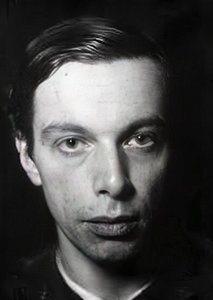
Ernst Ludwig Kirchner
1880 - 1938 , Alemania
Datos clave
- Artistas Que Influyeron:
- Albrecht Dürer
- Vincent van Gogh
- Edvard Munch
- Fecha De Fallecimiento: 15 de junio de 1938
- Fecha De Nacimiento: 6 de mayo de 1880
- Influenciado A: Expresionistas y artistas modernos
- Lugar De Nacimiento: Aschaffenburg, Alemania
- Movimiento Artístico: Expresionismo, Die Brücke
- Nacionalidad: Alemán
- Nombre Completo: Ernst Ludwig Kirchner
- Obras Notables:
- La calle
- Bailarina saltando
- Autorretrato con modelo
- Cinco mujeres en la calle
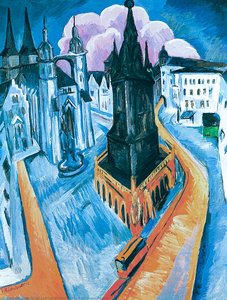
- Torre roja en Halle
Artículos relacionados
Expresionismo Alemán: 10 Obras Maestras que Transformaron el Arte | ArtsDot
Descubre las 10 obras maestras del Expresionismo Alemán: Kirchner, Munch y más. Explora la historia, técnica y emoción detrás de estos lienzos icónicos. Reproducciones de arte de museo en ArtsDot.com. ¡Inspira tu hogar con arte!
El Grito Visceral de una Nación: Explorando la Emoción y la Distorsión en el Expresionismo Alemán
Descubre el expresionismo alemán en profundidad. Analizamos sus orígenes, artistas clave como Kirchner y Kandinsky, técnicas innovadoras y su impacto duradero en el arte moderno. Guía para coleccionistas.
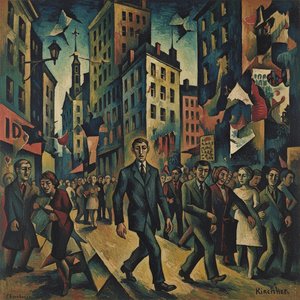
Ernst Ludwig Kirchner: Expressionism's Urban Anxiety & the Fragmentation of Modern Identity
Explore the powerful world of Ernst Ludwig Kirchner and German Expressionism. Discover his iconic paintings, Die Brücke group, and the movement's exploration of urban anxiety & modern identity. Expert analysis for collectors & enthusiasts.
The Raw Emotion of Expressionism: A Deep Dive into its History, Characteristics & Enduring Influence
Explore the raw emotion of Expressionism with ArtsDot. Discover its history, key artists like Kirchner & Munch, and lasting influence on modern art. Expert insights for collectors & enthusiasts.
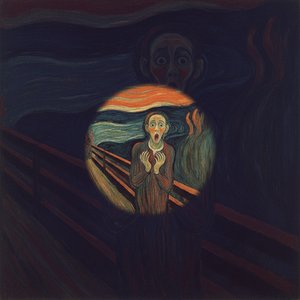
La Intensidad Visceral: Explorando la Expresión Emocional en el Expresionismo
Descubre la intensidad del Expresionismo Alemán. Explora sus orígenes, artistas clave como Munch y Kirchner, y su profundo impacto en el arte moderno. Análisis experto y obras maestras.