 Ver en contexto
 Enviar
 Compartir
 Detalles

 Descargar
 Similares
 Radiografía
 Presentación de diapositivas
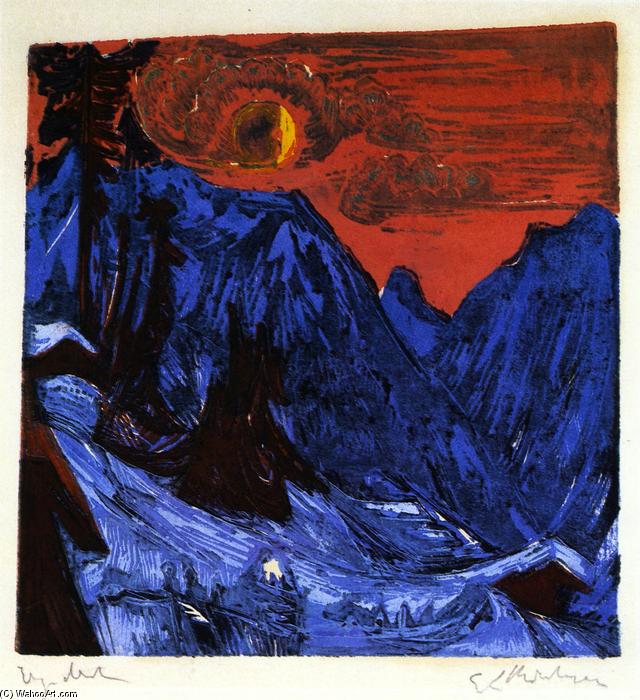
Winter Landscape by Moonlight


 Ver más
Giclée / Impresión de arte
Impresiones giclée o en lienzo de calidad de museo con producción rápida y opciones de acabado flexibles. ( Comprar pintura hecha a mano Comprar imagen)




P118B $10

P118H $10

P118W $10

P438Z $10

P508JH $12

P508YH $12

P805H $10

P805Z $10

P919BZ $10

P919G $10

P919XJ $10

P959ZH $10

P968JZ $12

W106C $8

W218G $10

W218JH $8

W218Y $10

W307PJ $10

W316G $10

W316PJ $8

W316Y $10

W398PJ $8

W4111J $10

W500HY $15

W500JH $15

W692G $12

W849H $8

W940BG $15

W953PJ $8




Elija entre nuestros tamaños predefinidos que respetan las proporciones originales de la obra.

Puede introducir sus propias dimensiones para adaptarse a un marco o espacio específico. Si el tamaño seleccionado no coincide con las proporciones de la imagen original, recortaremos la obra de arte o extenderemos la imagen con un borde con efecto espejo o de color sólido. Se enviará una maqueta digital para su aprobación antes de que comience la producción.
Tenga en cuenta que la vista previa en pantalla no refleja el recorte o la extensión real. Solo la maqueta mostrará con precisión la composición final.
Aunque existen tamaños personalizados, recomendamos seleccionar una dimensión de la lista predefinida para preservar las proporciones originales.
Envío a todo el mundo () en 2 semanas en lugar de las 4/5 semanas estándar. (26 agosto)

Envío exprés gratuito a todo el mundo

Lienzo de lino de alta calidad

Seguro de envío total

Garantía de reembolso de impuestos aduaneros

Garantía de fidelidad cromática exacta

Política de devolución de 60 días (solo por defectos)

Garantía de devolución del 100% del dinero

Descuento por cantidad
 La opción de vidrio solo está disponible en tamaños inferiores a 110 cm.

Winter Landscape by Moonlight
Giclée / Impresión de arte
Dimensiones de la reproducción
-


Precio total final
$ 62
Descripción de la pieza
Winter Landscape by Moonlight: A Descent into Expressionist Emotion
Ernst Ludwig Kirchner’s “Winter Landscape by Moonlight” is more than just a depiction of a snowy mountain scene; it's a visceral plunge into the heart of German Expressionism. Painted in 1919, this oil on canvas work captures a moment suspended between twilight and night, imbued with an unsettling beauty that speaks to the anxieties and emotional turbulence of the era. Kirchner, a pivotal figure in the movement, wasn’t interested in faithfully representing reality; instead, he sought to translate his inner experience onto the canvas, utilizing bold colors and distorted forms to evoke powerful feelings.
- Subject Matter: The painting presents a starkly beautiful winter landscape dominated by towering, dark blue mountains. A warm glow emanates from the setting sun, casting long shadows across snow-covered peaks – a visual paradox that immediately draws the viewer into its enigmatic atmosphere.
- Color Palette: Kirchner’s masterful use of color is central to the work's impact. Deep blues and reds clash dramatically, creating a sense of unease and tension. The vibrant hues are applied with thick, expressive brushstrokes, contributing to the painting’s raw energy.
- Composition: The composition itself feels deliberately unbalanced, reflecting the emotional instability that characterized Expressionist art. Figures scattered throughout the scene add to this feeling of disorientation and heighten the sense of isolation.
The Language of Light and Shadow
Kirchner’s understanding of light is crucial to interpreting “Winter Landscape by Moonlight.” He doesn't employ light to simply illuminate a scene; rather, he uses it as a powerful tool for emotional expression. The moonlight, depicted with an almost hallucinatory intensity, casts long, distorted shadows that seem to writhe and shift across the landscape. This manipulation of light and shadow is not merely aesthetic; it’s a deliberate attempt to evoke feelings of dread, loneliness, and perhaps even a sense of impending doom – common themes within Expressionist art.
As explained by experts in painting techniques, light fulfills several objectives: both plastic and aesthetic. The play of light and shadow is the basis of drawing and, in its interaction with color, is the primordial aspect of painting. Light has a great aesthetic value, since its combination with shadow and with certain lighting and color effects can determine the composition of the work and the image that the artist wants to project.
Historical Context and Artistic Intent
Created in 1919, “Winter Landscape by Moonlight” emerged during a period of profound social and political upheaval in Germany. The aftermath of World War I had left the nation scarred and disillusioned, and Kirchner’s art reflects this sense of disorientation and despair. As an Expressionist, he sought to capture not just what he saw, but how he *felt* about it – a reaction against the prevailing artistic conventions of realism and naturalism.
Kirchner's work aligns with the broader Expressionist movement’s rejection of traditional representation. Artists like Kirchner emphasized the subjective emotional experience of the viewer, aiming to provoke a strong emotional response through distorted forms and intense colors. This painting is a prime example of this approach, inviting the observer to confront their own anxieties and uncertainties.
Symbolism and Emotional Resonance
"Winter Landscape by Moonlight" transcends a simple landscape depiction; it’s a powerful meditation on human emotion. The solitary figures within the scene suggest isolation and vulnerability, while the dramatic lighting amplifies the sense of unease. The painting's enduring appeal lies in its ability to tap into universal feelings of loneliness, fear, and the sublime – emotions that resonate deeply with viewers across generations.
Obras relacionadas


Biografía del artista
Ernst Ludwig Kirchner: Vida y Legado
Primeros Años y Educación
Ernst Ludwig Kirchner, una figura clave del Expresionismo alemán, nació el 6 de mayo de 1880 en Aschaffenburg, Baviera. Su herencia prusiana familiar y la ascendencia hugonota de su madre moldearon significativamente su identidad artística. Las frecuentes mudanzas durante su infancia – debido a la búsqueda de empleo de su padre – llevaron a Kirchner a asistir a escuelas en Frankfurt y Perlen antes de establecerse en Chemnitz cuando su padre consiguió un puesto en el colegio tecnológico local.
En 1901, Kirchner comenzó a estudiar arquitectura en la Königliche Technische Hochschule (Real Escuela Técnica) en Dresde. Sin embargo, pronto se sintió atraído por la pintura, encontrando inspiración en las obras de artistas como Albrecht Dürer y desarrollando una perspectiva radical sobre el arte junto con su amigo, Fritz Bleyl.
Formación de Die Brücke (El Puente)
Un punto de inflexión en la carrera de Kirchner llegó en 1905 cuando cofundó Die Brücke (“El Puente”) con Bleyl, Karl Schmidt-Rottluff y Erich Heckel. Este grupo tenía como objetivo cerrar la brecha entre los estilos académicos tradicionales y una forma de expresión más moderna y cargada emocionalmente. Buscaron inspiración en el arte primitivo, particularmente del África y Oceanía, así como en las obras de Vincent van Gogh y Edvard Munch.
Estilo Artístico y Características Clave
El estilo artístico de Kirchner se caracteriza por sus colores audaces, pinceladas expresivas y composiciones a menudo inquietantes. Representaba con frecuencia escenas urbanas, retratando la alienación y las ansiedades de la vida moderna a principios del siglo XX en Alemania. Su obra también presenta un número significativo de desnudos femeninos dentro de paisajes naturales, mostrando su fascinación por el movimiento y la forma.
- Paletas de Colores Audaces: Kirchner empleó colores vibrantes, a menudo no naturalistas, para transmitir emoción.
- Trabajo de Pincel Expresivo: Sus pinceladas son enérgicas y visibles, contribuyendo a la intensidad emocional general de sus pinturas.
- Formas Distorsionadas: Las figuras y los objetos a menudo están distorsionados o alargados, reflejando una realidad subjetiva más que objetiva.
- Temas Urbanos: Muchas de sus obras representan calles bulliciosas de la ciudad y el impacto psicológico de la vida urbana moderna.
Obras Principales y Logros
Algunas de las obras más notables de Kirchner incluyen:
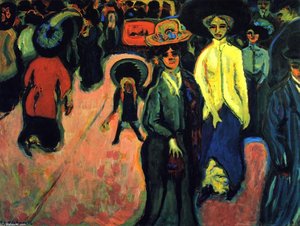
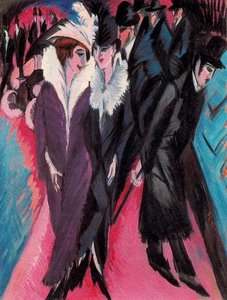
- La Calle (1908) – Una representación esencial de la vida callejera en Berlín, capturando su energía y alienación.
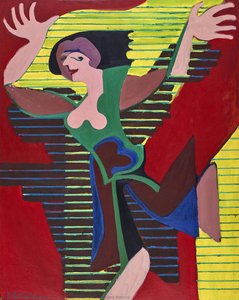
- Bailarina Saltando, Gret Palucca (1912) – Muestra su interés por el movimiento expresivo y la forma humana.
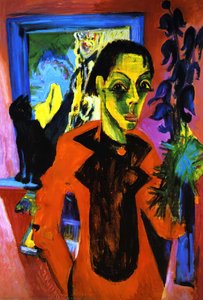
- Autorretrato con Modelo (1910) - Un ejemplo llamativo de su autoexploración a través del arte.
- Cinco Mujeres en la Calle (1913)
Vida Posterior, Desafíos y Legado
La vida de Kirchner estuvo marcada por el tormento personal. Sufrió un colapso mental durante la Primera Guerra Mundial y posteriormente se retiró a Suiza. El auge del nazismo trajo consigo nuevas dificultades; más de 600 de sus obras fueron confiscadas y consideradas “arte degenerado”. Enfrentando persecución y deterioro de su salud, Kirchner trágicamente se suicidó en Davos, Suiza, el 15 de junio de 1938.
A pesar de este trágico final, el legado de Ernst Ludwig Kirchner perdura. Sigue siendo una figura central del Expresionismo alemán, influyendo en generaciones de artistas con su estilo audaz y sus representaciones emocionalmente resonantes de la vida moderna. Su obra continúa expuesta en importantes museos de todo el mundo y es muy solicitada por coleccionistas.
Influencias e Impacto
Influenciado Por: Albrecht Dürer, Vincent van Gogh, Edvard Munch, Arte Primitivo (Africano y Oceanía)
Influyó en: La obra de Kirchner impactó profundamente a generaciones posteriores de artistas expresionistas y modernos. Su exploración de temas psicológicos y su uso innovador del color y la forma continúan inspirando prácticas artísticas contemporáneas.
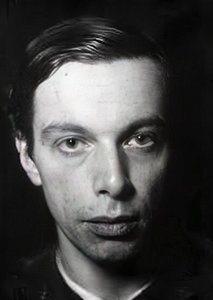
Ernst Ludwig Kirchner
1880 - 1938 , Alemania
Datos clave
- Artistas Que Influyeron:
- Albrecht Dürer
- Vincent van Gogh
- Edvard Munch
- Fecha De Fallecimiento: 15 de junio de 1938
- Fecha De Nacimiento: 6 de mayo de 1880
- Influenciado A: Expresionistas y artistas modernos
- Lugar De Nacimiento: Aschaffenburg, Alemania
- Movimiento Artístico: Expresionismo, Die Brücke
- Nacionalidad: Alemán
- Nombre Completo: Ernst Ludwig Kirchner
- Obras Notables:
- La calle
- Bailarina saltando
- Autorretrato con modelo
- Cinco mujeres en la calle
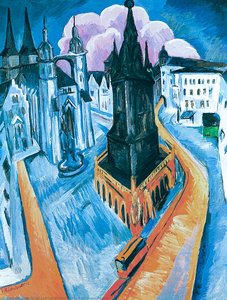
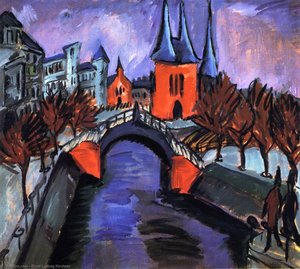
- Torre roja en Halle
Artículos relacionados
Expresionismo Alemán: 10 Obras Maestras que Transformaron el Arte | ArtsDot
Descubre las 10 obras maestras del Expresionismo Alemán: Kirchner, Munch y más. Explora la historia, técnica y emoción detrás de estos lienzos icónicos. Reproducciones de arte de museo en ArtsDot.com. ¡Inspira tu hogar con arte!
10 Obras de Arte Audaces que Transformarán tu Espacio | ArtsDot
Descubre 10 obras de arte audaces que definen la pasión y el impacto visual. Explora la historia detrás de artistas como Van Gogh, Matisse y Kahlo. Encuentra reproducciones de museo en ArtsDot.com.

Paisajes Románticos: 10 Obras Maestras que Definieron un Movimiento Artístico
Descubre los 10 paisajes románticos más influyentes de artistas como Caspar David Friedrich y Turner. Explora la belleza, el simbolismo y las técnicas del movimiento romántico. Reproducciones de arte exclusivas en ArtsDot.com.

Evocations of Place: A Historical Journey Through Landscape Art
Explore the rich history of landscape art with ArtsDot. Discover renowned artists, movements like Impressionism & Romanticism, and expert guidance for collecting timeless pieces. Find your perfect serene escape today!

John Constable: Las 25 Obras Maestras del Paisaje Inglés | ArtsDot
Descubre las 25 obras maestras de John Constable, el pintor romántico inglés que capturó la belleza del paisaje. Explora su técnica, historia y significado en ArtsDot.com. Reproducciones de arte de alta calidad para tu hogar.