 Ver en contexto
 Enviar
 Compartir
 Detalles

 Descargar
 Similares
 Radiografía
 Presentación de diapositivas
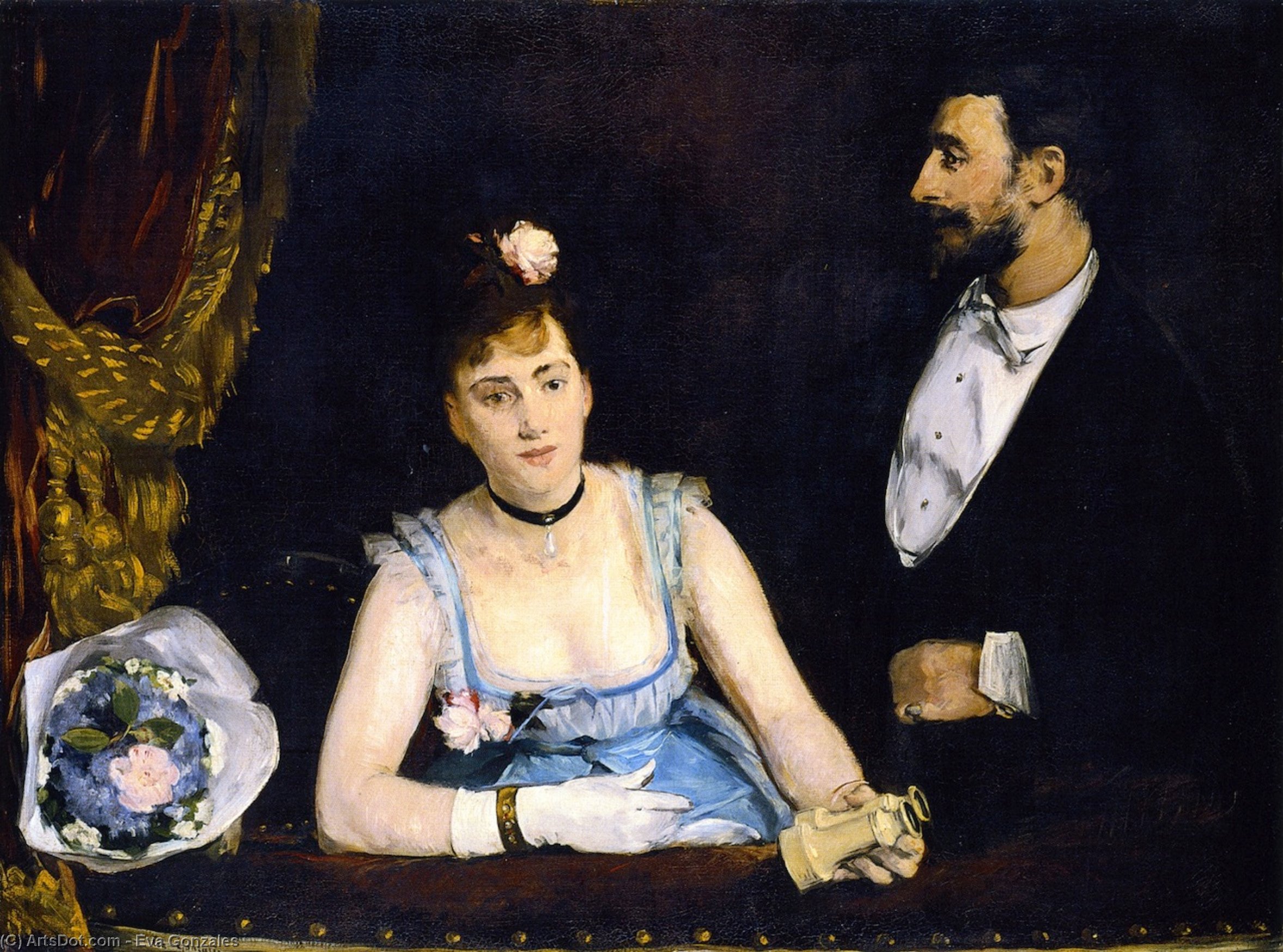
A Loge in the Theatre des Italiens
 Oil On Canvas
- WallArt
- Impressionism
 1874
1874 98.0 x 130.0 cm
 Museo de Orsay
 Ver más
Reproducción al óleo hecha a mano
Óleo sobre lienzo pintado a mano en el tamaño y marco de su elección, realizado por encargo por nuestros artistas. ( Comprar impresión Comprar imagen)




































Elija entre nuestros tamaños predefinidos que respetan las proporciones originales de la obra.

Puede ingresar sus propias dimensiones para adaptarse a un marco o espacio específico. Si el tamaño seleccionado no coincide con las proporciones de la imagen original, recortaremos la obra o extenderemos la pintura con elementos adicionales pintados a mano. Se le enviará una maqueta digital para su aprobación antes de comenzar la producción.
Tenga en cuenta que la vista previa en pantalla no refleja el recorte o la extensión reales. Solo la maqueta mostrará con precisión la composición final.
Si bien existen tamaños personalizados, recomendamos seleccionar una dimensión de la lista predefinida para preservar las proporciones originales.
Tras realizar el pedido, el equipo de ArtsDot.com enviará un correo electrónico al cliente para solicitar instrucciones y proporcionarle una vista previa del boceto.
Envío a todo el mundo () en 3-4 semanas en lugar de las 5 semanas estándar. (4 septiembre). Sin comprometer la calidad.

Envío exprés gratuito a todo el mundo

Lienzo de lino de alta calidad

Seguro de envío total

Garantía de reembolso de impuestos aduaneros

Garantía de fidelidad cromática exacta

Política de devolución de 60 días (solo por defectos)

Garantía de devolución del 100% del dinero

Descuento por cantidad
 La opción de vidrio solo está disponible en tamaños inferiores a 110 cm.

A Loge in the Theatre des Italiens
Técnica de reproducción
Dimensiones de la reproducción
-


Precio total final
$ 263
A Window Into Parisian Elegance: Eva Gonzalès’s “A Loge in the Theatre des Italiens”
The painting "A Loge in the Theatre des Italiens" by Eva Gonzalès isn't merely a depiction of an afternoon gathering; it’s a carefully crafted snapshot of Belle Époque Paris, imbued with subtle nuances that speak volumes about its era and the artist’s distinctive Impressionist vision. Completed in 1874, this oil on canvas masterpiece resides within the Musée d'Orsay, offering visitors a glimpse into a world where artistic innovation wrestled with societal conventions – a world reflected beautifully in Gonzalès’s brushstrokes.The Artist’s Context: Navigating Artistic Boundaries
Eva Gonzalès emerged from a milieu that simultaneously championed intellectual curiosity and imposed strict social expectations upon women. Born into a literary family, she benefited from her father's connections to the Société des gens de lettres, affording her access to influential artistic circles where discussions about Impressionism were gaining momentum. Yet, as a woman pursuing an artistic career in the late 19th century, Gonzalès faced considerable obstacles – prejudices regarding female creativity and limited opportunities for professional advancement. Despite these challenges, she persevered, honing her skills and establishing herself as a respected artist whose work captured the spirit of her time. Her determination to express herself authentically solidified her place within the artistic landscape of Paris.Impressionistic Technique: Capturing Fleeting Light
Gonzalès’s approach to painting exemplifies the core tenets of Impressionism. Unlike academic traditions that prioritized meticulous detail and idealized representations, she sought to convey the immediacy of experience—the ephemeral quality of light and color as perceived by the eye. Notice the soft, diffused illumination bathing the loge interior; it's achieved through layering thin glazes of pigment, allowing light to penetrate and shimmer across surfaces. The artist skillfully utilizes broken brushstrokes – short, choppy marks that blend together optically—to create a sense of movement and vibrancy. This technique isn’t about replicating reality exactly but rather capturing its essence, conveying the atmosphere and mood of the scene.Composition and Symbolism: An Intimate Dialogue
The painting's composition is deceptively simple yet remarkably effective. Two figures occupy the central space, seated comfortably in a loge box overlooking the Theatre des Italiens. The woman, dressed in a striking shade of blue—a color associated with nobility and serenity—turns slightly towards her companion, creating a visual dialogue that draws the viewer into their conversation. A vase filled with flowers sits on the table between them, symbolizing beauty and refinement – elements characteristic of Parisian aristocratic culture. Above all, the painting speaks to the importance of human connection amidst the grandeur of urban life. The clock hanging on the wall serves as a reminder of time passing, subtly emphasizing the fleeting nature of moments and experiences.Emotional Resonance: A Moment Frozen in Time
“A Loge in the Theatre des Italiens” transcends mere visual representation; it evokes a palpable sense of warmth and intimacy. Gonzalès’s masterful use of color—particularly the dominant blues and yellows—creates an atmosphere that is both elegant and inviting. The subtle shading and tonal variations contribute to the painting's depth, drawing the viewer into the scene and fostering empathy for the figures depicted. It’s a portrait not just of people but of a particular mood – one of quiet contemplation and shared companionship—a testament to Gonzalès’s ability to translate emotion onto canvas. This artwork remains an enduring symbol of Parisian sophistication and artistic innovation, continuing to inspire admiration centuries later.Obras relacionadas


Biografía del artista
Eva Gonzalès: A Delicate Touch Amidst Bold Visions
Eva Gonzalès (1849-1883) stands as a singular figure within the Impressionist movement, a woman artist who defied societal conventions while achieving remarkable artistic success. Her story is one of quiet determination and profound sensitivity—a testament to her ability to capture the essence of Parisian life through an exquisitely refined lens. Born into a privileged family in Paris, Gonzalès benefited from access to intellectual circles fostered by her father, Emmanuel Gonzalès, a prominent writer and president of the Société des gens de lettres. This upbringing instilled in her a deep appreciation for literature and art—a foundation upon which she would build her own distinctive artistic vision.- Early Influences: Gonzalès’s formative years were marked by exposure to avant-garde ideas circulating within Parisian society, particularly those championed by Édouard Manet. Her father's connections facilitated introductions to influential artists and thinkers who challenged the established academic traditions of the time.
- Formal Training & The Meeting with Manet: At sixteen, Gonzalès began her artistic training under Charles Chaplin, a respected portraitist known for his meticulous attention to detail. However, it was her encounter with Édouard Manet in 1869 that irrevocably shaped her career—a meeting that would prove pivotal not only personally but also professionally.
The Collaboration with Manet: A Paradigm Shift
Gonzalès’s relationship with Manet transcended mere mentorship; it constituted a transformative partnership that fundamentally altered the trajectory of her artistic development. Recognizing his hesitation to discuss his work openly due to critical rebuffs, Manet sought solace in Gonzalès’s presence—a connection that unlocked his creative spirit and fostered an unprecedented level of intimacy between artist and muse. Their collaboration yielded two iconic portraits: *Mlle E.G.* (1869) and *Portrait of Jeanne Gonzalès in Profile* (about 1878)—works celebrated for their nuanced portrayal of femininity and imbued with Manet’s signature stylistic innovations. The portrait of Jeanne Gonzalès, particularly, exemplifies Manet's masterful technique—a delicate pastel rendering that captures the sitter's gaze with remarkable precision and subtlety. Critics noted that Manet’s approach to portraying women differed markedly from his peers, emphasizing a sensitivity to emotion and an awareness of psychological depth.Style & Subject Matter: Intimacy and Observation
Gonzalès distinguished herself within the Impressionist movement through her unwavering commitment to capturing everyday life—primarily domestic scenes populated by women and children. Unlike many Impressionists who sought inspiration in grand landscapes or historical narratives, Gonzalès focused on intimate interiors—rooms bathed in soft light—where she meticulously observed details of daily existence. Her canvases are characterized by a restrained palette—dominated by muted tones—and a masterful use of brushstrokes that convey texture and atmosphere with breathtaking accuracy. The painting *Une loge aux théâtre italiens* (1874), rejected by the Salon jury for its perceived lack of “masculine vigor,” stands as a testament to Gonzalès’s artistic courage—a bold departure from conventional stylistic norms that nonetheless resonated deeply with her contemporaries. Her work embodies a profound empathy for human experience, reflecting the subtle nuances of emotion and perception that captivated audiences during her lifetime.Legacy & Recognition
Despite facing considerable obstacles as a woman artist in a male-dominated field, Eva Gonzalès achieved significant acclaim during her brief career—primarily through the endorsement of influential critics like Émile Zola and Louis Edmond Duranty who recognized her artistic merit. Her retrospective exhibition held in 1885 showcased eighty-eight paintings and pastel drawings—a remarkable feat considering the challenges inherent in securing funding and acceptance for female artists at the time. Although overshadowed by Manet’s fame, Gonzalès's contribution to Impressionism is now increasingly appreciated as a singular achievement—a testament to her artistic vision and unwavering dedication. Her legacy continues to inspire artists today, reminding us that beauty and innovation can flourish even within constraints imposed by societal expectations. The Denver Art Museum proudly houses *The Window* (La Fenêtre), showcasing Gonzalès’s distinctive style and capturing the essence of Parisian life during the Belle Époque—a poignant reminder of a woman artist who dared to express her creativity amidst a world eager to define its boundaries.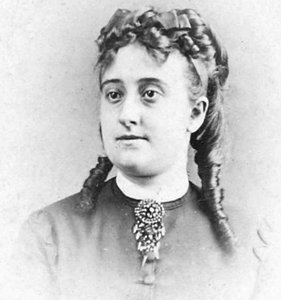
Eva Gonzalès
1849 - 1883 , Francia
Datos clave
- Artistic Movement Or Style: Impresionismo
- Artists Who Influenced This Artist: ['Édouard Manet']
- Date Of Birth: 1849
- Date Of Death: 1883
- Full Name: Eva Gonzalès
- Nationality: Francesa
- Notable Artworks:
- Mlle E.G.
- Enfant de troupe
- Box aux Théâtre Italiens
- Nanny et Baby
- Jeanne Gonzalès en profil
- Place Of Birth: París, Francia
Artículos relacionados

Impresionismo: 10 Obras Maestras que Capturan la Luz y el Momento
Descubre 10 obras maestras del impresionismo de Monet, Renoir y Degas. Explora la luz, el color y las historias detrás de estos icónicos cuadros. Reproducciones de arte en ArtsDot.com para decorar tu hogar con estilo.
Impresionismo y Postimpresionismo: Una Exploración de la Evolución Artística y sus Distinciones Clave
Explora la evolución del Impresionismo al Postimpresionismo. Descubre sus características, artistas clave y las diferencias esenciales en este análisis experto.

Paul Cézanne: Las 25 Obras Maestras que Definieron el Arte Moderno | ArtsDot
Descubre las 25 obras maestras de Paul Cézanne que revolucionaron el arte moderno. Explora su técnica, inspiración y significado en paisajes, bodegones y retratos. Reproducciones de alta calidad para decorar tu hogar con arte inolvidable. ¡Explora la colección completa en ArtsDot.com!
Los 10 Maestros del Impresionismo: Obras que Revolucionaron el Arte y la Decoración
Descubre los 10 cuadros más emblemáticos del Impresionismo con Monet, Renoir y Degas. Explora la historia, técnica y belleza de estas obras maestras. Reproducciones de arte en para decorar tu hogar con estilo.
Federico Zandomeneghi: Bridging Venetian Tradition & Parisian Impressionism
Discover Federico Zandomeneghi (1841-1917), a captivating Italian Impressionist bridging Venetian tradition and Parisian modernity. Explore his intimate scenes, unique style & legacy with ArtsDot.