

 Ver en contexto
 Enviar
 Compartir
 Detalles

 Descargar
 Similares
 Radiografía
 Presentación de diapositivas
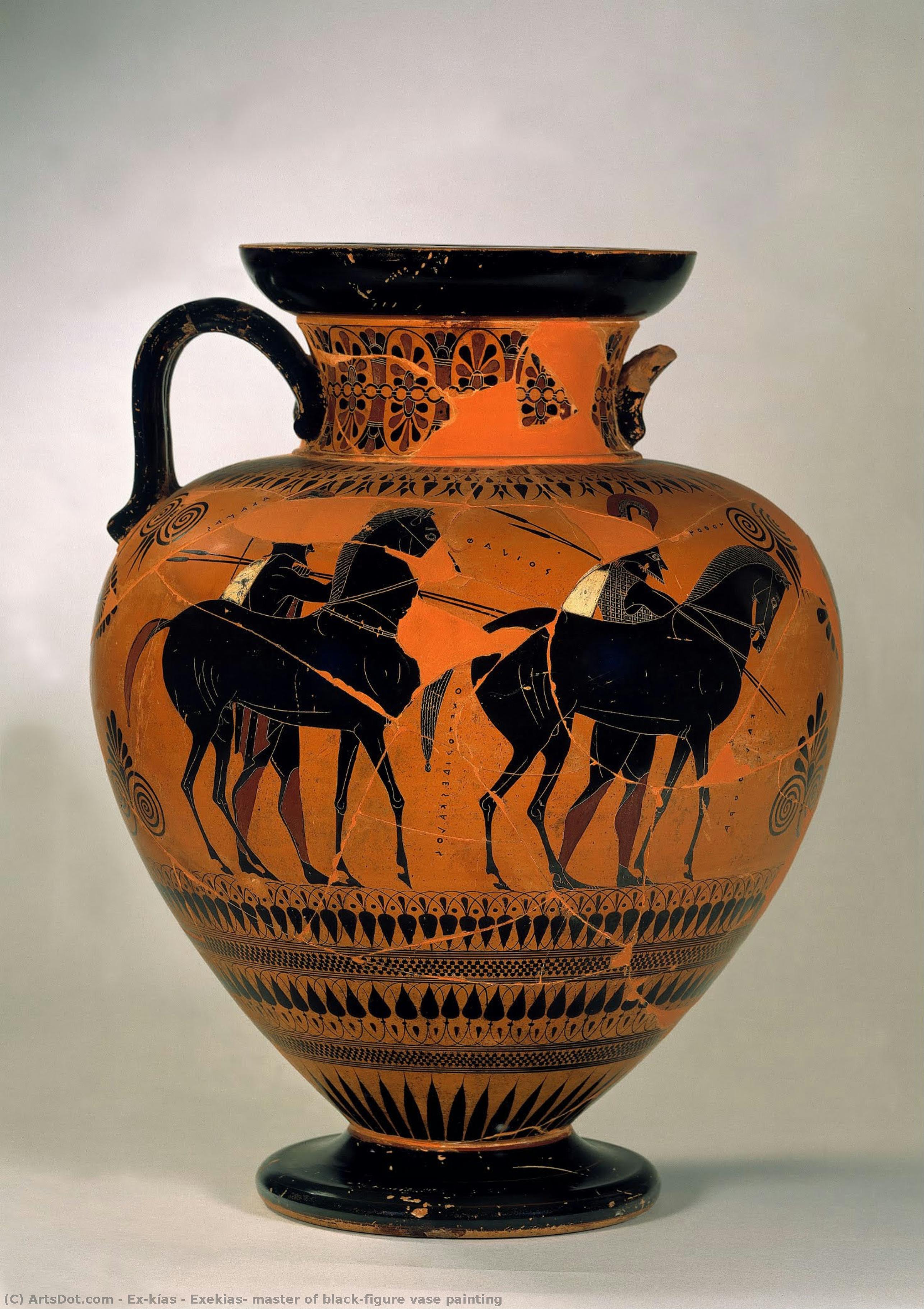
Exekias, master of black-figure vase painting


 Ver más
Adquiera una imagen digital de alta resolución y optimizada, muy superior a la vista previa en línea.
Cada archivo es preparado meticulosamente por nuestros especialistas internos mediante el uso de herramientas avanzadas y un experto retoque manual. Nos aseguramos de que cada imagen posea una claridad excepcional, una precisión cromática impecable y un detalle minucioso.
El archivo final se entrega por correo electrónico en un plazo de 72 horas, optimizado para su uso inmediato en entornos profesionales, editoriales y de impresión. Esta es la misma calidad en la que confían los estudios de diseño, las editoriales y las galerías de primer nivel.
Imagen Digital
Descarga un archivo de alta resolución para exhibición personal, impresión y proyectos creativos. ( Comprar impresión Comprar pintura hecha a mano)
Incluido en cada pedido de imágenes digitales
Entrega digital experta, garantizada.
Al elegir ArtsDot.com, no solo está adquiriendo una imagen; está recibiendo una obra de arte digital mejorada profesionalmente, elaborada con precisión y respaldada por una garantía de satisfacción. Esto es todo lo que incluye su pedido, automáticamente:

Entrega rápida por email
Recibirá su archivo de imagen digital en alta resolución por correo electrónico en un plazo de 72 horas tras realizar su pedido, listo para su uso inmediato.

Archivo digital optimizado por IA
Su obra de arte se optimiza profesionalmente mediante herramientas avanzadas de IA y edición manual, garantizando el máximo detalle, claridad y precisión cromática.

Reenvío gratuito de por vida
¿Has borrado o perdido tu archivo por error? No te preocupes: te lo volveremos a enviar en cualquier momento, sin coste adicional.

Sin gastos de importación, siempre
Disfrute de su obra de arte al instante sin aduanas, aranceles ni gastos de envío; las descargas digitales siempre están libres de impuestos.

Garantía de fidelidad de color
Garantizamos que su imagen digital refleje los colores originales con la mayor fidelidad posible, mediante el uso de herramientas profesionales y gestión del color.

Garantía de satisfacción de 60 días
Si no está satisfecho con su imagen digital, la revisaremos o le reembolsaremos el 100% en un plazo de 60 días, sin preguntas.

100% Garantía de devolución de dinero
¿No está satisfecho? Obtenga un reembolso completo dentro de los 60 días posteriores a la recepción de su archivo digital, sin necesidad de explicaciones.

Descuentos por pedidos grandes
Compra 3 imágenes, ahorra 10% - Compra 5, ahorra 15% - Compra 10+, ahorra 20%. Ideal para proyectos creativos, galerías y agencias.
Obras relacionadas
Biografía del artista
The Silent Genius of Athenian Vase Painting
Exekias remains one of the most enigmatic figures in ancient Greek art history, a potter and painter whose mastery of black-figure technique continues to inspire awe centuries later. Born around 545 BC in Athens—a city brimming with artistic innovation during the Archaic Period—he emerged as a pivotal voice within Athenian vase painting circles, shaping the aesthetic sensibilities of his time and establishing himself as arguably the greatest of all Attic vase artists. Despite leaving no written record of his life or personal beliefs, scholars reconstruct his existence through stylistic analysis of his surviving works and corroborating evidence from contemporary sources.A Pioneer of Psychological Depth
What distinguishes Exekias’s oeuvre is not merely technical brilliance—though undeniably impressive—but a profound understanding of human psychology that was remarkably advanced for its era. Unlike many of his contemporaries who focused on depicting mythological narratives with stylized figures, Exekias imbued his scenes with palpable emotion and nuanced characterization. Consider the famed Herakles & Warrior Amphora (circa 540 BC), currently housed in the Getty Museum. The musculature of Herakles is rendered with meticulous detail, yet it’s not merely anatomical accuracy; it conveys a sense of determined effort and unwavering resolve. Similarly, the warrior depicted alongside him exhibits vulnerability beneath his armor—a subtle gesture that speaks volumes about the anxieties inherent in warfare. This psychological realism was achieved through masterful incision techniques – carefully scratched lines etched into the clay surface before firing – which allowed for shading and contouring that surpassed anything seen previously. These incisions weren’t just marks on the clay; they were conduits of emotion, channeling the artist's vision onto the vessel itself.The Influence of Lysippos and the Rise of Psychological Portraiture
Exekias’s artistic vision profoundly impacted his pupils, notably Lysippos, who is considered one of the foremost sculptors of his time. Lysippos adopted Exekias's approach to portraying human figures with sensitivity and realism, elevating sculpture to new heights of expressive power. This stylistic convergence underscores the interconnectedness of Athenian art forms during the Archaic Period and demonstrates Exekias’s role as a catalyst for artistic evolution. The legacy of Exekias extends beyond his immediate students; he established a precedent for portraying human subjects with psychological depth—a tradition that would flourish throughout Classical Greece and influence subsequent generations of artists. He championed an aesthetic that prioritized conveying inner feelings alongside outward appearance, setting a standard for sculptors to follow.Black-Figure Technique: Innovation and Precision
The black-figure technique itself represents an extraordinary feat of artistic ingenuity. Artists like Exekias painstakingly applied a thin layer of glossy slip to the clay surface, then used incised lines to carve out the contours of figures and drapery—creating silhouettes that would emerge in shades of reddish-brown during firing. This method demanded exceptional precision and patience, requiring artists to meticulously plan their compositions and execute each incision with unwavering accuracy. The resulting images possessed a remarkable level of detail and tonal variation, capturing not only the physical appearance but also the emotional state of the depicted subjects. It was a technique that allowed for unparalleled expressive potential—a testament to Exekias’s artistic genius. Researchers believe that Exekias's mastery of incision techniques surpassed anything seen before him, marking a significant advancement in ceramic artistry.Historical Significance: Shaping Athenian Artistic Identity
Exekias's contribution to Athenian art history is undeniable. He helped solidify black-figure as the dominant decorative style, establishing it as the preferred medium for portraying mythological narratives and heroic deeds. His works exemplify the ideals of beauty and intellectual sophistication that characterized Athenian culture during its golden age—a period marked by flourishing philosophy, literature, and artistic achievement. By prioritizing psychological realism alongside technical virtuosity, Exekias elevated vase painting to a level of artistic excellence rarely matched in antiquity, securing his place as one of the most celebrated artists of the Archaic Period and cementing Athens’s reputation as a beacon of creativity and innovation. His influence can be seen throughout Classical Greek art, demonstrating that he truly shaped Athenian artistic identity for centuries to come.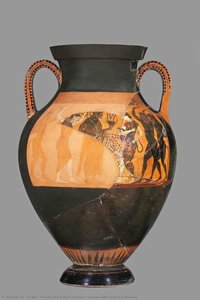
Breves datos
- Artistic Movement Or Style: Técnica del negro figura
- Artists Who Influenced This Artist: ['Lysippos']
- Date Of Birth: Around 545 BC
- Date Of Death: Living
- Full Name: exēkías
- Nationality: Griego
- Notable Artworks: ['Amphora de Heracles y guerrero']
- Place Of Birth: Athens, Greece

