Ver en contexto
 Enviar
 Compartir
 Detalles

 Descargar
 Similares
 Radiografía
 Presentación de diapositivas
 Estadísticas
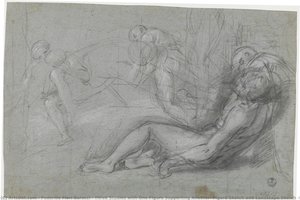
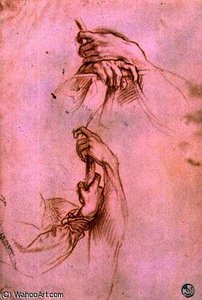
Studies of Hand, Fingers and Leg, Foot Sketch (for “Rest on the Flight to Egypt”, Città del Vaticano, Pinacoteca Vaticana)
 Charcoal
- WallArt
- Renaissance Mannerism
 1573
1573 26.0 x 39.0 cm
 Galería de los Uffizi
 Ver más
Giclée / Impresión de arte
Impresiones giclée o en lienzo de calidad de museo con producción rápida y opciones de acabado flexibles. ( Comprar pintura hecha a mano Cambiar a imagen digital)




P118B $10

P118H $10

P118W $10

P438Z $10

P508JH $12

P508YH $12

P805H $10

P805Z $10

P919BZ $10

P919G $10

P919XJ $10

P959ZH $10

P968JZ $12

W106C $8

W218G $10

W218JH $8

W218Y $10

W307PJ $10

W316G $10

W316PJ $8

W316Y $10

W398PJ $8

W4111J $10

W500HY $15

W500JH $15

W692G $12

W849H $8

W940BG $15

W953PJ $8




Elija entre nuestros tamaños predefinidos que respetan las proporciones originales de la obra.

Puede introducir sus propias dimensiones para adaptarse a un marco o espacio específico. Si el tamaño seleccionado no coincide con las proporciones de la imagen original, recortaremos la obra de arte o extenderemos la imagen con un borde con efecto espejo o de color sólido. Se enviará una maqueta digital para su aprobación antes de que comience la producción.
Tenga en cuenta que la vista previa en pantalla no refleja el recorte o la extensión real. Solo la maqueta mostrará con precisión la composición final.
Aunque existen tamaños personalizados, recomendamos seleccionar una dimensión de la lista predefinida para preservar las proporciones originales.
Envío a todo el mundo () en 2 semanas en lugar de las 4/5 semanas estándar. (15 septiembre)

Envío exprés gratuito a todo el mundo

Lienzo de lino de alta calidad

Seguro de envío total

Garantía de reembolso de impuestos aduaneros

Garantía de fidelidad cromática exacta

Política de devolución de 100 días (solo por defectos)

Garantía de devolución del 100% del dinero

Descuento por cantidad
 La opción de vidrio solo está disponible en tamaños inferiores a 110 cm.

Studies of Hand, Fingers and Leg, Foot Sketch (for “Rest on the Flight to Egypt”, Città del Vaticano, Pinacoteca Vaticana)
Giclée / Impresión de arte
Dimensiones de la reproducción
-


Precio total final
$ 62
Federico Barocci’s Intimate Study of Gesture – A Renaissance Window
Federico Fiori Barocci's “Studies of Hand, Fingers and Leg, Foot Sketch (for ‘Rest on the Flight to Egypt’),” a remarkably intimate drawing from 1573, offers a rare glimpse into the creative process of one of Italy’s most compelling Renaissance artists. More than simply a preparatory study for the grand fresco that would adorn the Pinacoteca Vaticana, this piece is a profound meditation on human form, movement, and the very act of artistic creation itself. It's a testament to Barocci’s meticulous observation and his masterful command of line – a skill honed through apprenticeships with Battista Franco and exposure to the influential studio of Taddeo and Federico Zuccari in Rome.
The drawing’s power lies not in vibrant color or dramatic composition, but rather in its stark simplicity and intensely focused detail. Dominated by shades of brown, grey, and creamy ivory, the palette is deliberately restrained, prioritizing tonal variation and the subtle nuances of light and shadow over visual spectacle. This deliberate limitation forces the viewer to engage with the drawing on a purely tactile level, appreciating the intricate network of lines that define every curve, contour, and gesture. Hatching and cross-hatching are deployed with astonishing precision, building up volume and suggesting texture – one almost feels the rough surface of the paper beneath the charcoal.
Deconstructing Anatomy: A Study in Movement
At its core, this drawing is a study in anatomy, but not in the rigid, idealized manner often associated with Renaissance art. Barocci isn’t striving for perfect representation; instead, he's dissecting the human form to understand how it moves and interacts. The intertwined hands, holding what appears to be a sheet of parchment, are the undeniable focal point. Their overlapping limbs and gestures – a subtle turn of the wrist, the delicate curve of a finger – speak volumes about intention and action. The leg and foot sketches further emphasize this dynamic quality, hinting at the figures that will populate the larger “Rest on the Flight to Egypt.”
Notice how Barocci doesn’t shy away from imperfections or awkward angles. These are not idealized forms; they are studies of real hands, capturing their inherent vulnerability and the subtle shifts in weight and balance. This approach anticipates the dynamism and emotional intensity that would characterize Barocci's later work – a departure from the static formality of earlier Renaissance styles. The drawing’s composition feels inherently theatrical, as if poised to capture a fleeting moment of interaction or narrative unfolding.
Symbolism and the Act of Creation
Beyond its technical merits, “Studies of Hand, Fingers and Leg, Foot Sketch” is rich in symbolic meaning. The act of holding paper suggests communication, documentation, and perhaps even creative endeavor – mirroring Barocci’s own role as both a painter and a printmaker. Hands, universally understood as instruments of action and expression, become the central metaphor for the entire artistic process. The drawing itself can be interpreted as a visual representation of the artist's mind at work, meticulously mapping out the elements necessary to bring a larger narrative to life.
Furthermore, the limited palette and focus on line work subtly echo the principles of chiaroscuro – the dramatic use of light and shadow – that would become hallmarks of Baroque painting. Barocci’s preparatory studies foreshadowed his later ability to create luminous figures within complex compositions, demonstrating a remarkable artistic foresight. This intimate study offers a unique window into the mind of an artist who profoundly influenced the course of Italian art.
A Reproduction for Collectors and Designers
ArtsDot is proud to offer meticulously hand-painted reproductions of Federico Barocci’s “Studies of Hand, Fingers and Leg, Foot Sketch.” These reproductions capture not only the drawing's exquisite detail but also its inherent atmosphere – a sense of quiet contemplation and artistic intensity. The rich tonal range and nuanced line work are faithfully reproduced using traditional painting techniques, ensuring that this captivating study retains its original power and beauty.
Whether you’re an art collector seeking to expand your Renaissance collection or an interior designer searching for a unique piece to add sophistication and intrigue to a space, this reproduction offers a compelling connection to one of Italy's most celebrated artists. It is more than just a print; it’s a tangible reminder of the creative process itself – a testament to Barocci’s genius and his enduring legacy.
Obras relacionadas
Biografía del artista
Vida y Formación Temprana
- Nacido: Urbino, Italia (1535)
- Fallecido: 1612
- Federico Fiori Barocci, un pintor y grabador renacentista italiano, nació en 1535 en Urbino, Italia.
- Su nombre original era Federico Fiori, y recibió el apodo "il Baroccio", que significa un carro de dos ruedas tirado por bueyes en los dialectos del noroeste italiano.
- Barocci recibió su primera formación con su padre, Ambrogio Barocci, un escultor de cierta relevancia local.
- Posteriormente, fue aprendiz del pintor Battista Franco en Urbino. Esta formación sentó las bases para su futuro éxito.
Carrera Artística e Influencias
- La obra de Barocci fue muy estimada e influyente, anticipando el estilo barroco de Peter Paul Rubens.
- Trabajó en el prestigioso estudio de Taddeo y Federico Zuccari en Roma, donde estuvo expuesto a diversas influencias artísticas.
- Su primera obra notable fue una San Margarita ejecutada para la confraternidad del Santísimo Sacramento.
- Fue invitado por el Papa Pío IV a ayudar en la decoración del Palacio Belvedere del Vaticano en Roma, donde pintó la Virgen María e Hijo, con varios santos y un techo al fresco, representando el anuncio.
- El estilo de Barocci se caracterizó por una mezcla de elementos manieristas y barrocos.
Obras Destacadas y Legado
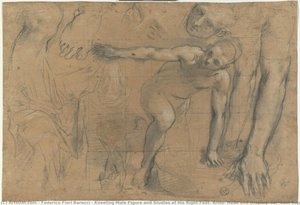
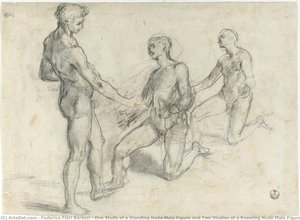
- Cinco estudios de figura masculina y dos de su mano derecha y brazo (Galería Uffizi, Florencia, Italia) - un testimonio de la habilidad de Barocci para capturar la forma humana.
- Estudio de composición (para “Circuncisión”, París, Musée du Louvre) - demuestra su capacidad para equilibrar la composición y la emoción.
- Cabeza de hombre (para “Llamamiento del santo Andrés”, Bruselas, Museos Reales de Bellas Artes de Bélgica) - muestra la atención al detalle y la expresión de Barocci.
- La Natividad (pintura al óleo de 1597 en el Prado).
- Madonna del Popolo (Galería Uffizi, Florencia, Italia).
- La Madonna del Gatto
- El Anuncio (1582)
Evolución Artística y Características
- Barocci se distingue por su transición entre el manierismo tardío y los inicios del barroco.
- Aunque influenciado por Rafael y Correggio, desarrolló un estilo propio caracterizado por una paleta rica y cálida, figuras dinámicas y composiciones dramáticas.
- Su habilidad para combinar la elegancia manierista con una expresividad emocional precursora del barroco lo convierte en una figura clave en la historia del arte italiano.
- Experimentó con el uso de pasteles y óleos en sus estudios preparatorios, siendo uno de los primeros artistas italianos en hacerlo sistemáticamente.
- Su obra refleja un profundo sentido religioso y una sensibilidad hacia la belleza natural.
Impacto Artístico e Influencia
- La influencia de Barocci puede verse en la obra de varios artistas, incluyendo a Peter Paul Rubens, quien se inspiró en el trabajo pictórico dramático y emotivo de Barocci.
- Su legado continúa siendo celebrado a través de sus numerosas obras, ahora alojadas en museos como la Galería Uffizi (Florencia, Italia) y el Musée du Louvre (París, Francia).
- Su capacidad para infundir emoción y dramatismo en sus composiciones sentó las bases para el desarrollo del arte barroco.
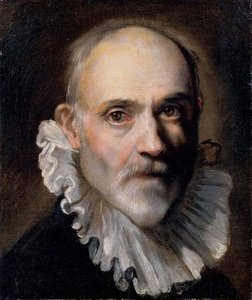
Federico Fiori Barocci
1535 - 1612 , Italia
Datos clave
- Artistas Influenciados Por: ['Peter Paul Rubens']
- Artistas Que Influyeron: ['Battista Franco']
- Fecha De Fallecimiento: 1612
- Fecha De Nacimiento: 1535
- Lugar De Nacimiento: Urbino, Italia
- Movimiento Artístico: Renacimiento, Barroco
- Nacionalidad: Italiana
- Nombre Completo: Federico Fiori Barocci
- Obras Notables:
- La Natividad
- Madonna del Popolo
- Anunciación
- Estudio de composición
Artículos relacionados
The Eloquent Body: Anatomy's Enduring Legacy in Art from Renaissance Dissection to Modern Representation
Explore the fascinating history of anatomy in art! From Renaissance dissections to modern masterpieces, discover how artists & scientists collaborated to depict the human form with unprecedented realism. Learn more at ArtsDot.
Leonardo da Vinci: Las 25 Obras Maestras que Definieron un Genio | ArtsDot
Descubre las 25 obras maestras de Leonardo da Vinci, desde la Mona Lisa hasta La Última Cena. Explora su arte renacentista, técnicas innovadoras y el legado del genio italiano. Reproducciones de alta calidad para decorar tu hogar con belleza y historia en ArtsDot.com.
El Crepúsculo del Clasicismo Renacentista: Un Estudio del Estilo y la Afectación en el Manierismo
Descubre el Manierismo: un análisis profundo de este fascinante estilo artístico del Renacimiento tardío. Explora sus características, artistas clave y legado con ArtsDot.
The Nuances of Graphite: Exploring Emotional Depth & Technical Mastery in Pencil Drawing
Explore the captivating world of graphite drawing! Discover its rich history, master essential techniques like chiaroscuro, and learn how artists evoke emotion through this timeless medium. Expert insights for art enthusiasts.
Frederick Bridgman: Anatomical Mastery & the Evolution of Figure Drawing Instruction
Explore the anatomical mastery of George B. Bridgman & his revolutionary figure drawing techniques. Discover how his methods transformed art instruction and continue to inspire artists today. Learn more at ArtsDot.