 Ver en contexto
 Enviar
 Compartir
 Detalles

 Descargar
 Similares
 Radiografía
 Presentación de diapositivas
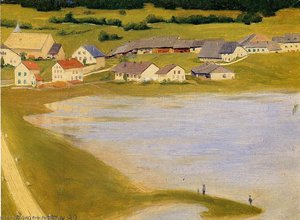
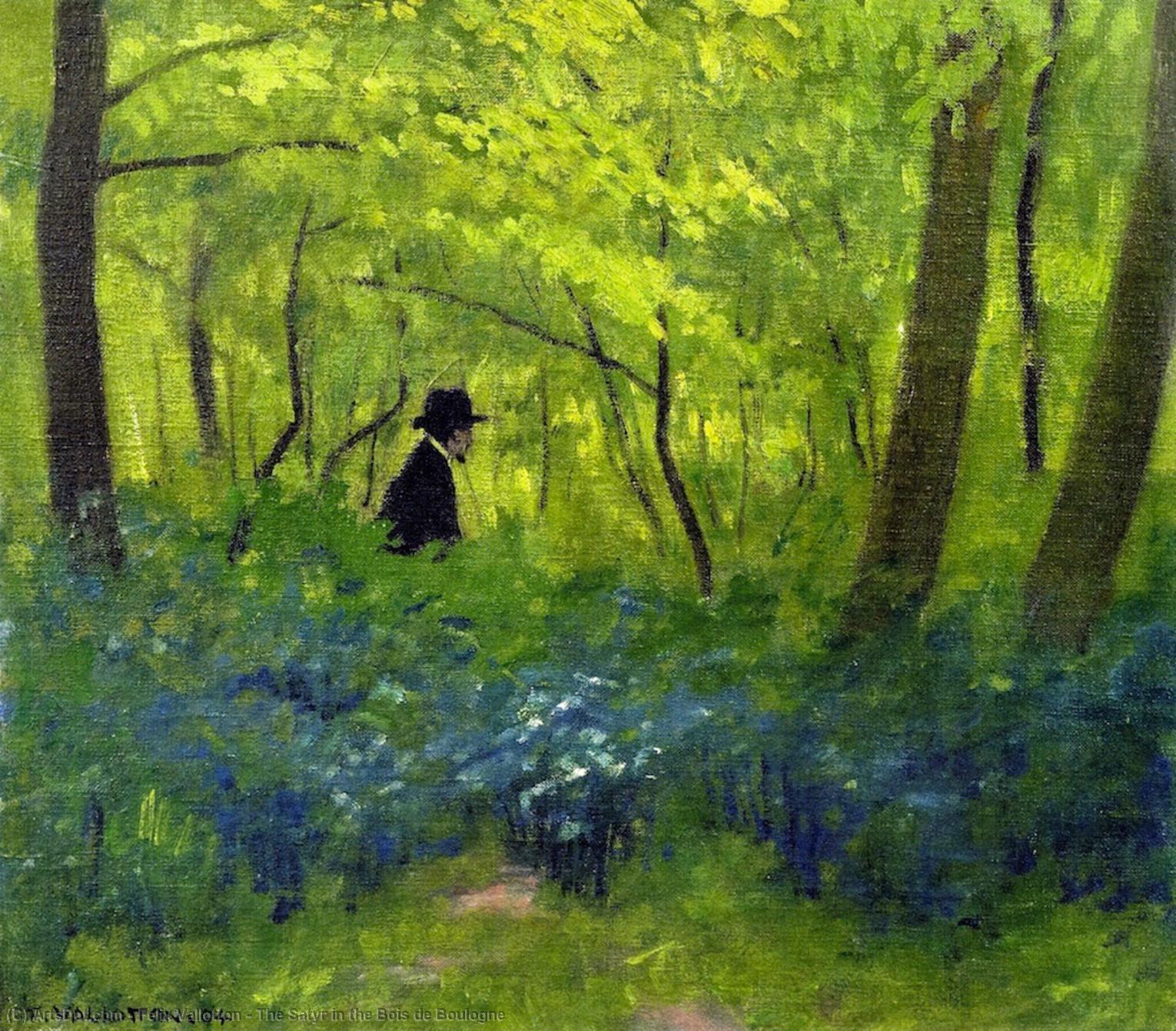
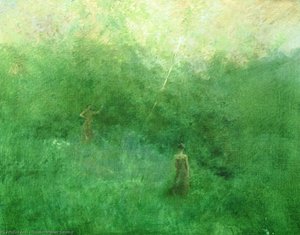
The Satyr in the Bois de Boulogne
 Oil On Canvas
- WallArt
- Nabi
 1904
1904 34.0 x 38.0 cm
 Ver más
Giclée / Impresión de arte
Impresiones giclée o en lienzo de calidad de museo con producción rápida y opciones de acabado flexibles. ( Comprar pintura hecha a mano Comprar imagen)




P118B $10

P118H $10

P118W $10

P438Z $10

P508JH $12

P508YH $12

P805H $10

P805Z $10

P919BZ $10

P919G $10

P919XJ $10

P959ZH $10

P968JZ $12

W106C $8

W218G $10

W218JH $8

W218Y $10

W307PJ $10

W316G $10

W316PJ $8

W316Y $10

W398PJ $8

W4111J $10

W500HY $15

W500JH $15

W692G $12

W849H $8

W940BG $15

W953PJ $8




Elija entre nuestros tamaños predefinidos que respetan las proporciones originales de la obra.

Puede introducir sus propias dimensiones para adaptarse a un marco o espacio específico. Si el tamaño seleccionado no coincide con las proporciones de la imagen original, recortaremos la obra de arte o extenderemos la imagen con un borde con efecto espejo o de color sólido. Se enviará una maqueta digital para su aprobación antes de que comience la producción.
Tenga en cuenta que la vista previa en pantalla no refleja el recorte o la extensión real. Solo la maqueta mostrará con precisión la composición final.
Aunque existen tamaños personalizados, recomendamos seleccionar una dimensión de la lista predefinida para preservar las proporciones originales.
Envío a todo el mundo () en 2 semanas en lugar de las 4/5 semanas estándar. (26 agosto)

Envío exprés gratuito a todo el mundo

Lienzo de lino de alta calidad

Seguro de envío total

Garantía de reembolso de impuestos aduaneros

Garantía de fidelidad cromática exacta

Política de devolución de 60 días (solo por defectos)

Garantía de devolución del 100% del dinero

Descuento por cantidad
 La opción de vidrio solo está disponible en tamaños inferiores a 110 cm.

The Satyr in the Bois de Boulogne
Giclée / Impresión de arte
Dimensiones de la reproducción
-


Precio total final
$ 62
Descripción de la pieza
A Moment of Quiet Contemplation: Felix Vallotton’s “The Satyr in the Bois de Boulogne”
Felix Vallotton's "The Satyr in the Bois de Boulogne," painted in 1904, is more than just a depiction of a man walking through a forest; it’s an exquisitely crafted meditation on the tensions between modernity and nature, civilization and instinct. Measuring a modest 34 x 38 cm, this oil on canvas invites the viewer into a world of subtle symbolism and carefully considered composition, revealing Vallotton's mastery in blending realism with a distinctly modern sensibility.
- Subject Matter: The painting centers around a formally dressed gentleman – a man of urban attire – traversing a winding path within the Bois de Boulogne, Paris’s famed park. His presence is both deliberate and slightly detached, suggesting a solitary journey through a landscape that simultaneously offers solace and perhaps, a quiet unease.
- Technique: Vallotton employs a signature style characterized by bold lines, flattened forms, and a restrained color palette dominated by muted tones of gray, brown, and black. This deliberate flatness emphasizes the geometric structure of the scene, creating a powerful visual impact that transcends mere representation. The artist’s brushwork is precise yet loose, contributing to an overall sense of calm and control.
Decoding Symbolism: Modernity and the Wild
The painting's power lies significantly in its layered symbolism. The figure in the suit – a stark contrast against the natural backdrop – immediately evokes the anxieties of the *fin de siècle*, a period marked by rapid industrialization, social upheaval, and a growing sense of alienation. He represents the encroaching influence of urban life, logic, and order upon the untamed beauty of nature. The title itself, “The Satyr in the Bois de Boulogne,” is deliberately evocative. Satyrs, figures from Greek mythology, were known for their wildness, connection to the primal forces of nature, and often, their association with hedonism and excess. Vallotton’s choice subtly suggests a confrontation between these opposing forces – the civilized man and the untamed spirit.
- The Path: The winding path itself can be interpreted as a journey, perhaps one of self-discovery or a futile attempt to reconcile conflicting desires.
- The Trees: The towering trees, rendered with simplified forms, symbolize both strength and the enduring power of nature, offering a silent counterpoint to the figure’s urban existence.
A Nabi Masterpiece – Context and Influence
"The Satyr in the Bois de Boulogne" firmly places Vallotton within the context of early 20th-century art movements, particularly the *Nabi* group. The *Nabis*, meaning “prophets,” sought to evoke religious emotion through color and form, rejecting traditional academic realism. Vallotton’s work exemplifies this movement's emphasis on flattened planes, bold colors (though muted here), and a focus on spiritual or emotional content rather than photographic accuracy. His ability to capture a sense of atmosphere and mood – the quiet serenity of the forest – is a testament to his artistic skill and understanding of modern aesthetics.
Painted in 1904, this piece reflects a pivotal moment in art history, bridging the gap between traditional representation and the burgeoning experimentation that would define much of the 20th century. Vallotton’s influence can be seen in the work of artists who followed, solidifying his place as a key figure in the development of modern art.
Emotional Resonance and Artistic Value
“The Satyr in the Bois de Boulogne” possesses an enduring appeal due to its quiet contemplation and evocative atmosphere. It’s a painting that invites viewers to ponder questions about humanity's relationship with nature, the impact of modernity, and the inherent duality within ourselves. This hand-painted reproduction captures not only the visual details of Vallotton’s original but also the emotional depth and artistic intention behind it – making it a valuable addition to any discerning collection or a striking focal point for interior design.
Obras relacionadas

Biografía del artista
Primeros años y formación
Félix Édouard Vallotton, pintor e impresor suizo/francés, nació el 28 de diciembre de 1865 en Lausana, Suiza. Asistió al Collège Cantonal, obteniendo un título en estudios clásicos en 1882. Ese mismo año, se trasladó a París para estudiar arte bajo la tutela de Jules Joseph Lefebvre y Gustave Boulanger en la Académie Julian.Estilo artístico e influencias
Las primeras pinturas de Vallotton, principalmente retratos, están firmemente arraigadas en la tradición académica. Sin embargo, su estilo evolucionó rápidamente, influenciado por el postimpresionismo, el simbolismo y, especialmente, la xilografía japonesa. Enfatizó el contorno y los patrones planos, eliminando las gradaciones y el modelado tradicionalmente producidos mediante sombreado. Buscó simplificar las formas y colores, creando imágenes con una fuerte presencia gráfica.Obras destacadas
- Intimités (Intimidades), una serie de diez interiores publicados en 1898, que abordan la tensión entre hombres y mujeres en el ámbito doméstico.
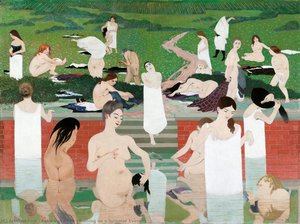
- Bañistas en una noche de verano (1892–93), actualmente en el Kunsthaus Zúrich. Esta obra ejemplifica su interés por representar figuras humanas en entornos naturales con un estilo simplificado y expresivo.
- Luz de luna (1895), en el Musée d'Orsay. Esta pintura muestra su habilidad para capturar la atmósfera y la emoción a través del uso sutil del color y la luz.
Asociación con Les Nabis y obra posterior
A partir de 1892, Vallotton se afilió a Les Nabis, un grupo de jóvenes artistas que incluía a Pierre Bonnard, Ker-Xavier Roussel, Maurice Denis y Édouard Vuillard. Sus pinturas reflejaron el estilo de sus xilografías, con áreas planas de color, bordes duros y simplificación del detalle. Su trabajo posterior incluyó retratos altamente acabados, desnudos y paisajes pintados de memoria, mostrando una mayor madurez técnica y expresiva.Legado e influencia
El arte gráfico de Vallotton alcanzó su máximo desarrollo a finales de la década de 1890, siendo ampliamente difundido en periódicos y libros tanto en Europa como en los Estados Unidos. Su influencia puede verse en la obra de Edvard Munch, Aubrey Beardsley y Ernst Ludwig Kirchner. Vallotton es recordado por su contribución al desarrollo del arte moderno, particularmente a través de sus innovadoras xilografías que combinan elementos de realismo y simbolismo. Enlaces clave: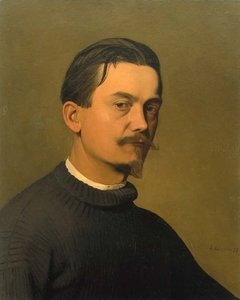
Félix Vallotton
1865 - 1925 , Suiza
Datos clave
- Artistas Influenciados:
- Edvard Munch
- Aubrey Beardsley
- Ernst Ludwig Kirchner
- Artistas Que Influyeron:
- Holbein
- Ingres
- Leonardo da Vinci
- Fecha De Fallecimiento: 29 de diciembre de 1925
- Fecha De Nacimiento: 28 de diciembre de 1865
- Lugar De Nacimiento: Lausana, Suiza
- Movimiento Artístico: Postimpresionismo, Simbolismo
- Nacionalidad: Suizo/Francés
- Nombre Completo: Félix Vallotton
- Obras Notables:
- Intimités (Intimacies)
- Bañistas en una noche de verano
- Luz de luna
Artículos relacionados

Giclée Prints: Archival Quality & Aesthetic Nuances for the Discerning Collector
Explore the world of giclée prints with ArtsDot. Learn about archival quality, aesthetic nuances & investment potential. Expert guidance for discerning art collectors seeking museum-quality reproductions and lasting value.

Las 10 Pinturas Más Famosas Dominadas por el Negro | Arte y Decoración
Descubre las 10 pinturas más impactantes dominadas por el negro. Explora obras maestras de Rembrandt, Goya y Rothko, su historia y significado. Encuentra reproducciones de arte exclusivas para transformar tu hogar en .

Goya: Las 25 Obras Maestras del Genio Español | Reproducciones de Arte en ArtsDot
Descubre las 25 obras maestras de Goya, el genio español. Explora retratos icónicos, 'Los Caprichos' y 'Las Pinturas Negras'. Reproducciones de arte en lienzo de alta calidad para decorar tu hogar con estilo. ¡Encuentra tu obra favorita en ArtsDot.com!

Echoes of Time: Exploring the Enduring Appeal & Historical Context of Vintage Art Prints
Explore the captivating world of vintage art prints! Discover their history, collecting tips & enduring appeal. Expert insights on chromolithography and building a legacy collection with ArtsDot.

The Enduring Legacy of Fine Art Prints: Technique, History & Aesthetic Impact
Explore the rich history & techniques of fine art prints. Discover investment potential, assess authenticity, and learn how to preserve your collection with expert guidance. Trusted insights for discerning collectors.