 Vista previa
 Compartir
 Compartir
 Ver detalles

 Descargar
 Ver similares
 Radiografía
 Presentación de diapositivas
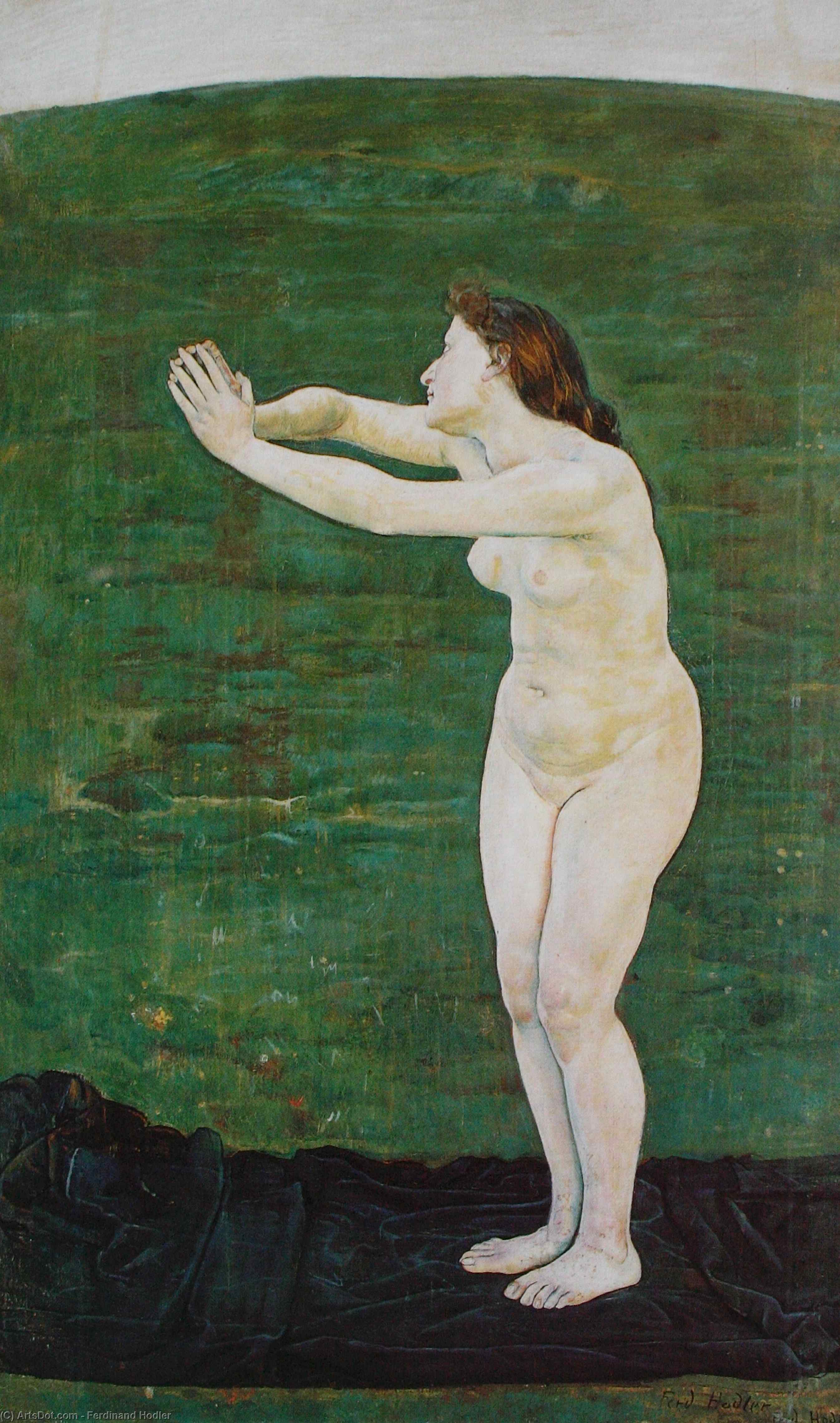
Communication with the Infinite
 Oil On Canvas
- WallArt
- Symbolism
 1892
1892- 19th Century
 159.0 x 97.0 cm
 Leer más
Reproducción al óleo hecha a mano
Óleo sobre lienzo pintado a mano en el tamaño y marco de su elección, realizado por encargo por nuestros artistas. ( Pedir impresión Comprar descarga)




P118B $10

P118H $10

P118W $10

P438Z $10

P508JH $12

P508YH $12

P805H $10

P805Z $10

P919BZ $10

P919G $10

P919XJ $10

P959ZH $10

P968JZ $12

W106C $8

W218G $10

W218JH $8

W218Y $10

W307PJ $10

W316G $10

W316PJ $8

W316Y $10

W398PJ $8

W4111J $10

W500HY $15

W500JH $15

W692G $12

W849H $8

W940BG $15

W953PJ $8




Elija entre nuestros tamaños predefinidos que respetan las proporciones originales de la obra.

Puede ingresar sus propias dimensiones para adaptarse a un marco o espacio específico. Si el tamaño seleccionado no coincide con las proporciones de la imagen original, recortaremos la obra o extenderemos la pintura con elementos adicionales pintados a mano. Se le enviará una maqueta digital para su aprobación antes de comenzar la producción.
Tenga en cuenta que la vista previa en pantalla no refleja el recorte o la extensión reales. Solo la maqueta mostrará con precisión la composición final.
Si bien existen tamaños personalizados, recomendamos seleccionar una dimensión de la lista predefinida para preservar las proporciones originales.
Tras realizar el pedido, el equipo de ArtsDot.com enviará un correo electrónico al cliente para solicitar instrucciones y proporcionarle una vista previa del boceto.
Envío a todo el mundo () en 3-4 semanas en lugar de las 5 semanas estándar. (19 agosto). Sin comprometer la calidad.

Envío exprés gratuito a todo el mundo

Lienzo de lino de alta calidad

Seguro de envío completo

Garantía de reembolso de aranceles aduaneros

Garantía de fidelidad cromática exacta

Política de devolución de 60 días (solo por defectos)

Garantía de devolución del 100% del dinero

Oferta por volumen
 La opción de vidrio solo está disponible en tamaños inferiores a 110 cm.

Communication with the Infinite
Técnica de reproducción
Tamaño de la reproducción
-


Precio total
$ 263
Descripción de la obra
Ferdinand Hodler’s *Communication with the Infinite*: A Symphony of Symbolism
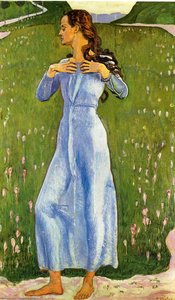
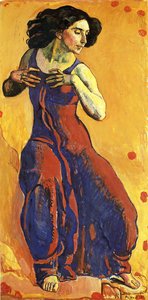
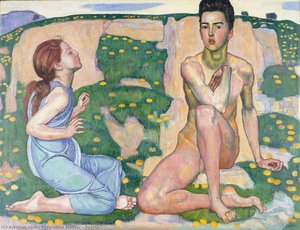
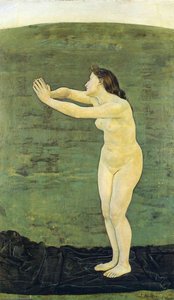
Ferdinand Hodler's 1892 painting, *Communication with the Infinite*, is more than just a portrait; it’s an immersive experience, a whispered invitation to contemplate the profound connection between humanity and the boundless realms beyond. Executed in his signature Symbolist style, this work captures a pivotal moment of serene transcendence, rendered with a remarkable sensitivity to light, color, and emotion. Measuring 159 x 97 cm, the painting immediately draws the viewer into its tranquil space – a green hillside serving as a grounding element beneath the ethereal presence of the nude woman who dominates the composition.
- Subject & Composition: The central figure, a young woman with arms raised in supplication and wonder, embodies the core theme. Her pose is not one of active striving but rather of receptive openness, suggesting an attempt to commune with something greater than herself – perhaps the infinite expanse of the sky or the very essence of existence.
- Symbolism & Interpretation: The nude form itself is a potent symbol, representing humanity’s inherent connection to nature and the spiritual world. Hodler masterfully avoids explicit narrative; instead, he relies on evocative imagery to stimulate the viewer's own interpretation. The green hillside provides a grounding element, anchoring the figure in the tangible world while simultaneously suggesting growth, renewal, and harmony with the environment.
The Artist’s Vision: Hodler and the Symbolist Movement
Ferdinand Hodler was a pivotal figure within the Symbolist movement, a reaction against the realism and naturalism that dominated 19th-century art. Born in Bern, Switzerland, in 1853, Hodler's early life experiences – notably the loss of his father and brothers – profoundly influenced his artistic trajectory. This sensitivity to mortality and the ephemeral nature of beauty fueled his exploration of subjective experience and emotional resonance. His style is characterized by bold lines, vibrant colors, and a deliberate blurring of form to evoke mood and feeling rather than strict representation. Hodler’s work shares affinities with artists like Paul Gauguin and Pablo Picasso, though he developed a uniquely Swiss interpretation of Symbolism, often focusing on the beauty of everyday life and the profound spiritual potential within it.
Technique & Materials: A Masterful Execution
Hodler's technique is remarkable for its fluidity and expressive quality. He employed loose brushstrokes and layered glazes to achieve a luminous effect, particularly evident in the rendering of the woman’s skin and the shimmering light reflecting off the hillside. The color palette – dominated by greens, blues, and subtle pinks – contributes significantly to the painting's ethereal atmosphere. The use of tempera on canvas allowed for rich colors and a smooth surface, perfectly suited to Hodler’s expressive style. This meticulous attention to detail, combined with his intuitive understanding of light and color, elevates *Communication with the Infinite* beyond mere decoration; it is a testament to the artist's skill and vision.
Historical Context & Legacy
*Communication with the Infinite*, created in 1892, reflects the broader cultural currents of the late 19th century. The Symbolist movement was a reaction against industrialization and materialism, seeking solace and meaning in spirituality, mythology, and the beauty of nature. Hodler’s work continues to resonate today because it speaks to universal human desires – our longing for connection, transcendence, and understanding. It stands as a powerful example of Symbolism's ability to evoke profound emotions and invite viewers to contemplate their place within the vastness of existence.
Obras relacionadas
Biografía del artista
Primeros años y formación artística
Ferdinand Hodler, pintor suizo, nació el 14 de marzo de 1853 en Berna, Suiza. Sus primeras obras se caracterizaron por retratos, paisajes y pinturas de género en un estilo realista. Sin embargo, posteriormente adoptó una forma personal de simbolismo, que él denominó "paralelismo".Evolución del estilo de Hodler
A medida que avanzaba la carrera de Hodler, su obra evolucionó para combinar influencias de varios géneros, incluyendo el simbolismo y el art nouveau. En 1890, completó Noche, una pintura que marcó su transición hacia la imaginería simbolista. Esta pieza, que presenta varias figuras reclinadas, fue inicialmente recibida con controversia pero finalmente obtuvo atención favorable en París.Obras destacadas y colecciones
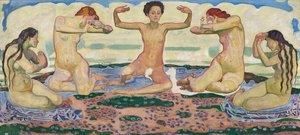
- El Día (1893), una pintura histórica a gran escala, es un ejemplo notable del trabajo de Hodler. Esta pieza, expuesta en el Kunsthaus Zúrich, demuestra su mezcla única de simbolismo y realismo.
- El Museo Kunsthaus Zúrich, Suiza, cuenta con una impresionante colección de obras de Hodler, incluyendo Verdad II (1897), que puede ser vista en /es/art/show/art-d3b4gt-es/
Legado e influencia
La adopción del simbolismo por parte de Hodler y el desarrollo del "paralelismo" han tenido un impacto duradero en el mundo del arte. Su trabajo puede verse como un precursor del expresionismo, con su énfasis en figuras fuertemente coloreadas y geométricas.- La biografía de Ferdinand Hodler está disponible en ArtsDot, proporcionando una visión profunda de su vida y evolución artística.
- La historia del desnudo en el arte, que ha sido un tema de interés a lo largo de la carrera de Hodler, puede explorarse más a fondo en [https://en.wikipedia.org/wiki/history_of_the_nude_in_art](https://en.wikipedia.org/wiki/history_of_the_nude_in_art).
Fechas clave
- 1853: Nació en Berna, Suiza
- 1890: Completó Noche, marcando su transición hacia la imaginería simbolista
- 1918: Falleció el 19 de mayo
- https://ArtsDot.com/@@/d3xnx9-ferdinand-hodler-the-day para ver El Día (1893)
- https://en.wikipedia.org/wiki/ferdinand_hodler para una biografía completa de Ferdinand Hodler
- https://ArtsDot.com/@/ferdinand-hodler para una extensa colección de sus obras y una biografía detallada.
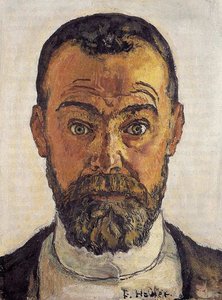
Ferdinand Hodler
1853 - 1918 , Suiza
Datos clave
- Artistas Que Influyeron:
- Alexandre Calame
- Gustave Courbet
- Hans Holbein
- Fecha De Muerte: 19 de mayo de 1918
- Fecha De Nacimiento: 14 de marzo de 1853
- Influencia En Artistas: ['Expresionismo']
- Lugar De Nacimiento: Bern, Suiza
- Movimiento Artístico: Simbolismo, Art Nouveau
- Nacionalidad: Suizo
- Nombre Completo: Ferdinand Hodler
- Obras Notables:
- La noche
- El día
- Verdad II
Artículos relacionados
Ferdinand Hodler: Symbolism, Parallelism & the Quest for Universal Harmony
Explore the captivating world of Ferdinand Hodler, Swiss Symbolist painter renowned for his evocative landscapes & pioneering 'parallelism'. Discover his life, key works, and lasting influence on art history. Own a hand-painted reproduction today!

Giclée Prints: Archival Quality & Aesthetic Nuances for the Discerning Collector
Explore the world of giclée prints with ArtsDot. Learn about archival quality, aesthetic nuances & investment potential. Expert guidance for discerning art collectors seeking museum-quality reproductions and lasting value.

Echoes of Time: Exploring the Enduring Appeal & Historical Context of Vintage Art Prints
Explore the captivating world of vintage art prints! Discover their history, collecting tips & enduring appeal. Expert insights on chromolithography and building a legacy collection with ArtsDot.

The Enduring Legacy of Fine Art Prints: Technique, History & Aesthetic Impact
Explore the rich history & techniques of fine art prints. Discover investment potential, assess authenticity, and learn how to preserve your collection with expert guidance. Trusted insights for discerning collectors.
The Enduring Legacy of Printmaking: Techniques, Themes & Artistic Innovation Across Centuries
Explore the rich history of printmaking with ArtsDot. Discover techniques from intaglio to lithography, learn about collecting valuable prints & find museum-quality reproductions. Expert insights for art enthusiasts and collectors.