 Vista previa
 Compartir
 Compartir
 Ver detalles

 Descargar
 Ver similares
 Radiografía
 Presentación de diapositivas
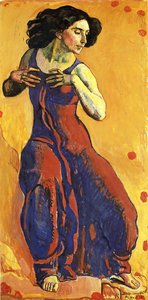
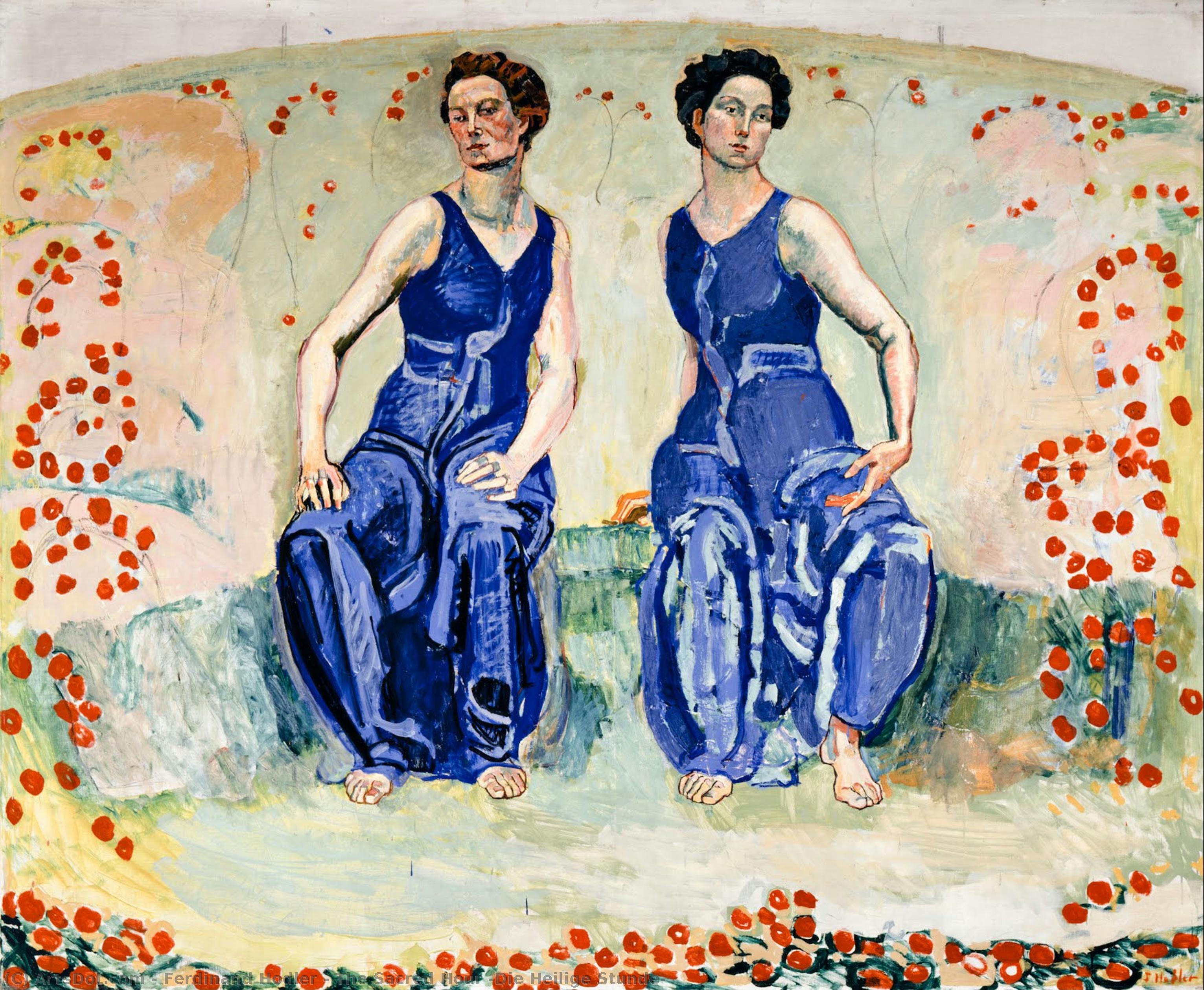
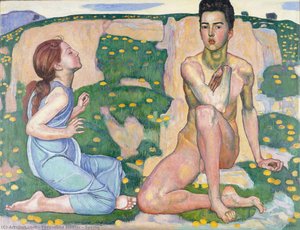
The Sacred Hour (Die Heilige Stunde)
 Oil On Canvas
- WallArt
- Symbolism Painting
 1911
1911- 19th Century
 182.0 x 226.0 cm
 Leer más
Reproducción al óleo hecha a mano
Óleo sobre lienzo pintado a mano en el tamaño y marco de su elección, realizado por encargo por nuestros artistas. ( Pedir impresión Comprar descarga)




P118B $10

P118H $10

P118W $10

P438Z $10

P508JH $12

P508YH $12

P805H $10

P805Z $10

P919BZ $10

P919G $10

P919XJ $10

P959ZH $10

P968JZ $12

W106C $8

W218G $10

W218JH $8

W218Y $10

W307PJ $10

W316G $10

W316PJ $8

W316Y $10

W398PJ $8

W4111J $10

W500HY $15

W500JH $15

W692G $12

W849H $8

W940BG $15

W953PJ $8




Elija entre nuestros tamaños predefinidos que respetan las proporciones originales de la obra.

Puede ingresar sus propias dimensiones para adaptarse a un marco o espacio específico. Si el tamaño seleccionado no coincide con las proporciones de la imagen original, recortaremos la obra o extenderemos la pintura con elementos adicionales pintados a mano. Se le enviará una maqueta digital para su aprobación antes de comenzar la producción.
Tenga en cuenta que la vista previa en pantalla no refleja el recorte o la extensión reales. Solo la maqueta mostrará con precisión la composición final.
Si bien existen tamaños personalizados, recomendamos seleccionar una dimensión de la lista predefinida para preservar las proporciones originales.
Tras realizar el pedido, el equipo de ArtsDot.com enviará un correo electrónico al cliente para solicitar instrucciones y proporcionarle una vista previa del boceto.
Envío a todo el mundo () en 3-4 semanas en lugar de las 5 semanas estándar. (22 agosto). Sin comprometer la calidad.

Envío exprés gratuito a todo el mundo

Lienzo de lino de alta calidad

Seguro de envío completo

Garantía de reembolso de aranceles aduaneros

Garantía de fidelidad cromática exacta

Política de devolución de 60 días (solo por defectos)

Garantía de devolución del 100% del dinero

Oferta por volumen
 La opción de vidrio solo está disponible en tamaños inferiores a 110 cm.

The Sacred Hour (Die Heilige Stunde)
Técnica de reproducción
Tamaño de la reproducción
-


Precio total
$ 263
Descripción de la obra
The Sacred Hour (Die Heilige Stunde) – A Portrait of Contemplation
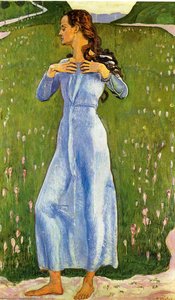
Ferdinand Hodler’s “The Sacred Hour” (1911), measuring 182 x 226 cm, is more than a simple portrait; it's an immersion into the quietude and profound introspection characteristic of the artist’s Symbolist style. Painted during a pivotal period in his career, this work exemplifies Hodler’s fascination with capturing not just outward appearances but also the inner lives and emotional states of his subjects. The scene unfolds with two women seated on the ground, their postures suggesting a shared moment of reverence or perhaps quiet sorrow. Their long hair, rendered with Hodler's signature loose brushstrokes, adds to the ethereal quality of the piece, while the simple blue dresses offer a subtle elegance that belies the deeper emotional currents at play.
The Influence of Symbolism and Hodler’s Vision
Born in Bern in 1853, Ferdinand Hodler's artistic journey was profoundly shaped by personal tragedy – the loss of his father and brothers early in life. This experience fueled a lifelong preoccupation with themes of mortality, memory, and the beauty found within fleeting moments. Hodler’s embrace of Symbolism wasn’t merely an aesthetic choice; it was a deeply felt response to the world around him. He sought to represent not what he *saw*, but what he *felt* – emotions rendered through distorted forms, flattened perspectives, and a deliberate avoidance of realistic detail. “The Sacred Hour” perfectly embodies this approach, prioritizing atmosphere and psychological depth over photographic accuracy.
Technique and Composition: A Study in Grace
Hodler’s technique is immediately recognizable—characterized by broad, flowing brushstrokes that create a sense of movement and softness. The vibrant red flowers and green leaves within the background aren't merely decorative; they serve to heighten the emotional intensity of the scene, acting as visual anchors for the viewer’s gaze. The composition itself is carefully balanced, with the two women positioned symmetrically yet subtly differentiated by their gestures – one clasped in prayerful contemplation, the other with her hands behind her back, suggesting a more passive state. This deliberate arrangement contributes to the painting's overall sense of serenity and grace.
Symbolic Resonance and Emotional Impact
The title, “The Sacred Hour,” immediately evokes notions of spirituality and solemnity. The women’s averted gazes suggest they are lost in thought, perhaps contemplating a significant event or simply experiencing a moment of profound reflection. Hodler masterfully uses color and form to convey this emotional weight. The blue of their dresses is both calming and melancholic, while the red flowers introduce an element of passion or remembrance. “The Sacred Hour” remains a powerfully evocative work, inviting viewers to contemplate themes of loss, beauty, and the enduring human need for connection and introspection. This piece would be a stunning addition to any collection seeking works that resonate with quiet contemplation and symbolic depth.
Obras relacionadas
Biografía del artista
Primeros años y formación artística
Ferdinand Hodler, pintor suizo, nació el 14 de marzo de 1853 en Berna, Suiza. Sus primeras obras se caracterizaron por retratos, paisajes y pinturas de género en un estilo realista. Sin embargo, posteriormente adoptó una forma personal de simbolismo, que él denominó "paralelismo".Evolución del estilo de Hodler
A medida que avanzaba la carrera de Hodler, su obra evolucionó para combinar influencias de varios géneros, incluyendo el simbolismo y el art nouveau. En 1890, completó Noche, una pintura que marcó su transición hacia la imaginería simbolista. Esta pieza, que presenta varias figuras reclinadas, fue inicialmente recibida con controversia pero finalmente obtuvo atención favorable en París.Obras destacadas y colecciones
- El Día (1893), una pintura histórica a gran escala, es un ejemplo notable del trabajo de Hodler. Esta pieza, expuesta en el Kunsthaus Zúrich, demuestra su mezcla única de simbolismo y realismo.
- El Museo Kunsthaus Zúrich, Suiza, cuenta con una impresionante colección de obras de Hodler, incluyendo Verdad II (1897), que puede ser vista en /es/art/show/art-d3b4gt-es/
Legado e influencia
La adopción del simbolismo por parte de Hodler y el desarrollo del "paralelismo" han tenido un impacto duradero en el mundo del arte. Su trabajo puede verse como un precursor del expresionismo, con su énfasis en figuras fuertemente coloreadas y geométricas.- La biografía de Ferdinand Hodler está disponible en ArtsDot, proporcionando una visión profunda de su vida y evolución artística.
- La historia del desnudo en el arte, que ha sido un tema de interés a lo largo de la carrera de Hodler, puede explorarse más a fondo en [https://en.wikipedia.org/wiki/history_of_the_nude_in_art](https://en.wikipedia.org/wiki/history_of_the_nude_in_art).
Fechas clave
- 1853: Nació en Berna, Suiza
- 1890: Completó Noche, marcando su transición hacia la imaginería simbolista
- 1918: Falleció el 19 de mayo
- https://ArtsDot.com/@@/d3xnx9-ferdinand-hodler-the-day para ver El Día (1893)
- https://en.wikipedia.org/wiki/ferdinand_hodler para una biografía completa de Ferdinand Hodler
- https://ArtsDot.com/@/ferdinand-hodler para una extensa colección de sus obras y una biografía detallada.
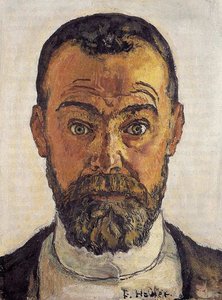
Ferdinand Hodler
1853 - 1918 , Suiza
Datos clave
- Artistas Que Influyeron:
- Alexandre Calame
- Gustave Courbet
- Hans Holbein
- Fecha De Muerte: 19 de mayo de 1918
- Fecha De Nacimiento: 14 de marzo de 1853
- Influencia En Artistas: ['Expresionismo']
- Lugar De Nacimiento: Bern, Suiza
- Movimiento Artístico: Simbolismo, Art Nouveau
- Nacionalidad: Suizo
- Nombre Completo: Ferdinand Hodler
- Obras Notables:
- La noche
- El día
- Verdad II
Artículos relacionados

Las 10 Obras Maestras del Azul Pizarra: Arte, Historia y Decoración
Descubre las 10 pinturas más famosas dominadas por el azul pizarra. Explora la historia, técnica y belleza de Monet, Van Gogh y otros maestros. Encuentra reproducciones de arte exclusivas para decorar tu hogar en .
Ferdinand Hodler: Symbolism, Parallelism & the Quest for Universal Harmony
Explore the captivating world of Ferdinand Hodler, Swiss Symbolist painter renowned for his evocative landscapes & pioneering 'parallelism'. Discover his life, key works, and lasting influence on art history. Own a hand-painted reproduction today!
The Allure of Azure: Exploring the Symbolic & Aesthetic Depths of Blue in Art History
Explore the rich history of blue in art! Discover its symbolism, from ancient pigments to modern masterpieces by Kandinsky & Seurat. Uncover the psychological impact and cultural meanings behind this captivating hue.
Azure Visions: Exploring Representations of the Blue Dress in Western Art History
Explore the rich history of the blue dress in Western art! Discover its symbolism, from Renaissance masterpieces to modern interpretations by artists like Martin & Schiele. Uncover cultural meanings and artistic techniques.
Las 10 Obras Maestras Azules: Arte, Historia y Decoración con
Descubre las 10 pinturas azules más famosas de la historia del arte. Explora obras maestras de Van Gogh, Monet y Manet, su técnica y significado. Encuentra reproducciones de museo en para decorar tu hogar con elegancia.