

 Ver en contexto
 Enviar
 Compartir
 Detalles

 Descargar
 Similares
 Radiografía
 Presentación de diapositivas
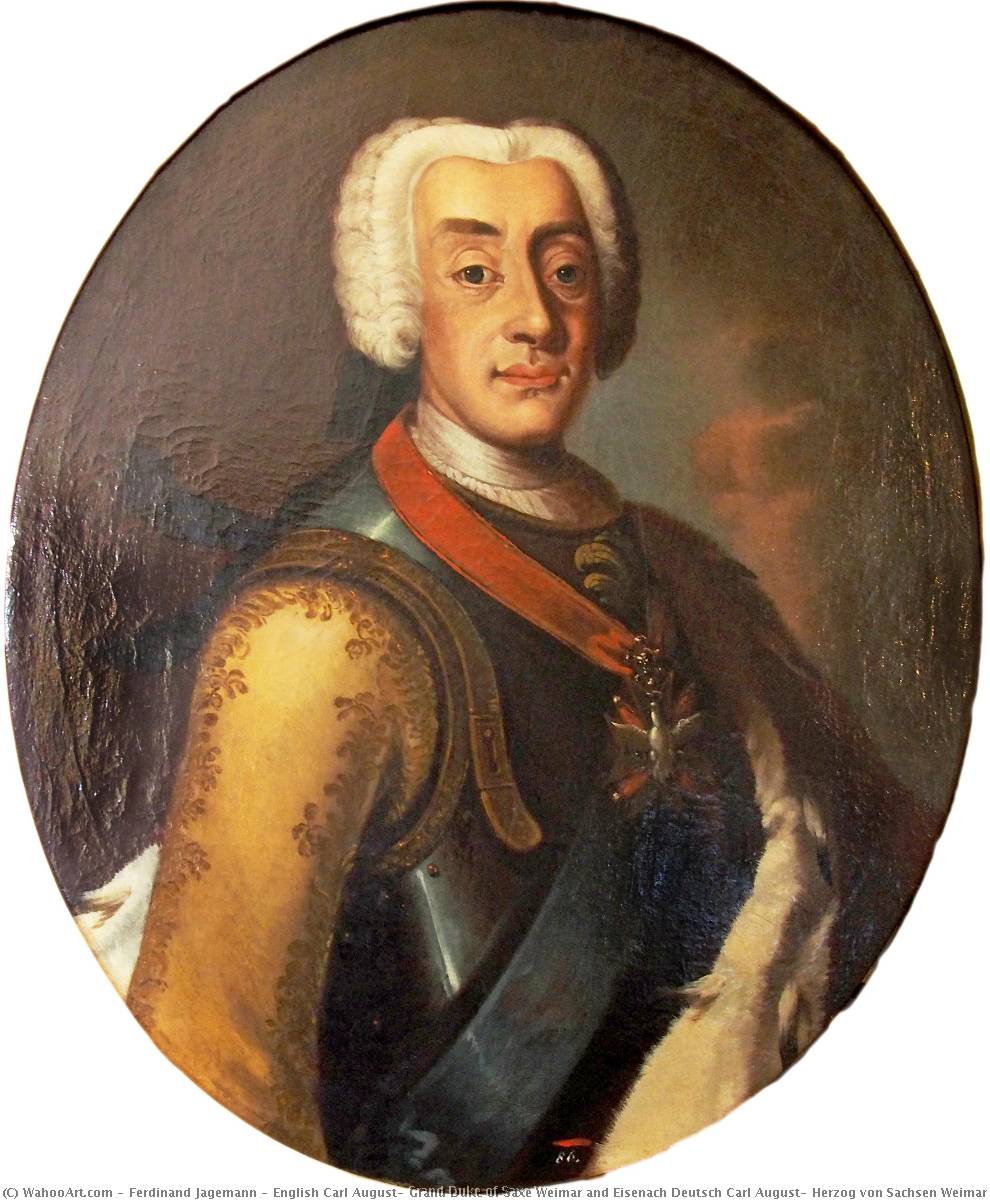
English Carl August, Grand Duke of Saxe Weimar and Eisenach Deutsch Carl August, Herzog von Sachsen Weimar und Eisenach, in der Uniform der Ascherslebener Kürassiere


 Ver más
Adquiera una imagen digital de alta resolución y optimizada, muy superior a la vista previa en línea.
Cada archivo es preparado meticulosamente por nuestros especialistas internos mediante el uso de herramientas avanzadas y un experto retoque manual. Nos aseguramos de que cada imagen posea una claridad excepcional, una precisión cromática impecable y un detalle minucioso.
El archivo final se entrega por correo electrónico en un plazo de 72 horas, optimizado para su uso inmediato en entornos profesionales, editoriales y de impresión. Esta es la misma calidad en la que confían los estudios de diseño, las editoriales y las galerías de primer nivel.
Imagen Digital
Descarga un archivo de alta resolución para exhibición personal, impresión y proyectos creativos. ( Comprar impresión Comprar pintura hecha a mano)
Incluido en cada pedido de imágenes digitales
Entrega digital experta, garantizada.
Al elegir ArtsDot.com, no solo está adquiriendo una imagen; está recibiendo una obra de arte digital mejorada profesionalmente, elaborada con precisión y respaldada por una garantía de satisfacción. Esto es todo lo que incluye su pedido, automáticamente:

Entrega rápida por email
Recibirá su archivo de imagen digital en alta resolución por correo electrónico en un plazo de 72 horas tras realizar su pedido, listo para su uso inmediato.

Archivo digital optimizado por IA
Su obra de arte se optimiza profesionalmente mediante herramientas avanzadas de IA y edición manual, garantizando el máximo detalle, claridad y precisión cromática.

Reenvío gratuito de por vida
¿Has borrado o perdido tu archivo por error? No te preocupes: te lo volveremos a enviar en cualquier momento, sin coste adicional.

Sin gastos de importación, siempre
Disfrute de su obra de arte al instante sin aduanas, aranceles ni gastos de envío; las descargas digitales siempre están libres de impuestos.

Garantía de fidelidad de color
Garantizamos que su imagen digital refleje los colores originales con la mayor fidelidad posible, mediante el uso de herramientas profesionales y gestión del color.

Garantía de satisfacción de 60 días
Si no está satisfecho con su imagen digital, la revisaremos o le reembolsaremos el 100% en un plazo de 60 días, sin preguntas.

100% Garantía de devolución de dinero
¿No está satisfecho? Obtenga un reembolso completo dentro de los 60 días posteriores a la recepción de su archivo digital, sin necesidad de explicaciones.

Descuentos por pedidos grandes
Compra 3 imágenes, ahorra 10% - Compra 5, ahorra 15% - Compra 10+, ahorra 20%. Ideal para proyectos creativos, galerías y agencias.
Obras relacionadas









Biografía del artista
The Silent Chronicler of Weimar’s Golden Age
Ferdinand Jagemann stands as a quietly influential figure within the artistic landscape of Weimar during its most luminous era, primarily recognized for his meticulous portraits that captured the very spirit of the age's intellectual and cultural dynamism. Born in 1780 into a scholarly environment, Jagemनांक’s life was deeply intertwined with the intellectual fabric of Saxe-Weimar. His father, Christian Joseph Jagemann, served as the esteemed librarian to Duchess Anna Amalia, an upbringing that undoubtedly instilled in the young artist a profound appreciation for both art and erudition. This familial connection to the heart of German Enlightenment culture shaped his artistic trajectory, allowing him to move through the highest circles of Weimar society with ease and purpose.
The artist’s early training was marked by the guidance of Johann Heinrich Tischbein II, a celebrated painter who championed Neoclassical ideals. Under Tischbein’s tutelage, Jagemann mastered a disciplined approach to technique and developed an understanding of classical aesthetics that would become a cornerstone of his work. Seeking to expand his horizons beyond the borders of Germany, Jagemann traveled to Paris between 1802 and 1804. It was in this vibrant, revolutionary atmosphere that he encountered the burgeoning influence of masters such as Jacques-Louis David and Jean-Baptiste Regnault. This Parisian exposure broadened his artistic vocabulary, infusing his portraiture with a sense of grandeur, theatricality, and a commitment to capturing dramatic emotion through precise, classical forms.
A Legacy Captured in Flesh and Spirit
Upon his return to Weimar in 1805, Jagemann transitioned from a student of the world to a pivotal figure in his home city's cultural institutions. He collaborated closely with prominent artists like Georg Melchior Kraus and Heinrich Friedrich Füger, contributing to the establishment and vitality of the Fürstliche Zeichenschule (Royal Drawing School). His role was not merely that of a painter but also of an educator, eventually serving as a professor and co-director of the school. This period of his life saw him documenting the most significant figures of the German Enlightenment, creating a visual record of the minds that were reshaping European thought.
One of his most poignant and historically significant undertakings was the commission to portray Friedrich Schiller on his deathbed. Such an intimate and somber task required a delicate balance of technical skill and profound empathy, capturing not just a likeness, but the fading light of a literary giant. His ability to navigate both the monumental and the deeply personal is further evidenced by his numerous portraits of Johann Wolfgang von Goethe. These works do more than present formal likenesses; they showcase the wealth, dignity, and intellectual weight of the era's protagonists through a Neoclassical lens.
Jagemann’s life was tragically short, as he passed away in 1820 at the age of thirty-nine. Yet, his impact resonated far beyond his years. The significance of his work can be summarized by several key contributions to art history:
- Documentary Importance: He provided a definitive visual archive of the Weimar Classicism period, capturing the likenesses of figures like Goethe and Schiller.
- Technical Synthesis: His style successfully merged the disciplined Neoclassicism of his German training with the dramatic, emotive influences of the French school.
- Institutional Impact: Through his leadership at the Zeichenschule, he helped foster the next generation of artistic talent in Saxe-Weimar.
- Cultural Connection: His work serves as a bridge between the scholarly world of the German Enlightenment and the visual language of European high art.
Though his name may not carry the same immediate weight today as those he painted, Ferdinand Jagemann remains an essential figure for anyone seeking to understand the soul of Weimar. He was the painter who looked upon the giants of his age and, through the tip of his brush, ensured their presence would endure long after their voices had fallen silent.
ferdinand jagemann
1780 - 1820
Breves datos
- Artistic Movement Or Style: Neoclassical Portraiture
- Artists Or Movements Influenced By This Artist: ['Johann Wolfgang von Goethe']
- Artists Who Influenced This Artist:
- Georg Melchior Kraus
- Heinrich Friedrich Füger
- Date Of Death: 1820
- Full Name: Ferdinand Jagemann
- Nationality: German
- Notable Artworks:
- Goethe Portraits
- Schiller Paintings
- Place Of Birth: Germany

