

 Compartir
 Compartir
 Ver detalles

 Descargar
 Ver similares
 Presentación de diapositivas
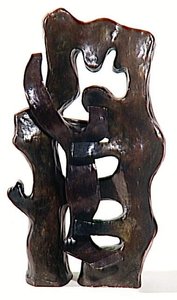
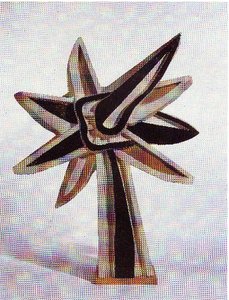
Branch
 Mixed Materials
- Sculpture
- Surrealism
 1952
1952- Modern
 63.0 x 35.0 cm
 Leer más
Adquiera una imagen digital de alta resolución y optimizada, muy superior a la vista previa en línea.
Cada archivo es preparado meticulosamente por nuestros especialistas internos mediante el uso de herramientas avanzadas y un experto retoque manual. Nos aseguramos de que cada imagen posea una claridad excepcional, una precisión cromática impecable y un detalle minucioso.
El archivo final se entrega por correo electrónico en un plazo de 72 horas, optimizado para su uso inmediato en entornos profesionales, editoriales y de impresión. Esta es la misma calidad en la que confían los estudios de diseño, las editoriales y las galerías de primer nivel.
Imagen Digital
Descarga un archivo de alta resolución para exhibición personal, impresión y proyectos creativos. ( Pedir impresión Encargar reproducción pintada a mano)
Incluido en cada compra de imágenes digitales
Entrega digital experta, garantizada.
Al elegir ArtsDot.com, no solo está adquiriendo una imagen; está recibiendo una obra de arte digital mejorada profesionalmente, elaborada con precisión y respaldada por una garantía de satisfacción. Esto es todo lo que incluye su pedido, automáticamente:

Entrega rápida por email
Recibirá su archivo de imagen digital en alta resolución por correo electrónico en un plazo de 72 horas tras realizar su pedido, listo para su uso inmediato.

Archivo digital optimizado por IA
Su obra de arte se optimiza profesionalmente mediante herramientas avanzadas de IA y edición manual, garantizando el máximo detalle, claridad y precisión cromática.

Reenvío gratuito de por vida
¿Has borrado o perdido tu archivo por error? No te preocupes: te lo volveremos a enviar en cualquier momento, sin coste adicional.

Sin gastos de importación, siempre
Disfrute de su obra de arte al instante sin aduanas, aranceles ni gastos de envío; las descargas digitales siempre están libres de impuestos.

Garantía de precisión de color
Garantizamos que su imagen digital refleje los colores originales con la mayor fidelidad posible, mediante el uso de herramientas profesionales y gestión del color.

Garantía de satisfacción de 60 días
Si no está satisfecho con su imagen digital, la revisaremos o le reembolsaremos el 100% en un plazo de 60 días, sin preguntas.

100% Garantía de devolución de dinero
¿No está satisfecho? Obtenga un reembolso completo dentro de los 60 días posteriores a la recepción de su archivo digital, sin necesidad de explicaciones.

Descuentos por volumen
Compra 3 imágenes, ahorra 10% - Compra 5, ahorra 15% - Compra 10+, ahorra 20%. Ideal para proyectos creativos, galerías y agencias.
Descripción del coleccionable
A Symphony of Organic and Industrial Forms
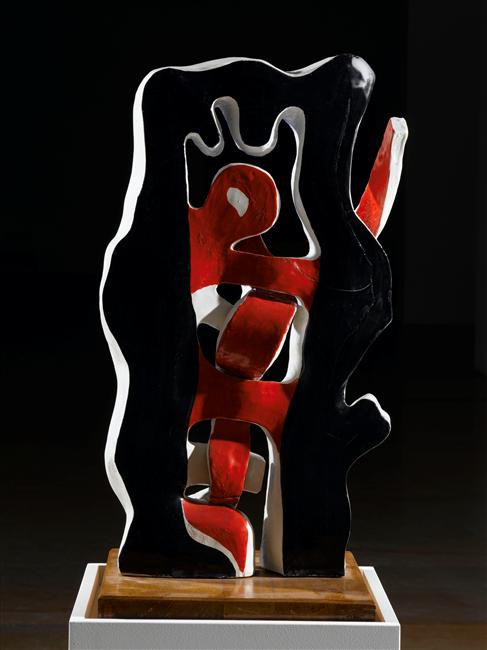
In the mid-century landscape of 1952, Fernand Léger unveiled a work that would forever challenge the boundaries between the natural world and the burgeoning machine age. His sculpture, "Branch," famously known as "Rockefeller Branch," serves as a profound Surrealist echo of industrial progress. At first glance, the piece presents a striking juxtaposition; it is an arresting embodiment of the tension between the organic and the inorganic. Léger, a master who had already established himself through the rigorous geometric abstraction of his earlier compositions, embarked on this daring experiment to reconcile the soft, unpredictable rhythms of nature with the hard-edged, orthogonal precision of modern technology.
The sculpture is not merely a visual object but a deliberate provocation. It was presented during the inaugural exhibition at Rockefeller Center, a moment when New York City was asserting itself as a global cultural and industrial titan. Through this work, Léger captures the very essence of mid-century America—a period defined by an unyielding optimism toward technological advancement, yet shadowed by a Surrealist critique of how such progress might reshape the human experience. The piece invites viewers to contemplate a world where the mechanical and the biological are no longer separate entities but are instead woven into a single, complex tapestry.
Mastery of Material and Technique
Léger’s technical execution in "Branch" is nothing short of masterful, utilizing a calculated approach to texture and form. Eschewing the dreamlike, ethereal fantasies often associated with Surrealism, Léger instead employs a technique of calculated juxtaposition. The sculpture utilizes simplified, powerful forms—primarily angular blocks and stylized, skeletal branches—constructed from a sophisticated blend of polished bronze and textured wood.
This deliberate choice of materials creates a compelling sensory interplay. The cold, reflective surface of the bronze speaks to the rigidity and efficiency of industrial manufacturing, while the warmth and grain of the wood evoke the fluid, unpredictable growth of the natural world. This duality allows the sculpture to breathe, creating a visual tension that mirrors the friction between urban expansion and environmental preservation. For the discerning collector or interior designer, this interplay of textures offers a sophisticated focal point, capable of adding both structural strength and organic warmth to a contemporary space.
Symbolism and the Spirit of Resilience
Beyond its physical presence, "Branch" carries a profound emotional weight. The central motif of the branch serves as a potent symbol of resilience and renewal. In an era where the rapid encroachment of machinery seemed to threaten the vestiges of the natural world, Léger positioned his stylized branches against a backdrop of geometric, man-made forms. This suggests a powerful message: even within the dominant influence of the machine, the spirit of organic life persists, adapting and enduring.
The emotional impact of the piece lies in this very dissonance. It evokes a sense of wonder at the possibility of coexistence, prompting a reflection on our own relationship with progress. To possess a reproduction of such a significant work is to bring into one's environment a piece of art history that celebrates the strength found in complexity. Whether placed in a minimalist gallery setting or an elegantly appointed study, "Branch" acts as a conversation starter, embodying the enduring struggle and ultimate harmony between the world we build and the world we inhabit.
Obras relacionadas
Biografía del artista
vida temprana y formación
fernand léger, un pintor, escultor y cineasta francés, nació el 4 de febrero de 1881 en Argentán, Orne, Baja Normandía. Su padre criaba ganado, y Léger inicialmente se formó como arquitecto de 1897 a 1899. Luego se mudó a París en 1900, ganándose la vida como dibujante arquitectónico.desarrollo artístico
El trabajo temprano de Léger estuvo influenciado por el impresionismo, como se ve en le jardin de ma mère (mi madre's garden) (1905). Después de asistir a la escuela de artes decorativas y la academia Julian, comenzó a trabajar seriamente como pintor a los 25 años. Su estilo evolucionó hacia una forma personal del cubismo, que los críticos denominaron "tubismo" por su énfasis en las formas cilíndricas.cubismo y el grupo puteaux
En 1910, Léger expuso en el salón de otoño junto a jean metzinger y henri le fauconnier. Se unió al grupo puteaux, también conocido como la sección dorada (la sección de oro), junto con otros artistas como francis picabia y marcel duchamp.guerra y su influencia en el trabajo de léger
Las experiencias de Léger en la Primera Guerra Mundial impactaron significativamente su obra. Durante su tiempo en el frente, produjo dibujos de piezas de artillería, aviones y soldados compañeros. Su pintura soldier with a pipe (1916) refleja este período.obra posterior y legado
La obra posterior de Léger, caracterizada por formas mecánicas y elegantes, lo vinculó a la tradición de la pintura figurativa francesa. Sus paisajes animados de 1921 mostraron figuras y animales en formas armoniosas y aerodinámicas.- ver obras de fernand léger en ArtsDot
- más sobre fernand léger en wikipedia
- descubra el musée national fernand léger (francia) con ArtsDot
- la mujer sentada (100 x 81 cm, tubismo)
- elemento de máquina (cubismo)
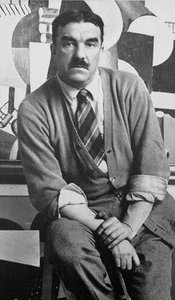
Fernand Léger
1881 - 1955 , Francia
Datos clave
- Artistas Influenciados Por: ['Pop Art']
- Artistas Que Influyeron:
- Cézanne
- Impresionismo
- Fecha De Nacimiento: 4 de febrero de 1881
- Lugar De Nacimiento: Argentan, Francia
- Movimiento Artístico:
- Cubismo
- Tubismo
- Nacionalidad: Francés
- Nombre Completo: Fernand Léger
- Obras Notables:
- La Mujer Sentada
- Elemento de Máquina
- El Gran Desfile
- Paisajes Animados

