 Ver en contexto
 Enviar
 Compartir
 Detalles

 Descargar
 Similares
 Radiografía
 Presentación de diapositivas
 Estadísticas
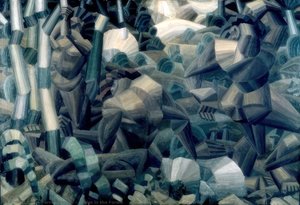
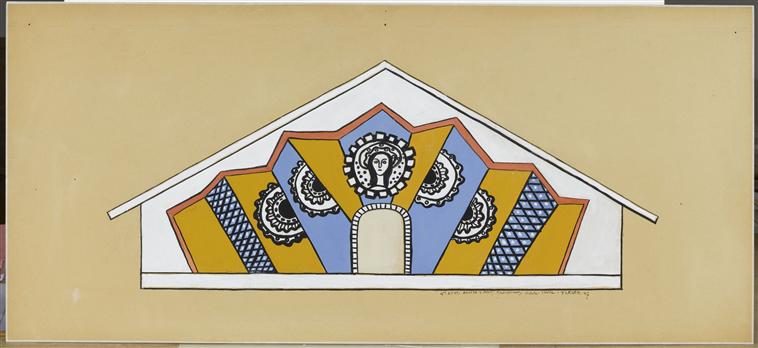
Fourth state, church of Assy
 Acrylic On Canvas
- WallArt
- Cubism
 1947
1947 46.0 x 100.0 cm
 Ver más
Giclée / Impresión de arte
Impresiones giclée o en lienzo de calidad de museo con producción rápida y opciones de acabado flexibles. ( Comprar pintura hecha a mano Cambiar a imagen digital)




P118B $10

P118H $10

P118W $10

P438Z $10

P508JH $12

P508YH $12

P805H $10

P805Z $10

P919BZ $10

P919G $10

P919XJ $10

P959ZH $10

P968JZ $12

W106C $8

W218G $10

W218JH $8

W218Y $10

W307PJ $10

W316G $10

W316PJ $8

W316Y $10

W398PJ $8

W4111J $10

W500HY $15

W500JH $15

W692G $12

W849H $8

W940BG $15

W953PJ $8




Elija entre nuestros tamaños predefinidos que respetan las proporciones originales de la obra.

Puede introducir sus propias dimensiones para adaptarse a un marco o espacio específico. Si el tamaño seleccionado no coincide con las proporciones de la imagen original, recortaremos la obra de arte o extenderemos la imagen con un borde con efecto espejo o de color sólido. Se enviará una maqueta digital para su aprobación antes de que comience la producción.
Tenga en cuenta que la vista previa en pantalla no refleja el recorte o la extensión real. Solo la maqueta mostrará con precisión la composición final.
Aunque existen tamaños personalizados, recomendamos seleccionar una dimensión de la lista predefinida para preservar las proporciones originales.
Envío a todo el mundo () en 2 semanas en lugar de las 4/5 semanas estándar. (9 septiembre)

Envío exprés gratuito a todo el mundo

Lienzo de lino de alta calidad

Seguro de envío total

Garantía de reembolso de impuestos aduaneros

Garantía de fidelidad cromática exacta

Política de devolución de 100 días (solo por defectos)

Garantía de devolución del 100% del dinero

Descuento por cantidad
 La opción de vidrio solo está disponible en tamaños inferiores a 110 cm.

Fourth state, church of Assy
Giclée / Impresión de arte
Dimensiones de la reproducción
-


Precio total final
$ 62
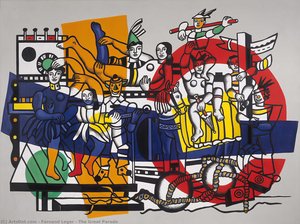
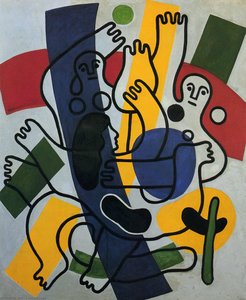
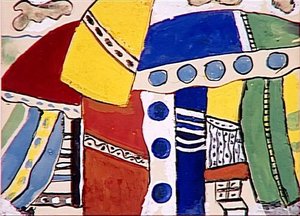
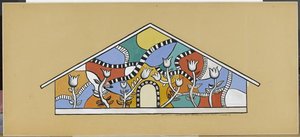
Fourth State, Church of Assy – A Synthesis of Form and Faith
Fernand Léger’s “Fourth State, Church of Assy,” completed in 1947, stands as a cornerstone of Naïve Art—a movement that championed unfiltered expression and challenged the conventions of academic painting. More than just a depiction of architectural space, this artwork embodies Léger's profound engagement with both geometric abstraction and spiritual contemplation, offering a glimpse into his artistic vision during a pivotal moment in postwar Europe. The piece’s striking simplicity belies its complex layering of ideas—a testament to Léger’s masterful ability to distill the essence of experience into visual form.Composition and Style: Cubist Echoes with Spiritual Resonance
The artwork's horizontal orientation immediately establishes a sense of stability, mirroring the monumental scale of the church façade it portrays. Dominating the upper portion is a triangular gable roofline rendered in bold geometric planes—a direct reference to Cubism’s fragmentation technique. However, Léger doesn’t merely replicate Cubist principles; he adapts them to convey a feeling of solemn grandeur. The central arched doorway anchors the composition, creating visual balance and drawing the eye inward toward the implied interior space. Decorative elements adorning the roofline—simplified geometric shapes reminiscent of stained glass windows—further amplify this rhythmic interplay between form and function. Léger’s stylistic choices deliberately eschew realism, prioritizing instead a flattened perspective that emphasizes structural integrity and invites contemplation.Color Palette and Texture: Vibrancy Amidst Restraint
The artwork's color palette is remarkably restrained, primarily utilizing yellows, blues, whites, and blacks—a deliberate contrast to the exuberant hues often found in Impressionist landscapes. The pale yellow background isolates and highlights the architectural details, creating a luminous effect that underscores Léger’s fascination with light as an expressive element. Blues accentuates windows or decorative panels within the roof structure, adding depth and coolness to the overall composition. White outlines delineate shapes and generate visual clarity, while black defines structural lines—a masterful use of color and texture that contributes significantly to the artwork's aesthetic impact. Léger’s technique—likely gouache or watercolor—results in a smooth surface devoid of pronounced textural variations, prioritizing planar surfaces and emphasizing the purity of color.Historical Context and Symbolism: Modern Faith Revisited
Created in the aftermath of World War II, “Fourth State” reflects the anxieties and aspirations of its time—a yearning for unity amidst devastation and a renewed interest in spiritual values. Léger’s embrace of Naïve Art represents a rejection of academic formalism and an affirmation of intuitive artistic expression. The depiction of a church façade serves as a symbolic gesture, prompting viewers to consider the role of faith in shaping human experience. The central figure—haloed with white—represents divine illumination—a visual metaphor for spiritual transcendence. Léger’s simplification of architectural forms underscores his belief that beauty can be found even in austere spaces and that art should communicate profound ideas without resorting to elaborate ornamentation.Emotional Impact: A Quiet Triumph of Form
Ultimately, “Fourth State, Church of Assy” transcends mere representation; it communicates a feeling of solemn contemplation—a testament to Léger’s ability to capture the spirit of his era while simultaneously elevating artistic vision beyond stylistic conventions. The artwork's understated elegance and geometric precision evoke a sense of serenity and inspire viewers to appreciate the enduring power of form to convey spiritual significance. It remains a compelling example of how art can illuminate both the physical world and the inner landscape—a timeless masterpiece that continues to resonate with audiences today.Obras relacionadas
Biografía del artista
vida temprana y formación
fernand léger, un pintor, escultor y cineasta francés, nació el 4 de febrero de 1881 en Argentán, Orne, Baja Normandía. Su padre criaba ganado, y Léger inicialmente se formó como arquitecto de 1897 a 1899. Luego se mudó a París en 1900, ganándose la vida como dibujante arquitectónico.desarrollo artístico
El trabajo temprano de Léger estuvo influenciado por el impresionismo, como se ve en le jardin de ma mère (mi madre's garden) (1905). Después de asistir a la escuela de artes decorativas y la academia Julian, comenzó a trabajar seriamente como pintor a los 25 años. Su estilo evolucionó hacia una forma personal del cubismo, que los críticos denominaron "tubismo" por su énfasis en las formas cilíndricas.cubismo y el grupo puteaux
En 1910, Léger expuso en el salón de otoño junto a jean metzinger y henri le fauconnier. Se unió al grupo puteaux, también conocido como la sección dorada (la sección de oro), junto con otros artistas como francis picabia y marcel duchamp.guerra y su influencia en el trabajo de léger
Las experiencias de Léger en la Primera Guerra Mundial impactaron significativamente su obra. Durante su tiempo en el frente, produjo dibujos de piezas de artillería, aviones y soldados compañeros. Su pintura soldier with a pipe (1916) refleja este período.obra posterior y legado
La obra posterior de Léger, caracterizada por formas mecánicas y elegantes, lo vinculó a la tradición de la pintura figurativa francesa. Sus paisajes animados de 1921 mostraron figuras y animales en formas armoniosas y aerodinámicas.- ver obras de fernand léger en ArtsDot
- más sobre fernand léger en wikipedia
- descubra el musée national fernand léger (francia) con ArtsDot
- la mujer sentada (100 x 81 cm, tubismo)
- elemento de máquina (cubismo)
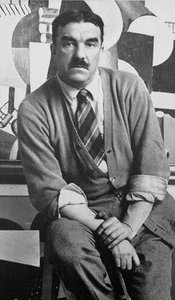
Fernand Léger
1881 - 1955 , Francia
Datos clave
- Artistas Influenciados Por: ['Pop Art']
- Artistas Que Influyeron:
- Cézanne
- Impresionismo
- Fecha De Nacimiento: 4 de febrero de 1881
- Lugar De Nacimiento: Argentan, Francia
- Movimiento Artístico:
- Cubismo
- Tubismo
- Nacionalidad: Francés
- Nombre Completo: Fernand Léger
- Obras Notables:
- La Mujer Sentada
- Elemento de Máquina
- El Gran Desfile
- Paisajes Animados
Artículos relacionados
Beyond Form & Color: Geometric Abstraction's Enduring Legacy in Art History
Explore the captivating world of geometric abstraction! Discover its origins, key artists like Malevich & Mondrian, and why this movement remains highly valued by art collectors today. Expert insights at ArtsDot.
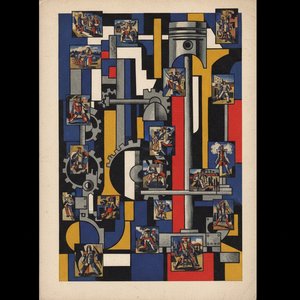
Fernand Léger: Las 25 Obras Maestras del Tubismo y la Vanguardia Francesa | ArtsDot
Descubre las 25 obras maestras de Fernand Léger, pionero del tubismo y la vanguardia francesa. Explora su estética industrial, composiciones geométricas y vibrantes colores. Reproducciones de arte exclusivas en ArtsDot.com.

Abstracción Geométrica: 10 Obras Maestras que Transformaron el Arte Moderno | ArtsDot
Descubre las 10 obras maestras de la abstracción geométrica que revolucionaron el arte moderno. Explora a Mondrian, Malevich y Kandinsky en ArtsDot.com. Reproducciones de alta calidad para tu hogar.
Beyond Form & Color: Geometric Abstraction's Evolution in 20th/21st Century Art
Explore the evolution of geometric abstraction from Cubism to contemporary art. Discover key artists like Malevich & Mondrian, investment insights, and expert collecting advice at ArtsDot.
Beyond Form: Exploring Geometric Abstraction's Enduring Legacy in Art History
Explore the captivating world of geometric abstraction! Discover its origins, key artists like Kandinsky & Mondrian, and why this movement remains highly valued by art collectors today. Expert insights at ArtsDot.