 Ver en contexto
 Enviar
 Compartir
 Detalles

 Descargar
 Similares
 Radiografía
 Presentación de diapositivas
 Stats
Stats'The album ''Circus''' (28)
 Acrylic On Canvas
- WallArt
- Cubism
Cubism
 1950
1950- 19th Century
 42.0 x 32.0 cm
 Ver más
Reproducción al óleo hecha a mano
Óleo sobre lienzo pintado a mano en el tamaño y marco de su elección, realizado por encargo por nuestros artistas. ( Switch to Print Switch to Digital Image)




P118B $10

P118H $10

P118W $10

P438Z $10

P508JH $12

P508YH $12

P805H $10

P805Z $10

P919BZ $10

P919G $10

P919XJ $10

P959ZH $10

P968JZ $12

W106C $8

W218G $10

W218JH $8

W218Y $10

W307PJ $10

W316G $10

W316PJ $8

W316Y $10

W398PJ $8

W4111J $10

W500HY $15

W500JH $15

W692G $12

W849H $8

W940BG $15

W953PJ $8




Elija entre nuestros tamaños predefinidos que respetan las proporciones originales de la obra.

Puede ingresar sus propias dimensiones para adaptarse a un marco o espacio específico. Si el tamaño seleccionado no coincide con las proporciones de la imagen original, recortaremos la obra o extenderemos la pintura con elementos adicionales pintados a mano. Se le enviará una maqueta digital para su aprobación antes de comenzar la producción.
Tenga en cuenta que la vista previa en pantalla no refleja el recorte o la extensión reales. Solo la maqueta mostrará con precisión la composición final.
Si bien existen tamaños personalizados, recomendamos seleccionar una dimensión de la lista predefinida para preservar las proporciones originales.
Tras realizar el pedido, el equipo de ArtsDot.com enviará un correo electrónico al cliente para solicitar instrucciones y proporcionarle una vista previa del boceto.
Envío a todo el mundo () en 3-4 semanas en lugar de las 5 semanas estándar. (8 septiembre). Sin comprometer la calidad.

Envío exprés gratuito a todo el mundo

Lienzo de lino de alta calidad

Seguro de envío total

Garantía de reembolso de impuestos aduaneros

Garantía de fidelidad cromática exacta

Política de devolución de 100 días (solo por defectos)

Garantía de devolución del 100% del dinero

Descuento por cantidad
 La opción de vidrio solo está disponible en tamaños inferiores a 110 cm.

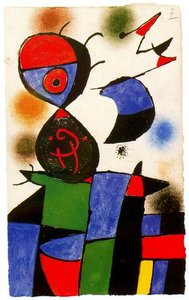
'The album ''Circus''' (28)
Técnica de reproducción
Dimensiones de la reproducción
-


Precio total final
$ 263
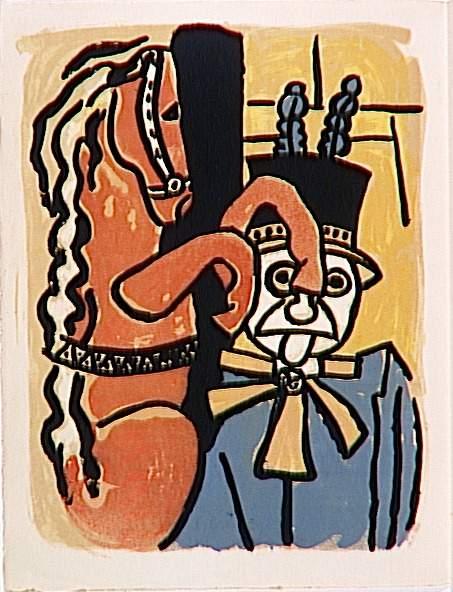
Fernand Léger: Capturing the Rhythm of Industry
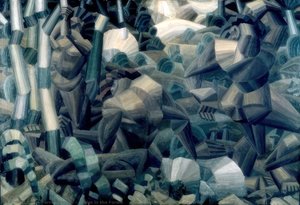
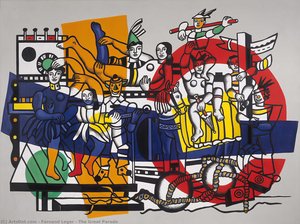
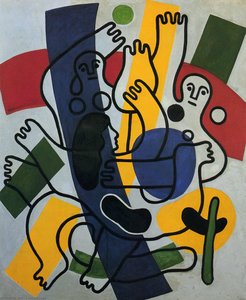
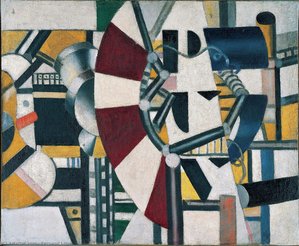
Fernand Léger’s “The Album ‘Circus’,” painted in 1950, isn't merely a depiction of a circus scene; it’s an ambitious exploration of how modern art could grapple with the burgeoning influence of industrialization. Léger, born Joseph Fernand Henri Léger in Argentan, Normandy, in 1881, initially pursued architecture but swiftly gravitated towards painting after relocating to Paris around 1900, establishing himself as a vital participant in the Parisian avant-garde movement.
Unlike many artists of his era who embraced pure abstraction as an escape from realism, Léger deliberately sought to synthesize observation and innovation. His formative years spent working on farms instilled a physicality that would inform his artistic approach – he wasn’t interested in discarding the tangible world but transforming it through a radically new visual vocabulary.
Style and Technique: Geometric Abstraction
Léger's distinctive style is characterized by geometric abstraction, heavily influenced by Cubism and Futurism. He employed bold, angular shapes – cubes, cylinders, cones – to represent mechanical forms and rhythms. These elements weren’t simply decorative; they conveyed a sense of movement and dynamism, mirroring the relentless pace of industrial progress.
His technique involved layering paint in thick impasto—a textured surface created by applying pigment thickly onto the canvas—giving his paintings an almost sculptural quality. This physicality mirrored Léger's own engagement with the physical labor of his youth and underscored his conviction that art could communicate directly with the viewer’s senses.
Historical Context: The Machine Age
"The Album ‘Circus’” emerged during a period marked by unprecedented technological advancements – the “Machine Age.” Léger witnessed firsthand the transformative effects of factories, railways, and automobiles on society. He responded to this shift not with despair but with an optimistic determination to represent it aesthetically.
The circus itself served as a potent symbol for Léger’s time. It represented spectacle, illusion, and controlled chaos – elements he skillfully captured in his painting. The juxtaposition of the horse and clown—a traditional circus duo—highlighted the tension between nature and technology, mirroring the broader anxieties and aspirations of the era.
Symbolism and Emotional Impact
Beyond its formal qualities, “The Album ‘Circus’” resonates with deeper symbolic meanings. The clocks symbolize time’s relentless march forward, emphasizing the inescapable influence of industrial progress on human experience. Léger's masterful use of color—primarily reds and yellows—creates an energetic visual atmosphere that conveys excitement and optimism.
Ultimately, Léger aimed to inspire awe and contemplation. He wanted viewers to confront the complexities of modernity while appreciating its inherent beauty. “The Album ‘Circus’” remains a powerful testament to Léger’s artistic vision – a celebration of form, movement, and the enduring spirit of innovation.
Obras relacionadas
Biografía del artista
vida temprana y formación
fernand léger, un pintor, escultor y cineasta francés, nació el 4 de febrero de 1881 en Argentán, Orne, Baja Normandía. Su padre criaba ganado, y Léger inicialmente se formó como arquitecto de 1897 a 1899. Luego se mudó a París en 1900, ganándose la vida como dibujante arquitectónico.desarrollo artístico
El trabajo temprano de Léger estuvo influenciado por el impresionismo, como se ve en le jardin de ma mère (mi madre's garden) (1905). Después de asistir a la escuela de artes decorativas y la academia Julian, comenzó a trabajar seriamente como pintor a los 25 años. Su estilo evolucionó hacia una forma personal del cubismo, que los críticos denominaron "tubismo" por su énfasis en las formas cilíndricas.cubismo y el grupo puteaux
En 1910, Léger expuso en el salón de otoño junto a jean metzinger y henri le fauconnier. Se unió al grupo puteaux, también conocido como la sección dorada (la sección de oro), junto con otros artistas como francis picabia y marcel duchamp.guerra y su influencia en el trabajo de léger
Las experiencias de Léger en la Primera Guerra Mundial impactaron significativamente su obra. Durante su tiempo en el frente, produjo dibujos de piezas de artillería, aviones y soldados compañeros. Su pintura soldier with a pipe (1916) refleja este período.obra posterior y legado
La obra posterior de Léger, caracterizada por formas mecánicas y elegantes, lo vinculó a la tradición de la pintura figurativa francesa. Sus paisajes animados de 1921 mostraron figuras y animales en formas armoniosas y aerodinámicas.- ver obras de fernand léger en ArtsDot
- más sobre fernand léger en wikipedia
- descubra el musée national fernand léger (francia) con ArtsDot
- la mujer sentada (100 x 81 cm, tubismo)
- elemento de máquina (cubismo)
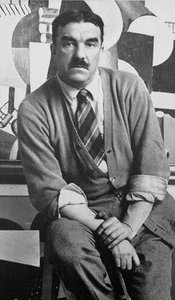
Fernand Léger
1881 - 1955 , Francia
Datos clave
- Artistas Influenciados Por: ['Pop Art']
- Artistas Que Influyeron:
- Cézanne
- Impresionismo
- Fecha De Nacimiento: 4 de febrero de 1881
- Lugar De Nacimiento: Argentan, Francia
- Movimiento Artístico:
- Cubismo
- Tubismo
- Nacionalidad: Francés
- Nombre Completo: Fernand Léger
- Obras Notables:
- La Mujer Sentada
- Elemento de Máquina
- El Gran Desfile
- Paisajes Animados